

Alcoholics Anonymous
Alcoholics Anonymous World Services
 English
Explains why a breakup feels like withdrawal and how to recover. The method is to feel emotions without feeding them, rewrite distorted stories, soften old beliefs step by step and aim for acceptance over happiness.
1 min 06 sec
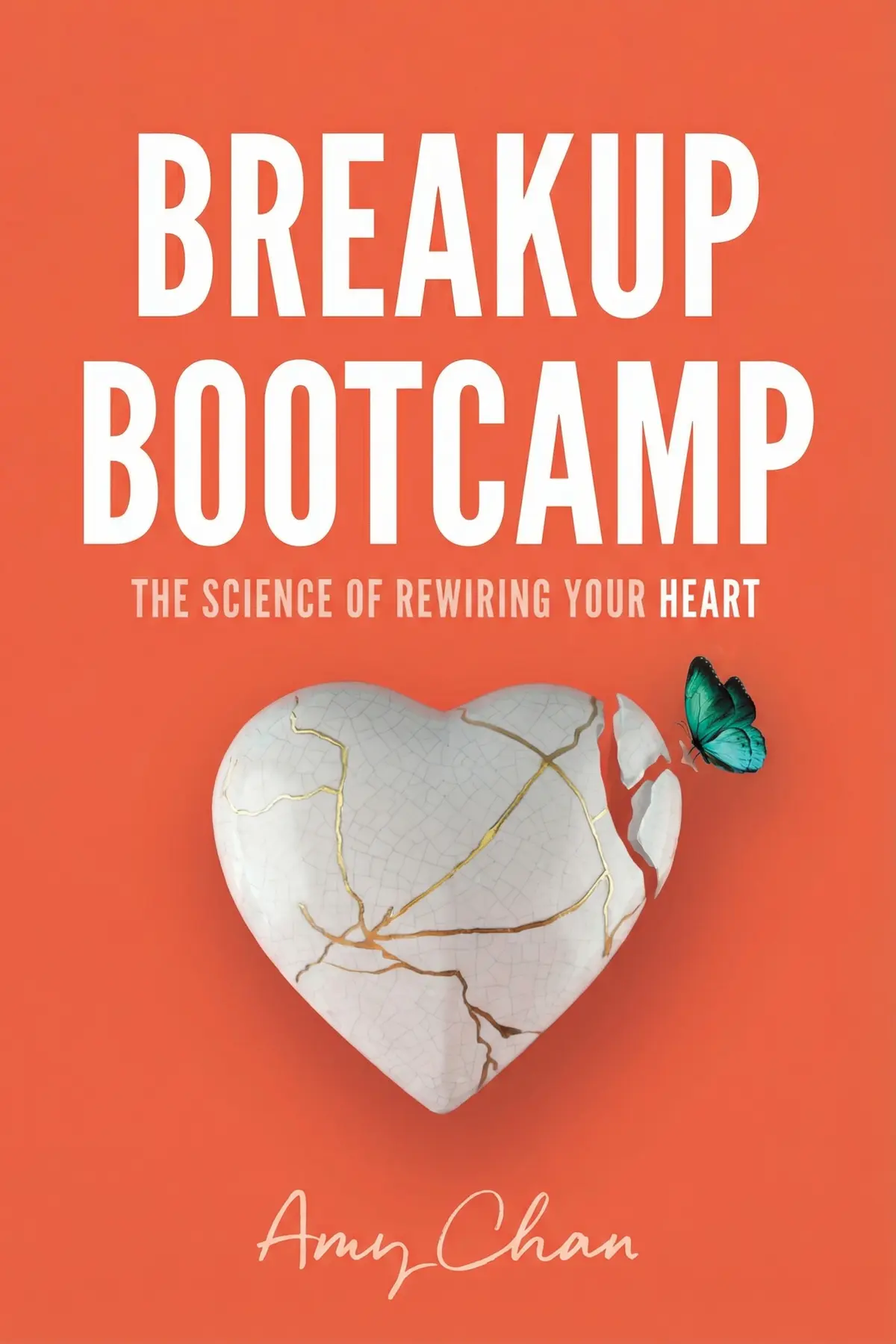
Weeks after a breakup, many people feel they should be over it by now, and they blame themselves when they are not. In Breakup Bootcamp, relationship expert Amy Chan offers a kinder and more useful explanation: a freshly broken heart shows brain activity much like an addict in withdrawal, because the partner who supplied regular hits of dopamine is gone.
At 29, Chan found out that the man she expected to marry had been cheating on her. In 2017 she turned what she learned into a heartbreak retreat called Renew Breakup Bootcamp. Her argument is that a brain which learned to depend on a partner can be rewired. You feel emotions without feeding them and catch the false stories the mind invents. You soften old beliefs one step at a time, rehearse new ones in your imagination and aim for acceptance instead of happiness.
Each step comes with a short exercise, and most need only a pen, a quiet room and a few honest minutes. The breakup still hurts, but it becomes a point where a life can change direction.
1 min 54 sec
You know the relationship is over, yet your hand keeps reaching for the phone. The reason has less to do with character than with chemistry, and it changes what a realistic recovery looks like.
1 min 59 sec
Pushing sadness away rarely works, yet sitting with it can spiral into a sleepless night. Chan draws a line between two ways of facing an emotion, and a single late-night scroll shows which one does the damage.
2 min 12 sec
The version of the breakup you replay every night feels like plain fact. A simple pen-and-paper test shows how much of it your mind made up, and what is left once you strip it away.
2 min 06 sec
Telling yourself you will find perfect love tomorrow rarely convinces anyone, least of all your own brain. Chan’s answer is a slower climb, and the size of each step matters more than the destination.
2 min 04 sec
Volunteers who only rehearsed the piano exercise in their heads still showed changes in the part of the brain that controls finger movement. Chan borrows the same trick to help a hopeful belief take root after a breakup.
1 min 52 sec
Chan had the boyfriend, the impressive job and the apartment, and still found herself flattened. What she rebuilt afterward changed what she was aiming for in the first place.
1 min 17 sec
Breakup Bootcamp treats heartbreak as two problems wrapped together. The first is chemical, and it has to run its course: a brain cut off from its dopamine source, grieving through shock, anger and sadness on its own schedule. The second is the one Chan believes you can work on. It is the stories, distortions and childhood beliefs that turn a 90-second wave into a sleepless night of scrolling through an ex’s party photos. Her method aims at that second layer, and its reward reaches past the breakup itself, toward a sense of worth that no longer rests on a boyfriend, a job title or an apartment.
The practice can start small. When a feeling rises, let it run its 90 seconds before adding a story, and stay away from the ex’s profile. Write your ten-point version of the breakup, spot the filtering, mind-reading and all-or-nothing lines, then rewrite the story as five new points that hold only to the facts. Pick one belief and climb only one rung this week. Then spend a few quiet minutes walking into the room where the top rung is real.
Chan came through her own betrayal more at peace with herself, because she stopped asking a partner to supply what only acceptance could give.
A breakup can leave you stuck for months, replaying conversations, checking an ex's photos and blaming yourself for not moving on faster. Amy Chan, a relationship expert who founded a heartbreak retreat after her own painful split, argues that this is not weakness. A freshly broken heart shows brain activity much like an addict in withdrawal, because a steady source of dopamine has disappeared. There is no shortcut through grief, Chan says, but there is a lot you can do to make it gentler. She separates the pain itself from what the mind adds to it: the stories we tell, the thinking traps we fall into and the beliefs about ourselves we picked up in childhood. Each of these can be worked on. The book gives readers simple exercises for each layer. You let a feeling pass without feeding it, then rewrite the breakup story using only facts. A ladder of beliefs helps you climb out of "never", and a visualization practice backed by a Harvard piano study helps a new belief take root. Chan ends by changing the goal itself, from chasing happiness through a partner to finding acceptance that holds whatever your relationship status.
People weeks or months past a breakup who still replay it every night.
Anyone who keeps checking an ex's social media and wants a way to stop feeding the pain.
Singles who suspect an old belief about not being good enough keeps shaping their love life.
Amy Chan started out as a dating columnist and became a relationship expert. She founded Renew Breakup Bootcamp, described as the world's first science-based heartbreak retreat, and she also runs Dating Bootcamps for singles. She has taught at Google and YouTube, given a guest lecture at Columbia University and teaches on the faculty at Esalen and The Omega Institute. Breakup Bootcamp became a bestseller and was optioned by a major streaming network. Her newest book, UNSINGLE, came out in April 2026.
Listeners find this guide both encouraging and useful, offering actionable tasks that lead them through the recovery journey. They value the evidence-based methods and perspectives, with one listener mentioning how it transformed their outlook on grief and ending relationships. The material earns praise for its accessibility and ability to mend a broken heart, with one listener characterizing the experience as a "giant hug." Listeners prize the relationship coaching, as one individual points out its role in bettering their connections with others.
Finally got around to reading this after a rough few months, and it truly felt like a giant hug from someone who actually understands the neurobiology of heartache. Amy Chan doesn't just offer simple platitudes; she provides a scientific framework for why we feel so shattered when a relationship ends. The practical exercises throughout the book helped me shift my mindset from loss to growth in a way I didn't think was possible right now. I particularly loved the sections on attachment theory because they explained so much about my past patterns. While some of the anecdotes from her retreat felt a little polished, the overall impact was incredibly empowering. I finished the last page feeling like my frontal lobe had finally finished developing. If you’re currently in the thick of it, this is the companion you need on your nightstand.
Show moreWow, I didn't expect a book about breakups to make me feel so empowered about my entire life, not just my dating status. Amy Chan has a gift for taking complex psychological concepts and making them accessible for the average person. The exercises are practical and actually require you to do the work rather than just nodding along to the text. I found the circle of love ending to be a beautiful way to reframe my perspective on connection. Not gonna lie, I was skeptical about the scientific claims at first, but the way she integrates expert advice from psychiatrists really won me over. It is rare to find a book that addresses the mind, body, and spirit with such balance. This truly felt like the relationship coaching I never knew I needed. It is a must-read for anyone feeling lost after a split.
Show morePicked this up during a time when I felt like I was drowning, and it was exactly the lifeline I needed. The mix of personal anecdotes and relationship coaching makes for a very compelling read that is hard to put down. I loved that the author does not just tell you to move on but gives you the actual tools to process the grief. The exercises are the real heart of the book; they forced me to look at my own contributions to my relationship patterns. It is empowering to realize that you have the agency to change your future outcomes. I have read a lot of self-help, but this one stands out because it feels grounded in reality rather than just positive vibes. The scientific insights into how our brains process loss helped me stop blaming myself so much. I feel much more equipped to handle future relationships now.
Show moreAfter hearing the hype about the Breakup Bootcamp retreat, I was curious if the book could capture that same magic. For the most part, it does a fantastic job of weaving together stories of transformation with psychological wisdom. The focus on self-care as a form of hard work—rather than just bubble baths—is a refreshing take on the concept. In my experience, most books in this genre are too soft, but Chan provides a rigorous path forward. The breakdown of attachment styles was incredibly eye-opening and helped me realize my bad luck was just a pattern. It is a supportive guide that offers a lot of clarity during a confusing time. I truly feel like a different person after finishing this. It is like having a private coach walking you through the wreckage.
Show moreThe chapter on attachment styles alone makes this book worth the purchase for any single person. It was like a lightbulb went off and I finally understood why I kept choosing the same type of unavailable partner. Amy Chan writes with a lot of empathy, and the book really feels like a supportive coach in your pocket. I loved the practical exercises because they moved me out of my head and into direct action. The way she frames a breakup as a shake-up for growth is such a powerful mindset shift for the brokenhearted. I have recommended this to several friends already, even those who are not currently going through a split. It is just good relationship coaching in general. While some of the retreat-specific stories felt a little like marketing, the value of the advice is undeniable.
Show moreThis book feels like a conversation with a very smart, very direct friend who won't let you wallow for too long without a plan. I appreciated the emphasis on the psychological and neurological aspects of love because it validated that my pain wasn't just in my head. The stories from women at the actual bootcamp were the highlight for me, as they made the advice feel grounded and real. To be fair, some of the biological arguments regarding testosterone levels felt a bit oversimplified and dated. I also found the suggestion to do a plank to release negative emotions a little bit odd for a book about deep emotional healing. However, the core relationship coaching is solid and helped me navigate a recent friendship fallout as well as my romantic history. It is a readable, fast-paced guide that balances heavy science with actionable steps for recovery.
Show moreEver wonder why it is so hard to stop checking your ex’s Instagram even when you know it hurts? This book answers that question through the lens of neurology and it is honestly life-changing. I really appreciated how Chan treats a breakup like a chemical detox rather than a personal failure. The sections on attachment theory provided a mirror that was uncomfortable to look into but necessary for my growth. Personally, I found the advice about finding a new lover after a specific timeframe a bit strange, especially after she explained how sex affects female hormones. It felt like a weird contradiction in an otherwise very thoughtful book. Still, the overall message of self-actualization is powerful. It is a great resource for anyone looking to understand the reason behind their heartache. The writing style is engaging and it never feels like a dry textbook.
Show moreTruth is, the science in this book is great, but the underlying philosophy did not always sit right with me. I appreciated the deep dive into how our bodies react to heartbreak and the practical steps to rewire those neural pathways. However, the message that you must be your own entire world and source of meaning felt a little hollow to me at times. To be fair, Chan acknowledges she is speaking from her own worldview, but it is very focused on individual self-actualization. I also found the chapter on biological differences between genders to be a bit reductive for my taste. It is still a very helpful book if you can filter out the parts that do not align with your personal values. The stories from the other women were definitely the most engaging part and kept me reading until the end.
Show moreAs someone who usually avoids the self-help aisle, I was drawn to the promise of a scientific approach to heartbreak. There is definitely some gold in here, specifically the breakdown of love addiction and how our brains get wired to crave toxic partners. However, I found the tone to be a bit preachy and repetitive in the middle sections. My biggest gripe is how the book relies on a very traditional, binary view of gender roles and heterosexual dynamics. It felt a bit limiting given how diverse and fluid modern relationships are today. Also, the transition from talking about deep emotional bonding to suggesting casual hookups after three months felt contradictory. Frankly, it felt more like an advertisement for her expensive retreat at times than a standalone manual. I would still recommend it for the attachment style insights, but keep a critical eye on some of the more strange suggestions.
Show moreI wanted to like this book because the premise is so strong, but I struggled to get past the fluff. It felt like Amy Chan was just recounting her own painful breakup and then trying to sell me on a weekend retreat. Some of the tips, like planking a pose to release negative energy, felt totally ridiculous and did not align with the scientific branding. Then there was the chapter involving a dominatrix which completely took me out of the experience. Look, I am sure the in-person workshop is transformative for some, but in book form, it felt disjointed and a bit corny. I also could not get behind the idea that men and women are fundamentally different just because of hormone levels. I did like the personal stories from the other women, but those were too few and far between. It just was not the right fit for me.
Show moreChan argues that heartbreak changes the brain in a way that resembles drug withdrawal, because a partner was a reliable source of dopamine. There is no shortcut through grief, but recovery gets easier when you feel emotions without feeding them, catch the false stories your mind tells, gradually soften limiting beliefs, rehearse new ones through visualization and aim for acceptance instead of happiness.
According to Chan, people who have just been through a breakup show brain activity similar to addicts who need a fix. They were used to getting dopamine from their partner, and when the relationship ends that supply disappears. This helps explain why moving on feels impossible at first, and why recovery takes time instead of willpower alone.
Chan says an emotion’s physiological lifespan in the brain and body is just 90 seconds. If a feeling lasts much longer, it is because of the story we build around it. Her own example is scrolling through an ex’s party photos late at night, inventing a narrative until she had a panic attack. The aim is to feel the emotion fully but stop feeding it.
Chan recommends a ladder of beliefs. Write an unhelpful belief on the bottom rung and ask whether it is true all the time. On the middle rung, write a softer, more honest version backed by evidence. On the top rung, write what you want to believe, keep it visible and look for proof of it. Visualizing that belief as already real helps the brain accept it.
It suits anyone struggling to get over a breakup, especially people stuck in rumination, checking an ex’s social media or carrying beliefs like never being good enough for a committed partner. Its exercises are short and practical, from rewriting the breakup story in five factual points to a guided visualization, and its final goal of acceptance applies whatever your relationship status.
Alcoholics Anonymous World Services

Steven C. Hayes




Leanne Maskell



AUDIO SUMMARY AVAILABLE
Get the key ideas from Breakup Bootcamp by Amy Chan, plus 5,000+ more nonfiction titles.









