

15 min 16 sec
Available in: English
Brave: 50 Everyday Acts of Courage to Thrive in Work, Love, and Life
A practical guide to everyday courage: how to face fears in small steps, speak up for your values and yourself at work, decide when the future is unclear, ask for help and move through grief.
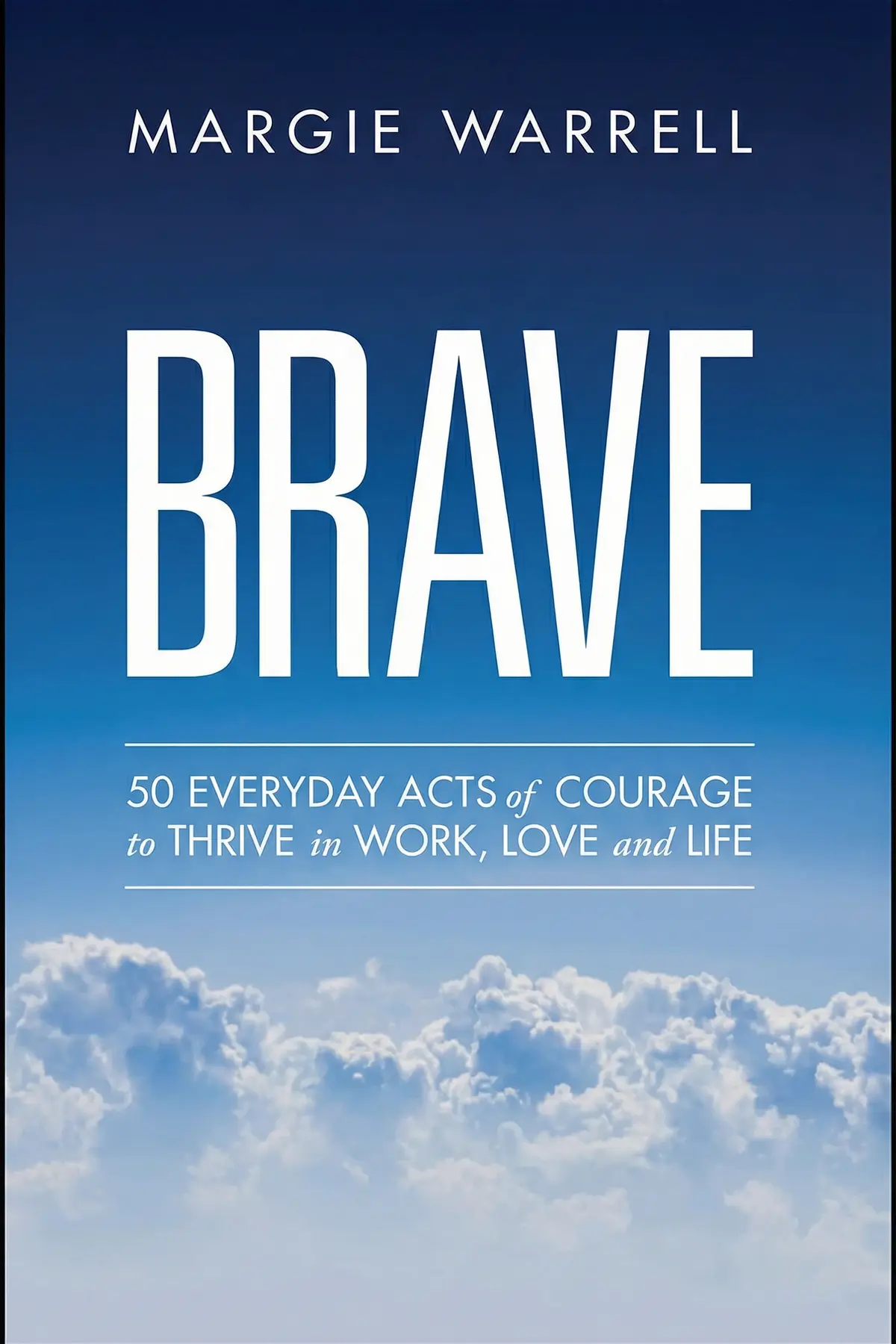
Table of Content
1. Introduction
1 min 03 sec
Most people can name the brave thing they keep postponing: the promotion they never ask about, the view they swallow in a meeting, the plan they rehearse but never start. In Brave, coach and author Margie Warrell argues that courage is built like a muscle, through small acts done while still afraid, and that each one makes the next easier.
Her book gathers 50 everyday acts of courage across work, love and life, and they share one thread. Fear holds back the career, the business and the relationship you could have, yet bravery rarely needs a plane or a shark tank. It needs ordinary moments handled with a little more nerve.
Warrell follows that thread from a teenager’s first jump to Malala Yousafzai, through a colonel learning to question his bosses, a friend fighting cancer and her own family’s grief. Along the way she offers ways to break a fear into parts, raise a hard topic without making it personal and talk about your strengths without bragging.
2. Build courage one small fear at a time
1 min 40 sec
A 13-year-old’s birthday wish left both mother and son frightened, and it revealed something about fear that applies far beyond adventure sports. It starts with a simple notebook habit most people never try.
3. Let what makes you different work for you
1 min 35 sec
A woman with no eyebrows or eyelashes once felt awkward in every room. What changed for her suggests that the effort you spend fitting in may cost you more than it protects.
4. Know your values before you must defend them
1 min 37 sec
Most people know the regret of staying silent when something felt wrong. Warrell links a Nobel Peace Prize winner’s courage to a bit of homework anyone can do long before the tense moment arrives.
5. Raise a hard topic without attacking the person
1 min 43 sec
A combat colonel found an office harder to face than battle. One word choice, from an employee passed over for promotion, shows how a fair complaint can wreck the very conversation meant to fix it.
6. Talk about your strengths without bragging
1 min 42 sec
Raised on a farm where boasting was frowned on, Warrell came to see modesty as a risk. Her alternative lets you name your strengths without sounding like you are selling yourself.
7. Make the call when the future is unclear
1 min 34 sec
A couple spent years planning a career that never arrived. Warrell’s conclusion about forecasting runs against instinct, and it may change how long you let one hard decision sit unresolved.
8. Ask for help and grow stronger for it
1 min 33 sec
A high-powered working mother had always been the one others relied on. A cancer diagnosis forced a different role, and what she learned upends a common belief about what strength looks like.
9. Face sadness fully so you can let it go
1 min 37 sec
After her brother’s death, Warrell felt grief she could barely carry. The usual ways people dull such pain turn out to delay healing, and cancer survivors point toward a harder alternative.
10. Conclusion
1 min 12 sec
Warrell’s courage has little to do with stunts. Ben’s jump opens the book, but most of its brave acts happen in offices, living rooms and hospitals: a woman with a visible skin condition going out as herself, a colonel questioning a superior, a busy mother learning to accept help. Each looks small and takes real nerve. Practice enough of them, she argues, and a fuller, happier life follows.
Her closing advice adds an act that is easy to overlook: gratitude. Being grateful takes courage, Warrell says, because it means dropping self-pity and petty jealousy and seeing how much you have already been given. From there, the responsibility is yours, with no excuses and no blaming others.
Begin with the fear you are avoiding now. Write it down, find what really sits underneath it, and take the smallest brave step against it this week, whether that is one honest sentence to your boss or one request for help.
Nobody is asking you to leap from a plane. Only to take the next step while you are still afraid.
About this book
What is this book about?
Fear rarely announces itself. It shows up as the promotion you never ask about, the opinion you keep to yourself, the decision you keep postponing or the help you refuse to request. Over time, those small retreats can cost you a job you want, a business you never start or a relationship you never begin. Margie Warrell, a coach with a background in business and psychology, argues that courage is mostly built in ordinary moments. Each time you act while afraid, she says, your courage muscles grow, and the next brave act gets easier. She shows the idea at work through her son's jump, a friend who turned a skin condition into a strength, Malala Yousafzai, an army colonel learning to question his superiors, a friend facing cancer and her own family's grief. Readers get concrete tools: noting each fear you dodge and breaking it into parts, preparing your values before you need them, raising hard topics by describing actions instead of judging people, framing your strengths as contributions, deciding without waiting for certainty, asking for help and giving sadness your full attention.
Book Information
Who it's for
Professionals holding back
Professionals who stay silent in meetings or avoid asking about a promotion they have earned.
Waiting for career certainty
People stuck on a career decision and waiting for a certainty that never comes.
Facing illness or loss
Anyone facing illness, loss or grief who finds it hard to ask for help or let sadness in.
About the Author
Margie Warrell
Margie Warrell grew up on a farm in rural Australia and brings a background in business and psychology to her work as a keynote speaker, coach and media contributor. She has written five bestselling books, including Brave, published by Wiley in 2015. She hosts the Live Brave podcast, where her guests have included Richard Branson and Bill Marriott, and her clients have included NASA, the UN Foundation and British Telecom.
Ratings & Reviews
Ratings at a glance

What people think
Listeners find the book exceptionally wise when it comes to performing acts of bravery. They value its motivational power, as one listener highlights its role in helping them reach their goals. Listeners truly enjoy the material, with one pointing out its specific usefulness during high-pressure seasons.
Top reviews
Ning
The chapter titled 'Say no to the good to say yes to the great' was exactly what I needed to hear this month. I’ve spent years playing it safe in a career that I enjoy, but I wasn't truly passionate about it. Warrell’s words gave me the kick I needed to pivot toward my real dreams. The five-part arrangement is brilliant because you can focus on 'Work Passionately' or 'Dig Deep' depending on your current struggle. This isn't just a book you read; it’s a book you do. I’m already seeing changes in how I handle setbacks and resiliency. It’s a life-changer for sure. Many thanks to the author for such an intense, inspiring read!
Show moreSiriporn
Wow, this was a high-octane shot of motivation that I didn’t know I needed! Every morsel of advice made my heart race with adrenalin. The section on resiliency was a game-changer for me personally. The faster you recover from a setback, the faster you can reach your goals, and Margie provides the tools to make that happen. I loved the emphasis on taking responsibility for your own life instead of blaming others for your problems. It’s an easy book to digest, yet the impact is profound. Highly recommended for anyone who needs to be more bold and confident in their daily decisions. The quotes included are absolutely excellent and very inspiring.
Show moreLadawan
After hearing so much about Margie Warrell, I finally dove into 'Brave' during a particularly stressful season at work. One specific takeaway that stuck with me was the idea that being grateful is actually a brave act. It forces you to dispense with self-pity and petty jealousies, which is much harder than it sounds. By recognizing what you already have, you realize you have the tools to succeed. The writing is punchy and direct, with no room for excuses. You are the solution to your own problems, and this book provides the roadmap to prove it. I felt more confident immediately after finishing the first few chapters. A truly excellent read!
Show moreMason
This book is like a gym membership for your soul. Warrell is an excellent guide, helping you strengthen those 'courage muscles' through various life challenges. Whether it's speaking your truth to a loved one or overcoming your limits at work, the advice is consistently actionable. I found the 'Dig Deep' section on resiliency to be incredibly helpful for managing daily stress. It’s an easy book to read day-by-day as a series of challenges rather than just reading it straight through. Gotta say, the quotes alone are worth the price of admission. It has definitely inspired me to live a fuller, more authentic life. It's easily one of the best books I've read this year.
Show moreIce
Being brave isn't always about skydiving or quitting your job on a whim. Margie Warrell argues that true courage is actually found in the small, daily choices we make to step outside our comfort zones. I really appreciated the focus on 'courage muscles'—the idea that bravery is a skill you can train over time. Some of the sections on speaking your truth were particularly convicting, especially regarding the risk of conflict. However, I did find a few chapters a bit repetitive toward the middle. It’s an incredibly wise guide for anyone feeling stuck in their current routine. The actionable advice about addressing sadness to find happiness resonated deeply with my current situation. It’s a very solid read.
Show moreAnchalee
Ever wonder why you’re holding back from that one difficult conversation? This book tackles the 'Speak Bravely' aspect of life with refreshing honesty. Truth is, we often avoid conflict at the expense of our own intimacy and growth. Warrell shows that being brave means choosing who you want to be and then actually acting like that person. It’s not about being fearless, but about acting courageously even when you want to stay safe. I would have liked a bit more detail in the 'Work Passionately' section, as some parts felt a bit rushed. Overall, it’s a fantastic resource for personal development. It definitely provides the beginning of a journey for those willing to take action.
Show moreAurora
Building a foundation for the person you want to become requires more than just wishful thinking. Margie Warrell provides a very practical framework for this in 'Brave.' I particularly liked how she defines bravery as taking little steps outside your comfort zone every day rather than just making huge, heroic risks. It makes the concept of courage feel accessible rather than something reserved for heroes. The 'Work Passionately' chapters encouraged me to re-evaluate my boundaries at the office. My only minor gripe is that some of the sections felt like they ended just as they were getting interesting. Still, it's a very solid and helpful guide for anyone looking to improve their life.
Show moreHiroshi
To be fair, much of the advice here felt like common sense dressed up in fancy formatting. The chapters are quite short, which makes it an easy book to pick up and put down, but it lacks the deep discussion I was hoping for. It feels more like a collection of ideas worth exploring than a cohesive, deep-dive manual. If you’re looking for a starting point on your journey toward self-improvement, this is a solid choice. Just don't expect groundbreaking psychological revelations on every page. It is a helpful nudge for the uninitiated, but seasoned self-help readers might find it a bit thin. It works well as a daily motivational tool rather than a comprehensive study.
Show moreCaleb
Look, the structure of this book is great for busy people, but I found the 'pick and choose' style a little disjointed at times. While the advice is certainly motivational, it can feel a bit surface-level if you’ve already read a lot of leadership literature. Personally, I think the 'Dig Deep' section was the strongest part of the whole book. It offers genuine insights into building the foundation needed to live your dreams. However, some of the 'everyday bravery' tips felt a bit recycled from other sources. It’s a good book to keep on your nightstand for a quick boost during stressful times, but maybe not for a deep weekend study.
Show moreSebastian
Not what I expected given the rave reviews. Frankly, I found the tone a bit too 'rah-rah' for my tastes. The chapters are so short that they barely scratch the surface of complex emotional issues like depression or significant career limits. It feels like a collection of inspirational quotes tied together with brief anecdotes. While I appreciate the message of taking action, the execution felt thin and repetitive. If you want a quick hit of positivity, you might like it. However, if you want a deep, academic, or structured psychological approach to courage, you’ll probably be disappointed. It just didn't have the substance I was looking for.
Show moreQuestions about this book
What is the main idea of Brave by Margie Warrell?
Warrell argues that courage is built in small, everyday acts, and that dramatic risks are optional. Each time you act while afraid, your courage muscles grow stronger and the next step gets easier. She applies this to standing out, speaking up for your values, raising hard topics, advocating for yourself, deciding under uncertainty, asking for help and facing grief, and she argues that a fuller, happier life follows.
How can I start building courage, according to Brave?
Warrell suggests writing down each time you avoid something out of fear of failure or rejection, then starting with small challenges, such as hosting a dinner if you feel socially awkward or sharing a personal struggle with a friend. Pick something you would do in the coming months if you felt brave, break the fear into its real parts and picture how success would feel.
How do you raise a difficult issue with your boss, according to Brave?
Warrell advises presenting your view as your perspective, sharing your feelings and staying open to the other side. Most important, judge the action and never the person. Her example is an employee overlooked for promotion: calling the decision unfair risks implying the boss is an unfair person, which makes every later conversation feel hopeless and keeps her unease alive.
Does Brave say asking for help is a weakness?
No. Warrell argues that asking for help takes real strength, because it means showing vulnerability. Her friend Mona, a working mother diagnosed with breast cancer in 2009, struggled at first to ask after years of being the one others relied on. Warrell adds that asking connects you to a community, and that nobody succeeds or flourishes alone.
Who should read Brave?
It suits professionals who hold back in meetings or hesitate to promote their own work, people facing a career choice with no clear answer, and anyone dealing with illness or loss. The advice is small and practical, from noting the fears you dodge to framing your strengths as what you can offer others and giving grief your full attention.
Readers also enjoyed

A High-Performing Mind: Strengthen Your Mind and Live Your Best Life
Andrew D. Thompson


Abundance: The Inner Path to Wealth
Deepak Chopra


59 Seconds: Change Your Life in Under a Minute
Richard Wiseman




AUDIO SUMMARY AVAILABLE
Listen to Brave in 15 minutes
Get the key ideas from Brave by Margie Warrell, plus 5,000+ more nonfiction titles.
- 5,000+ titles
- Listen as much as you want
- 7-day free trial
- Cancel anytime









