

60 Seconds & You’re Hired!
Robin Ryan
 English
Shows capable professionals why staying silent about their results costs them and their teams. It also shows how to record wins, describe them precisely and turn them into short stories that earn recognition.
59 sec
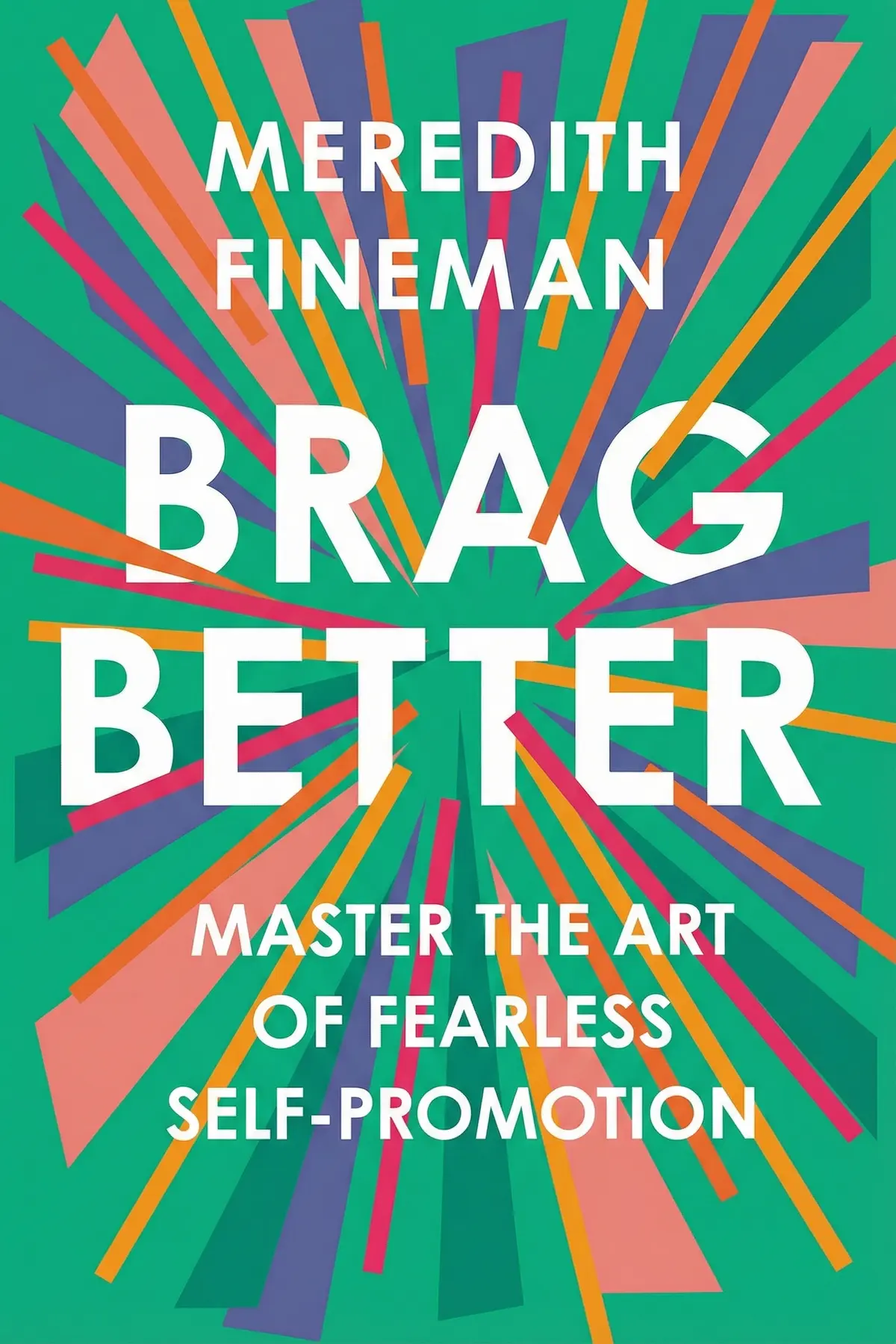
If you do strong work and still freeze when someone asks what you did, you are leaving decisions about your career to people who lack the facts. In Brag Better, entrepreneur and media expert Meredith Fineman argues that self-promotion is a skill anyone can learn and improve. Her starting point is simple: your manager and colleagues cannot read your mind, so telling them what you achieved gives them information they need to decide well.
From there she builds a practical method. Fineman shows where the reluctance to speak up comes from and why silence harms teams as well as careers. She names the small words that shrink your achievements, explains how to record wins before you forget them, and shows how to shape them into short stories for the right listener. Her case, followed through every step, is that explaining your work clearly is part of doing the job well. What you take from it is a weekly habit and a sentence pattern ready for your next status update.
1 min 52 sec
A developer led a major upgrade, gave her team the credit, and watched a colleague take the promotion she was better qualified for. Her story shows how good intentions about modesty can work against you.
1 min 56 sec
Some large technology companies ask engineers to write openly about their failures. Fineman sees a lesson there for how you talk about success, one that reaches past your own career to fairness and remote teams.
2 min 09 sec
An engineer who led a whole project says she just helped a little. Fineman shows how phrases like that hide your real ability, and the simple sentence pattern that makes your contribution visible.
2 min 10 sec
Most people try to recall their best work the week of a review, when the details have already faded. Fineman’s fix takes ten minutes a week and catches the small moments that matter most later.
1 min 50 sec
Two people can do the same work and get very different credit for it. A cybersecurity specialist shows how the way you tell a result can turn it into a promotion and a speaking invitation.
1 min 50 sec
The same achievement can impress a director and bore a peer, or land perfectly one month and vanish the next. Fineman borrows from planners, curators and researchers to show how to time and tailor it.
1 min 07 sec
Brag Better adds up to a new way of seeing your own silence. Keeping quiet about good work can feel generous or safe, yet Fineman shows that it mostly hides useful facts from the people who decide where projects, promotions and pay should go. Elena’s story is the warning: the more qualified person missed the role because nobody knew the full picture.
The remedy she offers is modest in size. Spend ten minutes each Friday writing down what you achieved, with a number and a human detail wherever you have them. When you describe that work, drop the words that shrink it and say plainly what you did and what changed because of it. When the moment fits, shape your strongest win into challenge, action and result, and pitch it at the person who most needs to hear it.
Done this way, self-promotion becomes a record kept honestly and shared on purpose. It also leaves a trail others can follow, the way a good post-mortem teaches a whole company. Your colleagues cannot read your mind, so tell them.
Plenty of talented people deliver strong results and then play down their own part the moment anyone asks. Meredith Fineman argues that this habit has deep roots: childhood lessons about humility, social penalties that fall hardest on women, and a perfectionism that makes no achievement feel worth mentioning. Its cost is real. Less qualified colleagues get promoted, ideas go unheard and pay falls behind. Fineman's angle is that self-promotion is a skill, and that sharing your achievements gives colleagues and leaders information they need, much as engineering post-mortems help a whole company learn. She ties visibility to fairness at work and to remote jobs, where unseen work goes unnoticed. Readers get a working method. They learn to cut the words that shrink their results and to describe work in specific, measurable terms. They also get a ten-minute Friday habit for recording wins, and a three-part story shape of challenge, action and result that can be adapted for a manager, senior leaders or industry peers.
Professionals who do strong work but credit the team or freeze when asked what they did.
Women and remote workers whose contributions too often go unseen at review and promotion time.
Anyone preparing for a performance review, job interview or salary talk who needs clear proof of their impact.
Meredith Fineman is an entrepreneur, writer and media expert. She founded FinePoint, a leadership and professional development company that helps people at every career stage with visibility and voice, with a particular focus on women in leadership. She has written for about fifteen years, including for Harvard Business Review, Forbes and Fast Company, and she trains companies, universities and other groups in positive self-promotion.
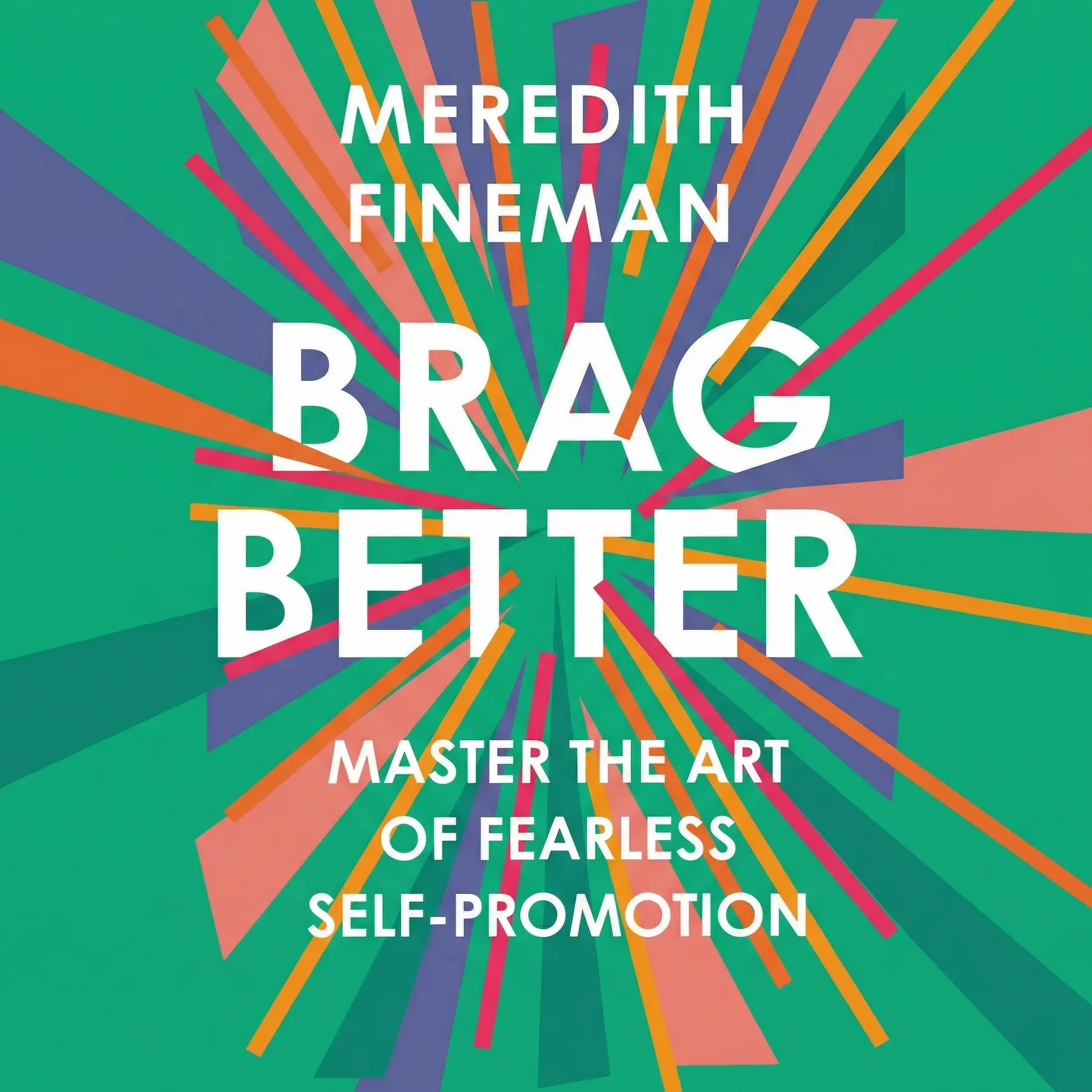
Listeners find this book empowering and accessible, offering useful and actionable tips that instill a sense of pride and confidence. Its clear writing style is highly valued, with one listener describing it as a must-read for young professionals. The text delivers effective techniques for highlighting successes, and listeners appreciate its considerate take on self-promotion, including one listener who shared how it altered their professional methods.
Wow, I wish I had this book ten years ago when I was first starting out in the tech world. It is incredibly empowering and provides the useful tools needed to share accomplishments without the usual 'ick' factor associated with bragging. Fineman’s writing style is punchy, modern, and very easy to digest during a commute or a lunch break. I love how she addresses the specific hurdles that women and minorities face in professional spaces. In my experience, most career books are written by people who don't understand the 'Qualified Quiet' struggle, but she hits the nail on the head. This isn't just a book; it’s a career-altering toolkit that I’ve already recommended to five different colleagues.
Show moreEver wonder why the loudest person in the room gets the promotion while you are doing twice the work? Fineman answers that question and gives you the exact roadmap to fix it. This book is a game-changer because it teaches you to mentally reframe your wins as objective truths rather than vanity. I found the section on 'bragging better' for others to be especially moving and practical for leadership roles. It makes you feel confident and proud of what you've achieved rather than feeling like you have to hide your light. The advice is actionable, and I've already seen a difference in how people respond to me in meetings. Highly recommended for anyone who feels overlooked at work.
Show morePicking this up was the best decision I've made for my career trajectory this year. Truth be told, I used to be terrified of self-promotion because I didn't want to seem like an asshole. This book completely stripped away that fear by providing a clear, logical framework for communicating my impact. The 'Qualified Quiet' terminology gave me the language I needed to describe my own professional habits. I appreciate that the author acknowledges her own perspective while still making the advice feel inclusive for a diverse audience. It's an easy, quick read that delivers high-impact results for anyone willing to put in the work. Don't let the title scare you off; this is about being effective, not being loud.
Show moreAfter hearing Meredith Fineman on a podcast, I knew I needed to grab a copy for my professional library. This book provides such a thoughtful approach to self-promotion by reframing the whole concept as simply 'stating facts.' For those of us who were raised to be humble, that mental shift is absolutely life-changing. I walked away with an actionable list of tasks to improve my public presence and feel much more confident about my upcoming promotion cycle. My only minor gripe is that some chapters felt a bit repetitive, as if the same point was being made three different ways. Regardless, it is an empowering read that makes networking feel utterly approachable and even a little bit fun.
Show moreFinally got around to reading this after my mentor suggested it, and it really reframed how I view self-promotion. As someone who identifies as the 'Qualified Quiet,' I always assumed my work would eventually speak for itself. This book taught me that if I don't speak for my work, no one else will. The advice is practical and easy to read, making it a must-read for young professionals who are just starting to navigate office politics. I particularly enjoyed the chapters on how to handle people who are uncomfortable with your success. Not gonna lie, I skipped the parts about being on television because that's not my life, but the rest was very helpful for my career.
Show moreThis book is a masterclass in learning how to be your own biggest advocate without feeling like an arrogant jerk. Fineman does a great job of explaining that bragging isn't about ego; it is about sharing the value you bring to the table. I loved the emphasis on being proud of your accomplishments and using factual data to back up your claims during negotiations. Some of the social media branding stuff felt a little bit like 'hot air' to me, but the core message is incredibly strong. It changed my approach at work almost immediately, especially in how I communicate with my superiors during weekly check-ins. It is a very handy book for anyone looking to build a personal brand from scratch.
Show moreAs a mid-level manager in a stable industry, I found only about half of this content applicable to my day-to-day life. Look, the concept of the 'Qualified Quiet' is brilliant and it really resonated with my personal experience of working hard while others grab the spotlight. However, the book leans very heavily into personal branding and public appearances, which just isn't what 'the rest of us' need. I appreciated the advice on keeping a running list of accomplishments for annual reviews and the tips on asking for a raise. But truth be told, the constant 'cheerleader' tone of the writing started to grate on my nerves after a while. It’s a decent enough read for young professionals, but seasoned employees might find it a bit shallow.
Show moreNot what I expected given the broad marketing, but I did find some nuggets of wisdom buried in the redundancy. The author narrates the audiobook version herself, which is a nice touch, though she does repeat her main talking points ad nauseam. I think this text is perfect for someone starting their own business or looking to land a book deal. For a regular employee, the focus on 'pitching' feels a bit misplaced and hard to translate into a cubicle environment. Personally, I liked the section on how to brag about your teammates to build a better culture. It’s a quick read, but you’ll probably find yourself skimming the later chapters about social media presence and TV appearances.
Show moreThe central premise of 'Brag Better' is solid, but the execution feels incredibly thin for a full-length publication. To be fair, most of these ideas could have been summarized in a single, well-written blog post rather than being stretched across several repetitive chapters. I found the constant focus on 'pitching' and PR-style self-branding to be totally unrelatable for those of us in more traditional, stable career paths. It felt like a how-to guide for becoming an influencer rather than a tool for a quiet professional trying to navigate a corporate hierarchy. There is a lot of fluff and filler here that just didn't add much value to my professional development. I would suggest checking out 'The Introvert's Edge' instead if you want actual strategies.
Show moreI really struggled to get through even a quarter of this book before I had to put it down. Frankly, the writing feels like a bizarre hybrid of corporate buzzwords and social justice rhetoric that never quite lands. Fineman spends way too much time quoting other people, which makes me wonder if she actually has any original insights of her own to share. The advice provided is the intellectual equivalent of cotton candy—it tastes sweet for a second but offers zero substance for anyone in a real-world job. This is marketed as a guide for everyone, yet it is clearly aimed at women who need basic permission to speak up. If you are already comfortable in your skin but want to refine your professional communication, this is not the book for you.
Show moreFineman argues that self-promotion is a learnable skill and that sharing your achievements gives colleagues and leaders information they need to make good decisions. Staying silent lets less qualified people advance and leaves your pay and ideas overlooked. Her method is to record wins as they happen, describe them in specific and measurable language, and turn them into short stories of challenge, action and result, adapted to each audience.
Fineman recommends precision over volume. Strip out hedges like just, kind of, sort of and a little, and drop phrases such as I got lucky. Then say what you did and what changed because of it, with a number where possible. Her example: instead of saying you helped with a sales presentation, say you built the market analysis section that answered the client’s concerns and helped win the contract.
It is a running record of your wins. Fineman suggests ten minutes every Friday to note the week’s accomplishments, the problems you solved and their impact. Save emails when your work is forwarded to senior leaders, note when a colleague says your analysis saved them time, and track figures like time saved, errors reduced or revenue earned. Use whatever tool you will actually open.
It suits capable professionals who downplay their role, especially those who say the work should speak for itself. Fineman pays particular attention to women, who often face social penalties for seeming ambitious, and to remote workers, whose contributions can go unnoticed on a screen. It also helps anyone preparing for a review, interview or salary discussion who needs organized evidence of what they achieved.
Fineman uses three parts: the challenge you faced, the steps you took and the results you can measure. Maya, a cybersecurity specialist in the book, described finding vulnerable systems, building a protection strategy, cutting incidents by 60 percent and halving response time. That account helped her win a promotion. Fineman also advises adding later ripple effects and preparing versions for different listeners.
Robin Ryan



Marianne Cantwell
William Vanderbloemen
AUDIO SUMMARY AVAILABLE
Get the key ideas from Brag Better by Meredith Fineman, plus 5,000+ more nonfiction titles.









