

13 min 29 sec
Available in: English
Blind Spots: When Medicine Gets It Wrong, and What It Means for Our Health
By Marty Makary
Shows how confident medical advice on peanuts, antibiotics, cholesterol, childbirth and implants turned out to rest on weak evidence. It also shows how to question health guidance before it harms you or your family.
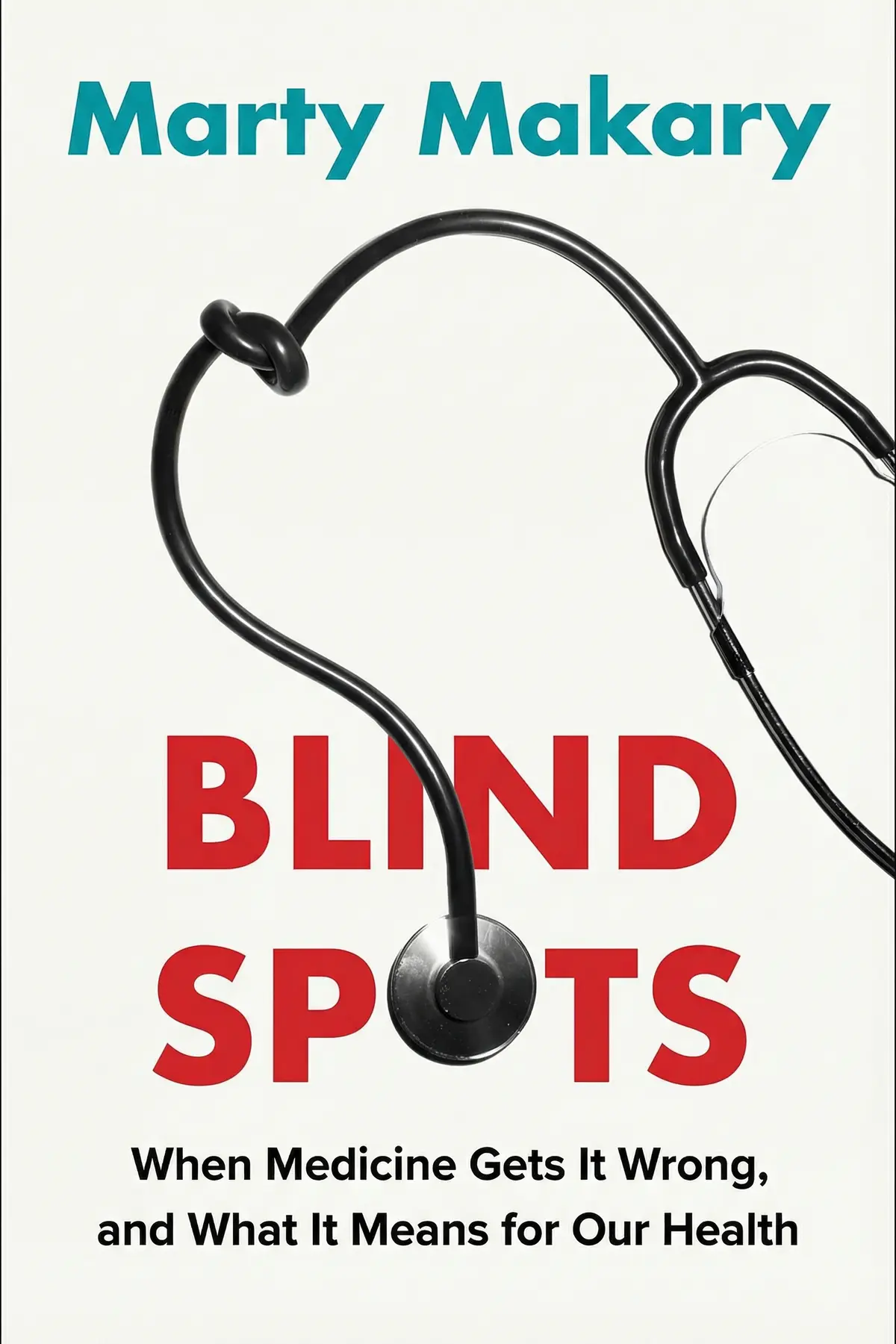
Table of Content
1. Introduction
1 min 04 sec
If you follow your doctor’s advice to the letter, some of it may already be out of date, and nobody has told you. In Blind Spots, Johns Hopkins surgeon Marty Makary shows how one guideline from American pediatricians helped turn peanut allergy from a rare condition into a problem for a whole generation. The guideline told parents to keep peanuts away from small children.
His argument is that much of everyday medicine rests on habit and authority, with thin evidence underneath. The mistakes made in good faith can outlast the science that disproves them by decades. Makary builds the case from a run of reversals. Antibiotics get handed out for illnesses they cannot treat. Eggs were banished from breakfast. Newborns were rushed away from their mothers. And a breast implant scare drew the spotlight while the opioid epidemic grew. Each case gives you a question to take to your next appointment, and a better feel for when a confident recommendation deserves a second look.
2. Learn from the advice that multiplied peanut allergies
1 min 55 sec
A rural pediatrician in Tennessee told parents the opposite of what national experts advised, and his patients avoided a problem spreading everywhere else. What did he know that the official guideline ignored?
3. Ask whether you really need that antibiotic
1 min 56 sec
A teenager with stomach pain no test could explain turned out to be carrying the cost of treatments meant to help him. His case challenges a belief most families share about a familiar prescription.
4. Eggs deserve a place on your plate again
1 min 55 sec
A man gave up his favorite food for decades on his doctors’ orders. The study behind that warning shaped government guidelines and supermarket shelves, and later research tells a very different story.
5. Gentler birth practices that help mother and baby
1 min 54 sec
For decades, hospitals hurried newborns away from their mothers in the name of safety. A neonatologist at Baylor University Medical Center pushed for gentler practices in those first minutes, and her studies linked them to healthier babies.
6. Spot a media scare that hides a real crisis
1 min 45 sec
One television segment helped get a medical device banned and drove a major company into bankruptcy. During the same years, a far deadlier product moved through approval with hardly a second glance.
7. Test the health beliefs you still take for granted
1 min 48 sec
A deadly misconception about skin cancer once cost a famous life. Makary uses it to point at familiar practices that may be next in line for reversal, from your tap water to the medicine cabinet.
8. Conclusion
1 min 12 sec
Blind Spots adds up to an uncomfortable picture. Most of the harm in these stories began with well-meant advice that ran ahead of the evidence and then stayed in place long after the evidence turned. Parents went on avoiding peanuts after the guideline flipped. A 93-year-old kept skipping eggs. Women had implants removed that later research cleared. Makary’s view is that medicine gets better when people are willing to question its rules, and patients can take part in that.
What he supports is a habit of asking better questions. When you are offered an antibiotic, ask whether the illness is likely viral and what waiting would cost. When a guideline shapes how you feed a baby or plan a birth, check whether it has been updated since you first heard it. When a health scare fills the news, ask how strong the evidence is and what the coverage might be leaving out.
Dr. Stephen Combs worked in rural Tennessee. He followed what immunology already taught, even though it went against the national advice of his day. His young patients were spared an allergy that spread almost everywhere else. Sometimes one well-placed question is enough to change the outcome.
About this book
What is this book about?
Most of us follow medical advice without asking where it came from. Marty Makary, a Johns Hopkins surgeon, argues that a surprising share of it grew out of opinion, weak studies and institutional habit. These errors were usually well meant, and they tended to stay in place long after better science arrived. Makary makes his case through a run of reversals. A pediatric guideline told parents to keep peanuts from small children and helped peanut allergies spread. Antibiotics are prescribed for infections they cannot treat. A flawed diet study kept eggs off breakfast tables for decades. Birth routines separated newborns from their mothers. In the 1990s a television scare got silicone implants banned while OxyContin was approved with little oversight. He ends with beliefs he thinks deserve a fresh look today, including fluoride, marijuana and treating every fever. Readers get a clearer sense of how medical dogma forms and why it lasts. They also get practical questions to bring to the next appointment, whether they are feeding a baby, filling a prescription or deciding which health headline to believe.
Book Information
Who it's for
Parents checking health advice
Parents who want to check the advice they were given on allergies, antibiotics and childbirth.
Confused by changing rules
Health-conscious readers confused by years of changing rules on cholesterol, fat and everyday medicines.
Professionals wanting sharper judgment
Professionals who want a sharper eye for weak evidence behind confident health headlines.
About the Author
Marty Makary
Marty Makary practiced surgical oncology and laparoscopic gastrointestinal surgery at Johns Hopkins Hospital, where he is now Professor Emeritus. He led work on the Surgery Checklist, developed with the World Health Organization, and in 2018 he was elected to the National Academy of Medicine. Confirmed as FDA commissioner in March 2025, he resigned in May 2026. He is a New York Times bestselling author whose books include Unaccountable, The Price We Pay and Mama Maggie.
Ratings & Reviews
Ratings at a glance
What people think
Listeners find the work thoroughly researched and full of medical insights, written in accessible, plain language. They value the stimulating content, with one listener highlighting how it encourages people to think for themselves. The writing earns praise for being both credible and effective, as one review notes it works in 90% of patients. However, the storytelling style draws varying responses from listeners.
Top reviews
Gift
After hearing Dr. Makary discuss his findings on a radio show, I knew I had to pick this up. It is a staggering look at how often the medical establishment relies on "expert consensus" rather than actual, rigorous data. The chapter on the sudden reversal of peanut allergy advice was particularly eye-opening for me as a parent; we were told for years to avoid them, only to find out that avoidance was likely causing the very problem we feared. Makary writes in a way that is accessible to the layperson but still feels deeply documented and credible. It’s a call for transparency and humility in a field that often lacks both. I found myself highlighting passages every few pages because the insights were just that sharp. Truly, this is essential reading for anyone who wants to take a more active role in their own healthcare decisions. It's thought-provoking and, at times, quite frustrating to see how long it takes for bad advice to die.
Show morePensuda
As a nurse who has worked in labor and delivery for over a decade, the section on skin-to-skin contact and natural birth practices resonated with me on a personal level. I have seen firsthand how rigid hospital protocols can sometimes clash with what is actually best for the mother and baby. Dr. Makary articulates the frustration of trying to change a system that is stuck in its ways perfectly. He isn't anti-science; rather, he is pro-scientific method, which requires us to be willing to admit when we are wrong. This book isn't just a list of medical errors—it's a philosophical look at how we process information and why we are so afraid of new ideas. The writing is clear, the examples are powerful, and the call for more transparency in medical journals is long overdue. It’s rare to find a book that challenges your profession while also making you feel more empowered to do your job better.
Show moreAria
The chapter on dietary dogmas was a complete revelation, providing a much-needed wake-up call regarding what we put in our bodies. Dr. Makary starts off strong, dismantling the history of the food pyramid and the "breakfast-as-the-most-important-meal" myth with precision and wit. He’s at his absolute best when he's using data to challenge outdated norms that we’ve all just accepted as gospel for decades. It’s an incredibly interesting perspective, and the book is packed with actionable insights that allow readers to bring their own critical thinking skills back to their doctor's office. The prose is snappy and moves quickly, which makes it a perfect read for a weekend. Overall, it's a brilliant addition to the conversation about medical reform that doesn't just point out problems but encourages a new way of thinking. I've already bought two more copies to give to friends who are struggling with chronic health issues.
Show moreHugo
Finally, a book that dares to question why we do what we do in modern medicine without falling into the trap of mindless conspiracy theories. Makary is a surgeon at a top-tier institution, so he’s not an outsider throwing stones; he’s an insider calling for a renovation. His breakdown of how medical journals and funding can stifle dissenting opinions is a must-read for anyone in the policy space. I particularly appreciated the discussion on hormone therapy for women and how a single, flawed study set back the health of an entire generation. The truth is, science is a process, not a destination, and this book serves as a vital reminder of that fact. It’s well-researched, written in everyday English, and provides a roadmap for how we can do better. If we want to restore trust in the medical community, we need more voices like Makary’s willing to say, "We were wrong, and here is how we fix it."
Show moreJom
Look, I’m all for evidence-based medicine, but this book exposes how flimsy that "evidence" sometimes is when you peel back the layers of politics and profit. I found the analysis of the opioid crisis particularly stinging, as it shows how easily even well-intentioned doctors can be misled by biased research. Makary’s writing is punchy and accessible, which is great for the general public, but it doesn’t shy away from the complexities of health policy. While he occasionally veers into territory that feels designed to spark debate, the core information regarding antibiotic overuse and the publication process in medical journals is incredibly valuable. It’s a thought-provoking read that encourages patients to be their own advocates and ask the "why" behind every prescription or procedure. Truthfully, it's one of the few books that actually changed how I view my annual check-ups.
Show moreSavannah
This book is a masterclass in challenging the status quo without being dismissive of the scientific method itself. Dr. Makary takes on the "establishment" with the precision of a surgeon, slicing through years of tradition to find the data-driven truth. I found the section on hospital practices during childbirth to be particularly illuminating, especially regarding how much of what we consider "standard care" is actually based on outdated convenience rather than patient health. The prose is clear and doesn't get bogged down in technical jargon, making it a great pick for anyone interested in public health. What I appreciated most was the author’s willingness to admit that even he had fallen for certain dogmas in the past. That kind of humility is rare in medical literature. It’s a book that empowers the reader to think independently and ask better questions of their providers.
Show moreAroha
Makary’s deep dive into medical "groupthink" is both enlightening and, frankly, a bit terrifying for anyone currently navigating the healthcare system. He does an excellent job of tracing the history of certain medical dogmas—like the push for opioids or the demonization of cholesterol—showing how they were built on a house of cards. The narrative style is engaging, though at times it feels a bit repetitive when he hammers home the same points about the "establishment." Admittedly, some of the claims he introduces later in the book feel slightly less substantiated than the early chapters, relying more on personal anecdotes than the hard data he insists others provide. Still, the core message about recognizing our own blind spots and fostering civil disagreement is vital. It’s a necessary critique of a system that often prioritizes prestige over patient outcomes. It certainly made me think twice about blindly following every guideline without asking for the underlying evidence first.
Show moreSomporn
Picked this up on a whim and ended up finishing it in just two sittings because the storytelling is so compelling. Dr. Makary has a way of taking complex medical history and turning it into a narrative that feels like a detective novel. You follow the "clues" of where researchers went wrong and see the real-world consequences of those mistakes. The discussion on how conventional pesticides and dietary advice have evolved was eye-opening, even if I didn't agree with every single conclusion the author reached. Frankly, some parts feel a bit like he’s settling scores with the medical community, which can be a distraction from the otherwise excellent research. However, the overarching theme of fostering more civil discourse and transparency in science is something we desperately need right now. It’s a high-quality read that will definitely spark some interesting dinner-table conversations.
Show moreJack
Ever wonder why medical advice seems to flip-flop every ten years, leaving everyone confused about what’s actually healthy? Dr. Makary’s "Blind Spots" provides the answer by looking at the politics and pride that often govern medical guidelines. The book is incredibly well-researched and filled with insightful information that is written in everyday English, making it accessible to anyone. I was particularly struck by the history of appendicitis treatment and how long it took for the medical community to even consider non-surgical options despite emerging data. It’s a powerful reminder that "standard of care" doesn't always mean "best care." The book is effective because it doesn't just complain—it offers a vision for a more transparent and honest medical field. While it veers into controversial territory toward the end, the core message remains strong. Highly recommend for healthcare workers and patients alike.
Show moreLars
I really wanted to like this, but the hypocrisy is hard to ignore once you get past the first few chapters. While Dr. Makary correctly identifies real issues—like the peanut allergy debacle or the mismanagement of the opioid crisis—he then uses those examples to launch into claims that aren't nearly as well-supported. He rails against "groupthink" but then seems to echo a specific brand of contrarian groupthink found in certain podcast circles. The misuse of statistics in some sections is glaring, particularly regarding medical error rates, which have been widely criticized by other researchers for being extrapolated incorrectly. It’s a shame because the core message—that we should be skeptical and evidence-driven—is a good one. Unfortunately, the author doesn’t seem to apply those same rigorous standards to his own assertions or his cherry-picked anecdotes. For a book about blind spots, it seems to have quite a few of its own.
Show moreQuestions about this book
What is Blind Spots by Marty Makary about?
Makary, a Johns Hopkins surgeon, argues that many accepted medical practices rest on weak or outdated evidence and persist long after better science arrives. He makes the case with examples: a peanut-avoidance guideline that helped allergies spread, antibiotics prescribed when they are not needed, the warning against eggs and cholesterol, intervention-heavy childbirth routines, and a silicone implant ban that drew attention while OxyContin was approved with little oversight.
What does Blind Spots say about peanut allergies?
In 2000, the American Academy of Pediatrics advised keeping peanuts from children until age three. Makary argues that the guidance rested on thin evidence and contradicted the basic principles of immunology. Gideon Lack’s 2015 trial found that early exposure cut the risk of peanut allergy by 86 percent. The guidance was reversed, but many parents never heard about the change.
Does Blind Spots say eggs and cholesterol are bad for the heart?
No. Makary argues the warning came largely from Ancel Keys’s flawed Seven Countries Study. He cites a 2020 study of 177,000 people that found eggs and other high-cholesterol foods did not meaningfully raise blood cholesterol or heart disease risk. In his reading, inflammation driven by refined carbohydrates and sugar matters more. He suggests focusing on whole foods, sensible portions and fewer refined carbohydrates.
How can I apply the ideas in Blind Spots?
Ask what evidence supports a recommendation and how recent it is. Before taking an antibiotic, ask whether the illness is likely viral. If you are a parent, check whether advice on introducing allergens has changed. If you are pregnant, ask your hospital whether it offers skin-to-skin contact and delayed clamping of the umbilical cord. When a health scare dominates the news, look at how strong the evidence behind it is.
Readers also enjoyed







AUDIO SUMMARY AVAILABLE
Listen to Blind Spots in 15 minutes
Get the key ideas from Blind Spots by Marty Makary, plus 5,000+ more nonfiction titles.
- 5,000+ titles
- Listen as much as you want
- 7-day free trial
- Cancel anytime









