

15 min 12 sec
Available in: English
Black and British: A Forgotten History
Olusoga shows that Black people have shaped Britain since Roman times, through slavery, abolition, empire and two world wars. He also explains why so much of that history was left out of the national story.
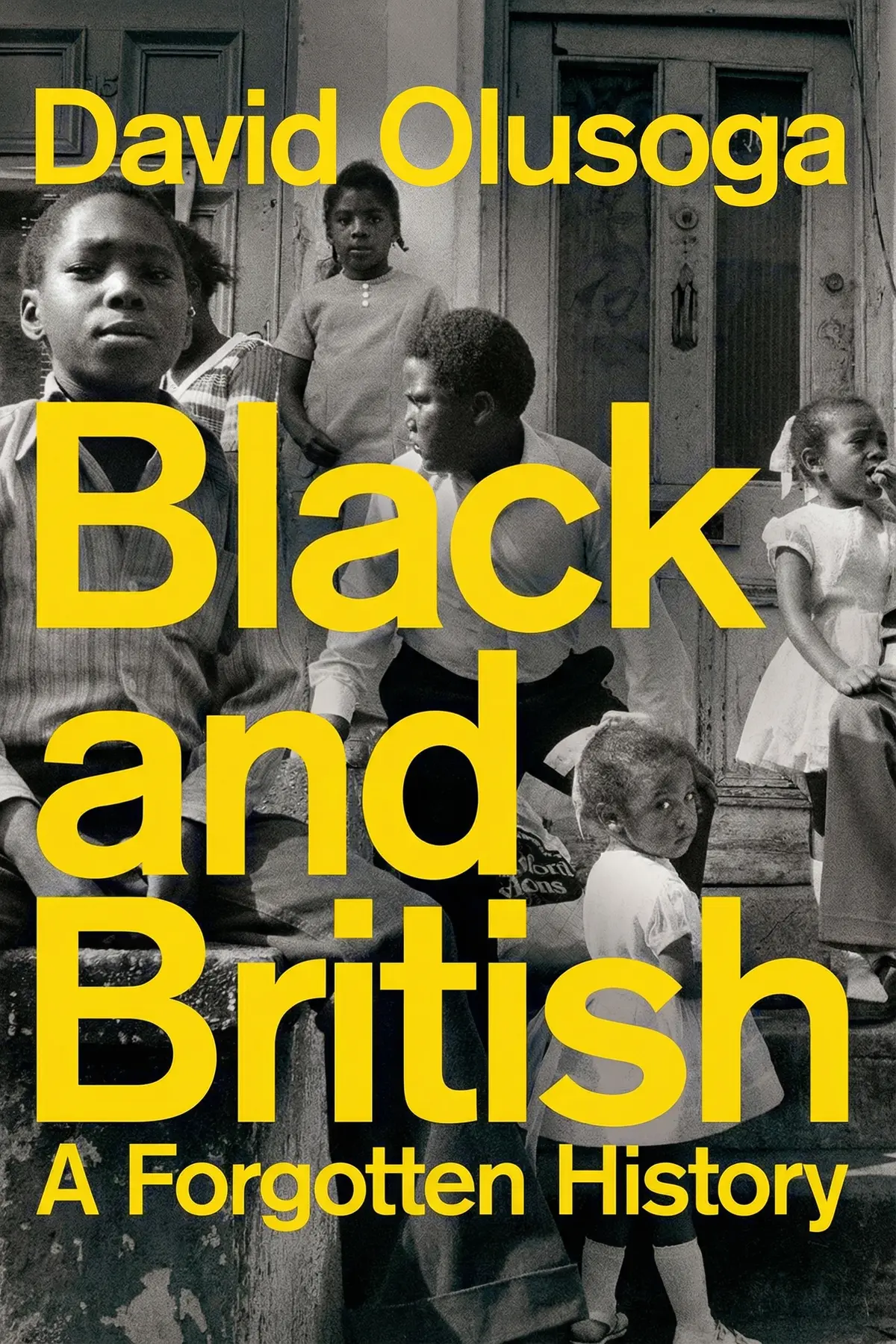
Table of Content
1. Introduction
1 min 06 sec
Many people carry a picture of British history in which Black people arrive only after 1945. In the 1990s, a London bookshop assistant told the African American historian Gretchen Gerzina exactly that, yet Africans were living in Britain in the third century. In Black and British, historian and broadcaster David Olusoga sets out to correct the picture.
He argues that people of African descent have been part of British history for well over a thousand years, as victims of its worst crimes and as actors in its proudest moments. In his account, the divide separating a Black Britain from a white one is an illusion that survives only because people forget.
The book moves from a Roman fort in Cumbria to a slave fortress in Sierra Leone, a London courtroom, the cotton mills of Manchester and the ship Empire Windrush. What it offers is a way of reading any history that asks whose story is missing, and what that absence has been used for.
2. Find the history a country left offshore
1 min 45 sec
A ruined fortress on a small West African island once sat at the heart of a vast British trade. Then it vanished from memory for generations, and the reasons say a lot about how nations remember.
3. Trace Black Britain back to Roman times
1 min 44 sec
A grave in York full of glass beads and bronze lockets held a young woman whose story upends a common assumption. Chemistry, court records and a royal trumpeter fill in the rest.
4. See how race became a legal line in 1661
1 min 53 sec
Shakespeare could write a Black general who was braver and better than the white man who destroyed him. A few decades later, planters on a sugar island wrote something very different into law.
5. See how ordinary people ended the slave trade
1 min 59 sec
An escaped man knocked on a stranger’s door in London, and a judge’s ruling spread far beyond his case. Then a ship’s insurance claim turned quiet profit into national outrage.
6. Follow the money that outlived abolition
1 min 54 sec
Decades after Britain outlawed slavery, its booming cotton towns depended on enslaved labor across the ocean. A celebration in London and a meeting in Berlin, three months apart, reveal the same contradiction.
7. Spot the pattern of service, then backlash
1 min 44 sec
A Black sailor appears in brass beside a dying national hero in the heart of London. A century later, men who served the same country were barred from its victory parade.
8. Understand how Windrush migrants were cast as outsiders
1 min 48 sec
Britain needed workers after 1945 and hesitated to accept the ones its own empire offered. When violence came, the people attacked were the ones politicians blamed.
9. Conclusion
1 min 19 sec
What stands out in Black and British is how ordinary most of its evidence is. A bangle in a York grave. A trumpeter at a Tudor celebration. A brass sailor on a London monument. A goldsmith’s advertisement and a ship owner’s insurance claim. Very little of this was hidden. It was left out, and Olusoga asks readers to notice who tells history and to look for the stories it hides, such as how planters drew a color line where class had been or how politicians cast migrants as swamping the country.
What the book adds up to is a different map of Britain, with Africa and the Caribbean drawn in from the start. On that map Black Britons are people who were enslaved and colonized. They are also sailors at Trafalgar, authors who helped end the trade and an officer leading white troops in France.
The habit worth keeping works anywhere. When you read a history or watch a documentary, notice who is telling it and who stays at the edges. When someone draws a line between us and them, ask how old that line really is. Often, as with Bunce Island, the missing piece was there all along, waiting for someone to look.
About this book
What is this book about?
Many people picture British history as a white story that Black people joined only after the Second World War. David Olusoga sets out to show how wrong that picture is, and how it came to be believed. He follows people of African descent from a Roman frontier fort in Cumbria to the Tudor court, from a slave fortress in Sierra Leone to a London courtroom in 1772, and on to the cotton mills of Manchester, the trenches of the First World War and the arrival of the Empire Windrush. Along the way he shows how the slave trade turned class divisions into racial ones, how Black and white campaigners ended that trade, and how Britain kept profiting from slavery after banning it. Readers come out with a fuller map of Britain's past and a habit that works far beyond it: asking whose story a history leaves at the margins, and who benefits from the gap.
Book Information
Who it's for
Wondering what school skipped
Readers who know British history from school and suspect a large part of it was left out.
Needing one clear account
Students and teachers who need a clear, connected account of slavery, abolition, empire and migration in Britain.
Following debates on immigration
Anyone following debates on belonging and immigration who wants the long history behind them.
About the Author
David Olusoga
David Olusoga is a British-Nigerian historian, writer and broadcaster, and a professor of public history at the University of Manchester. He has won a BAFTA as a film-maker and presented BBC history programs including A House Through Time, as well as the television series Black and British: A Forgotten History. His earlier books include The World's War, winner of the First World War Book of the Year prize, and The Kaiser's Holocaust. He writes a column for The Observer and is a Fellow of the Royal Society of Literature and the Royal Historical Society.
Ratings & Reviews
Ratings at a glance
What people think
Listeners characterize this work as an exceptional and deeply investigated chronicle that exposes long-neglected facets of Britain's past. They value the way the author integrates significant historical milestones with individual accounts, stretching from the Roman era to the present day. Additionally, the prose is described as both informative and empathetic, with one listener remarking that the content highlights "voices that go so often unheard or ignored," including those of the Sons of Africa. Many reviewers also emphasize the book’s capacity to confront conventional teaching by uncovering the global intricacies of the industrial revolution and the slave trade. While some find the heavy detail leads to a slower experience at points, they ultimately label the book indispensable for grasping both the past and the present.
Top reviews
Phichai
This book is a sweeping, necessary correction to the narrative of these islands. David Olusoga manages to bridge the gap between Roman legionaries and the Windrush generation with such grace that the history feels vibrant rather than dusty. I was particularly struck by how the author highlights the 'global' nature of British identity, tracing links between African coasts and Lancashire cotton mills. It’s a dense read, no doubt about it, but the personal stories humanize the cold statistics of the slave trade. Frankly, I felt a bit cheated by my own school education after finishing this. We were taught about Wilberforce as a lone savior, yet the reality of the Sons of Africa and their tireless campaigning is so much more compelling. Every chapter feels like another piece of a puzzle falling into place.
Show moreSureerat
Finally got around to reading this and I’m genuinely overwhelmed by the sheer scale of research David Olusoga poured into these pages. The focus on Granville Sharp was eye-opening for me because he’s someone who rarely gets the spotlight in standard textbooks. Truth is, seeing the names and hearing the actual voices of the enslaved people who fought for their own freedom changed my entire perspective on abolition. The writing is incredibly clear and humane, making a 500-page tome feel like a fast-paced narrative. I appreciated the unflinching look at how the industrial revolution was essentially fueled by the suffering in the cotton fields. It isn’t always a comfortable read, but it is an essential one for anyone living in Britain today.
Show moreDuangjai
Ever wonder why the Spinning Jenny is the only thing we learn about the Industrial Revolution in school? This book pulls back the curtain on the raw materials and the human cost that actually funded Britain's rise to global power. David Olusoga’s ability to weave together the macro-history of empires with the micro-histories of individual black lives is nothing short of masterful. I found the segments on the American Civil War and its impact on the British economy to be totally revelatory. Looking back, it’s shameful how these stories were systematically erased from our national consciousness. It’s a hefty book, but the prose is so engaging that I finished it much faster than expected. A vital contribution to our understanding of modern Britain.
Show moreSukit
Wow. This is an absolute masterpiece of historiography that manages to be both deeply academic and profoundly moving. Olusoga shifts the focus away from the "great white men" of history to show a more inclusive, complex version of our island story. I was particularly moved by the accounts of the black soldiers who fought in the World Wars only to be excluded from victory celebrations. It's a harrowing reminder of how memory can be curated by those in power. Personally, I found the chapter on the early African presence in Roman York to be a brilliant way to start the journey. It effectively dismantles the idea that black presence in Britain is a "modern" phenomenon.
Show morePetch
The section on the two World Wars alone makes this book worth the price of admission. It is enraging to read about the deliberate "de-memorialization" of black contributions to the defense of the British Empire. Olusoga writes with a calm authority that makes the more shocking revelations even more impactful. I especially loved the details about mixed-race marriages in the 19th century and how they were viewed at the time. It’s a rich, humane history that doesn't shy away from the darker corners of our national heritage. While it’s quite a long read, the chapters are broken up well enough to keep you turning the page. It’s the kind of history book that actually changes the way you look at the world around you.
Show moreMoo
Picked this up after seeing the TV series and the book is even more detailed and immersive than the show. I was fascinated by the story of the Sons of Africa and the way they toured the country to turn public opinion against slavery. It makes the traditional "Wilberforce-only" version of history look incredibly thin and misleading. The author has a real talent for finding these lost voices and giving them the platform they deserved centuries ago. I also found the discussion on "racial theories" and Social Darwinism in the Victorian era to be quite enlightening. It explains so much about the roots of modern prejudice. This isn't just a book about the past; it's a guide to the present.
Show moreCharles
After hearing so much hype about this book, I finally understand why it’s considered a modern classic. It is a stunning achievement that manages to feel both comprehensive and personal at the same time. The way Olusoga handles the complex relationship between Britain and the West African slave ports is exceptionally well-done. I also appreciated the attention given to the black sailors on Nelson’s column and other "hidden in plain sight" artifacts. It’s a powerful reminder that our history is much more diverse than the movies or old textbooks would have us believe. It’s an essential addition to any bookshelf, regardless of how much you think you already know.
Show moreMia
As someone who considers themselves well-read in history, I was shocked by how much I didn't know about our country’s past. Olusoga doesn't just list dates; he builds a comprehensive web of connections between Africa, America, and Britain. The legal contradictions of the Georgian era—where men were "free" in London but property in the colonies—were particularly fascinating to me. To be fair, the middle sections can get a bit bogged down in legislative detail which slows the momentum. However, the emotional payoff of the final chapters makes every page worth the effort. It’s an illuminating look at the fingerprints of empire that remain hidden in plain sight across our architecture and street names.
Show morePong
Not gonna lie, I went into this expecting a dry academic text but came away feeling like I’d read a gripping saga. Olusoga’s writing style is sophisticated yet accessible, which is a rare feat for a book of this size. The connection he draws between the wealth of the British aristocracy and the plantation economy is presented with undeniable evidence. It was particularly interesting to see how the British government paid massive compensation to slave owners, not the enslaved, upon abolition. That fact alone should be common knowledge, but it’s tucked away in the shadows of our history. The book is an emotional rollercoaster, ranging from deep shame to genuine inspiration.
Show moreNikolai
To be fair, this is an incredibly important piece of work, even if the pacing didn't always work for me. The research is impeccable and the author’s passion for the subject is evident on every single page. That said, I found some of the sections on legal battles and 18th-century parliamentary debates to be a bit dry and repetitive. It’s a lot of information to process, and I had to take frequent breaks to keep from feeling overwhelmed. Look, I’m glad I read it and I definitely learned things I should have known years ago, but it’s a dense slog at times. If you're looking for a light summary, this probably isn't the book for you.
Show moreQuestions about this book
What is Black and British by David Olusoga about?
It traces the presence of people of African descent in Britain from the third century to the decades after the Second World War. Olusoga covers Roman-era Africans, Black Tudors, Britain’s leading role in the Atlantic slave trade, abolition, cotton, the Scramble for Africa, both world wars and the Windrush generation. His argument is that Black people have always been central to British history, both as victims and as actors.
When did Black people first arrive in Britain?
According to Olusoga, the first Africans arrived in the third century CE, when Britain belonged to the Roman Empire. A military unit known as the Aurelian moors served at Aballava, a fortress in modern Cumbria. Chemical analysis of remains such as the Ivory Bangle Lady, found in York in 1901, confirms that North Africans and Africans of sub-Saharan origin lived in Roman Britain.
What was the Mansfield Judgment of 1772?
It was Lord Mansfield’s ruling in the case of James Somerset, a man enslaved in Virginia who escaped after being brought to London. Because no positive law upheld slavery in Britain, Mansfield ruled that Somerset was free and could not be forced back. Its exact scope is debated, but at the time enslaved people and abolitionists understood it to mean everyone in England was free.
Did Britain profit from slavery after abolishing it?
Yes, Olusoga argues. After Eli Whitney’s cotton gin revived American slavery, British mills depended on American cotton, which made up between 73 and 97 percent of supply from 1848 to 1858. When the Civil War disrupted it, 70 percent of Britain’s cotton workers lost their jobs by 1862, and towns such as Liverpool supported the Confederacy.
What is the main lesson of Black and British?
Olusoga’s lesson is to be wary of mainstream tellings of history, which often push marginalized groups to the edges. Whenever you pick up a history book or sit down to a documentary, notice who is telling the story and whose experience is left out. The groups that seem marginal, he shows, are often at the very heart of events.
Readers also enjoyed
Alexander the Great
Philip Freeman




A History of Iran: Empire of the Mind
Michael Axworthy

Afropean: Notes From Black Europe
Johny Pitts

A History of the World in 6 Glasses
Tom Standage


A Long Way Gone: Memoirs of a Boy Soldier
Ishmael Beah
AUDIO SUMMARY AVAILABLE
Listen to Black and British in 15 minutes
Get the key ideas from Black and British by David Olusoga, plus 5,000+ more nonfiction titles.
- 5,000+ titles
- Listen as much as you want
- 7-day free trial
- Cancel anytime









