
15 min 16 sec
Available in: English
 ไทย
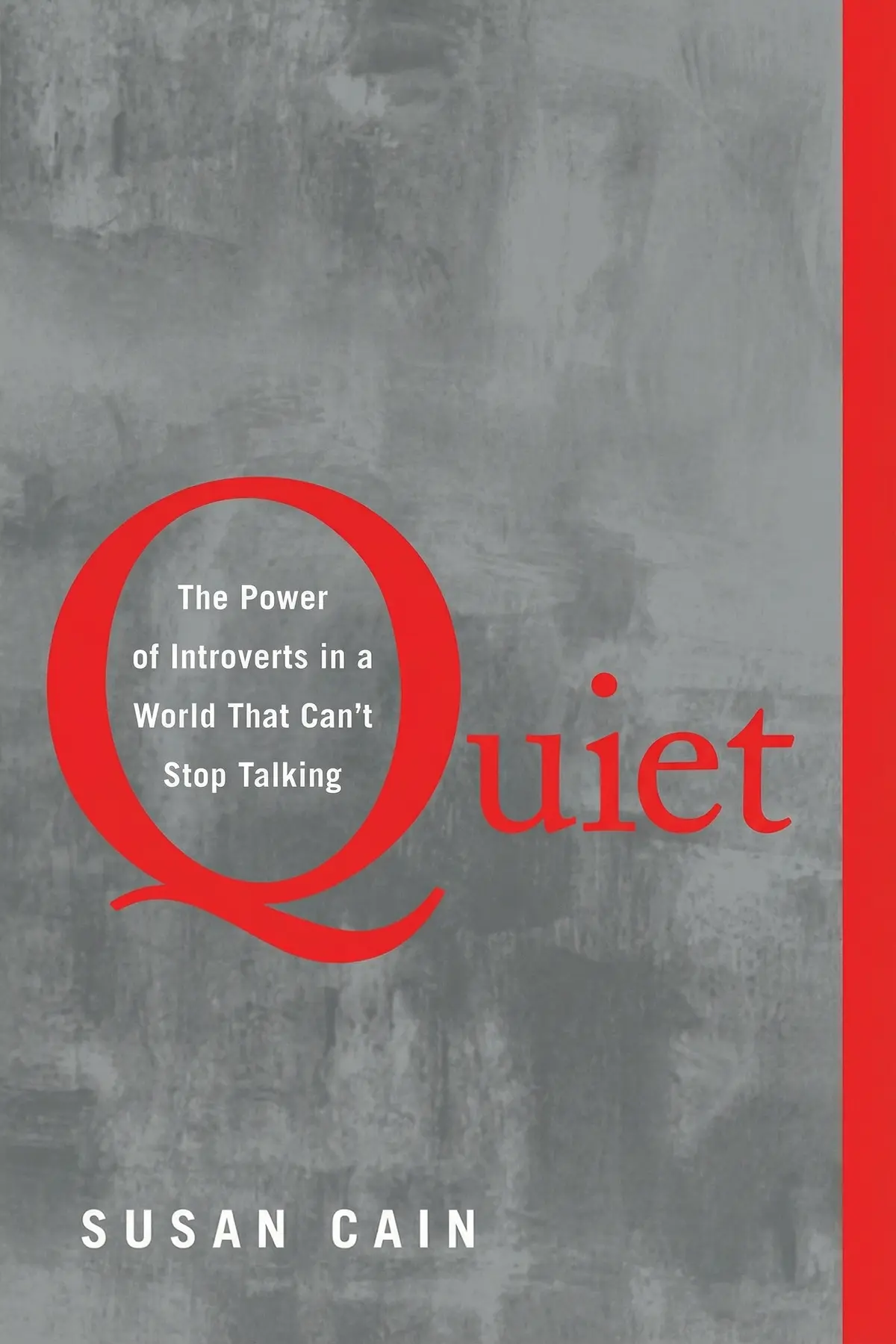
EnglishไทยBittersweet: How Sorrow and Longing Make Us Whole
By Susan Cain
Susan Cain shows why sorrow and longing belong beside joy. Accepting sadness through expressive writing, loving kindness meditation and a closer awareness of mortality can make everyday life feel richer and more connected.
Table of Content
1. Introduction
51 sec
If you tend to hide sadness behind a smile, Susan Cain has a finding worth hearing: people who accept their dark moods end up less stressed and more content than people who fight them. In Bittersweet, the author of Quiet argues that sorrow and longing are the other half of joy, the reason love feels precious and beauty stings. Her central claim is that when we turn away from the bitter side of life, we lose the sweet side with it.
The case runs from a cellist playing in the ruins of Sarajevo to a psychologist who wrote his way out of a bad spell in his marriage, and to the surprising happiness of the elderly. Along the way come habits to try this week: a short writing exercise, a meditation that turns pain into goodwill, and a gentler way to carry grief.
2. Let sorrow make your happiest moments sharper
1 min 43 sec
A man in a tuxedo carried a cello into a bombed market and kept returning while shells fell. What he played there reveals why the moments we treasure most are often the ones edged with loss.
3. Let sadness draw you closer to other people
1 min 52 sec
People replay one kind of favorite song far more often than any upbeat hit. The reason reaches back to the earliest humans, and it changes how you might respond when someone near you is hurting.
4. Stop forced smiles from making your pain louder
1 min 59 sec
A nation known for its smiles also reports high rates of anxiety and depression. Cain traces the gap to an old religious idea and to a simple trick the mind plays on anyone hiding a feeling.
5. Write your troubles down for twenty minutes
1 min 56 sec
A young psychologist caught in a loop of fights and drinking tried something that cost nothing and took minutes. His later experiments found effects that showed up months afterward, in blood pressure and at work.
6. Turn your own wound into care for others
2 min 04 sec
A poet who stopped speaking for years and an inventor who nearly gave up on life both found a use for their pain. An old Buddhist story explains why nobody gets to skip that test.
7. Remembering death makes ordinary days sweeter
1 min 53 sec
Psychologists searching for people inclined to forgive, love and feel grateful found them in an unexpected age group. Their secret is an awareness most of us spend our lives trying to avoid.
8. Carry your grief instead of closing it
1 min 47 sec
Modern advice tells mourners to let go and find closure. A story about Franz Kafka, a lost doll and a stack of letters offers a gentler, wiser idea of what grief can become.
9. Conclusion
1 min 11 sec
Cain’s book describes a culture in denial: one that plays down grief, shrinks loss and behaves as if death belonged to someone else. Her case is that this makes lives poorer, because a heart shut against sadness is also shut against real joy. The cellist in the Sarajevo rubble is her image of the alternative, grief and beauty held in the same moment, each making the other clearer.
The practice begins closer to home than that. Cain’s first suggestion is compassion toward yourself: talk to yourself with the gentleness you would offer a close friend who is hurting. When something weighs on you, give it twenty minutes on paper instead of a forced smile. When a good moment arrives, let the knowledge that it will pass deepen it. And try the metta wishes, starting with yourself and letting them ripple out to the people you love, to strangers and, slowly, to the rest of the world.
None of this takes the bitter out of life. It makes room for the sweetness that only comes alongside it, the kind Kafka promised a crying girl: love that returns in a different form.
About this book
What is this book about?
Many people are taught to treat sadness as a problem: smile through it, stay positive, find closure and move on. Susan Cain argues that this habit costs more than it saves. In Bittersweet, she makes the case that sorrow and joy arrive together, and that pushing away the first dulls the second. Cain builds her argument from striking stories and studies. A cellist plays for 22 days in the ruins of a Sarajevo market. A University of Michigan study finds that people replay bittersweet favorite songs far more often than happy ones. Psychologist James Pennebaker writes his way out of a spiral of fights and drinking, then shows in experiments that a few short writing sessions improve mood and health. Stanford's Laura Carstensen finds that the elderly, more aware that life is impermanent, are a group inclined toward happiness. Readers learn why compassion is an instinct, why hidden pain tends to grow, and how practices such as expressive writing and loving kindness meditation help. The book also offers a gentler way to carry grief, one that keeps love alive instead of demanding closure.
Book Information
Who it's for
Keeping a brave face
People who keep a brave face at work and feel the strain at home.
Tired of closure advice
Anyone grieving a loss who is tired of being told to find closure.
Hoping to comfort better
Managers, parents and friends who want to respond better when someone near them is hurting.
About the Author
Susan Cain
Susan Cain, born in 1968, is a New York Times bestselling author whose 2012 book Quiet reached number one on that list. In 2015 she co-founded Quiet Revolution, a company with projects in parenting, education, lifestyle and the workplace. Her 2016 book Quiet Power speaks to introverted children and teens and to their parents and teachers. A graduate of Princeton and Harvard Law School, she has given a TED talk on introverts that has been watched tens of millions of times.
Ratings & Reviews
Ratings at a glance

What people think
Listeners find this work both absorbing and perceptive, commending the superior prose and profound emotional depth. They value how the author integrates her own life stories while engaging both the mind and the body, with one listener mentioning that it provided the momentum they needed to progress. The narrative skill garners acclaim, as one listener characterizes the experience as a voyage through the more bittersweet facets of existence.
Top reviews
Pong
Ever wonder why a minor key in music feels more 'real' than a major one? Cain explores the beauty of longing and sorrow in a way that feels like a warm embrace for the melancholic soul. While some might find her personal anecdotes a bit tangential, I found the storytelling journey to be profoundly engaging and insightful. She balances the intellectual research with deep emotional resonance, helping me understand why I've always been drawn to rainy days and sad songs. This isn't just another self-help book; it’s a permission slip to feel the full spectrum of human experience without rushing to 'fix' the sadness. Truth is, this book helped me move forward by teaching me to value the shadows as much as the light. Her writing style is so fluid and compassionate that you can't help but feel seen. I highly recommend it for anyone who identifies as a deep feeler.
Show moreMats
Picked this up during a particularly heavy season of grief and found it to be exactly the companion I needed. Cain captures the essence of what it means to live with a 'deeply-feeling' heart, validating the beauty found in the intertwined nature of joy and pain. The way she weaves together art, music, and psychology creates a rich tapestry that felt both intellectual and emotional. It’s rare to find an author who shares her own vulnerabilities so openly while maintaining such a high level of research and insight. Frankly, it felt less like reading a textbook and more like having a long, meaningful conversation with a very wise friend. If you’re a connoisseur of the place where light and dark meet, you need this on your shelf. It’s an engaging exploration of the human soul that I won't soon forget.
Show moreSuthinee
Wow, Susan Cain has done it again by giving a name to a feeling I’ve had my entire life but could never describe. This is a masterful piece of storytelling that bridges the gap between the intellect and the heart. She uses her own personal experiences to anchor the research, making the concepts of 'longing' and 'sorrow' feel visceral rather than abstract. I was especially moved by the sections on how sadness can be a gateway to creativity and connection. The book is incredibly insightful, offering a new lens through which to view our most difficult emotions. It’s a gorgeous reminder that our wounds are often where the light enters us. Not gonna lie, I cried through several chapters, but in a way that felt healing rather than draining. This is essential reading for anyone who feels deeply.
Show moreRungtip
Finally got around to reading this and I am genuinely moved by how much it resonated with my own experiences. Cain engages both the mind and the body, exploring how our physical reactions to beauty and tragedy are deeply linked. The storytelling is top-notch, weaving together diverse threads from Sufism to C.S. Lewis to Leonard Cohen. It’s an incredibly engaging look at the human condition that encourages us to stop running from our shadows. Personally, I found the 'digressive' nature of the book to be part of its charm—it feels like a slow walk through a beautiful, slightly overgrown garden. This is a must-read for anyone who has ever felt 'too much' in a world that values 'not enough.' It offers deep emotional content that sticks with you long after you close the cover.
Show moreJeeranan
This book is a touching meditation on how our deepest longings and sorrows are actually our greatest strengths. Susan Cain has a gift for making complex psychological concepts feel accessible and deeply personal through her storytelling. I particularly loved the section on the 'bittersweet quiz'—scoring high made me feel finally understood in a world that demands constant positivity. While it occasionally meanders into weirdly spiritual territory, the core message about the value of the poignant is too important to ignore. It’s a journey that engages both the mind and the body, encouraging a move toward wholeness rather than just happiness. Not every chapter hit the mark for me, and some parts felt repetitive, but the overall impact was undeniably life-affirming. It’s an insightful look at why we need the dark to appreciate the light. Definitely worth the read if you enjoy introspective non-fiction.
Show morePaisley
After hearing so much buzz about this follow-up to Quiet, I was curious if Cain could strike gold twice. While this book is perhaps less 'urgent' than her work on introversion, it is arguably more profound in its emotional scope. She explores the 'longing for home' and the power of the sad-happy mix that defines so much of our greatest art and music. There were moments where the pacing slowed down and the content felt a bit repetitive, but the writing is so elegant that I didn't mind the detour. It’s an insightful look at how embracing our sorrow can lead to a more authentic way of living. If you appreciate the nuances of human emotion and don't mind a bit of a wandering narrative, you’ll find plenty to highlight here. It’s a deep emotional journey that really engages the mind.
Show moreRome
The chapter on 'The Bittersweet Quiz' was worth the price of admission alone. I’ve always been the person who prefers a sad movie to a blockbuster, and this book finally explained why that isn't a flaw. Cain’s exploration of the 'melancholy-loving' soul is both validating and deeply researched. Look, the book does wander a bit, and some of the transitions between topics are a little clunky. However, the emotional payoff is significant if you’re willing to follow her down those rabbit holes. It’s an engaging journey into the bittersweet aspects of life that we usually try to hide. I finished it feeling much more at peace with my own nostalgic tendencies and the way I process the world. It’s a beautiful, if somewhat disjointed, piece of work.
Show moreNoppadol
As someone who adored Quiet, I went into this with massive expectations that weren't quite met. The initial chapters on the power of a bittersweet temperament were fascinating and spoke to my inner Enneagram 4, but the narrative eventually felt a bit disjointed. Cain takes several digressions into spiritual territory that felt slightly out of place given the psychological framework established early on. To be fair, her prose is still beautiful and her voice is incredibly kind, but the structure lacked the urgency of her previous work. I enjoyed the parts about Leonard Cohen and the connection between creativity and sorrow, yet I frequently found myself losing the thread of her main argument. It is a lovely read for a rainy afternoon, but don't expect a tight, academic thesis. It felt more like a collection of thoughts than a cohesive book.
Show morePooja
Susan Cain is undoubtedly a talented writer, but this book felt more like a series of essays than a cohesive argument. While I appreciate the message that it’s okay to be sad, a lot of what was presented felt like common sense wrapped in very pretty prose. I enjoyed the historical and musical references, but the 'spiritual' turn in the middle of the book felt a bit forced and weirdly out of step with the rest of the text. To be fair, it’s a gentle and compassionate read, but it lacked the sharp, transformative insights I was hoping for after reading Quiet. It’s a nice enough book for those who want to feel seen, but it didn't provide many new tools for moving forward. I suspect I'll forget most of the specific details within a few weeks.
Show morePriya
Not what I expected at all, and unfortunately, it didn't work for me. I was looking for a rigorous psychological exploration of longing, but it quickly devolved into what felt like a collection of random, spiritual ramblings. The author mentions she isn't religious, yet the book is saturated with a vague mysticism that felt disjointed from the scientific promise of the intro. I kept waiting for a cohesive point to emerge, but instead, I got page after page of anecdotes that felt like common sense dressed up in flowery language. It’s certainly well-written in terms of the actual sentences, but the structure is so digressive that I struggled to stay focused. For me, it lacked the focus and 'aha!' moments that made her first book so impactful. I ended up skimming the last third just to be done with it.
Show moreQuestions about this book
What is the main idea of Bittersweet by Susan Cain?
Cain argues that sorrow and joy are bound together, so pushing away sadness also dulls happiness. She shows this through stories such as a cellist playing for 22 days in a bombed Sarajevo market, and through research on compassion, expressive writing and aging. Her message is that facing pain, failure and death openly leads to deeper connection, better health and more genuine joy than relentless positivity does.
Does Bittersweet say that staying positive is bad?
Cain argues that forced positivity backfires. Hiding a feeling makes it loom larger, a process psychologists call amplification, and buried emotions tend to surface elsewhere, as snapping at family or secret drinking. She cites a University of Toronto study in which people who accepted their negative emotions felt less stress and more well-being than their peers, even after bad events. Joy is welcome; pretending pain away is the problem.
What is the expressive writing exercise in Bittersweet?
It comes from psychologist James Pennebaker, who first wrote his way out of a spiral of fights, drinking and depression. In one of his studies, people wrote about real troubles for 20 minutes a day over three days, while a comparison group wrote about everyday topics. The first group felt calmer and happier, and months later reported lower blood pressure, fewer health problems and more success at work.
How can I apply the ideas in Bittersweet in daily life?
Start by speaking to yourself as kindly as you would to a hurting friend. When something weighs on you, write about it for 20 minutes instead of hiding it. Try the Buddhist metta meditation, sending simple wishes of well-being to yourself and then outward to others. And let small reminders that good moments pass help you savor them, as Laura Carstensen’s research suggests older people naturally do.
Who should read Bittersweet?
It suits people who feel pressure to look fine when they are not, anyone grieving who has been told to find closure, and those who want to support friends, children or colleagues through hard times. It also speaks to listeners who are drawn to sad music and beauty that fades, and who want to understand why those feelings matter so much.
Featured in

Readers also enjoyed

ADHD an A-Z: Figuring It Out Step by Step
Leanne Maskell

A Liberated Mind: How to Pivot Toward What Matters
Steven C. Hayes




Acting with Power: Why We Are More Powerful Than We Believe
Deborah Gruenfeld



AUDIO SUMMARY AVAILABLE
Listen to Bittersweet in 15 minutes
Get the key ideas from Bittersweet by Susan Cain, plus 5,000+ more nonfiction titles.
- 5,000+ titles
- Listen as much as you want
- 7-day free trial
- Cancel anytime









