

13 min 18 sec
Available in: English
Big Weed: An Entrepreneur’s High-Stakes Adventures in the Budding Legal Marijuana Business
A Colorado dispensary founder shows how to build a legal cannabis company like any serious business: plan the strategy, grow at a scale that pays, build a trusted brand and prepare for banks that refuse your money.
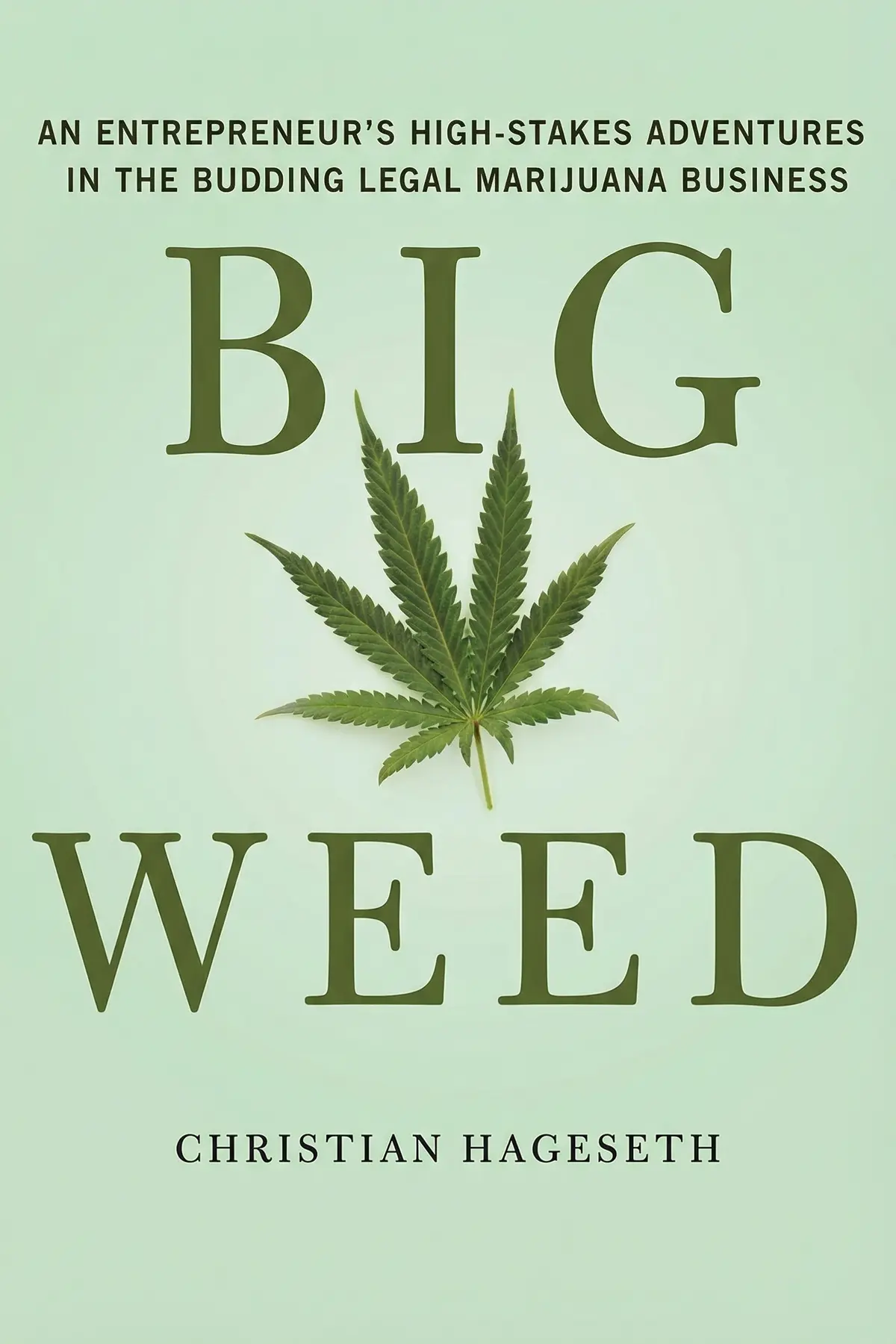
Table of Content
1. Introduction
59 sec
Plenty of people still picture marijuana as a hobby for stoners and a trade for street dealers, yet in several US states it has become a taxed, licensed industry with brands and accountants. In Big Weed, Christian Hageseth, who left two decades of office jobs to open a Colorado dispensary, argues that the winners in this new market are the people who run it exactly like any other business.
Renting a shop and stocking it with bud is how most newcomers fail. A clear strategy, growing at a scale that pays, a trusted brand and a sober view of the legal obstacles are what let the survivors last.
His account moves from why legalization is happening at all, through the hard lessons of his first harvests, to a banking system that will not take his deposits and a market that large companies will soon enter. Anyone weighing a venture in a distrusted, fast-changing field gets a set of questions worth asking before spending any money.
2. Follow the tax money to see where laws go
1 min 50 sec
A national ban on drinking once cost the government millions and changed nothing about what people did. Hageseth sees the same pattern repeating today, and a single state’s tax receipts explain why politicians are paying attention.
3. Expect old fears and answer them with facts
1 min 56 sec
Friends and colleagues doubted Hageseth the moment he went legal. He traces their suspicion to political choices made long ago and to a government report that said the opposite and was simply set aside.
4. Plan for scale before your first harvest
1 min 42 sec
Three of Hageseth’s early harvests failed before he scaled up production and found the right balance. The fix sat in an unexpected corner of the operation and ran against the instinct to start small.
5. Turn product knowledge into a brand customers trust
1 min 48 sec
Spending the workday sampling the stock sounds like the perk of the job. Hageseth argues it is the fastest route to failure, and he shows what a serious seller studies first.
6. Run a cash business when banks say no
1 min 49 sec
A legal company with real profits should be able to open a bank account. Cannabis sellers cannot, and the reason exposes a split between levels of government that shapes nearly every working day.
7. Spot the openings as the market grows up
1 min 58 sec
Cannabis cigarettes at the corner shop, hemp in car doors and a standard serving like a shot of vodka. Hageseth sketches where the industry is heading and where small sellers might still find room.
8. Conclusion
1 min 16 sec
Hageseth writes about a product many people still mention in a lowered voice, yet the lessons he draws are some of the plainest in business. The failures he describes came from treating cannabis as special: shops opened without a plan, harvests grown at the wrong size. The successes came from treating it as ordinary, with a brand, a cost model and an honest picture of what customers need to learn.
He also shows that a distrusted market is shaped by history and politics as much as by demand. A Senate report ignored in 1972, banks that refuse deposits and a tax bill paid in cash all belong to the same picture.
If you are weighing a venture in a field that is newly legal or still suspect, find the cost that only scale can tame, decide how you will explain the product to people who fear it, and learn which services you may be denied before you need them. And when legalization comes up in conversation, try his own test: weigh what your community spends keeping cannabis illegal against what it could collect in taxes from legal sales.
The ban on alcohol failed and was lifted, and Hageseth is betting that the same sums will settle the question of cannabis.
About this book
What is this book about?
Many people still picture marijuana as a pastime for stoners and a trade for street dealers. In several US states it is now a licensed, taxed industry, and Christian Hageseth, who left 20 years of office work to open a dispensary, argues that it rewards the same discipline as any other market. He explains why legalization is spreading, comparing it to the failed ban on alcohol in the 1920s and pointing to Colorado's tax revenue. He traces the plant's bad reputation to political choices and a 1972 Senate report that was ignored. Then he turns to the hard lessons of running the business: three failed harvests before he found the right growing scale, the brand he built under the name Green Man Cannabis, and the federal rules that keep cannabis sellers out of banks and paying every bill in cash. Readers get a grounded view of a young industry and its coming changes, from big tobacco and hemp to consistently dosed products, plus practical questions to ask before entering any contested market.
Book Information
Who it's for
Founders weighing stigmatized markets
Entrepreneurs considering a newly legal or stigmatized market who want lessons on scale, branding and regulation.
Career switchers exploring cannabis
Career switchers curious about how the legal cannabis industry actually operates day to day.
Curious about legalization economics
Readers who want the business and tax arguments in the legalization debate.
About the Author
Christian Hageseth
Christian Hageseth was born in Pensacola, Florida, and grew up in Fort Collins, Colorado. After a political science degree from Arizona State University in 1992, he spent 20 years in white-collar jobs before opening his first dispensary. In July 2009 he founded TGM Beneficial Care, LLC, and he later founded Green Man Cannabis and the consulting firm American Cannabis Partners. He also campaigns for marijuana rights. Big Weed, published in 2015, is his first book.
Ratings & Reviews
Ratings at a glance

What people think
Listeners find the book very easy to follow and appreciate how readable it is. Additionally, the level of information receives positive remarks, with one listener noting that it provides valuable perspectives on the exploding new field of legal marijuana business. Conversely, the quality of the narrative gets mixed feedback, as some listeners describe it as an enjoyable story that lacks much substance.
Top reviews
Mikael
Wow, what an eye-opening journey through the wild west of the marijuana industry. I live in a state where things are still very much under lock and key, so seeing the Colorado perspective was fascinating. Hageseth comes across as a true pioneer who isn’t afraid to show the messy side of building a business. He talks about the failures just as much as the wins, which makes the whole "ganjapreneur" title feel earned rather than just a marketing gimmick. Even if you aren't a consumer, the way he navigates the legal hurdles and social skepticism is genuinely inspiring. This is a story about resilience and seeing an opportunity where everyone else only sees a problem. I couldn't put it down once I started.
Show moreFrida
The chapter on the future of federal legalization alone makes this book a mandatory read for anyone interested in the space. Hageseth lays out a vision for the industry that is both logical and incredibly daring. It’s rare to find a business book that manages to be this educational while still reading like a fast-paced adventure novel. I was impressed by how he handled the constant setbacks, from legal red tape to the sheer skepticism of the public. He doesn't sugarcoat the difficulty of being a "corporate wonk" in a world that used to belong entirely to underground growers. This is a brilliant look at how a vilified flower is becoming a mainstream commodity. Truly an inspiring read for any aspiring entrepreneur.
Show moreDarawan
This book offers a compelling roadmap for anyone tracking the shift from illicit markets to corporate boardrooms. Hageseth frames his transition from a real estate speculator to a "ganjapreneur" with enough grit to keep it interesting without getting bogged down in too much technical jargon. While some might find his tone a bit self-congratulatory, the sheer logistics of navigating Colorado’s early legal landscape provide a great education. I especially appreciated the breakdown of how risk management differs when you’re dealing with a federally illegal substance. It isn’t just about the plant; it’s about the massive infrastructure required to grow a legitimate brand from scratch. For a business memoir, it moves quickly and keeps you engaged with the high-stakes reality of the industry.
Show moreAhmed
Finally got around to reading this, and it’s a solid look at the logistical nightmare of early cannabis legalization. Most people think starting a weed business is just about growing plants, but Hageseth highlights the brutal reality of banking restrictions and shifting local laws. The "high-stakes adventure" tagline isn't just hyperbole; the guy really put everything on the line after his real estate career stalled. It’s a fast-paced read that captures the frantic energy of a gold rush. I do wish there was more depth regarding the actual cultivation side, but as a business memoir, it hits the mark. The insights into how the industry will eventually consolidate into "Big Weed" were particularly thought-provoking for anyone looking at the long-term horizon.
Show moreKwan
Picked this up because I wanted to understand the transition from the black market to a corporate structure. Hageseth’s background in real estate commodities really shines through in how he analyzes the market potential of cannabis. He approaches the plant not just as a drug, but as a massive economic engine that is currently being hamstrung by outdated federal policies. To be fair, he does lean into the "marijuana snobbery" quite a bit, which might roll some eyes. But if you can get past the occasional ego, the core story of building Green Man Cannabis is a masterclass in persistence. It’s a highly readable account that bridges the gap between the activist roots and the corporate future of weed.
Show moreChanida
After hearing so much about the "green rush" in Colorado, I wanted a perspective from someone actually on the ground floor. Hageseth provides exactly that, delivering a narrative that is both easy to follow and filled with valuable insights into a complex field. The writing style is very approachable, making even the boring parts of business law feel like a high-stakes game. My only real gripe is that he glosses over some of the more technical aspects of the business in favor of telling "cool" stories. Still, the way he describes the awards his strains won and the breeders he worked with gives the book a lot of heart. It’s a great example of how to pivot a career in a totally new direction.
Show moreSomboon
In my experience, most books about the cannabis industry are either too technical or way too "stoner-centric." Big Weed finds a comfortable middle ground by focusing on the entrepreneurial spirit required to survive such a volatile market. Hageseth doesn’t shy away from the fact that he was an outsider, a corporate guy coming into a world he didn't fully understand at first. That vulnerability makes the successes feel more significant. While I think he oversimplifies some of the branding comparisons—his take on the coffee industry felt a bit disconnected from reality—the general business principles he applies are sound. It's an entertaining, quick read for anyone who wants to see how a "failed" real estate speculator found a second life in legal pot.
Show moreChaiwat
Ever wonder what happens when a corporate executive decides to start a grow house? Hageseth tries to mimic the "Shoe Dog" vibe here, weaving a narrative about his personal evolution alongside the rise of Green Man Cannabis. Truth is, the story is highly readable but feels a bit thin on actual actionable advice for prospective growers. It’s more of a personal diary regarding his setbacks with banking and public perception than a "how-to" guide. I found the comparisons to Ben & Jerry’s a bit weird, especially considering how big those corporations actually are compared to his vision of a local craft market. It’s an entertaining afternoon read, but don't expect a deep dive into the horticulture or complex economics of the weed world.
Show moreSamuel
As someone who has been curious about the "behind the curtain" operations of dispensaries, I found this to be a decent introduction. It isn't exactly earth-shattering information, but Hageseth is a good storyteller who knows how to keep a narrative moving. Look, the book is definitely self-promotional, and he occasionally comes off as a bit arrogant regarding his "street cred" in the industry. However, the descriptions of the various strains and the activists he met along the way add a nice layer of flavor to the business talk. It’s more of a "peek inside" for the curious observer than a manual for the serious entrepreneur. If you want a quick, entertaining story about a guy reinventing himself, this is worth a look.
Show moreJai
Not what I expected from a book that claims to be a definitive guide to the "budding" legal business. Frankly, Hageseth spends way too much time talking about his own greatness and not enough time on the actual industry dynamics. He makes several strange claims about consumer loyalty that just didn't ring true to me, like his odd take on coffee roasts and brand power. The writing is smooth enough, but the substance is lacking if you’ve already been following the news about legalization over the last few years. It felt more like a long advertisement for his company than an objective look at the market. Plus, some of the new-age reflections at the end felt totally out of place for a business book.
Show moreQuestions about this book
What is the main idea of Big Weed by Christian Hageseth?
Hageseth argues that legal marijuana is a business like any other and rewards the same discipline. Sellers who simply rent a shop and buy stock usually fail. Success comes from a clear strategy, growing at an efficient scale, deep product knowledge and a trusted brand, combined with realistic planning for the stigma and legal barriers left over from decades of prohibition.
Why can't legal marijuana businesses use banks?
Hageseth explains that marijuana remains illegal under US federal law and in many states, and deposits in US banks are backed by the federal government. Federal authorities can therefore refuse accounts to anyone in a trade they consider illegal. Legal sellers end up paying electricity, gas and even taxes in cash, which takes time and makes carrying large sums of money risky.
What did Hageseth learn from his failed harvests?
Cannabis needs a lot of light, which creates heat and humidity that harm the plants, so growers must run air conditioning that uses a great deal of energy. One large unit costs less to run than several small ones, but only if it cools enough plants. After three failed harvests, Hageseth expanded production and found a size where costs and output balanced.
How does Hageseth think the cannabis industry will change?
He expects tobacco and large agricultural companies to enter the market, bigger firms to buy small dispensaries and national brands to spread. He sees a possible return for hemp, already used in BMW and Mercedes-Benz door panels. He also predicts a move toward consistently dosed servings, similar to standard alcohol measures, and a shift in federal policy as demand and tax needs grow.
Who should read Big Weed?
It suits entrepreneurs eyeing a young or distrusted market, people thinking of working in legal cannabis, and anyone who wants the economic side of the legalization debate. The book offers a founder’s lessons on scale, branding and banking barriers, plus historical context such as the 1920s alcohol ban and a 1972 Senate report on marijuana that was ignored.
Readers also enjoyed


7 Powers: The Foundations of Business Strategy
Hamilton Helmer



Alibaba: The House That Jack Ma Built
Duncan Clark


Be A Free Range Human: Escape the 9 to 5, Create a Life You Love,
Marianne Cantwell

Be Obsessed or Be Average
Grant Cardone
Being Boss: Take Control of Your Work and Live Life on Your
Kathleen Shannon
AUDIO SUMMARY AVAILABLE
Listen to Big Weed in 15 minutes
Get the key ideas from Big Weed by Christian Hageseth, plus 5,000+ more nonfiction titles.
- 5,000+ titles
- Listen as much as you want
- 7-day free trial
- Cancel anytime









