Staring at the Sun: Overcoming the Terror of Death
Irvin D. Yalom
 English
A candid look at how one of psychiatry's best-known therapists dealt with a painful family, a hard-won career, his own fear of death and a late happiness, and what his life suggests about facing ours.
1 min 06 sec
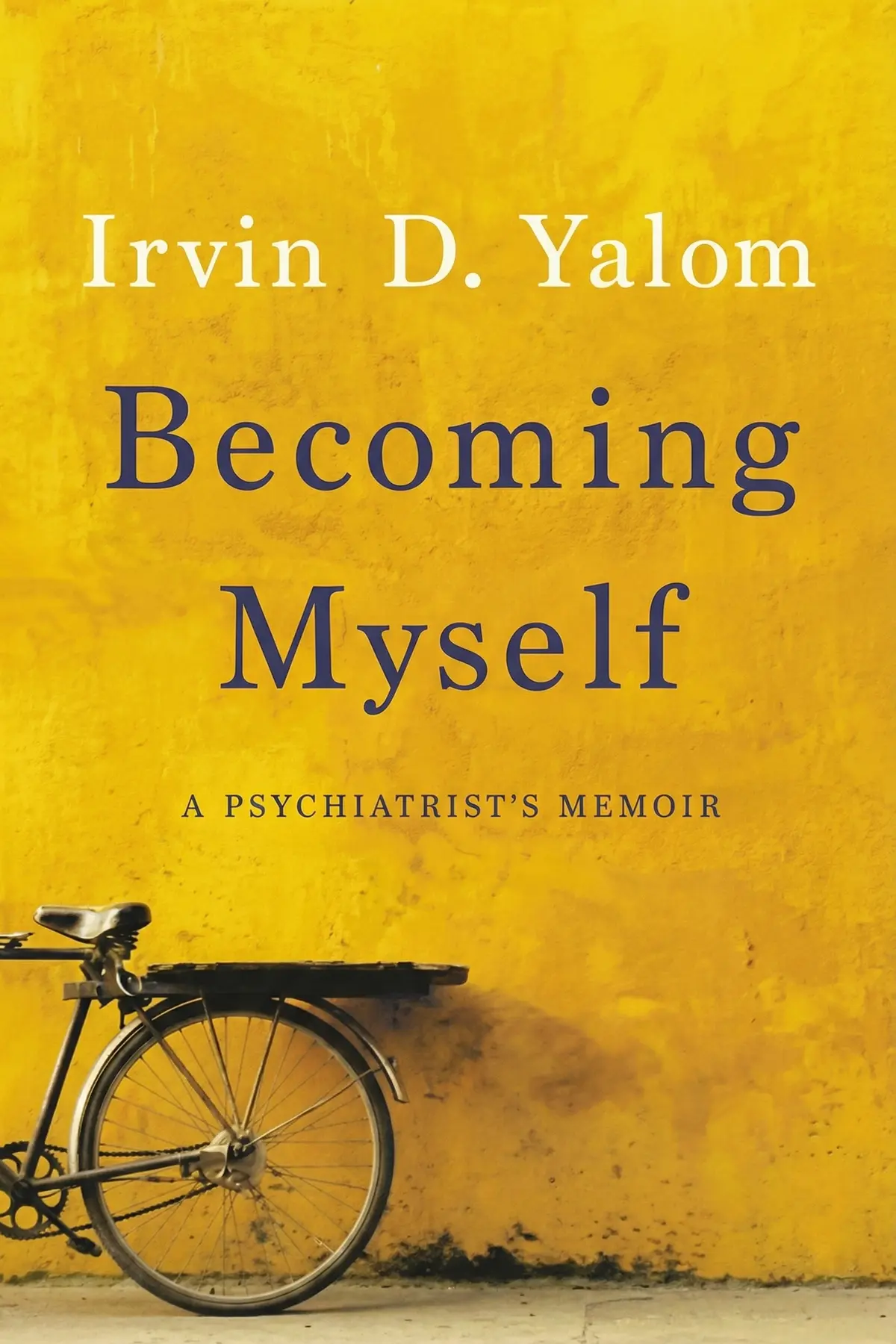
Most of us carry a low hum of worry about who we are, what our lives are for and how they will end, and we rarely stop long enough to face it. In Becoming Myself, psychiatrist Irvin D. Yalom shows that even a man who spent a long career helping others with those questions never escaped them himself. That admission is the book’s first gift: the fear is not a sign you are doing life wrong.
Yalom, a founder of existential psychotherapy, tells his story with unusual candor, from a frightening night in his family’s home in Washington, DC, to his ninth decade. Followed closely, his life makes one argument. The questions that unsettle us most, about family, purpose and death, lose some of their grip when we look at them directly, and the looking never has to stop. Along the way there is plenty to borrow: a way past what your own family got wrong, a way to find your work, and a steadier stance toward mortality.
1 min 55 sec
One terrible sentence shouted in panic changed how a boy saw his mother for years. What he did with that wound decades later says a lot about which family ties can be repaired and which must be built new.
1 min 57 sec
A doctor walked through the door before dawn, and a frightened teenager knew what he wanted to do with his life. Getting there meant beating odds that had nothing to do with talent.
2 min 05 sec
A young psychiatrist felt his profession was missing something, and he found it in an unlikely place. The four themes he put at the center of therapy are the ones most of us spend our lives stepping around.
1 min 57 sec
A boy on a red bicycle read his way through the library’s biographies, alphabetically. Decades later, that private habit became a second career that took therapy far beyond the clinic.
1 min 51 sec
The man who built a therapy around death anxiety still jumps out of bed from nightmares about it. Past eighty, he also reports something nobody would predict from that confession.
1 min 16 sec
Becoming Myself is the story of a man who never finished becoming. A boy screamed at by his mother built a warm, crowded home. A student turned away by 18 medical schools found his place through the nineteenth. A doctor who found his field too narrow borrowed from philosophers, then carried their questions into novels. And a man who feared he would die at 69 found, in his eighties, a happiness he had not known before. None of it came from avoiding the hard questions. Each step came from turning toward them.
His life points to two things worth doing. Name what really sits behind your background anxiety, using his four themes of isolation, death, freedom and meaning, and talk about it, ideally with a therapist. Yalom himself wishes he had seen one during his sleepless college years. And keep growing in your work and in the people you love, whatever your age, because at the end of a long life he still does both, six days a week.
If a master therapist still finds these questions worth facing after a lifetime of practice, they are probably worth facing for you too.
Many people live with a low background anxiety about who they are, what their life is for and how it will end. Few stop long enough to look at it. Irvin D. Yalom spent his career helping patients do exactly that, and in this memoir he turns the same honesty on himself. He tells of a mother who blamed him, at 14, on the night his father was seized by chest pains, and of the high school sweetheart who became his wife for more than sixty years. There are the Jewish quotas that turned 18 of his 19 medical school applications into rejections, the book by Rollo May that sent him to philosophy, and the years at Stanford where he reshaped group therapy and founded existential therapy. Then come the novels that carried those ideas to the public and, in his ninth decade, the death anxiety he still feels. What readers get is an inside view of how existential therapy grew out of one man's life. The memoir also offers a practical lens on isolation, death, freedom and meaning, and the reassurance that even the expert fears what you fear and keeps growing anyway.
People living with a background anxiety about purpose, identity or death who want an honest companion.
Readers drawn to therapy, or considering it, who want to see how a great therapist thinks.
Anyone carrying a strained family history and wondering what to build from it.
Irvin D. Yalom was born in Washington, DC, in 1931 and earned his medical degree from Boston University School of Medicine in 1956. He joined the Stanford faculty in 1963, became known for teaching group psychotherapy and developed a model of existential psychotherapy. In 2000 the American Psychiatric Association gave him the Oskar Pfister Award. Among his best-selling novels are The Spinoza Problem, The Schopenhauer Cure and When Nietzsche Wept.

Listeners describe this memoir as skillfully composed and perceptive, commending its profound wisdom and vast knowledge. The narrative feels deeply personal and sincere, with one listener noting how it provides an intimate look into a life well-lived. While some listeners find the material engaging, others mention it gets rather boring. Listeners value the book's candidness and motivational tone, with one review highlighting how it offers a deeper awareness of life's precious transiency.
Yalom’s work has always felt like a warm conversation with a wise grandfather, and this memoir is no exception. It’s an intimate look at a life dedicated to the messy, beautiful reality of the human condition. I was particularly moved by the sections on his childhood; the struggle of being a Jewish boy in a rough neighborhood adds so much depth to his later empathy. While some find the professional details dry, I appreciated seeing the scaffolding behind his famous books. It’s not just about his success, but the constant 'becoming'—the self-doubt and the persistent drive to understand others. His relationship with Marilyn is portrayed with such quiet devotion that it makes the existential fears of aging feel a bit less daunting. This is essential reading for anyone who has ever found solace in his clinical tales.
Show moreWhat struck me most about this autobiography was the sheer heart behind the intellectualism. Yalom doesn’t shy away from his own insecurities or the 'self-created' myth he once lived by. Seeing him grapple with mortality while reflecting on his childhood in D.C. makes his existential theories feel lived-in and authentic. The truth is, most memoirs by giants in their field feel like ego-trips, but Yalom manages to keep it grounded in the patient-therapist relationship. I found his thoughts on Marcus Aurelius particularly poignant; the idea that our opinions are what truly hurt us is something I’ll be chewing on for a long time. It’s a masterclass in aging with grace and continuing to seek personal growth even in the ninth decade of life.
Show moreThere is an undeniable magic in reading a life story that feels this complete. Yalom’s memoir is a beautiful tapestry of professional grit and personal tenderness. I was captivated by his transition from clinical manuals to narrative fiction, proving that stories are often our best teachers. His vulnerability about seeking his own therapy throughout his life was incredibly refreshing; it reinforces the idea that we are all 'becoming' until the very end. The book captures a deeper awareness of life's precious transiency that only someone of his age and experience could articulate. It’s a gift to his readers—a final, intimate session with a therapist who has seen it all and still believes in the power of human connection.
Show moreAfter hearing so much about Yalom’s clinical work, seeing the man behind the desk was a revelation. This memoir is deeply personal and full of heart, especially when he discusses his lifelong romance with his wife, Marilyn. Their partnership is the backbone of the book, providing a stabilizing force against the heavy themes of death and isolation he treats in his patients. Not gonna lie, I teared up a few times during the final reflections on aging. He writes with such a clear, accessible style that makes complex psychiatric concepts feel like common sense. It’s a life well-lived and beautifully recorded. This book isn't just for therapists; it's for anyone trying to navigate the business of being human.
Show moreA life well-lived deserves a chronicler as skilled as Yalom, and who better to do it than the man himself? From the roach-infested streets of his youth to the heights of Stanford academia, the trajectory of his career is nothing short of inspirational. I appreciated his candor about the 'teaching tales' he uses to illustrate points; it shows a level of self-awareness most biographers lack. Even the parts that felt a bit like a travelogue were charming in their own way, showing a man who truly enjoyed the fruits of his hard work. This book is a testament to the fact that we are never finished products. We are always in a state of becoming, evolving through every patient met and every book written.
Show morePicked this up after a recommendation from a colleague, and I’m glad I did. Yalom offers an encyclopedic level of insight into the evolution of modern psychiatry, especially his pushback against the 'diagnostic categories' forced on us by insurance companies. He reminds us that the human connection is the real medicine, not just a list of symptoms. I loved the story about the rabbis and the spoons in heaven and hell; it perfectly encapsulates his humanistic philosophy. Look, it’s not a perfect book—the pacing slows down significantly when he starts recounting his travel stories—but the wisdom contained in the first half is worth the price of admission. It’s an honest, if slightly self-congratulatory, look back at a career that truly changed the field.
Show moreThe early chapters about Yalom's upbringing were easily the highlight for me. Hearing about the rats, the roaches, and the drive to escape his father’s grocery store provides a gritty context to his later successes. It’s a fascinating journey from a lonely boy to a world-renowned psychiatrist, even if the narrative feels a bit too 'composed' at times. Gotta say, I was less interested in the play-by-play of how he wrote each novel, which felt like filler for those of us who have already read his entire bibliography. Still, his critique of the current state of mental healthcare is incredibly sharp and necessary. He remains a beacon for those of us who believe in the power of the 'talking cure' over just handing out pills.
Show moreEver wonder what the architect of existential therapy thinks about when he’s alone? This book gives you a glimpse. While I found some of the later chapters a bit repetitive, the overall wisdom is undeniable. Yalom’s focus on the therapeutic relationship as a microcosm of life is a powerful reminder for anyone in the helping professions. Personally, I found the details about his early gambling 'bookie' days hilarious and humanizing. It’s not all heavy philosophy; there’s a lot of humor and grit here too. He admits to his own need for praise, which makes the self-congratulatory tone easier to swallow. It’s a long, winding road of a book, but one that feels like it’s leading somewhere meaningful.
Show moreIs this a memoir or a CV of professional achievements? I’ve adored his fiction for years, but the man on the page here feels surprisingly distant from the vulnerability he preaches. To be fair, the descriptions of his early clinical work and the birth of group therapy are fascinating for a student of psychology. However, the later half of the book descends into what feels like a polished highlight reel of exotic vacations and name-dropping. I found the clarity of his eighty-year-old memories of childhood dreams a bit suspect—almost too neatly arranged to fit his narrative. It’s a decent enough read if you want to know the 'how' of his books, but if you’re looking for the deep existential struggles he usually explores, you might find this version of Yalom a bit too comfortable.
Show moreFrankly, I expected more from the man who wrote 'Love's Executioner.' This felt less like a deep dive into the soul and more like a collection of polished anecdotes for a dinner party. The chapters regarding his various holidays and the ancient coins he collected in Cyprus just didn't land for me. Where was the existential angst? Where were the hard questions about his own family dynamics? He mentions his 'perfect' marriage and successful kids in a way that feels almost dismissive of the complexities of real life. It’s great that he’s had such a wonderful run, but it doesn't make for a compelling memoir. If you aren’t a die-hard fan or a professional in the psychiatric community, you’ll probably find this a bit of a slog.
Show moreIt is Yalom’s memoir, following his life from a tense childhood in Washington, DC, through medical school, his work at Stanford and his career as a novelist, to his ninth decade. He describes how he reshaped group therapy, developed existential therapy around isolation, death, freedom and meaning, and still struggles with death anxiety while finding a new peace late in life.
Yalom felt the two main approaches of his time, psychoanalytic and biopsychological, left too much out. Inspired by Rollo May’s book Existence and his own study of philosophy, he put four universal themes at the center of treatment: isolation, death, freedom and meaning. He argued that facing them directly helps patients more, easing fear of death and reconnecting them with purpose.
Yes, and he says so openly. Until he turned 70 he believed he would die at 69, as his father had, and nightmares about mortality still wake him. Yet in his eighties he describes a peace and happiness he had not felt before. He still loves his work, writing and seeing patients six days a week.
It suits readers wrestling with questions of identity, purpose or mortality, people curious about therapy from the therapist’s side, and anyone with a difficult family history. Readers of Yalom’s novels, such as When Nietzsche Wept, will also see how his clinical work and his fiction grew from the same life.
His story suggests turning toward hard questions instead of around them. You can use his four themes, isolation, death, freedom and meaning, to name what lies behind your anxiety, and consider talking to a therapist, which he wishes he had done in his anxious college years. He also shows that you can build the close family you never had.
Jonathan Eig


J. Craig Venter


Alcoholics Anonymous World Services

Ishmael Beah

James Herriot


Barack Obama
AUDIO SUMMARY AVAILABLE
Get the key ideas from Becoming Myself by Irvin D. Yalom, plus 5,000+ more nonfiction titles.