

13 min 44 sec
Available in: English
Becoming FDR: The Personal Crisis That Made a President
Shows how a polio infection in midlife turned Franklin Roosevelt from a privileged, self-absorbed politician into an empathetic leader, and how Eleanor Roosevelt became a political force while he fought to recover.
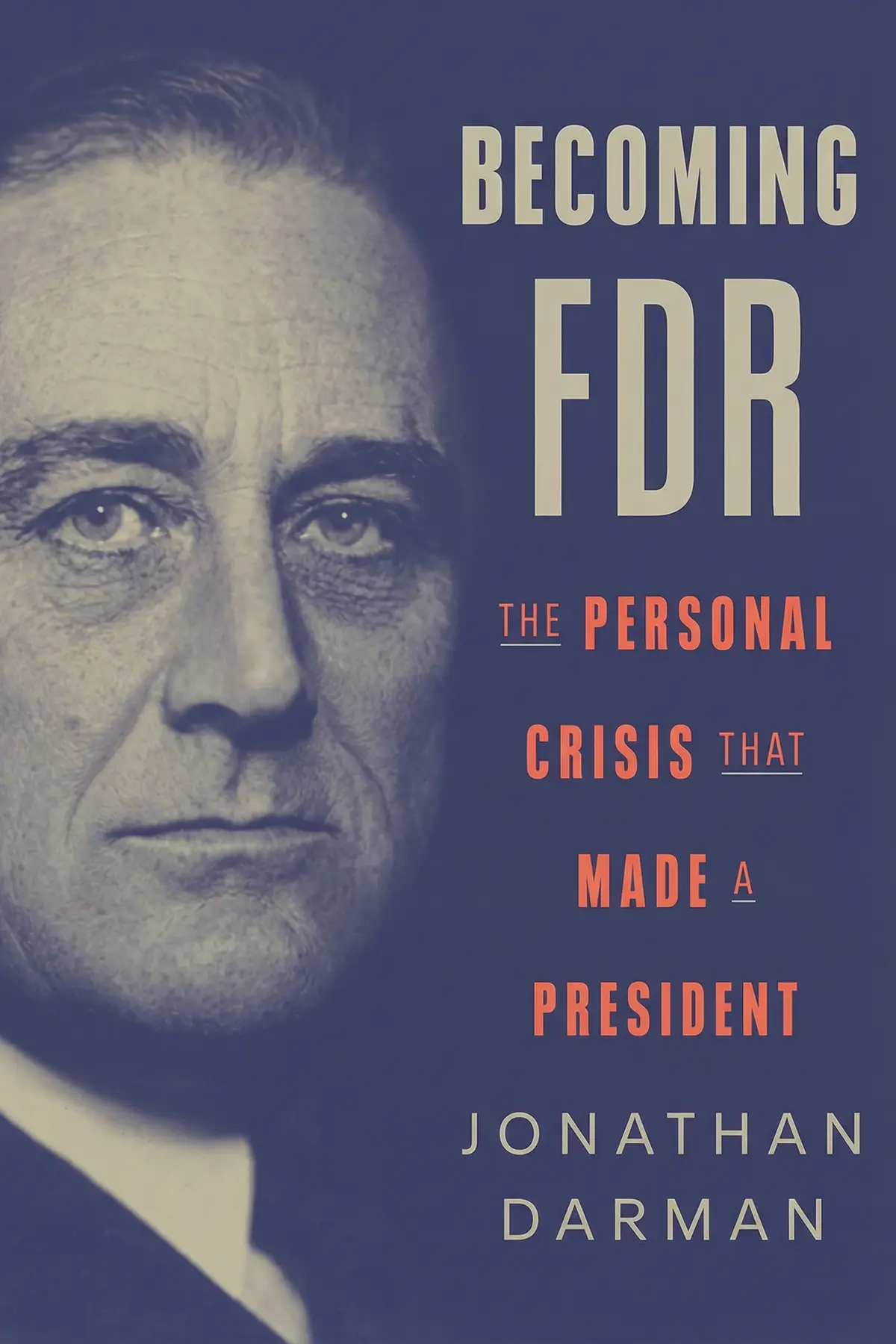
Table of Content
1. Introduction
1 min 01 sec
A setback that seems to end a career can be the very thing that builds a person worth following. In Becoming FDR, political journalist Jonathan Darman makes that case through Franklin Delano Roosevelt, who was struck down by polio at 39 and came out of it a different man. Darman argues that perhaps no other politician’s life splits so sharply into before and after.
Before, Roosevelt was a tall, graceful heir from upstate New York who, by his own admission, thought mostly about himself. After, he was a man who could not walk unaided yet projected strength in public. The struggle in between, along with Eleanor Roosevelt’s surprising rise, gave him the empathy and grit he would later bring to the Great Depression and the Second World War.
Follow the story and you see how character gets made under pressure, and what that can mean for anyone facing a crisis of their own.
2. Understand the summer that split Roosevelt's life
2 min 06 sec
A tired evening on a family holiday turned into weeks of fever and a wrong diagnosis. The mistake felt like good news at first, which made the truth that followed even harder to bear.
3. A crisis can force a broken partnership to rebuild
1 min 57 sec
Eleanor had already started planning a life apart from her unfaithful husband. Then his illness struck when the timing could hardly have been worse for either of them, and it rewrote the roles each would play.
4. Step out of view to rebuild your strength
1 min 47 sec
Roosevelt’s body had been wearing down long before the fever hit. His answer was to vanish from public life for years, on a boat few people knew about, and the choice paid off.
5. Answer the small questions to win the big ones
1 min 53 sec
Reporters wanted to know about Eleanor’s hairstyle and her children. She found a way to turn those soft questions into a megaphone, and within a few years she was a national political figure.
6. Turn your weakness into the moment people remember
1 min 52 sec
At a shouting, divided convention, Roosevelt had to be carried to the stage in his wheelchair. Radio listeners at home heard something very different from what the delegates saw, and to them he sounded like the star of the event.
7. Build trust as a leader by sharing your struggles
1 min 49 sec
A run-down spa in rural Georgia became Roosevelt’s personal mission. What started as treatment for his own legs ended up changing medical thinking, and winning him allies he would need on the road to the presidency.
8. Conclusion
1 min 19 sec
Roosevelt’s story turns the usual idea of a comeback around. Polio took away the body that had carried his early career, and what he built in its place was a character his younger self would hardly have recognized. The privileged son who thought mostly of himself became a man who whispered encouragement to strangers at rallies and bought a broken-down spa so others could heal. He also learned that a silent room can say more than applause. Eleanor changed just as deeply. Pushed into public life by his collapse, she became a political force, and the two formed a close partnership that was no longer romantic but lasted, widening to include other lifelong companions.
Darman’s point is that the empathy, grit and determination Roosevelt needed to survive his illness were the same strengths he later used to guide a country through dark years. When a setback hits, ask what it might be ending in you as well as what it takes. Protect the slow work of recovery from an audience if you need to. And look for the people who share your struggle, because helping them may be where real trust begins.
The hush in Madison Square Garden lasted only a moment, but it was the sound of a new kind of leader rising to his feet.
About this book
What is this book about?
Franklin Roosevelt seemed to have everything at 39: wealth, a famous name, good looks and a clear path toward the White House. Then, in the summer of 1921, a fever on a family holiday left him unable to stand. A local doctor got the diagnosis wrong, the real one was polio, and Roosevelt lost control of his body below the waist. Jonathan Darman argues that this crisis split Roosevelt's life into a before and an after. The charming golden boy who thought mostly of himself gave way to a man shaped by daily struggle, stubborn optimism and real concern for others who suffered. Eleanor Roosevelt changed too. Hurt by his very public affair and already planning a separate life, she became his nurse and then rose to rank among the most influential women in the country's political world. The book follows the private recovery on a Florida barge, Eleanor's rise through reform circles and clever press work, the 1924 convention where Roosevelt turned his disability into a moment of strength, and the Georgia spa he rebuilt for fellow polio survivors. Readers see how character gets made under pressure, and why the hardest years of Roosevelt's life prepared him to lead through depression and war.
Book Information
Who it's for
Presidential history buffs
Readers of presidential history who want to know how Franklin Roosevelt became the leader he was.
Team leads and managers
Managers and team leads curious how hardship can build empathy and authority.
Recovering from a setback
People recovering from illness or a career setback who want a real story of rebuilding.
About the Author
Jonathan Darman
Jonathan Darman writes about American politics and the presidency. A former national political correspondent for Newsweek, he covered the presidential campaigns of Hillary Clinton, John Kerry and Mitt Romney, and his work on the magazine's 2004 election project won the National Magazine Award for Single Topic Issue. He is also the author of Landslide, about Lyndon Johnson and Ronald Reagan in the 1960s, and has offered commentary on presidential history on television and public radio. He studied American history and literature at Harvard College.
Ratings & Reviews
Ratings at a glance
What people think
Listeners view the biography as expertly researched and written, with one listener observing that it is informative while avoiding excessive detail. The storytelling approach earns praise, as one listener draws attention to the compelling stories and anecdotes found throughout the book. They value the sensitive narrative style, with one review characterizing it as a phenomenal account of adversity and leadership.
Top reviews
Oat
Jonathan Darman has crafted an incredibly humanizing portrait of a man we often see only as a static icon on a dime. This isn't just another dry recitation of legislative victories; it’s a deep dive into the crucible of suffering that forged FDR's character. I found the transition from his somewhat arrogant, "foppish" younger self to the empathetic leader of the Great Depression both believable and moving. Darman captures the vulnerability of his recovery at Warm Springs without ever veering into melodrama. While some might find the psychological speculation a bit much, it provides a necessary framework for understanding his later political genius. The writing is punchy and accessible, making it a breeze to get through despite the heavy subject matter. It’s a phenomenal account of how personal adversity can translate into national leadership. If you want to understand the soul of the New Deal, start here.
Show moreNum
Wow, what a transformation this book illustrates. I never realized just how much of a "lightweight" FDR was considered before his illness. Darman illustrates a man who went from being a privileged, somewhat shallow politician to a figure of immense depth and patience through sheer physical agony. The prose is elegant and the research feels thorough without being bogged down by academic jargon. I particularly enjoyed the anecdotes about his interactions with regular people during his recovery; it explains so much about his later "Fireside Chats." It’s a rare history book that reads like a suspenseful novel. My only gripe is that I wanted more on the late 1930s, but the author stays true to his "becoming" theme. This is essential reading for anyone interested in the intersection of personal crisis and public service.
Show moreLogan
Finally got around to this after seeing it on several recommended lists, and I must say the quality of the storytelling is top-notch. The author does a brilliant job of exploring the "invisible" work done by Louis Howe and Eleanor Roosevelt to keep Franklin's spirits up and his name in the papers. It really highlights how his presidency was a team effort from the very beginning. I was shocked by the details regarding the Navy scandal involving the entrapment of sailors—that was a piece of history I had never encountered before. The book moves at a brisk pace, which is a relief compared to some of the denser presidential biographies I've slogged through recently. It's a poignant reminder that even the most powerful people are shaped by their darkest moments. Highly recommended for anyone looking for an inspiring, well-researched narrative.
Show moreSaowalak
Is there anything left to say about Franklin Roosevelt? According to Jonathan Darman, the answer is a resounding yes. By narrowing the scope to the years of his physical struggle, the author uncovers the man behind the legendary cigarette holder and grin. We see the fear, the frustration, and ultimately the steely resolve that came from learning to walk again—or learning to live with the fact that he couldn't. The narrative style is incredibly empathetic, making the reader feel the weight of every heavy leg brace and every political setback. It’s an inspiring portrait of resilience that feels especially relevant in today's world. The research is evident in every anecdote, and the storytelling is phenomenal. This isn't just a book about a president; it’s a book about the human spirit’s ability to adapt.
Show moreAnchalee
As someone who struggles with chronic illness, this portrait of resilience hit home in a way I didn't anticipate. Seeing FDR's determination to hide his disability from the public while using it to fuel his internal compass was fascinating. Darman captures the "Dr. Roosevelt" persona at Warm Springs perfectly, showing a side of the man that was far more than just a politician seeking votes. The book is incredibly well-researched, yet it retains a warmth and intimacy that is often missing from large-scale biographies. It shows how the silence of his recovery years allowed him to think more deeply about the struggles of the common man. I finished this feeling incredibly inspired. It is a phenomenal account of adversity and leadership that everyone should read.
Show moreKwame
While I wouldn't call myself a history buff, I found this narrative to be exceptionally engaging and easy to follow. Darman manages to take the well-trodden path of Roosevelt's life and shine a light on the specific, grueling years of his polio diagnosis. It’s fascinating to see how Eleanor and Louis Howe essentially curated his environment to keep his political dreams alive while his body failed him. Louis Howe’s famous observation that a year or two in bed should be prescribed for all statesmen really resonates throughout these chapters. The book does feel a bit cursory if you are looking for a massive, thousand-page tome on his entire presidency, but as a study of character, it succeeds. To be fair, some sections on his early career in the Navy felt a bit rushed, yet the emotional core remains solid. It’s a testament to the idea that our greatest weaknesses can become our greatest strengths.
Show morePot
The chapter covering the Warm Springs recovery was particularly moving and served as the heart of the book for me. Darman portrays FDR not just as a patient, but as a "Dr. Roosevelt" who truly cared about his fellow patients. This empathy clearly became the backbone of his political philosophy during the Depression. The writing is sophisticated yet clear, avoiding the dry tone of many academic biographies. I appreciated the inclusion of the failed assassination attempt just before his inauguration, which added a layer of tension I wasn't expecting. My only minor complaint is that the ending feels a bit abrupt once he actually hits the White House. Still, the focus on his personal growth is handled with a lot of grace and insight. It’s a great pick for a book club discussion on leadership.
Show moreCee
Truth is, I wasn't expecting to be this gripped by a book about a politician's physical therapy, but Darman pulled it off. He paints a vivid picture of the 1920s and the social circles the Roosevelts moved in, making the sudden onset of polio feel like a genuine tragedy. The way he describes FDR’s "Uncle Ted" shadow hanging over him was really insightful. It explains that initial drive to be a certain kind of man, and how the illness forced him to find a new, more authentic path. The pacing is excellent, though some might find the jump into the 1932 campaign a bit quick. It’s a very informative read that doesn't feel like a chore. For a one-volume look at FDR's formative years, this is hard to beat.
Show moreLucas
Darman’s prose flows with the grace of a novel, which is rare for political non-fiction. He avoids the trap of listing every single person FDR ever met, focusing instead on the key players like Louis Howe and Eleanor. This makes for a much more compelling read. The central thesis—that polio was the making of the president—is argued convincingly throughout. I liked how the author didn't shy away from FDR's earlier flaws, like his cockiness and his somewhat messy personal life. It made his eventual rise feel earned rather than inevitable. While it doesn't replace the exhaustive multi-volume works for serious scholars, it’s a perfect bridge for those who want more than a summary but less than a thousand-page commitment. A very solid, thought-provoking biography.
Show moreYanin
Seeking a new perspective on a well-known figure can be hit or miss, and this one leans towards the "familiar" side for seasoned history buffs. Darman is a gifted writer, no doubt, but much of the material here feels like a rehashing for those of us who have already read the definitive Davis or Ward biographies. There is a noticeable amount of armchair psychology regarding his relationship with his mother and Eleanor that felt speculative at times. Frankly, it’s a good introductory text for someone new to the Roosevelts, but it lacks the granular detail found in more exhaustive multi-volume works. The focus on polio as the central catalyst is a strong thesis, though it’s been explored before. It’s a professional and well-written read, just not groundbreaking for the serious scholar.
Show moreQuestions about this book
What is Becoming FDR by Jonathan Darman about?
It tells how Franklin Roosevelt’s polio infection at 39, in the summer of 1921, changed his character and shaped the president he became. Darman shows a privileged, self-focused politician turned into a man marked by struggle, optimism and empathy. The book also follows Eleanor Roosevelt’s rise from reserved wife to a leading female figure in American politics while he recovered.
How did polio change Franklin Roosevelt according to Becoming FDR?
Darman argues that the illness ended Roosevelt’s life as a shallow golden boy who relied on height, charm and athletic presence. Years of hard recovery on a Florida barge and at Warm Springs, Georgia, built endurance and patience. Living with disability also gave him real empathy for others who suffered, seen in his encouragement of disabled people at rallies and his work to improve treatment for polio survivors.
What role did Eleanor Roosevelt play in Becoming FDR?
Eleanor nursed Franklin through the worst weeks, then kept the family active in politics while he recovered out of sight. Through a circle of reform-minded women she gained a wide political education, headed the Democratic Party’s National Women’s Committee, and used questions from women’s journalists about her clothes and home to get her political views into print. She became a key adviser to her husband.
What happened at the 1924 Democratic convention in Becoming FDR?
Roosevelt, managing Al Smith’s bid for the nomination, had to be lifted onto the stage in his wheelchair at Madison Square Garden. The noisy hall fell silent as he rose with his son’s help, walked on canes to a podium fitted with iron bars, and stood to speak. Radio listeners heard only silence and then a huge ovation, and he became the star of the convention.
What lessons does Becoming FDR offer for handling a personal crisis?
The story suggests that a setback can end a weaker version of yourself as well as take something away. Roosevelt kept the slow work of recovery private until he was ready, let his partner step forward when he could not, and turned his own suffering into a cause that helped others. That outward turn, Darman argues, became the source of the trust he later earned as a leader.
Readers also enjoyed

Ali: A Life
Jonathan Eig

Abortion: Our Bodies, Their Lies, and the Truths We Use to
Jessica Valenti

A Life Decoded: My Genome: My Life
J. Craig Venter


Adults in The Room: My Battle With Europe’s Deep Establishment
Yanis Varoufakis

A Long Way Gone: Memoirs of a Boy Soldier
Ishmael Beah

All Creatures Great and Small
James Herriot

AUDIO SUMMARY AVAILABLE
Listen to Becoming FDR in 15 minutes
Get the key ideas from Becoming FDR by Jonathan Darman, plus 5,000+ more nonfiction titles.
- 5,000+ titles
- Listen as much as you want
- 7-day free trial
- Cancel anytime









