

A Long Way Gone: Memoirs of a Boy Soldier
Ishmael Beah
 English
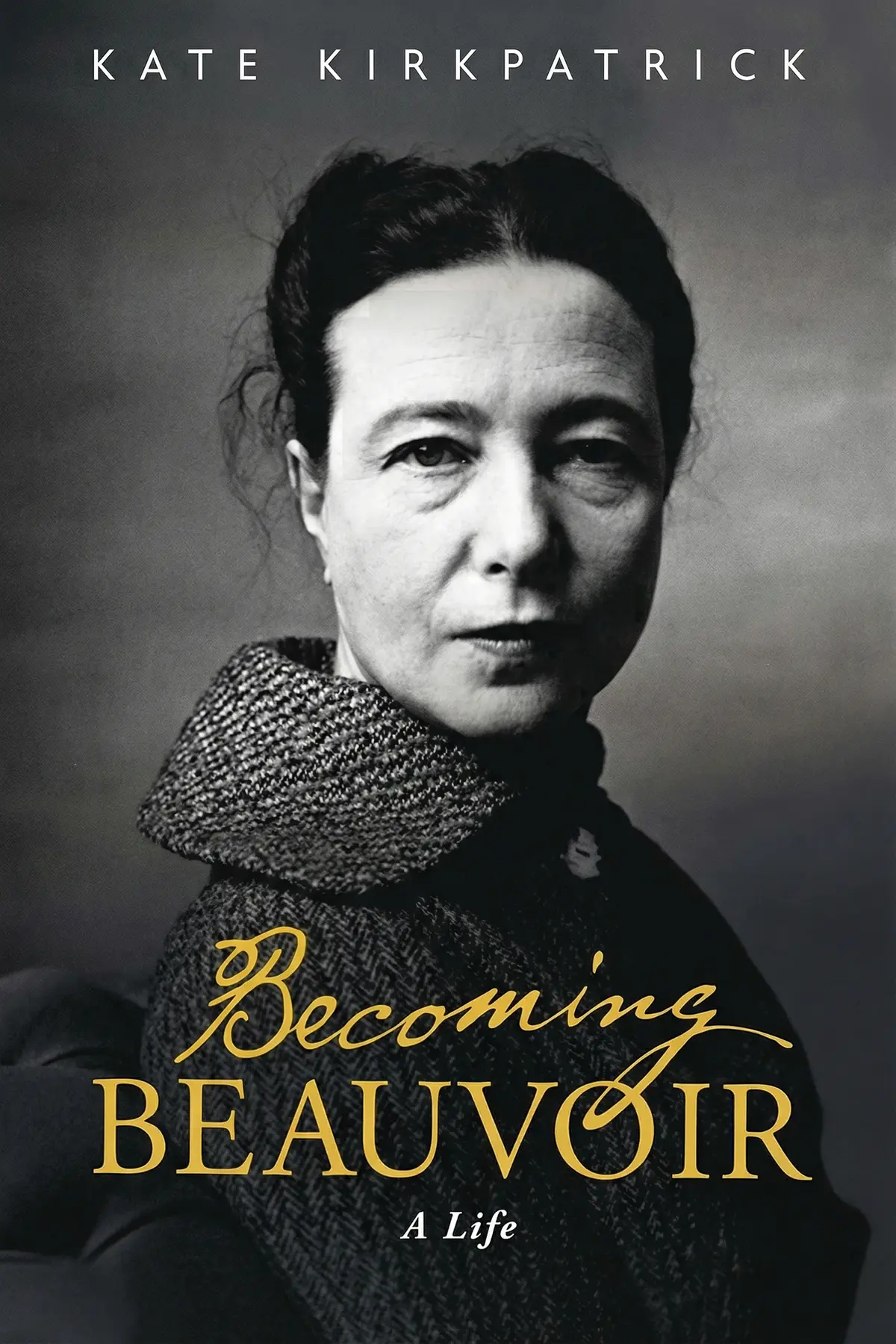
Kate Kirkpatrick shows that Simone de Beauvoir was an original philosopher whose ideas often came before Sartre's. She traces Beauvoir's thinking on freedom, power and ethics back to her faith, her reading and her life.
1 min 01 sec
If your work has ever been credited to the person standing next to you, Simone de Beauvoir’s life will feel familiar. In Becoming Beauvoir, Kate Kirkpatrick, who teaches philosophy and religion at King’s College London, shows that ideas long credited to Jean-Paul Sartre already sit in Beauvoir’s student journals, written before his most famous book appeared. Yet the author of The Second Sex, the 1949 book that inspired a generation of second-wave feminists, was treated for decades as the junior half of a famous couple.
Kirkpatrick’s case is that Beauvoir built her own philosophy out of a religious childhood, a beloved novel, a shaken summer at Lourdes and a long argument with Sartre. On the question that matters most, how to use freedom when other lives depend on your choices, she went further than he did. Her story corrects a famous misreading, and it hands you a two-part test for your own decisions.
1 min 24 sec
The best-known image of Beauvoir shows her at a Paris café beside Sartre, slightly smaller in every sense. Journals and letters that surfaced only recently suggest the picture was wrong from the start, shaped by an era that couldn’t accept an independent woman.
1 min 30 sec
A girl at a convent school was praised for thinking like a man, and a novel with a heroine named Jo March raised a question that shaped her later thinking. Her later feminism started in an unlikely place.
1 min 30 sec
A pious girl who considered becoming a nun lost her faith in her teens, after two hard lessons about men. What she put in God’s place became the seed of a philosophy later credited to someone else.
1 min 39 sec
At eighteen, faced with sick pilgrims seeking a cure at Lourdes, Beauvoir briefly considered a life of total self-sacrifice. The balance she struck instead still speaks to anyone who cares for others.
1 min 32 sec
The story goes that meeting Sartre rearranged her life. Her story takes in a date she sent her sister to in her place, a crush on his friend, and an exam that made her the youngest person ever to pass it.
1 min 36 sec
In a summer meadow two young philosophers agreed to love each other and others too. The pact lasted a lifetime, but a brilliant student and a blind spot about power showed what it really cost.
1 min 44 sec
Sartre said anyone can rise above their circumstances, even a waiter who takes his job for who he is. Beauvoir pointed to people whose circumstances were imposed by others, and found the piece his famous theory left out.
1 min 33 sec
An ancient adviser asked a king why conquering the world mattered more than resting at home. Sartre could not answer that kind of question. Beauvoir could, and her reply became the heart of her ethics.
1 min 07 sec
Kirkpatrick’s portrait swaps a shadow for a person. The woman cast as Sartre’s lady passed a notoriously hard exam younger than anyone before her and wrote at 19 that our acts define us. She also saw what his system missed: freedom means little without the power to use it, and it does harm when used without regard for others. Those ideas came from a home split over God, from Jo March, from a bookshop at Saint Sulpice and the sick at Lourdes. Her life also shows how good principles can fail in practice, since the woman who wrote about power misjudged her own with her students.
What she leaves is a habit of mind. When you admire someone’s freedom, notice what power made it possible. When you claim your own, think about whose lives it reaches. And when a gifted woman is introduced as someone’s companion, go looking for her own words.
As a girl, Beauvoir heard a voice saying she was here and ready to be sent. She answered it by being free, and by holding herself answerable for what that freedom did.
For decades Simone de Beauvoir, author of The Second Sex, was cast as the lesser half of a famous couple: elegant, devoted and following Jean-Paul Sartre's lead. In France she was even nicknamed Notre Dame de Sartre. Kate Kirkpatrick argues that this picture was always wrong, and that it reflected a century that could not accept an independent woman thinker. Drawing on Beauvoir's student journals and her letters to other men, Kirkpatrick shows that ideas later credited to Sartre already appear in Beauvoir's notes. She traces where those ideas came from: a home divided between a Catholic mother and an atheist father, a girlhood love of Jo March in Little Women, a loss of faith, and a summer at Lourdes that changed how she thought about duty to others. The book is frank about her open relationship with Sartre, including its darker side. Readers get a clear account of where Beauvoir parted from Sartre. She saw that freedom means little without the power to use it, and that it must be exercised ethically, because our actions shape the conditions other people live in.
Readers who know The Second Sex or Sartre and want the real story of Beauvoir's ideas.
Students of philosophy and feminism looking for where existentialist ethics came from.
Anyone whose work has been credited to a partner, boss or more famous colleague.
Kate Kirkpatrick teaches religion, philosophy and culture at King's College London. She has also written about Jean-Paul Sartre, the thinker Beauvoir was so often measured against, including the books Sartre and Theology and Sartre on Sin, and here she sets out where the two of them differed.
Listeners view this biography as an insightful and thoroughly researched account that effectively validates Simone de Beauvoir as a self-reliant intellectual distinct from Jean-Paul Sartre. They appreciate the inclusion of recently released diaries and letters that provide a sophisticated perspective on her life, with one listener highlighting the compelling way the author examines the contradictions between Beauvoir’s private journals and her public autobiographies. Additionally, they praise the intricate, objective portrayal of her personal development and polarizing relationships. Finally, they remark on the book’s fast and accessible narrative, though some listeners find the writing style occasionally unrefined or varied in its analytical depth.
Kate Kirkpatrick has done something remarkable by finally prying Simone de Beauvoir out from under Sartre’s massive shadow. This isn't just another dry recount of dates and publications; it’s a vibrant, essential look at her as an independent force. Using newly available diaries, Kirkpatrick reveals a woman who was often at odds with her own public image. Truth is, seeing the gaps between her memoirs and her private letters was the most fascinating part for me. It makes her feel human rather than just an icon on a pedestal. The writing moves at a brisk pace, keeping the philosophical heavy-lifting accessible for someone who isn't a scholar. It’s a nuanced, non-hagiographical portrait that doesn't shy away from her messy relationships or her mistakes. If you’ve only ever seen her as Sartre’s sidekick, this book will completely change your perspective.
Show moreWhat a revelation this was! I went into this thinking I knew everything there was to know about the author of The Second Sex, but Kirkpatrick proved me wrong. By incorporating letters that weren't available to previous biographers, she paints a much more complex picture of Simone’s emotional life. The way she addresses the discrepancies between the memoirs and the reality of Beauvoir’s 'open' relationship is both startling and necessary. It’s not a puff piece; the book looks directly at the power imbalances in her relationships with younger women. Look, it’s a dense read because her life was dense, but the effort is rewarded. I loved seeing her early years and the influence of her mother, which really shaped her drive for independence. This is a powerful reminder that we are all in a state of becoming. It’s easily the most comprehensive look at her soul I’ve encountered.
Show moreThe myth of the 'token woman' is dismantled so effectively here that it’s hard to look at Beauvoir the same way again. Kirkpatrick uses Beauvoir’s own philosophy to critique her life, which is a fascinating meta-approach. I particularly appreciated the focus on her later years, when she began to recognize her own complicity in certain power structures. It’s a refreshing change from biographies that treat her life as a finished product the moment she met Sartre. The inclusion of new archival material provides a much-needed layer of grit to her story. Truth is, she was a deeply contradictory person, and this book embraces those contradictions rather than trying to smooth them over. The pace is fast, yet the depth of research is staggering. It’s a brilliant tribute to a woman who never stopped questioning. Every chapter felt like a new discovery about a figure I thought I already understood.
Show moreIf you think you know Simone de Beauvoir, think again. This book is a masterclass in how to write a biography that is both academic and deeply personal. Kirkpatrick doesn’t just tell us what she did; she shows us how she thought, using those recently unearthed letters to ground the philosophy in real emotion. The tension between her desire for independence and her need for love is palpable on every page. Personally, I was floored by the revelations regarding her private feelings toward Sartre—it wasn't the perfect intellectual union people often claim it was. It’s a messy, beautiful, and sometimes uncomfortable portrait of a genius. The writing is brisk and engaging, making even the most complex existentialist theories feel relevant to our own lives. This is a woman who was constantly reinventing herself, and Kirkpatrick captures that spirit perfectly.
Show moreEver wonder why we still talk about Simone de Beauvoir like she was just Sartre’s plus-one? Kirkpatrick answers that question by showing exactly how much of that narrative was a deliberate, sexist construction. This book is a wonderful deep dive into the 'becoming' of a philosopher. The way it contrasts her public memoirs with her private diaries is genuinely eye-opening—it shows a woman struggling with the very freedom she preached. Frankly, some of the sections on 'The Second Sex' go on a bit too long while other works are neglected, but the overall impact is undeniable. It’s a sympathetic portrait that doesn't ignore her more controversial choices, specifically the way she treated her students. The writing is clear and fast-paced, though it lacks a certain stylistic flair. Regardless, it’s an essential piece of scholarship that gives Beauvoir the individual credit she has long deserved.
Show moreFinally, a biography that treats 'becoming' as a verb rather than a static state. Kirkpatrick’s exploration of Beauvoir’s life through the lens of her own philosophy is a stroke of brilliance. The book highlights how Simone evolved, especially regarding her later-life realizations about tokenism and her role in the patriarchy. Personally, I was struck by the inclusion of recently released correspondence that complicates the 'legendary' relationship with Sartre. It’s not always a pretty picture, particularly when discussing her students, but the author handles these controversies with a critical yet fair hand. My only gripe is that the prose can be a bit uneven—some chapters flow beautifully while others feel like a dense academic lecture. Still, for anyone interested in the intersection of life and thought, this is a must-read. It firmly establishes her as a philosopher in her own right.
Show moreAs a long-time admirer of 'The Second Sex', I found this biography incredibly vindicating. Kirkpatrick meticulously documents how Simone’s ideas often preceded Sartre’s, turning the traditional narrative on its head. The focus on her 'becoming'—her constant refinement of her ethics and identity—is the book’s greatest strength. Frankly, the sections on her later feminist awakening in the 70s were the most moving for me. However, I agree with some other readers that the prose isn't always polished. I spotted several awkward sentences and a few split infinitives that took me out of the moment. That said, the content is so rich that it’s easy to forgive a lack of stylistic grace. It’s a sympathetic but rigorous look at a woman who refused to be defined by anyone but herself. Highly recommended for any student of existentialism.
Show moreIt’s about time someone looked at the gap between the myth and the woman. Picked this up hoping for a deeper look at her philosophical independence, and Kirkpatrick delivered in spades. The focus on her private diaries reveals a much more vulnerable, sometimes even manipulative, side to her that her memoirs glossed over. This isn't an attack on her character, though; it’s a nuanced look at the cost of trying to live an 'authentic' life. I found the details about her relationship with her sister Poupette especially charming. Gotta say, the author does a great job of keeping Beauvoir at the center of the story even when Sartre’s ego tries to take over the room. It loses a star only because the transitions between her different books can feel a bit rushed. Overall, a very readable and enlightening biography that feels very modern in its sensibilities.
Show moreTo be fair, the research here is undeniably deep, but the execution left me wanting a bit more elegance. Kirkpatrick relies heavily on newly released letters and diaries to debunk the idea that Beauvoir was just Sartre's follower, which is a worthy goal. However, the writing style itself is occasionally clunky and repetitive, lacking the 'Parisian' flair I expected from such a subject. There were moments where the narrative felt a bit too brisk, skimming over significant historical contexts like the friction with Camus. Not gonna lie, I found the constant jumping between her published memoirs and her private diaries a bit jarring at times. It’s a solid resource for facts, but it doesn't quite capture the atmosphere of the era. If you want a scholarly assessment of her intellectual evolution, you’ll find it here. If you’re looking for a stylish, immersive narrative, you might be disappointed.
Show moreHonestly, this felt like a bit of a mixed bag. While the research into the new diaries is impressive, the actual narrative style is so dry and academic that it becomes a chore to get through. I was expecting a biography that captured the vibrant, smoky atmosphere of 1940s Paris, but instead, I got a series of descriptions of what she wrote in which year. To be fair, Kirkpatrick does a good job of showing her as an independent thinker, but the emotional core of Beauvoir’s life feels buried under a mountain of footnotes. The prose is uneven and often feels unrefined, with some very clunky syntax that made me double-check if I was reading a final draft. It’s more of a philosophical assessment than a life story. If you’re a scholar, you’ll love the data. If you’re a general reader looking for a compelling story, you might find this a bit of a slog.
Show moreKate Kirkpatrick’s biography argues that Simone de Beauvoir was an original philosopher rather than a follower of Jean-Paul Sartre. Using Beauvoir’s student journals and letters, it shows that ideas later credited to Sartre appear in her notes first. It traces her thinking to her religious childhood, her reading and key experiences, and it explains where she broke with Sartre on freedom, power and ethics.
Kirkpatrick argues the influence often ran the other way. Beauvoir’s journals contain ideas found in Sartre’s 1943 Being and Nothingness before it was published, including her contrast between living for oneself and for others. At 19 she wrote that our acts define us. She called his early essays clumsy, and she passed the agrégation at 21, the youngest person ever to do so.
Sartre held that everyone can transcend the facts of their situation. Beauvoir objected that oppressed people, such as Jews in the 1930s or a woman confined in a harem, lack the power to do so. She also built an ethics Sartre never developed: because our actions shape the conditions others live in, freedom must be used responsibly, as she argued in Pyrrhus and Cineas.
It suits readers of The Second Sex or of Sartre who want to know where Beauvoir’s ideas came from, and students of philosophy or feminism. It also speaks to anyone whose work has been overshadowed by a partner or colleague. The book is candid too about her open relationship with Sartre and their affairs with students, which later harmed both reputations.
Her central test is twofold: seek freedom as an individual, and use it with regard for others, since your actions shape the conditions they live in. Before judging someone’s choices, ask how much power they actually had. From her time at Lourdes comes another lesson: give generously to others while protecting the part of you that exists for yourself.
Ishmael Beah

James Herriot


Barack Obama


Masaji Ishikawa


Ben Macintyre

William B. Irvine

AUDIO SUMMARY AVAILABLE
Get the key ideas from Becoming Beauvoir by Kate Kirkpatrick, plus 5,000+ more nonfiction titles.









