

11 min 52 sec
Available in: English
Be Where Your Feet Are: Seven Principles to Keep You Present, Grounded, and Thriving
By Scott O'Neil
Shows how to stop giving partial attention to everything. Scott O'Neil explains how to commit fully to the moment, aim at one clear priority, learn from failure, back your team and stay patient while results build.
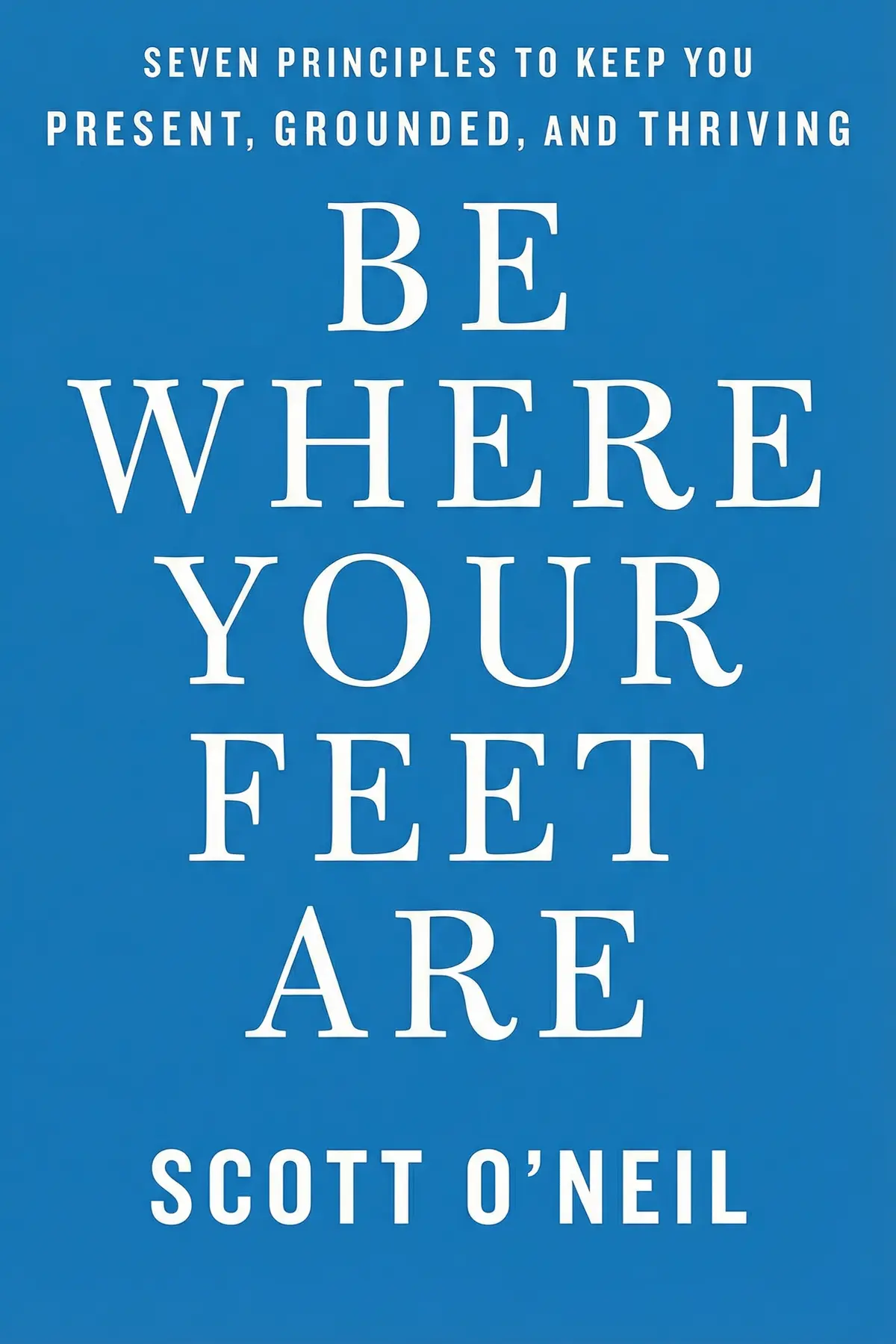
Table of Content
1. Introduction
1 min 07 sec
Most of us give a little attention to everything and full attention to almost nothing, and then wonder why both work and home feel thin. In Be Where Your Feet Are, Scott O’Neil, who has led the Philadelphia 76ers and the New Jersey Devils, argues that the fix starts with one decision: commit completely to whatever is in front of you right now. He learned that only after losing one of the most prized jobs in sports.
From that starting point he builds a short set of principles for work, family and community. Each one answers the same question: where should your attention, effort and goodwill go? Be fully present. Aim your life at what matters most. Stay patient with a long plan, and learn from the failures you cannot avoid. Then turn outward, step in for the people around you and give them the benefit of the doubt. Along the way there is a family in Tonga who sold the walls of their house, a boy band deal that did nothing for ticket sales and a herd of water buffalo that saved one of its own.
2. Give the moment in front of you everything
1 min 36 sec
Losing the biggest job of his career should have sent O’Neil racing back to work to prove himself. What he did instead changed how he has worked, and lived, ever since.
3. Choose your one priority and drop the rest
1 min 39 sec
A boy in Tonga grew up in a house missing two of its walls. No storm took them, and no debt forced the sale. His parents had a reason most people would never consider.
4. Stay the course when results come slowly
1 min 40 sec
A struggling basketball team kept losing, and even loyal fans were giving up. Then a player said a few offhand words before a game, and a whole city adopted them.
5. Turn every flop into your next lesson
1 min 37 sec
An expensive deal with one of the most famous pop groups of its day failed to sell a single extra ticket. The lesson O’Neil drew from it had nothing to do with marketing.
6. Step in when something around you needs fixing
1 min 26 sec
On his second day in a new top job, O’Neil gathered hundreds of staff to watch lions hunt a young animal. The video was thrilling, but the point he made with it was about ordinary office life.
7. Let go of anger by assuming good intentions
1 min 39 sec
At 13, a girl found one word in her adoption file that shaped how she saw herself for years. When she finally went back to that folder, she discovered what she had missed the first time.
8. Conclusion
1 min 08 sec
O’Neil’s principles begin with the self and end with other people, but they rest on one habit: deciding where your attention goes and keeping it there. A man fired from the job of his dreams found his best weeks walking through London and Paris with his family, with no calls coming in. A couple in Tonga gave up the walls of their home for what mattered most to them. A basketball team kept losing until its plan, followed day after day, turned it into a contender.
None of this needs a new job or a grand plan to start. Put the phone away for one meal and be fully there. Name the one thing your life is aimed at, and check whether last week agrees. Write down the mistakes that still bother you and what each one taught you. And when someone lets you down, reach first for the kinder explanation, then pick up the piece of paper nobody else will.
The herd in that video had every reason to keep running. It turned around instead, and the calf got away. Wherever your feet are today, that is where the work, and the people who need you, are waiting.
About this book
What is this book about?
Many busy professionals give a little attention to everything and full attention to almost nothing. Work feels frantic, family time feels thin, and even big goals seem to drift. Scott O'Neil, who has run some of the best-known teams in American sports, argues that the answer starts with one choice: commit completely to whatever is in front of you. He learned this when he was fired from the top role at Madison Square Garden Sports, and he builds on the lesson with a short set of principles. Know What's Most Important to you and aim your life at it. Expect failure and learn from every one. Step in for the people around you, and assume they mean well. Trust a long plan even when results come slowly. Each principle comes with a story: a family in Tonga who sold the walls of their house, a boy band partnership that sold no extra tickets, a herd of water buffalo that saved one of its calves, a word in an adoption file and three words that became a basketball team's anthem. Readers get simple habits they can try at work and at home the same week.
Book Information
Who it's for
Overstretched professionals
Busy professionals who feel pulled in every direction and rarely fully present at work or at home.
Leaders wanting supportive teams
Managers who want a team that steps up for each other instead of waiting for someone else.
Those stuck after setbacks
Anyone stuck after a setback who wants to learn from it and stay patient with a long plan.
About the Author
Scott O'Neil
Scott O'Neil has worked in professional sports and entertainment for more than 25 years, with the Philadelphia 76ers, New York Knicks, New Jersey Nets, Philadelphia Eagles, New York Rangers and New Jersey Devils. He has been CEO of the Devils and the 76ers, president of Madison Square Garden Sports and CEO of LIV Golf. A Harvard Business School graduate, he spent a decade on the NBA and NHL Boards of Governors. He is a father of three, known for running to work and back home.
Ratings & Reviews
Ratings at a glance
What people think
Listeners find the work absorbing and straightforward to grasp and implement, highlighting impactful life lessons and identifiable narratives that resonate on both an emotional and intellectual level. They value the steady rhythm and regard it as a pleasant experience. While the caliber of writing draws varied feedback, many consider it well written.
Top reviews
Arjun
Finally got around to reading this after seeing it all over my feed, and I have to say, Scott O'Neil’s perspective is surprisingly grounded for someone in his position. While I am not a massive sports fan, the core concept of being present resonated deeply during my hectic morning commute. The 'purple water buffalo' concept was a standout moment that made me rethink how I present myself in daily office interactions. Sure, he mentions his famous friends quite a bit, but the emotional core of putting family first feels universal and sincere. It is a quick, engaging read that doesn’t feel like a heavy lecture, which I really appreciated after a long day. If you need a reminder to slow down and stay in the moment, this is it.
Show moreDimitri
Wow. I did not expect a high-level sports executive to be this open about his own personal struggles and the constant pressure of staying present. The heart-breaking testimonies included—especially the more tragic stories from his circle—really put my own minor daily stressors into a much-needed perspective. It is rare to find a leadership book that tackles the 'soul' aspect of productivity without feeling overly cheesy or clinical. I have already started implementing the 'Assume Positive Intent' rule in my personal life, and it has already changed my communication style for the better. This book is a beautiful, vulnerable reminder that even the people we see as indestructible are just humans trying to find their balance. It is well worth the time.
Show moreAnna
Look, I will be the first to admit that I usually roll my eyes at 'thriving' guides, but this one actually stuck with me long after I finished. The title alone is a simple mantra I have started using daily to stop myself from spiraling about the future or dwelling on my past mistakes. O’Neil writes with a sense of urgency and warmth that makes the advice feel like it is coming from a trusted mentor rather than a distant boss. The chapters on 'Trust the Process' gave me the permission I needed to stop obsessing over immediate results in my own fitness journey. It is intellectual enough to be interesting but simple enough to apply immediately after putting the book down. Truly a transformative and powerful read for my current stage of life.
Show moreMaya
After hearing about this guide from a colleague, I expected a standard, dry business manual, but it is actually a much warmer guide for purposeful living. The pacing is excellent, and the seven principles provide a solid framework for anyone feeling overwhelmed by their digital schedule. I found the 'WMI' (What’s Most Important) chapter particularly useful for filtering out the daily noise of my middle-management job. To be fair, the constant name-dropping of NBA stars and high-level executives got a bit repetitive and felt unnecessary after a while. However, the underlying message of failing forward is something we all need to hear more often in our careers. It is an enjoyable read that connects on both an intellectual and emotional level.
Show moreWachira
Ever wonder how the busiest people on earth stay sane while managing high-stakes organizations and professional sports teams? Scott O’Neil attempts to answer that question, and for the most part, he succeeds with a very easy-to-digest and engaging writing style. I particularly appreciated the section on being mindful of racial prejudice in America, which felt like a necessary and authentic addition to a modern leadership book. Some of the principles felt a little like 'word soup' early on, but they eventually coalesced into a meaningful narrative about what it means to thrive. It is a grounded look at how to prioritize what actually matters when the world keeps demanding more of your precious time. I would recommend it to managers looking for a soul-searching exercise.
Show moreCaleb
The chapter on 'Failing Forward' was exactly what I needed to read during a particularly rough patch in my own professional career recently. Scott O’Neil manages to connect on an intellectual level while still keeping the stories moving at a brisk, engaging, and very readable pace. While the name-dropping of athletes is undeniably frequent, the lessons he extracts from those high-pressure interactions are surprisingly humble and applicable to daily life. I enjoyed the focus on 'WMI' and how it helps narrow down your focus when every single task feels like a high-stakes priority. It is well-written and avoids the dry, academic tone that plagues so many other books in this specific leadership genre. I will definitely be passing my copy along.
Show moreBo
Not what I expected from a guy who ran the 76ers and Madison Square Garden, but I mean that in the best way possible. The book is heavily family-centered, and while some of it is pure common sense, it serves as a powerful reminder to unplug from our phones. In my experience, 'Assuming Positive Intent' is one of the hardest principles to master, yet O'Neil makes a compelling case for why it is vital for our long-term mental health. There is a bit of a 'Boy Scout' vibe to the writing that can feel a little disconnected from the real world for those of us who aren't CEOs. Still, the emotional weight of the testimonies kept me turning the pages until the very end. It is a truly enjoyable and thoughtful read.
Show moreJib
As someone who usually enjoys a good self-help book, I found the core message here valuable, even if the delivery was a bit clunky at times. There is a very strong religious undertone throughout the chapters that might not land well with everyone, particularly the frequent references to the LDS church. The sports analogies are laid on thick, so if you are not a basketball fan, some of the intended impact might be lost on you. I did like the focus on 'Purple Water Buffalo' and identifying what makes us unique in a crowded, competitive market. It is a decent read overall, but I wish there were fewer 'my good friend the CEO' stories and more practical tips for non-executives who can't just block out their schedules.
Show moreNikolai
This book unfortunately felt like an extended LinkedIn post written by a CEO who doesn't quite realize how different his life is from the average worker. O’Neil seems like a genuinely nice guy, but the constant references to his high-powered friends made it difficult for me to relate to his 'grounded' advice. Most of the suggestions are just common sense, like exercising and spending time with family, wrapped in a layer of corporate jargon and word soup. The homework sections at the end of each chapter felt like busy work and did not add value to the actual reading experience for me. If you enjoy reading about how successful executives manage their time, you might like this, but it felt a bit boastful for a self-help book.
Show moreSirichai
Picked this up hoping for a modern mindfulness guide, but it felt more like a recruitment brochure for a specific type of American corporate culture. The tone is often cloying and treacly, especially when the author describes his 'perfect' family life or his high-profile sports career in such a boastful way. I absolutely hated the exercise where you have to write a 'Leadership Constitution,' which just felt like a fancy, trite name for a standard mission statement. It is hard to take advice on being 'grounded' from someone who spends so much time listing his access to world-renowned stars and CEOs. In my opinion, the book comes off as slightly egotistical under the guise of being 'raw and vulnerable,' which made it hard to finish.
Show moreQuestions about this book
What is the main idea of Be Where Your Feet Are?
Scott O’Neil argues that a good career and a good life depend on where you put your attention. He urges readers to commit fully to whatever they are doing, aim their lives at What’s Most Important to them, learn from failure, support the people around them, assume others mean well and trust a long plan. He learned the first lesson after losing his job at Madison Square Garden Sports.
What does WMI mean in Be Where Your Feet Are?
WMI stands for What’s Most Important. O’Neil illustrates it with the parents of Vai Sikahema in Tonga, who sold the boards of their house to pay for a trip to a temple in New Zealand to be sealed. Your WMI need not be religious. It could be family, helping others or a lifelong goal, and O’Neil says you should aim your life at it without drifting.
How does Scott O'Neil say to learn from failure?
O’Neil calls it failing forward: treating each setback as a lesson instead of only a loss. After his NSYNC partnership failed to sell WNBA tickets, a friend helped him see he had never built relationships with colleagues, so he did. His practical tool is to write down the mistakes on your mind and what each one taught you, so the lessons are easier to remember.
What does trust the process mean in the book?
The phrase came from 76ers guard Tony Wroten in January 2015 and became an anthem for fans of a losing team. O’Neil reads it as trusting both your plan and your daily follow-through, resisting instant rewards and accepting long days of hard work. In his telling, the 76ers’ patient rebuild turned them into one of the strongest teams in the NBA.
Who should read Be Where Your Feet Are?
It suits busy professionals who feel distracted and pulled away from family, managers who want a team culture where people step in for each other, and anyone recovering from a setback. The principles are simple and story-driven, from a herd of water buffalo saving a calf to a woman rereading her adoption papers, so they are easy to remember and try.
Readers also enjoyed

A High-Performing Mind: Strengthen Your Mind and Live Your Best Life
Andrew D. Thompson


Abundance: The Inner Path to Wealth
Deepak Chopra


59 Seconds: Change Your Life in Under a Minute
Richard Wiseman




AUDIO SUMMARY AVAILABLE
Listen to Be Where Your Feet Are in 15 minutes
Get the key ideas from Be Where Your Feet Are by Scott O'Neil, plus 5,000+ more nonfiction titles.
- 5,000+ titles
- Listen as much as you want
- 7-day free trial
- Cancel anytime









