
15 min 16 sec
Available in: English
 ไทย
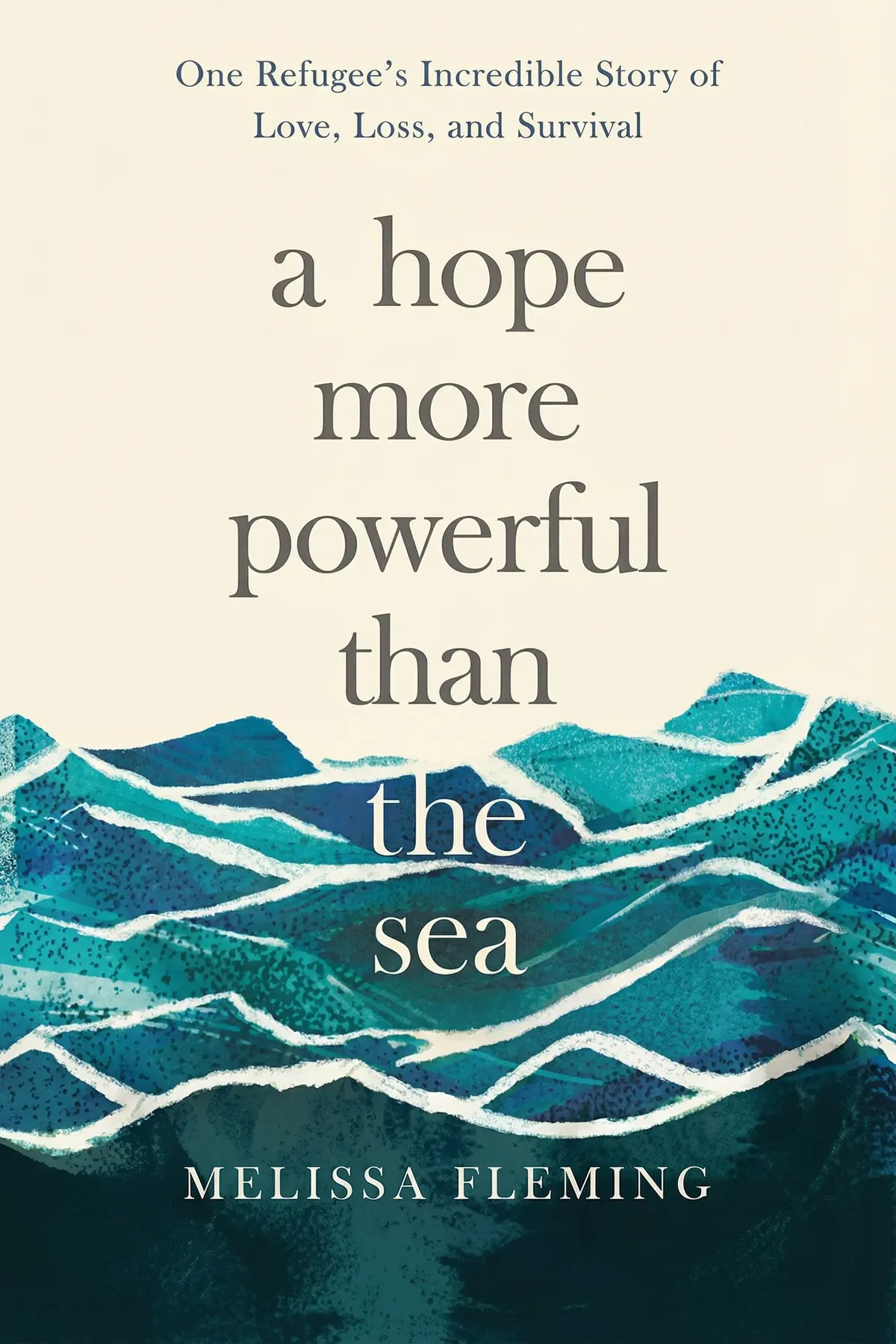
EnglishไทยAstor: The Rise and Fall of an American Fortune
Follows the Astors from a German immigrant who arrived with very little money and became America's richest man to an heir convicted of fraud involving his mother's estate. It shows how great wealth gets built, displayed and lost across generations.
Table of Content
1. Introduction
1 min 06 sec
Anyone hoping to build wealth that outlasts them should know that making a fortune and keeping one are different skills, and the Astor family mastered the second for only a few generations. In Astor, CNN anchor Anderson Cooper and writer Katherine Howe follow America’s first homegrown dynasty, from a German immigrant who became the country’s richest man to an heir convicted of defrauding his own mother. The founder, John Jacob Astor, saw where demand was going, moved early and lived modestly so his children would inherit more.
Their story makes one argument. Wealth lasts only as long as someone in each generation guards it and adapts it, and the Astors stopped doing both while the city around them changed. Along the way come beaver hats, a tenth of Manhattan, a guest list of 400 and a hotel with more than 1,000 rooms. The payoff is a clear picture of what builds lasting wealth, what drains it, and how to tell which side of that line you stand on.
2. Spot where value is heading before others do
2 min 01 sec
A young immigrant selling musical instruments in New York noticed what wealthy Europeans were wearing on their heads. What he did next, and the risks he took, made him the richest man in America.
3. Turn one windfall into income that lasts
2 min 16 sec
Fur made John Jacob Astor rich, but fashions change and trappers move on. His next move kept paying his family for generations, until one grandson owned a startling share of Manhattan.
4. Use image to win status, and know its limits
2 min 13 sec
One woman decided who counted in Gilded Age New York, and she did it without ever giving an interview. Her method worked brilliantly for a while, but it rested on a world that would not stand still.
5. Open the doors and your brand outlives you
2 min 14 sec
Two feuding cousins tore down their fathers’ mansions to build rival hotels. The building they ended up sharing kept the Astor name glowing long after the family itself had faded from view.
6. Learn how great fortunes thin out across generations
2 min 06 sec
A shipwreck, a tabloid scandal and a market crash all played a part, but none of them alone sank the Astors. What drained the money was slower, duller and far more common.
7. What the last heir shows about stewardship
1 min 59 sec
The dynasty did not end with a whimper but with a courtroom, a grandson in tears and a mother’s country house left to rot. The final Astor heir reversed everything the founder stood for.
8. Conclusion
1 min 21 sec
The Astor story begins and ends with two men and one choice. A founder learned the languages of frontier trappers, turned fur into Manhattan land and lived without show so that strangers yet unborn would inherit more. Two centuries later, a last heir stripped his own mother’s estate and let her country home decay. Between them, the fortune did not vanish in a single disaster. It thinned through taxes, gifts and division, while the family leaned on a pedigree that New York had stopped valuing.
The sharpest irony is that the Astor creation which lasted longest was the one that let strangers in. The Waldorf-Astoria kept its prestige long after the 400 had scattered.
The story supports a few habits worth keeping. When money arrives, ask what it can turn into that keeps paying, the way fur became rent. When you inherit anything, a company, a client base, a reputation, judge yourself by whether you grow it or merely split it. And notice whether your standing depends on keeping people out, because cities and markets change their minds.
John Jacob Astor built for heirs he would never meet. His family learned too late that a fortune needs a builder in every generation.
About this book
What is this book about?
The Astors were America's first homegrown dynasty. John Jacob Astor arrived in New York with almost nothing, cornered the fur trade, then turned his profits into Manhattan land just ahead of the city's growth. His heirs kept buying until one of them owned about a tenth of the island, and Caroline Astor turned that money into a social throne with a guest list of 400. Anderson Cooper and Katherine Howe trace what happened next. A death on the Titanic, tabloid scandal, the 1929 crash, estate taxes and generations of heirs dividing the money wore the fortune down. A final heir, Anthony Marshall, was convicted of fraud and elder abuse after taking millions from his mother, Brooke Astor. Readers get a vivid family saga with a practical edge: a clear view of the habits that build lasting wealth, the forces that drain it, and why the Astor creation that survived longest was the hotel that opened its doors to everyone.
Book Information
Who it's for
Founders and business owners
Founders and family business owners wondering how to make what they build outlast them.
Professionals inheriting a business
Professionals who inherit a company, a client list or a name and want to avoid the mistakes that drain it.
Interested in American history
Readers of American history curious how New York's first great dynasty rose and collapsed.
About the Author
Anderson Cooper
Anderson Cooper, born in 1967 and a 1989 Yale graduate, began by filming war-affected regions for Channel One News, joined ABC News in 1995 and has hosted Anderson Cooper 360° on CNN since 2001. He won two Peabody Awards and 18 Emmys. Katherine Howe writes historical fiction and nonfiction; her debut novel was a New York Times bestseller. She studied American and New England studies at Boston University. Together they also wrote Vanderbilt, about another great American family fortune.
Ratings & Reviews
Ratings at a glance
What people think
Listeners find this work highly engaging and skillfully composed, praising its rich historical detail and extensive research. The narrative earns high marks; specifically, one listener enjoyed the way different branches of the Astor family tree are woven together, while another characterized the account as a harsh chronicle of rising from poverty to wealth and then falling back again. They appreciate the exploration of the family's legacy, with one person highlighting the insight into how fortune impacts descendants over time, even if some feel the progression of the book can be sluggish at points.
Top reviews
Suthida
This book is a sweeping, brutal examination of how an American dynasty is forged and then eventually squandered. Cooper and Howe do a fantastic job tracing the lineage from the first John Jacob Astor’s grit in the fur trade to the tragic legal battles of Brooke Astor’s final years. It is a classic rags-to-riches-to-rags story that feels deeply researched. I found the details about early Manhattan real estate particularly fascinating, as it shows how the family essentially built New York City. While some readers might find the jumping timelines a bit distracting, I felt it added a layer of historical context that kept the narrative moving. To be fair, the family members are often quite unlikable, but their pathology regarding wealth is what makes the book so hard to put down. It’s an entertaining, well-written look at how extreme money can warp a person's character over several generations.
Show moreAmelia
After hearing Anderson Cooper discuss this on his podcast, I was curious to see if he could maintain a journalistic distance from such a wealthy legacy. He and Howe have crafted a masterful narrative that is both entertaining and deeply cynical about the American Dream. The story of John Jacob Astor’s rise from a German butcher's son to the richest man in America is legendary, but the authors are careful to show the human cost. The descriptions of the 19th-century slums are eye-opening and gut-wrenching. It’s a brutal tale of how wealth affects people through the generations, leading to isolation and eventually, the dissolution of the entire fortune. I couldn't put it down. Every chapter felt like a new revelation about the dark side of the Gilded Age. This is easily one of the best family biographies I’ve read in years, despite the family themselves being largely unlikable.
Show moreEarn
The chapter on the 19th-century New York tenements provides an eye-opening look at the misery that funded the Astor's extravagant lifestyles. I’ve always been fascinated by the Gilded Age, and this book delivers the goods on the social rivalries and the sheer scale of the family's wealth. It is a fascinating picture of a dynasty that eventually vanished. I loved the details about 'The' Mrs. Astor and her quest to define American society, even if she seemed incredibly cold. The book is well-paced and the research feels solid throughout. It’s rare to find a history book that reads this much like a novel. I highly recommend it to anyone who enjoys stories about the rise and fall of powerful families. It is a poignant reminder that money can buy mansions and titles, but it certainly can't buy happiness or a functional family.
Show morePete
Ever wonder how much work it actually takes to skin a beaver pelt? The early chapters of this book dive deep into the smells and blood of the fur trade that started it all. It’s a stark contrast to the later chapters filled with jewels and yachts. I appreciated the depth of information regarding the New York City tenements, as it reminds us that this fortune was built on the misery of the poor. The authors aren't afraid to call out the 'slumlord' behavior of the early Astors, which adds necessary grit to the story. My only minor gripe is the chapter on the movie versions of the Titanic sinking; it felt like filler. Look, if you want a book that balances backstairs gossip with serious economic history, this is definitely worth your time. Cooper’s narration in the audiobook version is also top-notch, adding a personal touch to the historical weight.
Show moreRungrat
Picked this up because I was curious about the Gilded Age, and I found the comparison between the Astors and the Vanderbilts quite illuminating. The book does an excellent job showing how the Astors were 'old money' snobs who looked down on everyone, despite their own patriarch being a rugged immigrant. The research is thorough, especially when discussing the family’s massive real estate holdings. I liked how the authors computed the fortunes into today’s dollars because it really puts that level of wealth into perspective. Some of the side stories, like the one about the gay bar at the Astor Hotel, were unexpected but actually quite interesting additions to the social history of the city. Personally, I found the pacing a little slow in the middle, but the tragic ending involving Anthony Marshall and Brooke Astor made for a compelling final act. It’s a solid 4-star read for history buffs.
Show moreNum
Finally got around to finishing this, and while the early chapters on the fur trade were gripping, the later sections felt a bit rushed. The authors do a great job of intertwining various Astor family narratives, showing how each generation tried—and often failed—to live up to the name. I actually enjoyed the 'trivia' like the story of the cat burglar at the Waldorf Astoria, though I can see why some might find it a distraction. To be fair, the book is at its best when it focuses on the psychological toll of inheriting that much money. The ending with Brooke Astor is particularly heartbreaking and serves as a cautionary tale. My only criticism is that the tone sometimes shifts from serious history to celebrity gossip a bit too abruptly. Overall, it’s a well-written and engaging look at a family that defined New York for over a century.
Show moreSuwit
Frankly, the authors seem a bit too obsessed with the idea that the Astors were 'misanthropes,' but the evidence they provide is pretty convincing. This book is a deep dive into a family that had everything and yet seemed to enjoy very little of it. I found the section on the Astor Hotel bar and its importance to gay history to be a really thoughtful and unexpected inclusion. It showed a different side of the family’s legacy that I hadn't heard before. While the jumping between centuries can be a little confusing at first, the themes of greed and legacy tie everything together nicely. The writing style is engaging and doesn't get bogged down in too much dry data, despite the thorough research. It’s a compelling look at the dark side of New York’s elite history. I definitely plan on reading Cooper’s other work after this.
Show moreOrm
Wow, the sheer level of greed on display in these pages is enough to make anyone’s skin crawl. The Astors were not a kind family, and Cooper doesn't try to paint them as such, which I appreciated. However, the book jumps all over the place chronologically, making it hard to keep track of which William or John Jacob we are talking about. I found the chapter on the Titanic to be a bit repetitive since that story has been told a thousand times before. Frankly, I would have preferred more focus on the actual business dealings rather than the socialite gossip. The writing is accessible and clear, but it lacks the 'punch' I expected from such a high-profile release. It’s an okay overview if you know nothing about the family, but seasoned historians might find it a bit superficial in its analysis of their economic impact.
Show moreJune
Not what I expected, as the book manages to be both a piece of historical research and a collection of somewhat disjointed anecdotes. I found the sections on the family's 'philanthropy' to be quite interesting, especially since much of it was done to clean up a very dirty reputation. But did we really need a comparison to the Kardashians? That felt a bit forced and unnecessary for a book of this stature. The writing is clear, and Cooper’s voice definitely comes through, though sometimes I wondered if his own Vanderbilt connections biased his view of the Astor's 'miserly' nature. It's a quick read and definitely entertaining, but it feels a bit 'history-lite' at times. If you're looking for a scholarly deep dive, this might not be it, but for a plane ride or a weekend read, it's perfectly fine.
Show moreThitima
As someone who appreciates deep history, I felt the narrative structure here was incredibly messy and often drifted into unnecessary tangents. Why was there an entire chapter dedicated to Mary Astor, the actress, when she isn't even part of the family? It felt like the authors were just trying to fill pages with trivia rather than sticking to a cohesive biography. Anderson Cooper is a fine reporter, but he struggles here to keep a consistent tone. One minute we are learning about the Astor Place Riot, and the next he is making odd comparisons to the Kardashians. Truth is, the book feels like a collection of magazine articles rather than a unified history. I wanted to love this after enjoying 'Vanderbilt,' but this one just didn't have the same emotional resonance or tight editing. It’s a bit of a disappointment for such a fascinating subject.
Show moreQuestions about this book
What is Astor by Anderson Cooper and Katherine Howe about?
It tells the story of America’s first homegrown dynasty. John Jacob Astor, a German immigrant, built a fortune in the fur trade and Manhattan real estate and died the richest man in America in 1848. His heirs expanded the property empire and ruled Gilded Age society, but scandal, the 1929 crash, estate taxes and division wore the fortune down to an estimated $30 million by the 2000s.
How did John Jacob Astor make his fortune?
Astor first sold musical instruments in New York, then moved into furs when he saw European demand for beaver hats. He traveled deep into frontier country, learned local languages to trade with Native American trappers and built a near monopoly. By 1798 he was worth $250,000. He then bought cheap Manhattan land as the city grew north, and by the late 1830s was estimated to be worth over $20 million.
Why did the Astor family fortune decline?
The authors describe a slow erosion. John Jacob Astor IV died on the Titanic in 1912, scandal led trustees to restrict an inheritance, and many heirs sold property at a loss after the 1929 crash. Estate taxes, charitable giving and each generation dividing the money drained the rest. Meanwhile old money and pedigree came to matter less in a changing city, and the family failed to adapt.
Who was Mrs. Astor and what was the 400?
The family matriarch in the late 1800s, and the arbiter of New York society, was Caroline Schermerhorn Astor, who went by the title the Mrs. Astor. From her Fifth Avenue mansion she hosted a guest list of roughly 400 elites. Outsiders mocked them as the 400, but an invitation meant the height of status. She refused press interviews and allowed photographs only in a studio.
What lessons about wealth does Astor offer?
The book suggests that building a fortune and keeping it are different tasks. The founder turned a one-time profit into land that produced rent for generations and lived modestly for his heirs. Later Astors divided, displayed and finally plundered the money. The Waldorf-Astoria, which welcomed anyone who could pay, outlasted the family’s exclusive society, a reminder that openness and adaptation tend to endure.
Readers also enjoyed
Ali: A Life
Jonathan Eig


A Life Decoded: My Genome: My Life
J. Craig Venter


A Splendid Exchange: How Trade Shaped the World
William J. Bernstein

A Long Way Gone: Memoirs of a Boy Soldier
Ishmael Beah
All Creatures Great and Small
James Herriot


AUDIO SUMMARY AVAILABLE
Listen to Astor in 15 minutes
Get the key ideas from Astor by Anderson Cooper, plus 5,000+ more nonfiction titles.
- 5,000+ titles
- Listen as much as you want
- 7-day free trial
- Cancel anytime









