
On His Own Terms: A Life of Nelson Rockefeller
Richard Norton Smith
 English
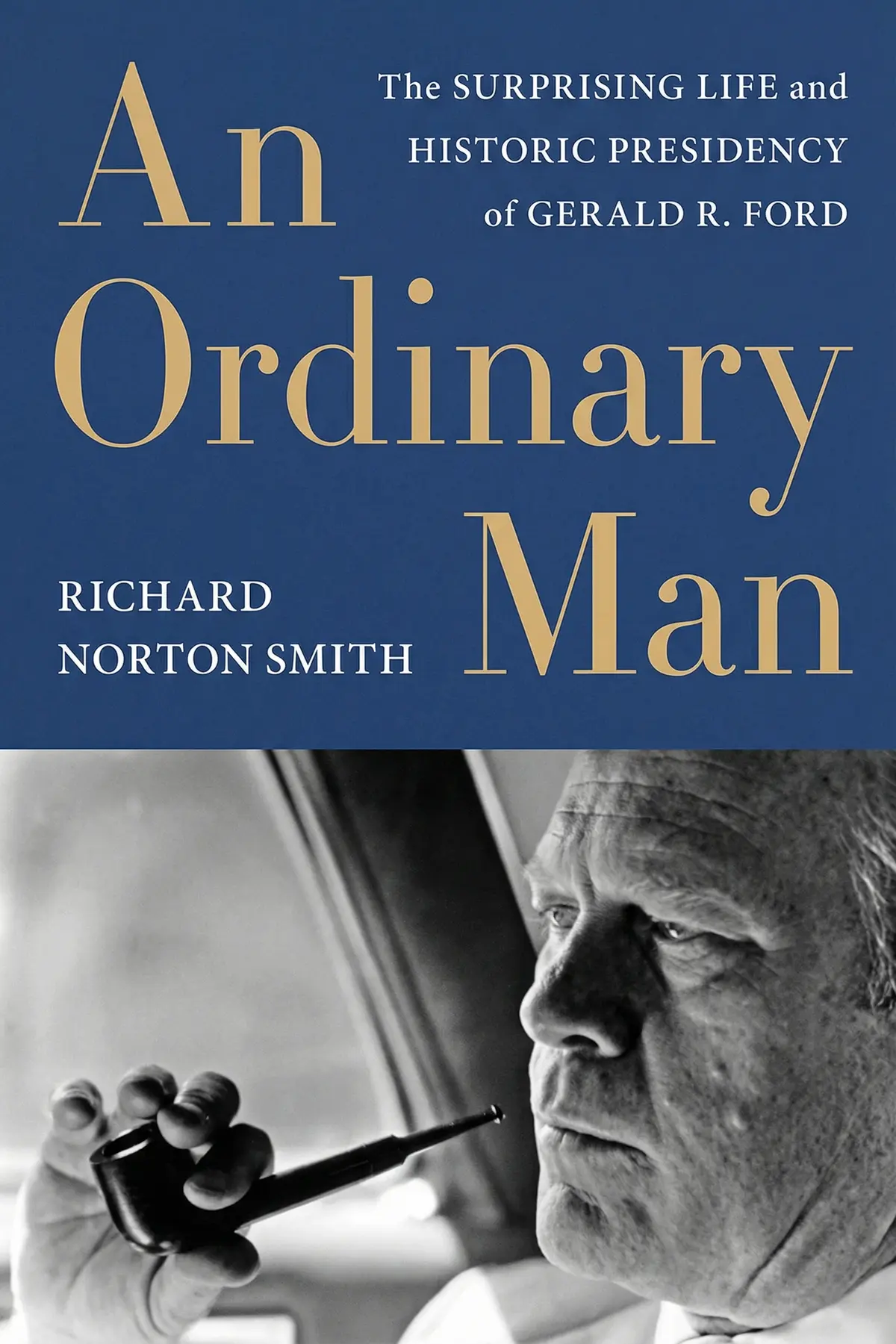
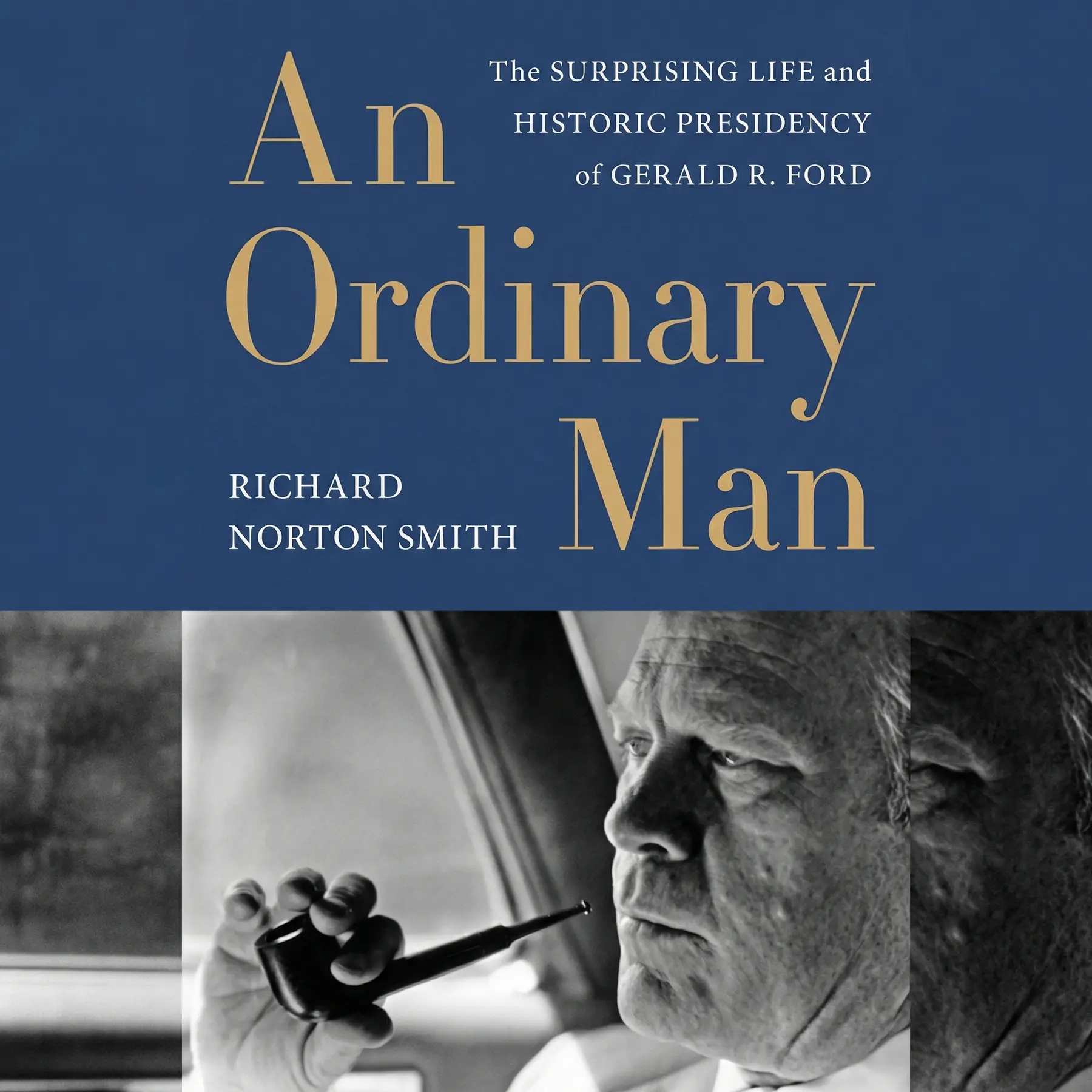
Richard Norton Smith shows how Gerald Ford, a congressman Nixon chose because he seemed harmless, took over a country in crisis and gave up his own popularity to restore Americans' trust in their government.
1 min 06 sec
Trust in leaders is easy to lose and slow to rebuild, and many people with power never try. In An Ordinary Man, historian Richard Norton Smith shows how Gerald Ford, a congressman who never wanted the presidency, took over a country in its worst constitutional crisis since the Civil War. Richard Nixon had picked Ford as vice president because he seemed harmless, and that misjudgment put Ford in the White House.
Smith once directed the Ford Presidential Library and counted Ford as a friend. He spent a decade on this book, reading thousands of documents and conducting almost two hundred interviews. His argument is that Ford’s plain virtues of integrity, compassion, bipartisanship and competence were exactly what a broken system needed, and that Ford spent his own political standing to use them.
The story moves from a mother’s escape to a dog on the Oval Office carpet, a pardon that enraged the nation and a football game remembered for decades. What it leaves you with is a working picture of character when character costs something.
1 min 56 sec
Richard Nixon was one of the shrewdest political operators of his age, and he chose his vice president as an insurance policy. The calculation looked airtight, and it ended up handing his job to the man he had picked.
1 min 48 sec
Ford was born under a different name, to a father who threatened to kill him as a baby. What happened next explains the man Nixon never understood, and the job Ford actually wanted.
1 min 19 sec
As president, Ford signed a law that touched his own childhood directly, and the same day he rejected an honor most politicians would have welcomed. Neither choice made headlines, which was exactly how he wanted it.
1 min 40 sec
Ford took office as the economy stalled, Saigon was about to fall and allies were drifting toward communism. A small moment with the family dog captures how he saw the job he never asked for.
1 min 42 sec
On September 8, 1974, Americans woke up to learn that the new president had pardoned the old one. The fury was instant and lasting. Smith argues the decision only makes sense once you see what Ford believed held a country together.
1 min 31 sec
A southern college team refused to play unless Michigan benched its Black star, and the university gave in. Ford wanted to quit. His friend asked for something else, and one play settled the matter.
1 min 48 sec
In 1999, almost no prominent politician would defend affirmative action, including famous liberals. A retired Republican president did, with a story from his student days. Nearly a decade later, that story returned in a way nobody planned.
1 min 11 sec
Nixon chose Ford because he looked like nobody in particular. Smith’s book shows why that ordinariness turned out to be the rarest quality in Washington. A man shaped by Grand Rapids thrift and his mother’s courage reached the top almost by accident. He inherited a country failing at home, abroad and at its constitutional foundations, and he spent his own political standing to steady it. He signed the law that would have helped his mother and kept silent about why. He refused to put his name on a building. He pardoned the man who had picked him as a harmless shield, knowing the country would hate him for it.
Smith presents these values as a message for politics today, where they are often missing. For the rest of us they turn into habits anyone can practice. Judge colleagues by what they have done over the years, whatever their manner. When something you care about succeeds, let it stand without your name on it. And when an institution gives in to something shameful, decide which side of the line you will hold.
Ford once told a friend that a hard hit was for him. Decades later, that friend’s grandson stood up for Ford in return.
In 1974, the United States was in its worst constitutional crisis since the Civil War. Watergate had drained public trust, stagflation was squeezing the economy and the Cold War seemed to be slipping away. The man who took charge never wanted the job. Gerald Ford dreamed of becoming Speaker of the House, and Richard Nixon made him vice president because he looked too harmless to replace anyone. Richard Norton Smith, a historian who directed the Ford Presidential Library and counted Ford as a friend, spent a decade on this biography. He read thousands of documents and conducted almost two hundred interviews. He traces Ford from his mother's escape from an abusive husband, through a Grand Rapids upbringing, to the White House and the pardon of Nixon that shocked the country. Smith presents Ford's integrity, compassion, bipartisanship and competence as an example for politics today. Along the way come a quiet signature on a child support law, a refugee rescue after the fall of Saigon, and a college football game whose story helped earn Ford a statue in the US Capitol decades later.
Readers of political history who want to know how America recovered from Watergate.
Managers and team leads interested in leadership that puts the institution ahead of personal credit.
Anyone tired of cynical politics who wants a real example of integrity under pressure.
Richard Norton Smith, born in 1953 in Leominster, Massachusetts, once directed the Gerald R. Ford Presidential Library and counted Ford as a close friend. He has written freelance for The Washington Post and worked alongside Senators Edward Brooke and Bob Dole. He appears often on C-SPAN and PBS NewsHour. His books include Thomas E. Dewey and His Times, shortlisted for a Pulitzer Prize, and Patriarch: George Washington and the New American Nation.
Richard Norton Smith
Listeners find this biography to be an extensively researched and informative portrayal of Gerald Ford's personal journey and presidency. The narrative is excellently composed, and listeners view it as a work that merits attention. They respect the author's deep expertise and his even-handed treatment of the subject.
This biography finally gives Gerald Ford the monumental treatment he deserves after years of being sidelined as an 'accidental' president. Richard Norton Smith’s prose is exceptionally smooth, making even the densest legislative battles in the House of Representatives feel urgent and vital. To be fair, 800 pages is a commitment, but the narrative pace rarely falters once you get into the rhythm of Ford’s steady rise. I was particularly struck by the detailed account of his naval service during the war, which paints a much more heroic picture than the clumsy caricature popularized by 1970s media. While the book is exhaustive, it never feels like it's just padding the word count for the sake of it. It’s an essential read for anyone who wants to understand how the GOP transitioned from Eisenhower to the modern era. Smith’s ability to remain objective while clearly respecting Ford’s character makes this the new gold standard for biographies of the 38th president.
Show moreWow, I came away with a completely different perspective on the 38th president after finishing this masterful volume. The truth is, I always thought of Ford as a placeholder, but Smith reveals a man of deep ambition hidden behind a modest, Midwestern exterior. I was moved by the descriptions of his childhood and the way he handled the revelation of his birth father’s identity with such quiet strength. The book also provides a very brave and honest look at Betty Ford’s struggles, which adds a layer of humanity that is often missing from political biographies. Smith’s writing style is elegant and engaging, proving that you don't need a scandalous subject to write a page-turner. Even if you aren't a fan of the GOP, you have to respect the way this man navigated one of the most turbulent periods in American history. It’s a massive undertaking, but it is undoubtedly the definitive account of Ford’s life.
Show moreThe chapter on Ford’s time in the Navy during World War II reads more like an adventure novel than a dry history text. I never knew he had so many brushes with death, from the hurricane at sea to the two separate assassination attempts during his presidency. Richard Norton Smith has a real talent for making these historical moments feel immediate and high-stakes. While the book is nearly 800 pages long, the pacing is excellent, and I found myself finishing it much faster than I expected. Smith’s research is clearly top-tier, utilizing interviews and notes that provide a fresh perspective on the Helsinki Accords and the end of the Cold War. To be fair, some readers might find the focus on his congressional career a bit dry, but I found it essential for understanding his leadership style. This is a brilliant, unbiased biography of a man who was far more than just 'ordinary.'
Show moreFinally got around to this massive volume, and it was worth every ounce of the three-pound weight. Gerald Ford has always been an intriguing figure to me, and Smith does an amazing job of showing why he deserves more historical credit than he usually gets. From his early days as a star athlete to his accidental ascent to the Oval Office, the story is told with a level of detail that is simply staggering. I particularly enjoyed learning about his 'trick knee' and how those famous falls were actually the result of old football injuries rather than simple clumsiness. The book does a great job of contextualizing his foreign policy achievements, like the progress he made between Egypt and Israel. Smith’s writing is clear and authoritative, making this a must-read for anyone interested in the American presidency. It's a long journey, but by the end, you feel like you truly know the man behind the office.
Show moreGerald Ford might be 'ordinary' in name, but this account of his life reveals a man of extraordinary moral fiber. Smith’s biography is a masterclass in how to document a life with both depth and dignity. The way he handles the transition from Nixon's chaotic resignation to Ford's steadying presence is both dramatic and deeply moving. Not gonna lie, I was worried this would be a dry, academic slog, but the writing is actually quite lively and full of personality. I especially loved the bits about his time as a forest ranger in Yellowstone—it's those small details that make him feel like a real human being. The book convincingly argues that Ford’s greatest achievement was simply being a man of integrity at a time when the country needed it most. It’s a beautiful tribute to public service and a fantastic addition to any history buff’s library. Highly recommended for anyone who wants to see the better angels of American politics.
Show moreEver wonder why Gerald Ford's reputation has shifted from a bumbling character to a man of profound integrity? This book answers that question by meticulously dismantling the 'empty suit' myth that followed him for decades. Smith does an incredible job of showing that Ford’s decision to pardon Nixon wasn't a corrupt bargain but a deeply painful choice made for the nation's healing. Look, the level of detail regarding his time on the Warren Commission can get a bit overwhelming for a casual reader, and I found myself skimming some of the 'inside baseball' political minutiae. However, the portraits of Betty Ford and the internal friction within the administration are absolutely fascinating and well-researched. It’s a dense, academic work that manages to stay accessible through sheer storytelling prowess. If you can handle the weight of the book, you’ll be rewarded with a rich understanding of a truly underrated leader.
Show morePicked this up because I wanted to learn more about the man who followed Nixon, and I was pleasantly surprised by how much I enjoyed it. Smith is clearly a fan of Ford, yet he doesn't shy away from pointing out his political missteps or the occasional lack of vision that hampered his administration. The narrative regarding his naval service and the brush with death during a typhoon was genuinely gripping stuff. Frankly, the only reason I’m not giving this five stars is that the sections on the 1976 primary felt like they went on forever. It’s a lot of 'inside baseball' that might only appeal to the most hardcore political junkies. But for the most part, the book is an educational and fair-minded look at a man who prioritizes service over ego. It’s a refreshing change of pace from the more polarized political books we see today. Definitely worth a read if you have the time to spare.
Show moreRichard Norton Smith manages a rare feat here: he writes with clear admiration for his subject without slipping into hagiography. It's a remarkably objective look at a man who was often unfairly parodied by the press as a klutz or a dimwit. I found the analysis of the Nixon pardon to be the most compelling part of the book, as it really digs into the moral weight Ford carried during that time. My only real gripe is that the family life takes a back seat to the political maneuvering for the first two-thirds of the book. I wanted to see more of his dynamic with Betty and the kids earlier on. Still, the prose is a pleasure to read, and the author's command of 20th-century history is nothing short of impressive. It's an educational deep dive that rewards the reader for sticking through the denser chapters. This is easily the most comprehensive look at Ford to date.
Show moreAfter hearing Smith speak on C-SPAN for years, I had high expectations for this book, and for the most part, they were met. The research is exhaustive, and the author’s knowledge of the era is palpable on every single page. I appreciated the way he balanced the technical aspects of Ford’s fiscal conservatism with the more personal stories of his life in Grand Rapids. Look, I’ll admit that some of the legislative history in the middle dragged for me, as it felt like a play-by-play of 1960s committee meetings. But the payoff in the final sections, where we see Ford's character truly shine through during the Watergate fallout, makes it all worthwhile. It’s a very fair-minded book that doesn't try to force a 'historic' label on Ford, but instead lets his decency speak for itself. It’s an informative, albeit long, read that filled a major gap in my knowledge of the 1970s.
Show moreAs someone who typically devours presidential bios, I found this one to be a bit of a slog through the middle sections. Richard Norton Smith is undeniably a master of the craft, but there were moments where the level of detail about Michigan political bosses felt unnecessary. To my mind, the book suffers slightly from being too comprehensive, sacrificing the broader historical context of the LBJ and Nixon years to focus on Ford’s specific legislative record. I also felt the treatment of his post-presidency was a bit rushed compared to the painstaking detail given to his early career. That said, the sections on his personal decency and his lifelong struggle with a football injury were genuinely enlightening. It’s a solid, educational resource, but it requires a lot of patience that not every reader will have. I’d recommend it for historians, but the average reader might find it a bit too heavy.
Show moreIt is a biography of Gerald Ford, the congressman Richard Nixon made vice president because he seemed harmless, who became president when Nixon resigned in August 1974. Smith argues that Ford’s integrity, compassion, bipartisanship and competence were what a country in its worst constitutional crisis since the Civil War needed. He follows Ford from his difficult birth and Grand Rapids childhood to the White House and his later public life.
Smith argues Ford was a small-c conservative focused on protecting the country’s institutions, which survive only while people believe in them. Watergate kept draining that belief, and a long trial of a former president would have kept the scandal alive. Ford pardoned Nixon on September 8, 1974, knowing it would likely consume his own presidency, to end what he called the long national nightmare and help the country move past Nixon.
Willis Ward was a Black star player on the University of Michigan football team and one of Ford’s closest friends. When Georgia Tech refused to play against him, the university barred him from the stadium. Ford later told the story in a 1999 New York Times piece defending affirmative action. In 2008, Ward’s grandson, state senator Buzz Thomas, retold it to help win unanimous approval for Ford’s statue in the US Capitol.
According to Smith, Ford pushed Congress to fund the resettlement of thousands of Vietnamese refugees after Saigon fell in 1975. He fought inflation with spending restraint and targeted measures, though a recession followed. He signed the Helsinki Accords on European cooperation, human rights and security, and kept détente going. He also signed a child support law and pardoned Nixon to help restore trust in American institutions.
Smith presents Ford’s life as an example for modern politics. People who seem modest are often underestimated, as Nixon underestimated Ford. Real service can mean refusing credit, as Ford did when he vetoed a bill to name a building after himself. Leaders sometimes have to spend their popularity on unpopular decisions. And standing up for others, as Ford did for Willis Ward, can matter long after the moment passes.

Jonathan Eig

Jessica Valenti

J. Craig Venter


Yanis Varoufakis

Ishmael Beah
James Herriot

AUDIO SUMMARY AVAILABLE
Get the key ideas from An Ordinary Man by Richard Norton Smith, plus 5,000+ more nonfiction titles.









