

A Promised Land
Barack Obama
 English
 ไทย
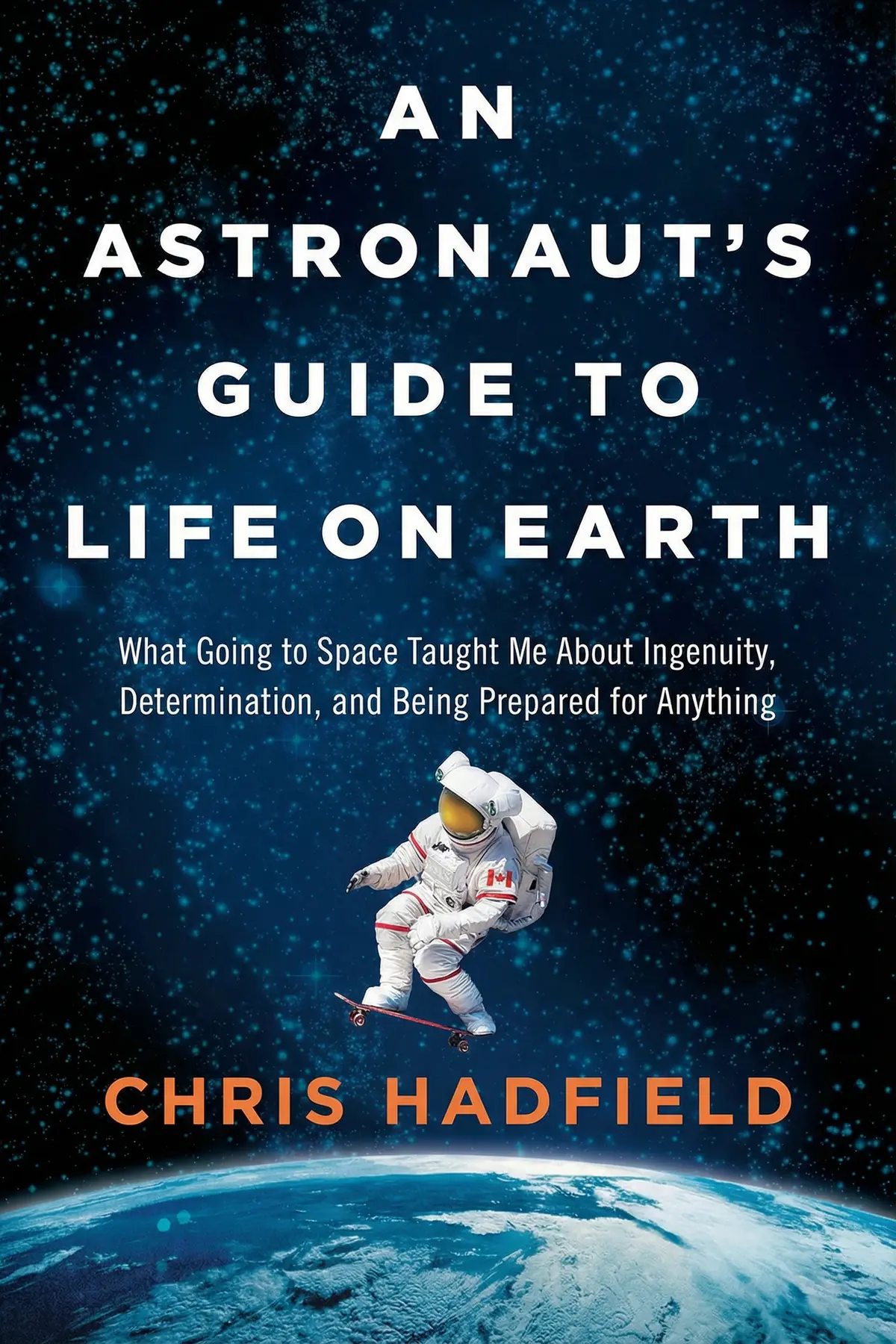
Shows how astronauts stay calm where no rescue is possible: constant rehearsal, criticism aimed at problems instead of people, and careful planning. It also shows how those habits make everyday work and family life steadier.
57 sec
If a hard week leaves you feeling one surprise away from panic, an astronaut’s habits are a good place to look. In An Astronaut’s Guide to Life on Earth, Chris Hadfield, who flew in space three times and commanded the International Space Station, makes a plain point: every day in orbit is paid for with several months of training on the ground. Spacewalks and floating are a tiny slice of the job.
The rest is preparation, critique, long absences from home and a body that must be kept ready for gravity it no longer feels. The argument running through all of it is that calm under pressure is built in advance, by rehearsing trouble, inviting correction and planning for what you will miss.
Hadfield shows how those habits keep a crew alive 400 kilometers above the planet. He also shows why they make an elevator ride, a tough review at work or a long business trip easier to handle on the ground.
1 min 40 sec
A fire breaks out in a cabin hundreds of kilometers above the nearest firefighter. What a crew needs in that moment explains why astronauts spend far more of their careers in classrooms than among the stars.
1 min 32 sec
Trainers at NASA spend their days inventing disasters that may never happen. Hadfield says the habit followed him off the job and into crowded elevators, and that it made him more relaxed rather than less.
1 min 38 sec
Hundreds of people will pick apart an astronaut’s every slip over a career. The rule that keeps all that scrutiny from poisoning a crew is simple, and most workplaces break it every week.
1 min 29 sec
Hadfield was home only a few months a year and missed birthday after birthday. His fix for one of them involved a rocket, but the method behind it fits any demanding job.
1 min 43 sec
Floating all day sounds like the best part of the job. On the space station it is also a quiet threat, and the routines that guard against it reveal what the station is really for.
1 min 26 sec
One crew’s parachute burned away on the way down, and the first people to greet them had a very puzzled question. Getting home from space is brutal, yet Hadfield finds something unexpected waiting at the end.
1 min 01 sec
Hadfield’s book makes the astronaut’s life look like a long apprenticeship in being ready. Years of training stand behind each day in orbit. Hundreds of critics stand behind each crew. Even a son’s birthday and a wife’s Valentine’s card get planned in advance. None of this removes risk, as a burning parachute over the Kazakh Steppe shows, but it means the people facing the risk have already met most of it in rehearsal.
That idea fits an ordinary life. Before the next big event in your week, picture what could go wrong and choose your first move, the way Hadfield sizes up a crowded elevator. When a colleague slips, talk about the problem and write down the fix, and leave the person out of it. If work is about to pull you away, open a calendar tonight, mark the dates you will miss and arrange something for each one now.
The reward goes beyond safety. Hadfield comes back from every hard landing seeing his own planet with fresh eyes, and it is the preparation that lets him enjoy the view.
Most people picture astronauts floating past windows full of stars. Chris Hadfield, who flew in space three times and commanded the International Space Station, describes a job that is mostly something else. For each day in orbit come months of study, simulation and critique on the ground, because 400 kilometers up there is no rescue crew to call. Hadfield explains how that preparation works. Trainers invent disasters so crews learn to rank threats and act calmly. Hundreds of reviewers pick apart every mistake, but always without making it personal. Families get their own plans, from a Valentine's card arranged in advance to a launch that became a birthday celebration. Life on board turns out to be a mix of strict routine, from two hours of exercise a day to no-rinse shampoo, and serious science that reached fields as different as medicine and online maps. Coming home brings a rough landing and weeks of readjusting to gravity. Readers get a frank picture of the job and a set of habits they can carry into an office or a home: rehearse what could go wrong, critique the problem and not the person, and plan ahead for the times you will be missing.
Professionals who freeze or scramble when plans fall apart and want a calmer way to handle surprises.
Team leads who need feedback that fixes mistakes without wounding people.
Parents and partners in demanding jobs who often miss important dates at home.
Chris Hadfield, born in 1959, studied engineering at the Royal Military College in Kingston, Ontario, and served 25 years in the Canadian Armed Forces as a fighter pilot and then a test pilot. The Canadian Space Agency selected him as an astronaut in 1992. He flew to Mir in 1995 and to the International Space Station in 2001, when he became the first Canadian to walk in space, and again in December 2012. In 2013 he commanded the station, sharing photographs of Earth and daily life on board with a large online audience. He has written five books.
Listeners find this work to be a charming and captivating experience, packed with wisdom and practical guidance for navigating existence. Furthermore, they value the inspiring material geared toward professional environments and the collaborative perspective on life it offers. The prose is also noted for being articulate and clear, featuring excellent narratives, while listeners consider it funny and deeply informative regarding the realities of space exploration.
This book surprised me by being less about the glory of space and more about the grit required to get there. Hadfield writes with a warmth that makes his incredible career feel almost accessible, though his discipline is clearly on another level. I was particularly struck by his "aim to be a zero" philosophy, which flies in the face of most modern self-help advice that demands we all be superstars immediately. Truthfully, the way he describes the mundane parts of training—learning Russian, practicing every possible disaster—is just as gripping as his descriptions of liftoff. It’s a grounded perspective from someone who has literally left the planet. While some might find the heavy emphasis on preparation a bit repetitive, I found it incredibly refreshing to hear a successful person credit their luck to exhaustive hard work rather than innate genius. It is a genuine masterclass in perspective.
Show morePicked this up after watching Chris Hadfield’s viral Space Oddity video, expecting a light collection of space anecdotes, but what I got was a profound meditation on what makes a life well-lived. His mantra of "sweat the small stuff" is the total opposite of what we’re usually told, yet he makes a compelling case for how attention to detail creates true freedom and safety. The writing is incredibly genial, making you feel like you’re sitting in a pub with the world’s most interesting astronaut while he spills all his secrets. Frankly, the transition back to Earth and the description of how gravity feels like a physical weight after months in orbit was the most moving part for me. It’s a beautiful reminder that our home planet is something to be cherished, not just a launchpad. This is easily one of the most inspirational books on my shelf.
Show moreWow. This is the kind of book that makes you want to wake up at 5:00 AM and reorganize your entire life. Hadfield’s voice comes through so clearly on every page; he is remarkably likable and seems to have a genuine desire to share his knowledge with the rest of us. I was especially fascinated by the description of the Cupola on the ISS and how it changed his view of borders and geography. The way he discusses managing the worst-case scenario transformed my own anxiety into a more productive form of planning. It’s a delightful read that balances the high-tech world of aeronautics with very simple, relatable advice about being a good neighbor and a reliable teammate. It really does serve as fuel for your own metaphorical rocket.
Show moreFinally got around to reading this, and I’m kicking myself for waiting so long because it is absolutely fantastic. Hadfield’s description of the physical toll of returning to Earth—the heavy limbs, the nausea, the "old man" shuffle—was eye-opening and something you never see in the movies. This isn't just a book for space nerds; it's for anyone who wants to be better at what they do. His focus on the collective effort of the ISS crew and the beauty of international cooperation is exactly the kind of optimism we need more of right now. The prose is eloquent and the pacing is perfect, moving between high-pressure simulations and quiet moments of reflection. It’s easily one of the best books I’ve read this year.
Show moreEver wonder what it actually feels like to be stuffed into a tiny Soyuz capsule or how you brush your teeth without a sink? Hadfield delivers those details with a dry wit that kept me turning pages late into the night. It isn’t just a dry memoir; it’s a manual for staying calm when the stakes are literally life or death. To be fair, there are sections where the technical descriptions of the ISS feel a bit dense for a casual reader, but his passion carries the narrative through the slower moments. I loved the way he reframes fear as a lack of preparation—it’s a mindset shift that I’ve already started applying to my own career. The book is eloquent, straightforward, and filled with the kind of hard-earned wisdom you can only get by orbiting the Earth sixteen times a day.
Show moreAfter hearing so much hype about Commander Hadfield, I was worried this would be another ghost-written celebrity fluff piece, but it is remarkably substantial. The book functions as a team-oriented guide to life, showing that even the person on the spacewalk is only successful because of a thousand people on the ground. Not gonna lie, the constant "can-do" attitude can feel slightly overwhelming if you’re in a cynical mood, but his humility feels authentic rather than performed. He doesn't sugarcoat the sacrifices his family made during his career, which adds a necessary layer of reality to the hero narrative. It’s a great mix of high-stakes adventure and practical advice for navigating office politics or personal goals. Definitely worth a read for the perspective on global cooperation alone.
Show moreNot what I expected at all, as I thought this would be a strictly chronological autobiography, but it’s structured more like a series of interconnected life lessons. Hadfield uses his time at NASA to explain why being a "plus-one"—someone who adds value without seeking the spotlight—is the ultimate professional goal. Look, I’m not a scientist, and I usually find business-adjacent books boring, but the stories about his training in Russia were genuinely fascinating. My only minor gripe is that he occasionally repeats certain themes about preparation, but maybe that’s the point? If you want to understand the psychological makeup of a test pilot, this is the book for you. It’s a solid, insightful read that manages to be both educational and deeply human without ever feeling like it’s talking down to you.
Show moreThe chapter on managing fear was a game-changer for me, especially as someone who struggles with irrational phobias. Hadfield explains that he isn't fearless; he’s just extremely prepared, and that distinction is so important. I loved the "what's the next thing that's going to kill me?" mentality—it's a hilarious but effective way to prioritize problems. The book is full of these little nuggets of wisdom that are clearly born from extreme situations but apply perfectly to a stressful day at work. My only complaint is that the writing is a bit straightforward and lacks some of the poetic flair I’ve seen in other space memoirs, but Hadfield’s sincerity more than makes up for it. It's a very practical, grounded look at a career that is literally out of this world.
Show moreAs someone who isn't particularly obsessed with space, I found the middle sections of this book a bit of a slog through technical acronyms. Hadfield is clearly a sterling human being, but his tendency to pontificate on the "right" way to live can feel a bit preachy after a few chapters. He is a perfectionist to the core, and while that works for an astronaut, it’s a bit exhausting to imagine applying that level of "sweating the small stuff" to a regular Monday. However, I can't deny that the stories about his early days as a fighter pilot were thrilling, and his sense of humor about his own quirks helps soften the lecture-heavy tone. It’s a decent memoir with some great takeaways, but I think I would have preferred a more traditional narrative style.
Show moreGotta say, while the content is definitely interesting, I struggled a bit with the pacing of the life lessons versus the space stories. Sometimes the transition from a life-threatening crisis in orbit to a tip about how to handle a business meeting felt a little disjointed. I also found the emphasis on meritocracy a bit idealistic, given that not everyone has the same starting line as a fighter pilot. That said, the "being a zero" concept is a truly brilliant piece of social advice that I think everyone should hear. The book provides a great peek behind the curtain of NASA, and Hadfield’s personality is infectious even if the book's structure didn't totally work for me. It's a three-star read that I'm still glad I picked up.
Show moreChris Hadfield argues that calm under pressure is built long before a crisis arrives. Astronauts train for months for each day in orbit, rehearse disasters that may never happen, accept constant criticism and plan ahead for time away from family. Because no rescue crew can reach a station 400 kilometers up, they must be ready to solve almost anything themselves, and Hadfield shows how those habits also work on the ground.
Through simulations. Trainers invent bad scenarios such as engine trouble, computer failures and explosions, and crews work through them as if they were real. The aim is to replace the fight-or-flight reflex with a calm response: rank the threats, then solve them one at a time. The stakes are real, as the 1997 fire on the Russian station Mir showed, when the crew put out a burning oxygen canister with wet towels.
He treats it as a survival skill. At NASA, dozens of people watch each simulation to catch mistakes, and hundreds review an astronaut’s work over a career. The findings become Flight Rules for handling specific problems. Criticism must target the problem, never the person, and must never involve ridicule, because in an emergency your crewmates are the only people who can save you.
He was home only about 15 weeks a year, so he planned his absences in advance. Before his last mission he marked every date he would miss on a calendar, arranged a Valentine’s card and gift to arrive for his wife on the day, and turned his launch into a celebration of his son’s 16th birthday by telling interviewers the rocket’s engines were the biggest candles.
Hadfield compares it to a long sailboat trip: remote, with little privacy or fresh food and no running water. Astronauts wash their hair with no-rinse shampoo and exercise two hours a day so they can still stand when they return. The station is mainly a laboratory, and its research has helped with one type of osteoporosis, nuclear plant machinery and Google Maps.
Barack Obama

Andrew D. Thompson



Masaji Ishikawa

Deepak Chopra

Ben Macintyre



James Shapiro
AUDIO SUMMARY AVAILABLE
Get the key ideas from An Astronaut’s Guide to Life on Earth by Chris Hadfield, plus 5,000+ more nonfiction titles.









