

A Promised Land
Barack Obama
 English
 ไทย
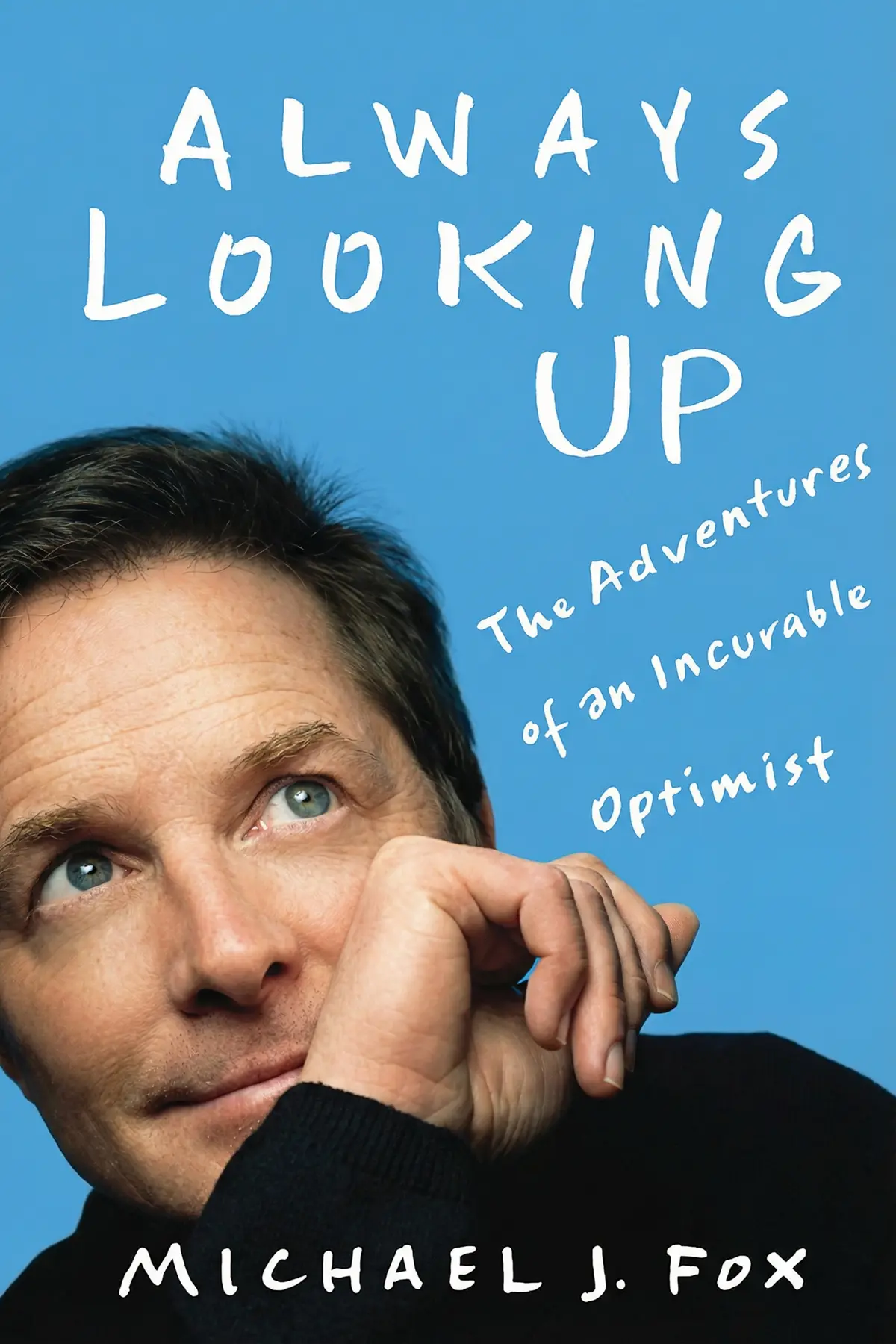
Michael J. Fox shows how he met Parkinson's disease by leaving acting on his own terms, fighting for research, choosing hope over fear in faith and letting his children find their own way.
1 min 02 sec
When a diagnosis or a loss wrecks the plan you had, hope can start to feel naive. Michael J. Fox learned he had Parkinson’s disease at 29, and in Always Looking Up he treats optimism as a choice he keeps making, not a mood he waits for. His first hard choice came in 1999, when he walked away from a hit television show so his energy could go to his health, his family and the search for a cure.
That pattern repeats through the book. Each time illness closes a door, Fox looks for the next useful thing he can still do, and he chooses hope when fear would be easier. His story runs from a sitcom set to Congress, from a preacher’s lit match to a bishop in Tulsa, and from a nervous new father’s parenting classes to a 16-day drive with his son. What it offers is a working model of resilience: when to let go, what to fight for, and how to stay present with the people who matter.
1 min 19 sec
A star at the top of a hit show realized, floating in calm water on New Year’s Eve, that something had to end. How he chose to leave mattered as much as the decision itself.
1 min 24 sec
A scientist’s prediction about how soon a cure might come changed what one famous patient did with his name. The charity he built next was designed to behave in an unusual way.
1 min 49 sec
A bill passed both houses of Congress and still failed, announced against a carefully chosen backdrop. What Fox did after that defeat says a lot about where his hope comes from.
1 min 39 sec
Two strangers at the door on a quiet summer day sent Fox back to a childhood memory involving a preacher and a burning match. The contrast shaped how he tries to win people over.
1 min 36 sec
A famous preacher watched a news report and lost his church because of what he concluded. Fox traveled to Tulsa to meet him, and the conversation prompted him to reflect on his own family’s faith.
1 min 43 sec
A father who once worried over every scrape had to accept that he could not protect his four children from everything. What he chose to do instead became the core of his parenting.
1 min 38 sec
Two cross-country trips, almost thirty years apart, bookend Fox’s thinking about change. The second one, with his son, happened while he was still absorbing news that would reshape everything.
1 min 18 sec
Fox’s optimism, as he tells it, has little to do with expecting good news. It is a habit of looking for the next useful move once the old plan stops working. He reached 100 episodes and then left. He turned a frightening diagnosis into a foundation built for speed. He faced a president’s veto of a stem cell funding bill and kept pushing for research-friendly policies anyway. He met fear-driven faith with hope, admired a bishop who paid dearly for honesty, and let his children stumble toward lives of their own.
The image worth keeping is the car on the open road, Sam in the seat beside him, California still days away. Nothing about Parkinson’s was in Fox’s plan, yet the road kept offering things to notice and people to talk to.
When something you counted on falls apart, his story suggests a few moves. Decide what is worth finishing, then let the rest go on your own terms. Look at what you still have and where it could serve a bigger cause. And when you need to win someone over, lead with hope and save the warnings for later.
Looking up, for Fox, is simply where you point your eyes while you keep driving.
Diagnosed with Parkinson's disease at 29, Michael J. Fox had to give up the plan he had for his life. In Always Looking Up he describes what came next, and why he still calls himself an optimist. The book follows a series of choices. Fox leaves Spin City after reaching 100 episodes, testifies before Congress and founds a research foundation built for speed. He campaigns for stem cell research in 2006 and keeps going after a presidential veto. He questions faith that runs on fear, travels to Tulsa to meet a bishop who lost his church for following his conscience, and grows closer to his wife's Jewish traditions. He raises four very different children and learns, on a 16-day drive with his son, that the route matters more than the arrival. Readers get an honest, warm portrait of resilience in practice: how to recognize when to step back, how to turn a personal blow into a public cause, and how to keep hope at the center of daily life.
People living with a chronic illness, or caring for someone who is, who want a hopeful but honest example.
Professionals forced to leave a role they loved and looking for a new purpose.
Parents learning to step back and let their children fail, recover and find their own path.
Michael J. Fox began acting as a child and became a film star as Marty McFly in the Back to the Future trilogy. On television he played Alex P. Keaton in Family Ties and Mike Flaherty in Spin City. Diagnosed with Parkinson's disease in 1991, he spoke about it publicly in 1998 and in 2000 founded The Michael J. Fox Foundation to help fund research toward a cure. His New York Times bestselling books include Lucky Man and A Funny Thing Happened on the Way to the Future.
Listeners find this work a delightful experience with an optimistic life message, and one listener mentions it serves as a wonderful way to begin a new year. The book is also skillfully crafted and informative, with one listener observing that it provides a deeper understanding of Parkinson's disease. Additionally, listeners value Michael J. Fox's sense of humor, character, and vulnerability, while one review emphasizes his unconditional love for his family.
Wow, what an incredibly moving perspective on resilience. Michael J. Fox has this rare ability to discuss a devastating disease with a level of humor and emotional depth that feels entirely authentic. He doesn't sugarcoat the "arms wheeling" or the physical tolls, yet he remains an incurable optimist throughout the entire book. Truth is, I learned more about Parkinson's here than I ever did from a medical article because he makes the symptoms so relatable through his storytelling. The chapter on faith was a pleasant surprise; it wasn’t preachy but rather an inclusive look at how he finds meaning in the chaos. His unconditional love for Tracy and his kids is the heartbeat of the book. I closed this feeling like I had a better understanding of what it means to truly look up when life tries to pull you down. Highly recommended for anyone facing their own uphill battle.
Show moreAs someone who has family members dealing with chronic illness, this book was a breath of fresh air. It isn't a "woe is me" story; it’s a masterclass in adapting to a new normal. Fox writes with such emotional depth that you can feel his love for his family in every paragraph. Gotta say, his description of Parkinson's symptoms as a spin-arrow is both hilarious and illuminating. The book provides a deeper understanding of what goes on behind the scenes of a major medical foundation. I actually appreciated the political sections because they showed just how hard he has to fight for a cure. It's a positive, uplifting message that doesn't feel forced or fake. If you're looking for a memoir that will leave you feeling better about the world, this is the one. Fox is a gem, and his writing is just as charming as his screen presence.
Show moreThis memoir is much more than just a celebrity update; it’s a manual for living with grace under pressure. While I loved his previous work, this follow-up feels more grounded in his current reality of advocacy and family life. Fox’s humor shines through even when he’s describing the frustration of his "human whirligig" symptoms, making the heavy parts of Parkinson’s easier to digest. To be fair, the section on the politics of stem cell research gets a bit dense, but his passion for the cause is undeniable. I found his reflections on his four children particularly touching, showing a side of him that isn’t just the movie star we grew up with. It’s an educational look at a man who refuses to be a victim. If you need a boost of positivity to start your year, this is definitely the book to grab.
Show morePicked this up on a whim and was pleasantly surprised by the educational value tucked inside the personal stories. Fox manages to explain the complexities of his foundation's work without making it feel like a dry textbook, even if it does get a little heavy on the names sometimes. I found his reaction to the Rush Limbaugh controversy to be handled with incredible grace and wit. It’s hard not to laugh when he compares his kids to Labrador retrievers scrambling into a car with the motor running. Those moments of levity are what make the book work so well. In my experience, celebrity memoirs can be hit or miss, but this one has a lot of heart. It’s not a chronological life story, which might confuse some, but the thematic approach allows him to dive deep into his values. Solid four stars for a very inspiring man.
Show moreEver wonder how someone maintains such a sunny outlook while facing a progressive illness? Michael J. Fox answers that with a resounding, humorous, and sometimes messy look at his post-acting life. There are just enough Back to the Future nods to satisfy the fans, but the real meat is in his transformation into an advocate. He describes himself as a "human whirligig," and that self-deprecation makes the harder chapters on political roadblocks easier to swallow. Personally, I enjoyed the segments on his family life the most; the way he talks about his wife Tracy is truly goals. The book is well-written and offers a deeper understanding of the neurological challenges he faces daily. It's not always a fast read because some of the scientific details require focus, but the payoff is a much-needed dose of perspective. It’s a great way to remind yourself that your future isn't written yet.
Show moreFinally got around to finishing this, and I’m glad I stuck with it through the dense parts. Fox is a talented writer, but he definitely doesn't shy away from the technicalities of stem cell research and the Bush-era vetoes. At times, the political mantra felt like "resounding drums" as another reviewer put it, but I think it's important context for his life's work. To be fair, the humor and the "safe at home" chapters are the real highlights. He has a way of turning a frustrating physical symptom into a witty observation that makes you smile despite the circumstances. It’s educational without being a lecture, and his voice is so clear you can almost hear him narrating it. This isn't just for fans of Marty McFly; it's for anyone who wants to see how a well-grounded man handles life's biggest curveballs. Definitely a worthwhile read for the new year.
Show moreThe chapter on faith alone is worth the price of admission. Fox takes a very honest, non-biased look at religion and spirituality that felt incredibly refreshing. He doesn't claim to have all the answers, but his search for them is genuinely interesting. The book does a great job of humanizing a celebrity, showing him as a father and a husband first, and a movie star second. I did find the jumpy timeline a bit confusing occasionally, as it’s more of a thematic collection than a straight autobiography. But his description of living as a "human whirligig" while still finding the strength to lead a foundation is nothing short of inspiring. It’s a well-written, educational piece that highlights the importance of unconditional love and persistence. I’ll likely remember his metaphors for his children and his dog long after the political details fade. A very solid follow-up to Lucky Man.
Show moreI wanted to love this, but the structure really threw me off. Michael J. Fox is an incredible human being, but as an author, he tends to jump around in time and space without much warning. One minute we are talking about his kids, and the next we are deep into the weeds of the Bush administration and stem cell funding. Look, I understand that politics are a huge part of his life now, but it felt like the narrative thread got lost in the shuffle. I would have preferred more of those personal family anecdotes and less of the technical legislative jargon. His writing is witty and self-deprecating, which kept me turning the pages, but I ended up feeling more like a spectator at a political rally than a guest in his home. It's a decent read, just not quite what I expected.
Show moreAfter hearing several interviews with MJF, I decided to finally give his writing a try. There’s no denying that his personality is infectious, and that "incurable optimism" he talks about is evident on every page. However, the book feels quite disjointed at times. He organizes it by themes—Politics, Faith, Family—which means we keep jumping back and forth through different years. Not gonna lie, I got a bit lost in the "Politics" chapter because there were so many names of senators and scientific terms without much of a primer. I loved the parts about his kids and the funny way he views his symptoms, like trying to listen to Obama while his arms are spinning like a board-game arrow. He’s a grounded guy, but sometimes the "celebrity" world he lives in feels worlds away from reality. It’s a good book, just a bit uneven in its execution.
Show moreNot what I expected after hearing so many good things about Fox’s first book. While I have nothing but respect for his fight, this felt less like a memoir and more like a political manifesto for stem cell research. For an average reader, the constant name-dropping of presidents and athletes makes his experience feel out of reach and a bit alienating. I struggled to connect with his "Forrest Gump moments" when I was looking for a more intimate look at the daily struggle of the disease. Frankly, the middle section was a slog that I almost didn't finish. He’s a talented writer with a great sense of humor, but the balance was just off for me. If you’re into the legislative side of medical research, you’ll love it, but for a casual fan of his acting, it might be a disappointment.
Show moreIt is a memoir about the years after Fox’s Parkinson’s diagnosis at 29. He describes leaving Spin City, founding The Michael J. Fox Foundation in 2000, campaigning for stem cell research in 2006, rethinking faith and fear, raising four children and taking road trips. Throughout, he presents optimism as a choice he keeps making when illness changes his plans.
His Parkinson’s symptoms were getting worse and the role had become too demanding. During a New Year’s Eve snorkeling trip at St. John’s, he realized it was time to focus on his health and family. He stayed long enough to reach 100 episodes, which secured the show’s syndication, and made sure his character’s final exit mirrored his own.
Fox sees himself as spiritual rather than religious, with beliefs grounded in hope. After talking with two Jehovah’s Witnesses at his Long Island home, he felt their mission was driven by fear of a vengeful God. A childhood memory of a preacher using a lit match to describe hell confirmed his dislike of faith built on fear.
Fox moved from anxious first-time parenting with Sam to trusting his instincts by the time Esme was born. He supports each child’s own path, from Sam’s choice to study math and science in California to Aquinnah’s ballet and Schuyler’s sports. Living with Parkinson’s taught him to balance control with acceptance and to let his children face failure while he stays close.
Fox’s story suggests finishing what truly matters before stepping away from something you can no longer sustain, as he did with 100 episodes of Spin City. Use what you still have, as he used his fame, for a larger cause. Treat setbacks as reasons to push harder, persuade with hope instead of fear, and value the moments along the way.
Barack Obama


Masaji Ishikawa

Ben Macintyre


James Shapiro



Ben Macintyre

AUDIO SUMMARY AVAILABLE
Get the key ideas from Always Looking Up by Michael J. Fox, plus 5,000+ more nonfiction titles.









