
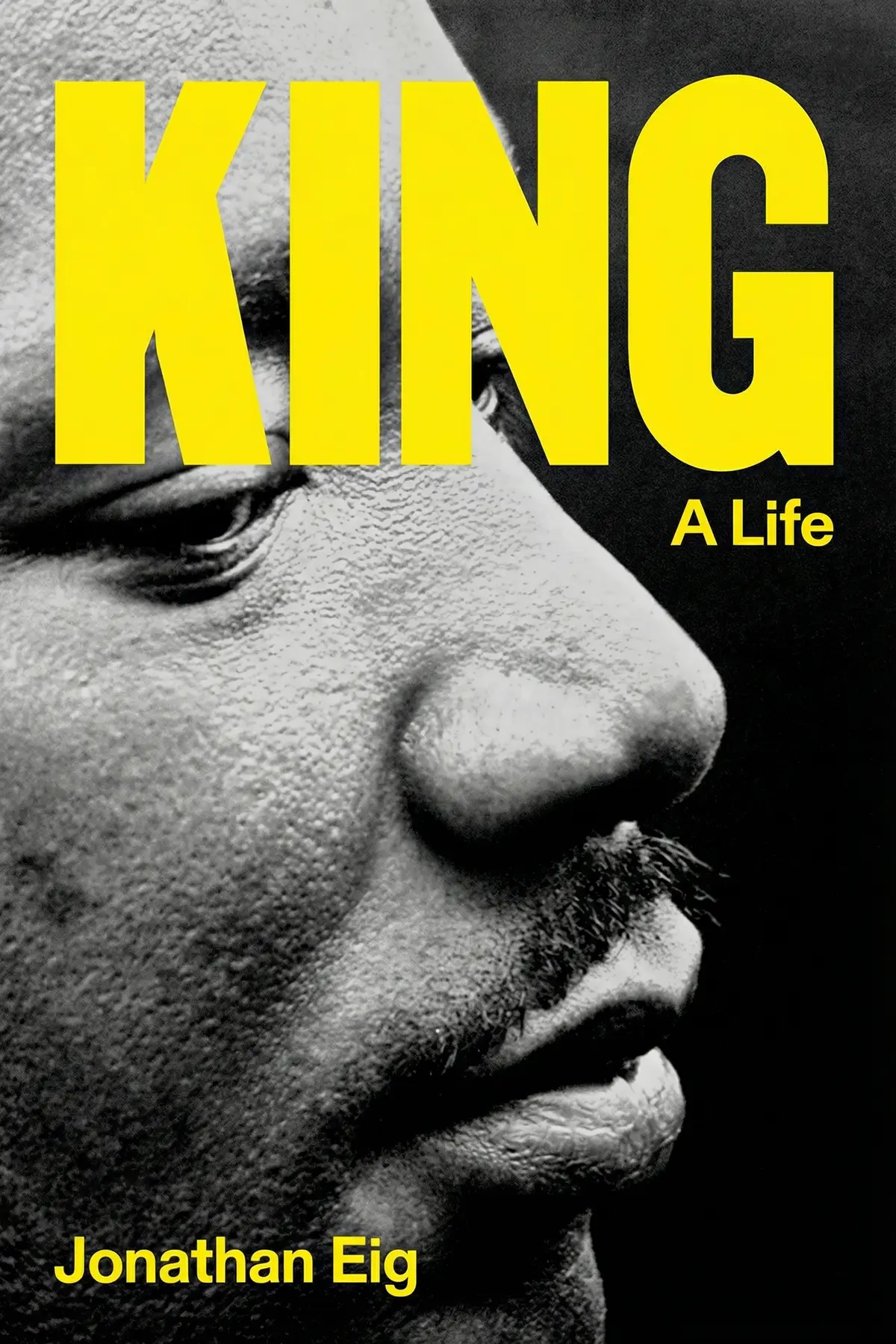
King: A Life
Jonathan Eig
 English
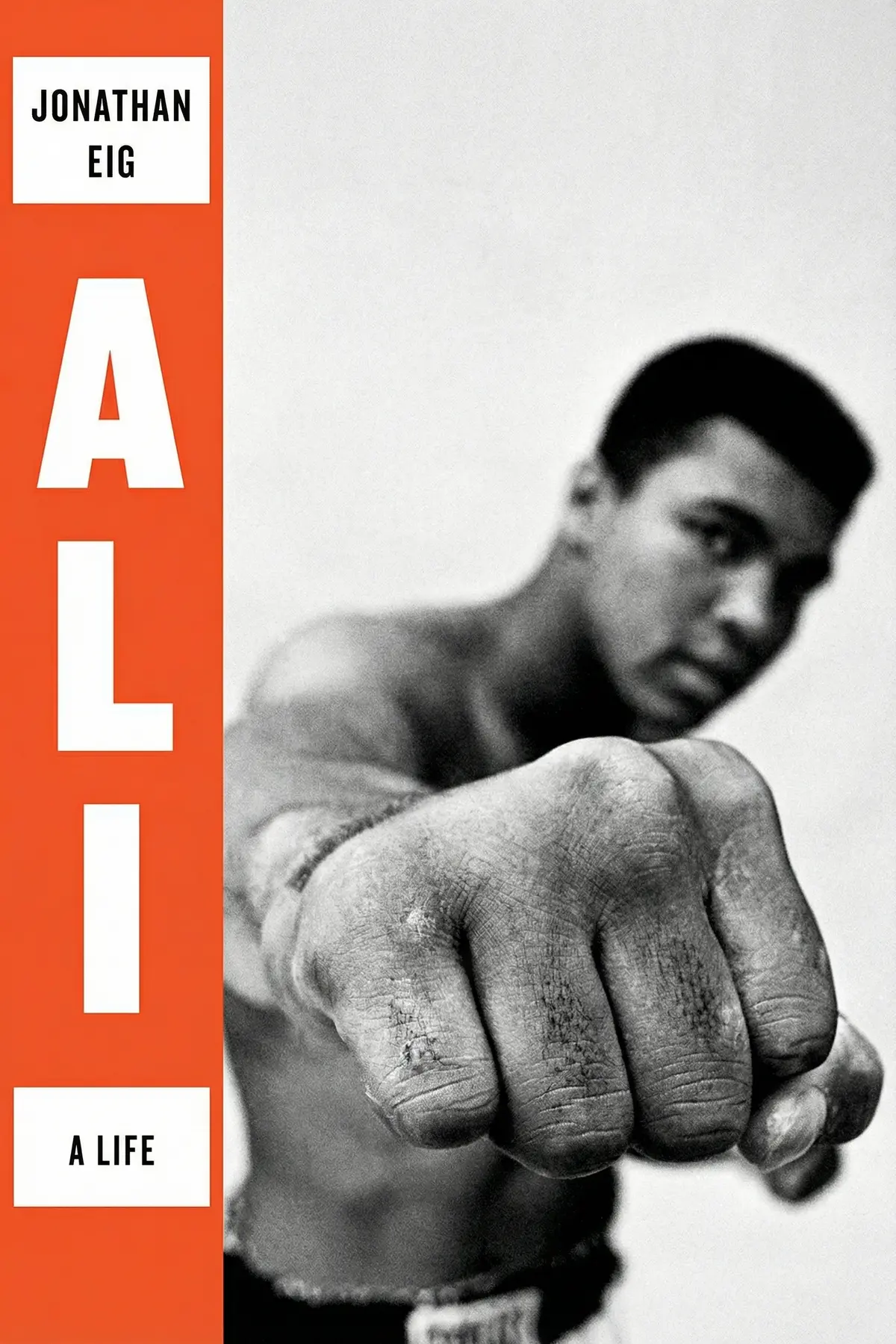
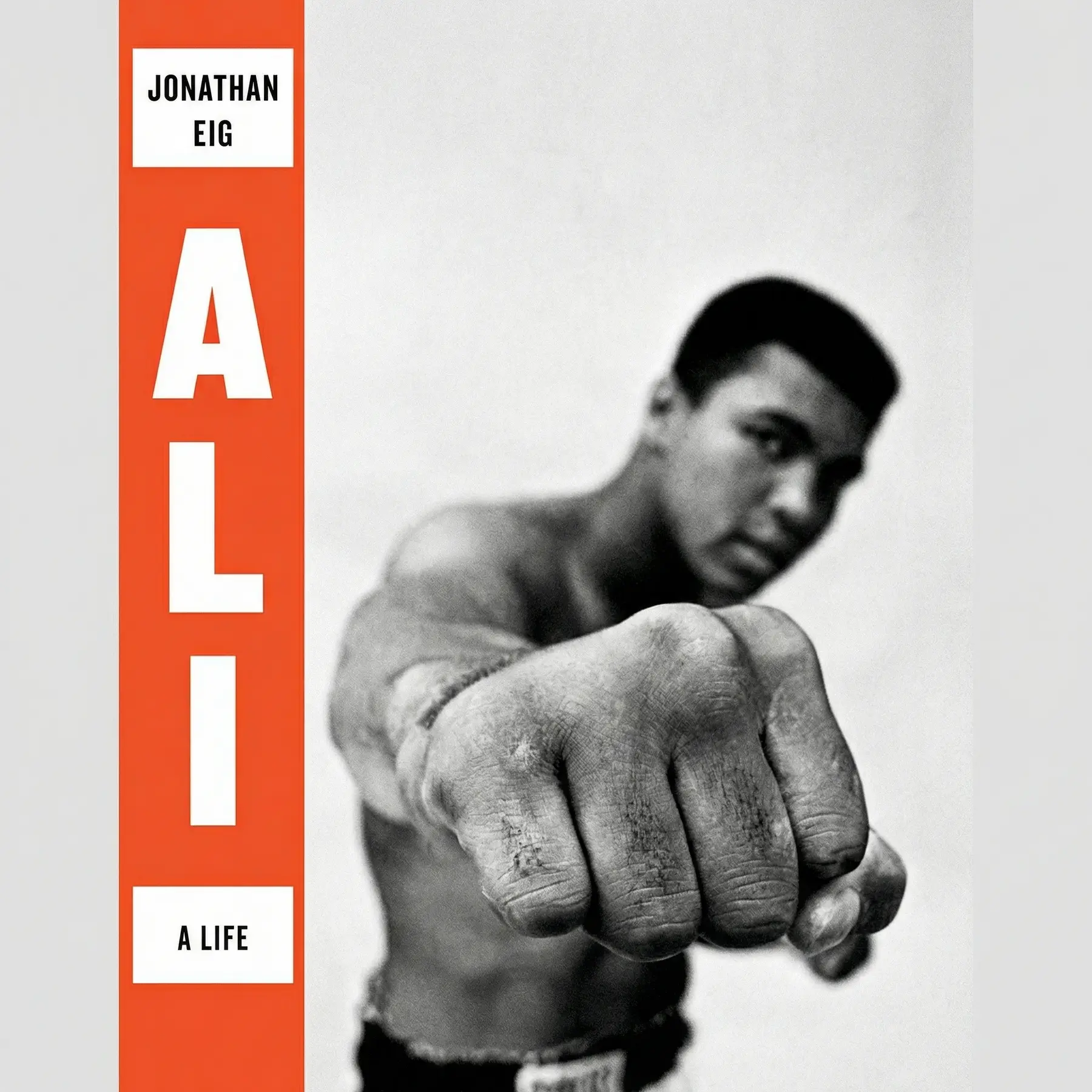
Follows Muhammad Ali from a poor Louisville childhood to three heavyweight titles. Refusing the Vietnam draft cost him his titles, choosing boxing ended his Nation of Islam membership, and years of blows to the head harmed his health.
58 sec
Most people picture Muhammad Ali as a fast, loud heavyweight, yet his birth name came from a Kentucky slave owner. In Ali: A Life, Jonathan Eig, a onetime Wall Street Journal reporter, traces the boy born Cassius Clay from a pink house in Louisville to a fight against Joe Frazier that roughly 300 million viewers are thought to have tuned in for. One pattern runs through it all. Ali’s biggest contests were choices about who he would be, and each time he picked conviction over comfort, he paid a price and got back up.
The story moves from a stolen bicycle to an Olympic final, from a new name to a refused draft order, and from a hook that tore brain cells to a hostage mission. Eig turns a sports legend into a study of nerve under pressure. He shows what it costs to defy powerful institutions, and what a person can still give once the body begins to fail.
1 min 42 sec
Long before it was printed on fight posters, the name Cassius Marcellus Clay had passed through slavery, a shooting over a single coin and a prison cell. Those generations shaped the meaning of the name Ali would later give up.
1 min 44 sec
A storm, a missing Christmas present and a police officer with a side job came together on one afternoon in Louisville. A furious twelve-year-old walked in to report a theft and walked out with a new direction.
1 min 36 sec
At the Rome Olympics, the young American was a crowd favorite but nobody’s pick for gold. In the final he faced the exact kind of opponent who had last beaten him, and he had prepared for it.
1 min 35 sec
The night of his epic 1964 win over Sonny Liston, Clay met a man who would change his life. Days later he stood before reporters and gave them a story far bigger than boxing, and a name they had never heard.
1 min 48 sec
In a Houston military office, 27 men waited to hear their names called. One of them had brought a lawyer and had no intention of standing up. What followed took away years of his career.
1 min 38 sec
The suspension pleased one powerful man very much. When Ali hinted at a comeback, he was called to a private meeting with no smile waiting for him, and he left facing a choice with no easy side.
1 min 50 sec
His return ended with him on the canvas and a loss on his record. Three years later, in Africa, he faced a younger, undefeated puncher and won by doing something that looked like losing for most of the night.
1 min 45 sec
A third world title came in a sloppy fight that he won on sheer will. What followed was harder: an illness he could not outbox, and a second career built on jokes, diplomacy and stubborn generosity.
1 min 08 sec
The opponents that shaped Ali were rarely the men across the ring. They were a draft board, the boxing associations, a religious leader he feared and finally his own body. Eig shows him losing titles, a name and a community, and each time choosing belief over safety, then rising again, as he did from Frazier’s hook. The book does not pretend that toughness came free: late in his career the many blows to his head were taking a toll, and around 1984 he was diagnosed with Parkinson’s, which stayed with him for the rest of his life.
What stays is a way of reading your own hard moments. When success hands you attention, decide on purpose what it is for. When a defeat stings, treat it as Clay treated his loss to a left-hander before Rome, and change what you rely on. When powerful people demand that you drop a conviction, think of the man who, warned of prison, handed over his papers and said he mostly wanted his mother’s cooking.
Calm under that kind of pressure was the title he held longest.
Muhammad Ali is remembered as a dazzling heavyweight with a quick tongue. Jonathan Eig sets out to show the man behind that image: a boy whose name traced back to a Kentucky slave owner, and who became an Olympic champion, a convert to the Nation of Islam and a divisive public figure of the 1960s. Eig follows Ali through the decisions that defined him. He changed his name and spoke out for Black pride. He refused induction into the army during the Vietnam War and lost his titles for three years. He was cast out of his own religious movement for choosing boxing over its leader. Then, in the ring, he lost to Joe Frazier, outfoxed George Foreman with the rope-a-dope and won a third championship against Leon Spinks. Readers get the full arc of the life, from a stolen bicycle in 1954 to a diplomatic mission in 1985 and a long fight with Parkinson's disease. They also get a clear picture of what standing on principle cost one famous man, and what he kept giving after his body began to fail.
Sports fans who know the famous fights but not the man or the choices behind them.
Readers interested in civil rights, the Vietnam era and how athletes became political voices.
Anyone weighing a stand at work or in public who wants to see what conviction can cost.
Jonathan Eig, born in 1964, is a former reporter for The Wall Street Journal and the author of six books, four of them New York Times best sellers. Ali: A Life won a PEN America literary prize in 2018. His 2023 biography King: A Life, about Martin Luther King Jr., won the 2024 Pulitzer Prize for biography. He also served as a consulting producer on the PBS documentary series about Muhammad Ali, and his first book, Luckiest Man, is about the baseball player Lou Gehrig.
Jonathan Eig
Listeners find this biography to be extensively researched and elegantly composed, offering an engrossing narrative that portrays Ali's human nature and singular character. The work is delightful and never dull, with one listener mentioning how strikingly it illustrates Ali’s life events. They value its reliability, with one review calling it a legitimate exploration of the athlete's life.
Jonathan Eig has produced what I consider the definitive portrait of the 20th century's most polarizing athlete. While many biographers fall into the trap of hagiography, Eig is brave enough to show us the man behind the myth, flaws and all. The level of research is simply staggering—you can tell he actually spoke to the people who were in the room. I was particularly moved by the sections detailing Ali’s struggle with his faith and his ultimate sacrifice regarding the draft. It’s a sobering reminder of what it actually cost him to stand by his principles. The writing is cinematic and fast-paced, making a doorstop of a book feel like a quick read. Truthfully, you don't even need to like boxing to be captivated by this narrative. It's a story about America, race, and the heavy price of being 'The Greatest.' Highly recommended for anyone who values deep, investigative biography.
Show moreWow. This is how you write a biography. Eig manages to balance the 'Louisville Lip' persona with the quiet, often lonely reality of Ali’s private life. I found the chapters on the 'Rumble in the Jungle' and the 'Thrilla in Manila' to be particularly gripping. You can almost hear the crowd and feel the humidity. To be fair, seeing his flaws—the philandering and the sometimes-childish behavior—actually made me respect his journey more. He wasn't a saint; he was human. The way the book handles his Parkinson’s diagnosis is heartbreaking but handled with extreme dignity. It’s a riveting account of outliving segregation and developing a world-beating confidence. This book is a must-own for any sports fan, but it’s really just a masterpiece of storytelling regardless of the subject matter.
Show morePicked this up on a whim and couldn't put it down for three days straight. Eig’s writing style is incredibly accessible, moving through Ali's life with the grace of the man himself in his prime. I was fascinated by the details regarding his four wives and how Lonnie Ali eventually provided the stability he so desperately needed. It’s a tale of facing consequences, both political and physical. The book doesn't just tell you Ali was important; it shows you the atmosphere of the 1960s and why his defiance mattered so much. I felt like I was ringside for every major bout. Frankly, it’s one of the few biographies I’ve read that actually feels authentic to the person’s spirit. The ending is a real tear-jerker, so have some tissues ready. Absolutely brilliant work that deserves all the praise it has received.
Show moreDoes the world really need another Ali bio? According to this book, yes. Eig finds fresh angles on a life that has been picked over for decades. The focus on his lack of inner resources and his constant need for public admiration was a revelation to me. It made his later years, when his voice was silenced by illness, feel even more tragic. The narrative is scintillating and the pacing is perfect. I was especially interested in the section on his draft evasion and how the government tried to use him as a social loudmouth example. Not gonna lie, I learned more about the Nation of Islam and 1960s politics here than I did in any history class. It’s a long, deep, and satisfying read that captures the unique personality of a man who was larger than life.
Show moreFinally got around to reading this and it lived up to every rave review. Eig manages to separate the facts from the legend without stripping away the wonder of Ali’s achievements. The book is a sobering tale of a man’s body failing him while his spirit remained defiant. I loved the way the author integrated rhymes and quotes—it gave the text a rhythmic quality that mirrored Ali’s own speech patterns. In my experience, most sports biographies are either boring stats or pure worship, but this strikes the perfect balance. It’s an authentic study of a warm-hearted but deeply flawed man. The chapters on his relationship with his children were particularly eye-opening and added a layer of humanity I hadn't seen before. This is the kind of book you keep on your shelf and revisit every few years.
Show moreNot what I expected at all, in the best way possible. I’m the furthest thing from a sports fan, yet I found this to be one of the most compelling books I’ve read all year. It’s less about the boxing and more about the man's soul and his place in the American psyche. Eig's ability to weave together politics, religion, and sports is masterclass. The truth is, Ali was as human as the rest of us, even if he didn't always believe it. He was lovable and unlikable in equal measure, and Eig captures that duality perfectly. The detail about his early life in Louisville really sets the stage for everything that follows. It's a riveting story that captures Ali's humanity and his unique, often exhausting personality. If you want to understand the 20th century, you have to understand Ali, and this book is the map.
Show moreAs someone who grew up watching Ali, I thought I knew everything, but Eig proved me wrong. This book excels at connecting the dots between Ali’s boxing career and the broader Civil Rights Movement. I appreciated how the author didn't shy away from Ali’s complicated relationship with the Nation of Islam and Malcolm X. It paints a vivid picture of a man who was often exploited by those closest to him, yet remained incredibly generous. My only real gripe is that the boxing analysis sometimes feels a bit detached compared to the social history. Some of the fight descriptions lacked the visceral punch I was expecting. However, the emotional payoff in the final chapters is immense. It’s a beautiful, if occasionally painful, look at a legend’s decline. A solid four stars for the sheer depth of the 600 interviews conducted.
Show moreAfter hearing so much hype, I finally dived into this 600-page beast. It is an impressive study of how Cassius Clay transformed into Muhammad Ali and the sheer willpower it took to remain relevant. Eig is particularly good at deconstructing the 'Uncle Tom' labels and showing how Ali smashed every category people tried to put him in. The book is complex, fascinating, and at times, quite frustrating because Ali could be so self-centered. I liked that the author didn't sugarcoat the financial exploitation he faced from figures like Don King. However, I did feel the post-boxing years were rushed. After such a detailed look at his early life, the last thirty years of his life fly by in what feels like a few pages. Still, it’s a deeply researched and beautifully written book that provides a truly three-dimensional look at an American icon.
Show moreFrankly, this biography is an essential read for anyone interested in the intersection of sports and culture. Eig doesn't pull his punches when it comes to Ali's treatment of Joe Frazier or his abandonment of Malcolm X. It’s a gritty, honest portrayal that doesn't rely on the usual myths. The chapter on the Rumble in the Jungle was a highlight, though I disagree with the author's take that the rope-a-dope was a 'non-strategy.' To me, that felt like a misunderstanding of the tactical brilliance involved. Aside from a few minor technical quibbles regarding boxing history, the book is an absolute triumph. It’s a comprehensive, cradle-to-grave account that fills the gaps left by earlier works. Even with its length, it never feels boring. A very strong four stars for a biography that finally feels complete and authentic.
Show moreI'll be the contrarian here and say this was a bit of a mixed bag for me. While the prose is undoubtedly elegant and the research is thorough, I found Eig’s take on Ali’s boxing ability to be frustratingly dismissive. Using retrospective CompuBox stats to suggest Ali was overrated felt like a reach and ignored the 'sweet science' of his footwork and psychological warfare. If you are a hardcore boxing fan, his lack of technical understanding might grate on you. Also, some of the supporting figures like Bundini Brown and Angelo Dundee felt like footnotes when they deserved more space. Look, it’s a decent introductory text for someone who knows nothing about Ali, but it lacks the nuance found in Remnick’s work. It’s a 'warts-and-all' view that sometimes focuses so much on the warts that it loses sight of the magic in the ring.
Show moreIt is a biography of Muhammad Ali, born Cassius Clay in Louisville in 1942. Eig follows him from a poor but loving childhood and a stolen bicycle that led him to boxing, through Olympic gold in 1960, his conversion to the Nation of Islam, his refusal of the Vietnam draft, his great fights with Frazier and Foreman, and his later years with Parkinson’s disease.
In 1967 Ali turned down induction into the US military, explaining that his faith as a Muslim and his commitment to peace led him to object to serving in Vietnam. He also argued that the army exploited Black men while letting privileged white men escape the draft. The World Boxing Association and other major American boxing bodies annulled his titles and barred him from fighting professionally in the country for three years.
Elijah Muhammad, the movement’s leader, saw boxing as out of line with its values and welcomed Ali’s suspension. In March 1969, when Ali hinted at a comeback, Elijah summoned him and made clear he would not accept a return to the ring. Ali chose boxing, was formally expelled, and followers were told to call him Cassius Clay again.
It was the tactic Ali used against the undefeated George Foreman in Zaire in 1974. He taunted Foreman and spent long stretches leaning on the ropes while Foreman’s punches did little damage, then attacked hard during the final 30 seconds of every round. By the eighth round Foreman was exhausted, and five straight punches knocked him out, giving Ali back the heavyweight title.
Eig’s account suggests a few. Use the attention success brings for something you believe in, as Ali did with his conversion and his civil rights stance. Treat a loss as information, the way he adjusted his style before the Rome final. And expect principles to have a price: Ali lost titles, years of his career and a community, yet he kept getting back up.


J. Craig Venter

James Herriot

Ishmael Beah


Barack Obama


Masaji Ishikawa

Ben Macintyre
AUDIO SUMMARY AVAILABLE
Get the key ideas from Ali by Jonathan Eig, plus 5,000+ more nonfiction titles.









