
12 min 13 sec
Available in: English
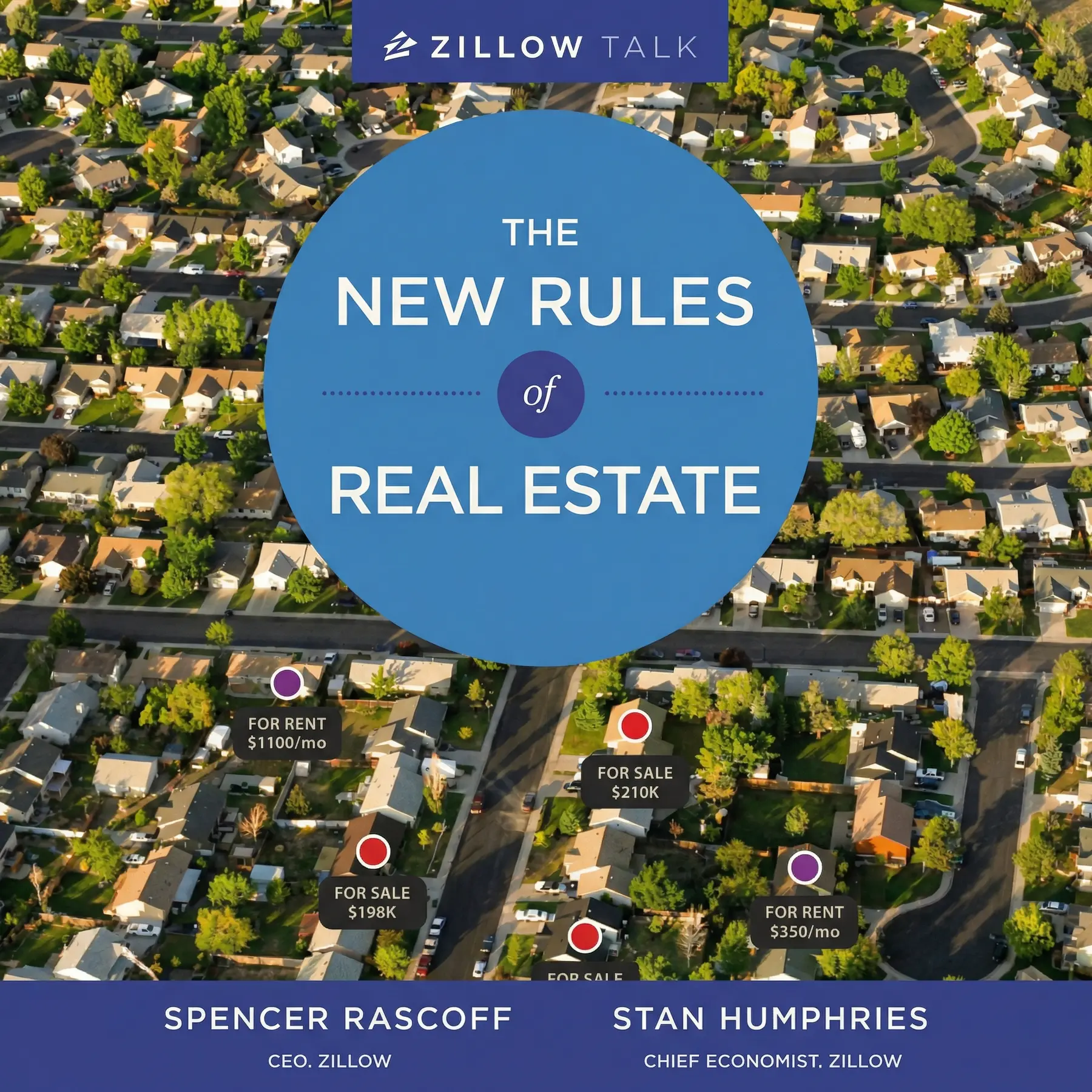
Zillow Talk: The New Rules of Real Estate
Shows how to make the big housing decisions with data instead of folklore: whether buying beats renting for you, which neighborhoods will rise, which renovations hold value and how to time and word a listing.
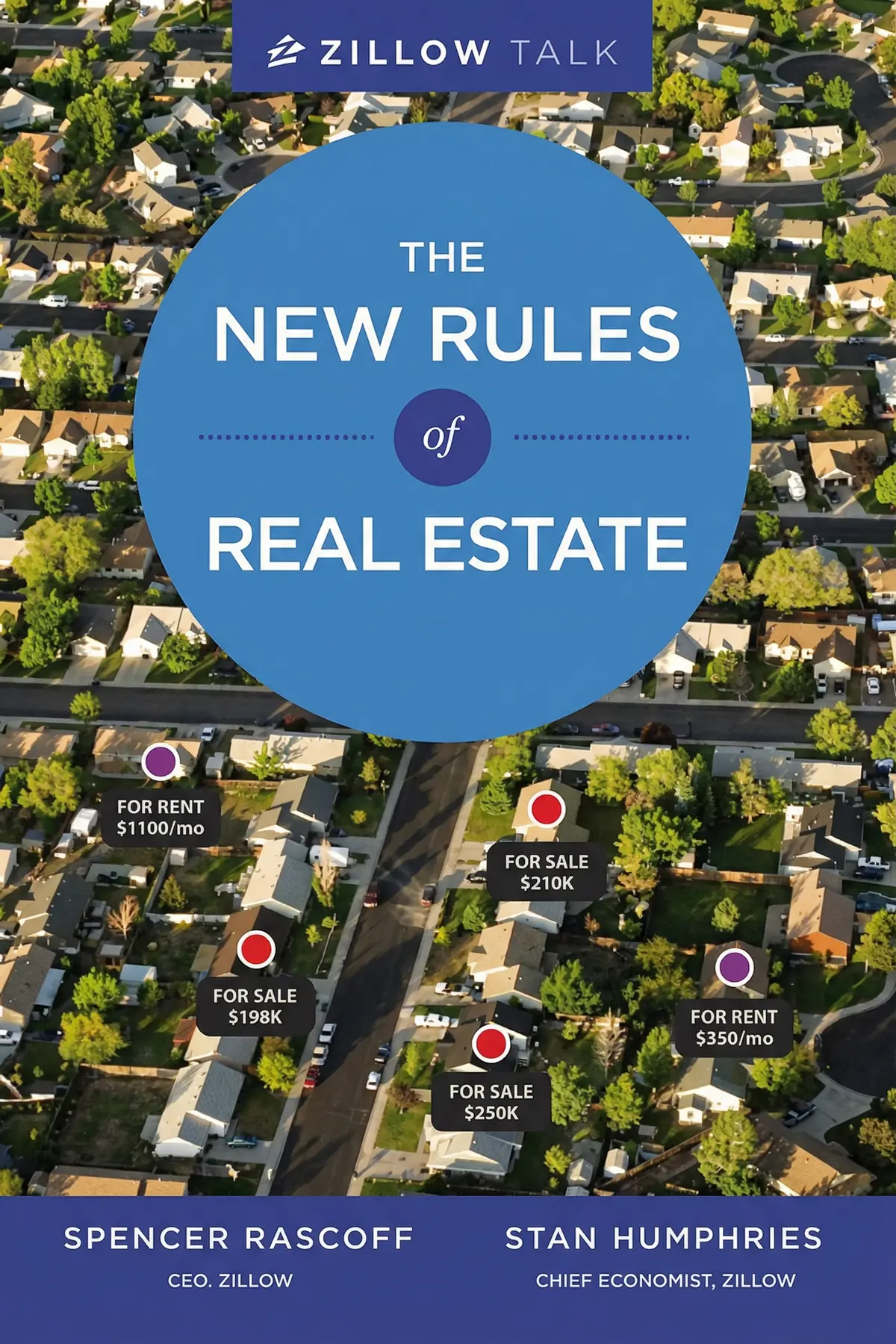
Table of Content
1. Introduction
1 min 03 sec
Most first-time buyers carry rules they never checked: buy the worst house on the best street, renovate in style, owning always beats renting. In Zillow Talk, Zillow chief executive Spencer Rascoff and the company’s chief economist Stan Humphries hold that folk wisdom up against housing data, and much of it does not survive.
Their case is that a home is a financial decision with answers you can measure, from whether to buy at all to the single adjective that can scare buyers away. The authors begin with a question many people skip entirely, which is whether owning suits them in the first place. From there they move through choosing a neighborhood, deciding what to remodel and picking the right month to sell. At each step, a hunch gives way to a number or a pattern.
By the end, you will know how to test whether buying pays off in your situation, which streets are likely to rise, which upgrades keep their value and how to time and word a listing so it sells for more.
2. Treat owning a home as a choice
1 min 36 sec
A national push to help more families own homes ended with many of them losing those homes. The authors explain who ownership actually serves, and the hidden cost that rarely appears in any mortgage calculator.
3. Know the year buying starts to beat renting
1 min 39 sec
Plenty of single city dwellers assume buying is only for couples with children. A simple calculation built by Zillow suggests household size is the wrong thing to look at entirely.
4. Skip the cheapest house on a wealthy street
1 min 28 sec
It sounds like a clever shortcut to a good address: buy the modest place among expensive homes and let the neighbors lift its price. One Texas family found out how that plan actually plays out.
5. Bet on where a neighborhood is heading
1 min 49 sec
Run-down streets with poor roads and empty shops can become some of the most wanted addresses in a city. The authors describe the signals that show which ones are about to turn.
6. Remodel for function and keep more money
1 min 46 sec
A gleaming new bathtub feels like an investment the day it goes in. The authors explain why buyers barely reward it, and how much of any renovation’s value disappears within a single year.
7. List in early spring and describe every detail
1 min 31 sec
Two homes in the same condition can sell for different prices depending on the week they appear and the words used to describe them. One common word, in particular, means something most sellers never intend.
8. Conclusion
1 min 21 sec
What Rascoff and Humphries offer, beyond any single tip, is a habit of doubt. Almost every piece of inherited housing wisdom they examine turns out to be wrong or incomplete once the data comes in. Owning is not automatically better than renting. The cheapest house among expensive ones is a trap. Luxury rarely pays for itself. And although summer is the busy season, the smart listing goes up in March.
Behind all of it sits one fact: a home is both a place to live and one of the largest investments most people will ever make. Treating it only as the first is how a family ends up with a bungalow that lags its neighbors, or a police officer loses a townhouse he could not keep.
If you are thinking of buying, start by estimating how long you will truly stay and compare it with the break even horizon. Then look for a neighborhood on its way up, ideally near a popular school, before prices catch up. If you already own, put function before polish in any renovation, and when you sell, list early in spring with a description specific enough that buyers can see the house before they arrive.
The best house to buy is rarely the most impressive one today. It is the one on a street that is getting better.
About this book
What is this book about?
Buying or selling a home is one of the largest financial decisions most people make, yet much of it runs on rules nobody has checked. Buy the worst house on the best street. Renovate in style. Owning always beats renting. Spencer Rascoff and Stan Humphries, the chief executive and chief economist of Zillow, test that kind of wisdom against housing data and find much of it wanting. The book follows a home's life from the first question to the final sale. It shows how a tool called the break even horizon tells you whether owning will cost less than renting, why the cheapest house in a rich area tends to lag, and how gentrifying neighborhoods and good schools lift values. It explains why mid-range remodels beat luxury ones and how improvements lose value each year. Readers also learn when to list a home and how to describe it, including why the word modern can put buyers off and why longer listings sell for more. The result is a practical set of checks for anyone about to sign a mortgage, start a renovation or put a house on the market.
Book Information
Who it's for
Would-be first homeowners
First-time buyers unsure whether owning will actually cost less than renting.
Renovation planners
Homeowners planning a renovation who want to know which upgrades keep their value.
Home sellers
Sellers who want to choose the right month and wording for their listing.
About the Author
Spencer Rascoff
Spencer Rascoff was among Zillow's founding employees in 2005, joining as finance chief, and became its chief executive in 2010. A Harvard graduate, he co-founded Hotwire.com, Pacaso and dot.la and has also served as chief executive of Match Group. Stan Humphries, also an early Zillow employee, created the Zestimate and its original algorithm and built the company's economics and analytics team. He previously led advanced analytics at Expedia and holds a Ph.D. in Government from the University of Virginia.
Ratings & Reviews
Ratings at a glance
What people think
Listeners find the book accessible and enjoy its analytical focus on real estate, offering practical insights for both property buyers and investors. They appreciate the guidance on market transactions, and one listener highlights how the statistics accurately mirror modern circumstances. Feedback regarding the prose and overall worth is divided; while some consider it well-crafted, others feel the writing is subpar, and some find it a worthwhile expenditure of time and money whereas others disagree.
Top reviews
Zoey
Finally got around to reading this, and it’s a goldmine for anyone looking to sell in a competitive market. The advice about pricing your home ending in the number "9" or using "8" for certain demographics isn't just a marketing gimmick—they back it up with actual consumer behavior data. I particularly enjoyed the section on remodeling, which explains why a bathroom upgrade often yields better returns than a kitchen overhaul. It’s written in a very accessible, Freakonomics-style tone that makes complex market shifts easy to grasp. Truth is, real estate can feel like a guessing game, but Rascoff and Humphries provide a solid framework to make smarter decisions. It’s a fast-paced read that I’ll definitely be referencing when we list our place next spring. The insights are worth every penny.
Show moreKevin
Wow, this completely flipped my thinking on buying foreclosures. I always thought they were the ultimate "deal," but the authors use their data to show they often aren't worth the headache. The book is filled with these little counter-intuitive gems that make you second-guess traditional real estate "wisdom." I loved the chapter on how local markets matter more than national trends—it’s a reminder that real estate is hyper-local. The charts are simple to read and the "new rules" they propose feel modern and relevant to today's tech-savvy buyer. It’s a refreshing change from the old-school books that rely on anecdotes instead of massive datasets. Definitely a must-read if you want to be an informed participant in the market today.
Show morePita
Ever wonder why certain houses sell faster even when they look identical on paper? This book answers that question using millions of data points, and the results are often shocking. I particularly liked the analysis of street names and how a "Way" or a "Court" can influence a buyer's subconscious perception of value. It's not just about the four walls; it's about the data surrounding the property. Rascoff and Humphries have created something that feels like a roadmap for the modern era. I’ve already recommended it to three friends who are currently house-hunting. It empowers you to go into a deal with more than just a real estate agent’s opinion—you go in with hard facts. This is essential reading.
Show moreNora
As someone currently listing a home, I found the specific word-choice analysis to be incredibly tactical. Avoid "unique" because it’s a red flag? That’s the kind of practical insight I was looking for. The book does a great job of debunking myths, like the idea that buying the worst house in the best neighborhood is always a win. Instead, they show how diminishing returns can eat your profits alive. The writing is conversational and breezy, which I appreciated after a long day of dealing with agents. I do think they lean a bit too hard on their own website as the only source of truth. However, the data on how proximity to a Starbucks impacts home value was well-reasoned and supported by the numbers.
Show moreSamart
Picked this up on a whim after using the Zillow app for months. I wasn't expecting much, but the breakdown of the "timing" for listings was actually very helpful. Who knew March was the magic month to list your property? The authors write in a way that is easy to understand without being overly jargon-heavy, which is a plus for a layperson. I also liked the global perspective, like how New York real estate operates on its own set of bizarre rules compared to the rest of the country. It’s not a perfect book—there’s a bit too much fluff and filler—but the "insider" feel of the data makes it a compelling read for any casual investor or buyer.
Show moreSiriphen
Is it a marketing brochure or a data study? To be fair, "Zillow Talk" sits right in the middle, offering some genuinely "aha!" moments alongside plenty of self-promotion for the site. I found the insights about street names versus court names fascinating, yet other tips felt like common sense dressed up as data science. Why do we need a whole chapter telling us to hire a qualified home inspector? Some of the political commentary regarding the Mortgage Interest Deduction felt out of place and a bit preachy for a book about real estate trends. Still, for a casual reader who wants a quick overview of how big data is changing the housing landscape, it's worth a skim. Just don't expect a comprehensive masterclass or deep academic research.
Show moreYuwadee
Some chapters really fly by while others drag on for an eternity. I was captivated by the discussion on how the "American Dream" of home ownership can actually widen the wealth gap in certain cities. That was a bold take. On the other hand, the sections regarding fixed versus variable rate mortgages felt like filler you could find in any basic finance pamphlet. The conversational style is okay, but it sometimes borders on being too simplistic for such a complex topic. It’s a decent entry-point for a first-time buyer, but if you’ve already bought and sold a few homes, you might find most of this redundant. It's a bit like a long-form podcast in book format; some parts are fascinating, others are skippable.
Show moreKwame
The premise seemed solid, but the execution left me frustrated and frankly bored. The authors claim to be non-partisan, yet they spend significant time critiquing past administrations and specific policy decisions that don't directly relate to their core data points. My biggest gripe is how they treat web traffic as a substitute for actual academic research. Just because people are clicking on waterfront properties doesn't mean those buyers are "irrational" about rising sea levels. The chapters are fragmented and lack a cohesive narrative thread, making the whole experience feel like a collection of disparate blog posts. While the "magic of nine" pricing tip was interesting, it wasn't enough to save a book that feels fundamentally directionless and arrogant. I would recommend skipping this one.
Show moreWilliam
Look, the analytics here are surprisingly underwhelming for a company that prides itself on being a data giant. They often confuse correlation with causation, leading to some pretty "mysterious" conclusions that could be explained by simple qualitative factors. For a book that uses "Talk" in the title, it spends a lot of time patting itself on the back for its own success. I didn't appreciate the condescending tone regarding homeowners who value "charm" or "cozy" vibes in their listings. The writing quality is hit-or-miss, with some sections feeling like they were rushed to meet a publishing deadline. If you want real econometrics, go elsewhere; if you want a light read that feels like a promotional pamphlet, this is for you.
Show moreWachira
I expected deep data mining but instead got a lengthy commercial for the Zillow platform. The writing is incredibly basic, almost as if it was written for a blog rather than a bound book. While the "Starbucks effect" is a fun anecdote, the actual statistical rigor is severely lacking throughout the text. I found the analysis of housing price declines in New Orleans to be particularly shallow and poorly contextualized. If you have an undergraduate degree in economics, you will likely find the regressions and correlations used here to be amateurish at best. It is disappointing because the authors have access to so much information. They just failed to do anything truly meaningful with it. Save your money and just browse the free articles on their website instead of buying this.
Show moreQuestions about this book
What is the main idea of Zillow Talk?
Spencer Rascoff and Stan Humphries argue that much common housing advice fails when tested against data. They walk through each decision in owning a home, from whether to buy at all to choosing a neighborhood, remodeling and selling, and show where the numbers point. Their message is to buy in up-and-coming areas, choose mid-range renovations and list at the right time of year.
What is the break even horizon in Zillow Talk?
The break even horizon is a Zillow tool that compares the cost of owning a home with the cost of renting the same home over time, taking in inflation, tax rates and property value. It tells you how long you must stay before buying becomes cheaper. If you expect to stay longer than that, buying likely saves money; if not, renting is cheaper.
Should you buy the worst house in the best neighborhood?
The authors say no. The cheapest house on a wealthy street has the least room to grow, and buyers suspect something is wrong with it. A family in Eagle Ranch, a suburb of Fort Worth, Texas, saw their bottom-ten-percent bungalow trail neighboring homes by four percentage points. They suggest buying the worst house in a gentrifying, up-and-coming neighborhood instead.
When is the best time to sell a house according to Zillow Talk?
Summer is the strongest selling season in many places, partly because families with children prefer to move during the school break. The authors advise listing early to catch it. Homes listed at the end of March in 2011 and 2012 sold faster and for more than two percent above the average for the rest of the year.
Do expensive renovations increase home value?
Less than people expect, the authors argue. Because of diminishing returns, high-end remodels earn back less than mid-range ones, since buyers mainly pay for working essentials rather than style. Improvements also lose value: their example remodel added $24,310 to a home’s value but was worth $22,000 a year later. Fix what is broken first, and skip the luxury extras.
Readers also enjoyed
AUDIO SUMMARY AVAILABLE
Listen to Zillow Talk in 15 minutes
Get the key ideas from Zillow Talk by Spencer Rascoff, plus 5,000+ more nonfiction titles.
- 5,000+ titles
- Listen as much as you want
- 7-day free trial
- Cancel anytime









