
14 min 38 sec
Available in: English
The Book on Rental Property Investing: How to Create Wealth and Passive Income Through Smart Buy & Hold Real Estate Investing
A practical guide to buying and holding rentals that pay monthly, gain value, cut taxes and pay down their own loans, and to the math, financing, systems and exit plans that make it work.
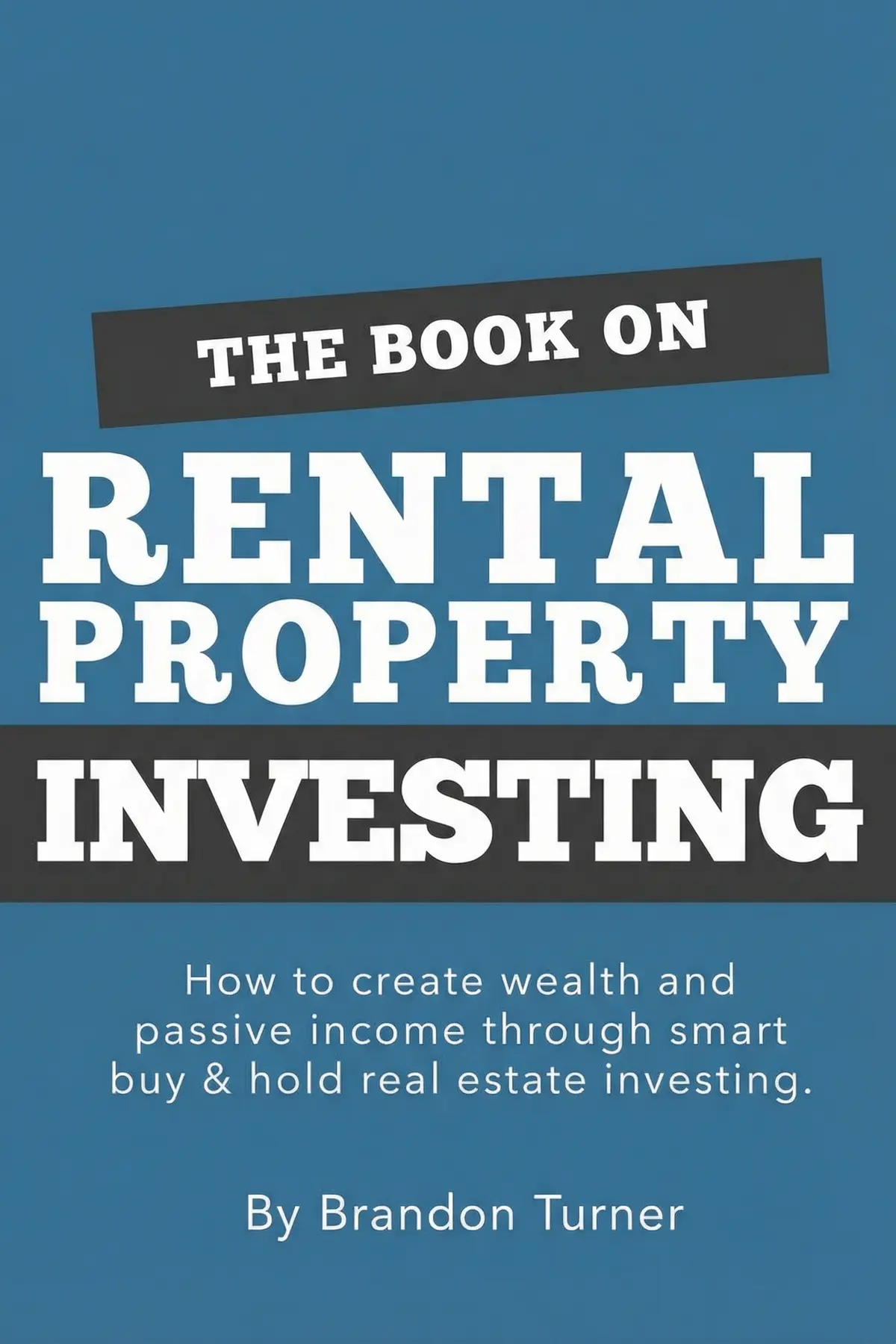
Table of Content
1. Introduction
59 sec
Most people with a salary have one source of wealth: their own working hours. In The Book on Rental Property Investing, entrepreneur and investor Brandon Turner argues that one well-chosen rental can make money four ways at once. It pays you every month, rises in value, cuts your tax bill and lets tenants pay down your loan. That idea alone changes how a modest house looks.
Turner is just as clear that those four returns only arrive for owners who do the work up front. His case is that rental wealth comes from discipline, and luck has little to do with it. Buy on honest math in the right neighborhood. Fund each deal with the right tool. Run the property on systems, and plan the exit long before you sell.
Follow that order and a duplex stops being a gamble. It becomes a business you can judge with a pencil, from the first offer to the day you hand it on.
2. Earn four ways from a single rental
2 min 01 sec
A classic sports car can be driven every weekend and still be worth more each year. Turner sees a rental the same way, except the car is only one of several money makers sitting in the driveway.
3. Run the numbers before you fall for a deal
1 min 58 sec
A first-time buyer in Phoenix expected $800 of profit every month from a house that looked like a steal. Six months later the picture had changed, and a one-minute calculation could have warned her.
4. Match the neighborhood grade to your goals
1 min 56 sec
Two houses with identical numbers can deliver very different years of ownership. An Atlanta investor found his sweet spot by checking three things about a neighborhood before he ever looked inside a property.
5. Build a toolbox of ways to fund deals
2 min 22 sec
Banks stop lending after a certain number of mortgages, and many investors stall right there. Three buyers show how a seller, a hard money loan and a refinance can keep a portfolio growing.
6. Systems that end the midnight tenant calls
2 min 02 sec
A landlord whose rentals looked profitable on paper found herself buried in repair requests, late rent and disputes. What turned it around was a set of routines anyone with one rental can copy.
7. Plan your exit on the day you buy
2 min 14 sec
Two investors each start with a $50,000 down payment and see consistent appreciation, yet one finishes 25 years later with $1.4 million more. The difference has nothing to do with picking better buildings.
8. Conclusion
1 min 06 sec
Turner’s book turns a vague dream, money that works while you live, into something closer to a trade. The four generators explain why a rental can beat a paycheck: one building can pay monthly, gain value, cut taxes and pay off its own loan. Everything else he teaches exists to keep those generators running, from the arithmetic before purchase to the intermediary holding funds after a sale. The struggling owners in his examples, like Sarah in her first months, had not run out of luck. They had skipped a step.
So start where the risk is greatest. On the next listing that tempts you, halve the rent, subtract the mortgage and see whether anything is left. Look up the neighborhood’s jobs, schools and crime before you look at the kitchen. Get to know a local lender long before you need one, and give each property an exit plan on the day you buy it.
The Camaro gains value only for the owner who keeps it tuned. A rental works the same way, and the tuning is a habit you can begin this week.
About this book
What is this book about?
Many people would like income that does not depend on their own hours, and rental property is one of the oldest ways to get it. It is also easy to get wrong. A house that looks like a bargain can drain its owner's savings once taxes, repairs and empty months arrive. Brandon Turner argues that a well-chosen rental makes money in four ways at once: rising value, monthly cash flow, tax benefits and a loan that tenants pay down. His book shows how to keep all four working. Readers learn to screen a deal with the 50 percent rule and to grade neighborhoods from A to D. They see how conventional loans, seller financing and the BRRRR method each fit different deals. The second half turns to ownership itself. Turner shows how to set up systems for tenants, repairs and rent so a few properties do not take over your life. He also explains how a 1031 exchange, an inheritance or a move into passive holdings can protect what you have built. The result is a step-by-step way to treat a rental as a business you can judge with numbers.
Book Information
Who it's for
Professionals wanting passive income
Salaried professionals who want income that does not depend on their working hours.
First-time investors
First-time investors who need a simple way to tell a real bargain from a money pit.
Landlords ready to expand
Owners of one or two rentals who are ready to grow but are stuck on financing or overwhelmed by tenants.
About the Author
Brandon Turner
Brandon Turner is an entrepreneur and real estate investor who has written several books on the subject, including How to Invest in Real Estate, with one source crediting his books with more than a million copies sold. He hosted The BiggerPockets Podcast and now hosts The BetterLife Podcast. He founded Open Door Capital and has invested in apartments and mobile home parks, and his work has appeared in Forbes and Entrepreneur.
Ratings & Reviews
Ratings at a glance

What people think
Listeners find this rental property investment guide highly interesting and full of practical insights, specifically noting its hands-on advice and step-by-step approach to real estate ventures. Furthermore, the content is simple to comprehend, enabling listeners to better define their own targets and methods. They also emphasize its value for money and rank it as a great beginner's guide.
Top reviews
Pornthip
Brandon Turner basically handed me a roadmap to financial freedom with this one. I came in knowing nothing about the "four wealth generators," but the way he explains appreciation and cash flow made the concepts click instantly. Truth is, I used to think you needed a massive bank account to start, but the breakdown of creative financing like house hacking and the BRRRR method really opened my eyes. The book is incredibly actionable, offering a step-by-step approach that feels less like a dry textbook and more like a conversation with a mentor. My only gripe is that it can feel a bit repetitive in the middle sections. However, the sheer volume of practical suggestions for finding deals on the MLS or through direct mail is unmatched. It is a comprehensive guide that actually lives up to the hype.
Show moreSarawut
After hearing about this title on a dozen podcasts, I finally dove in and wasn't disappointed at all. The book is amazing because it covers everything from the initial mindset shift to the nitty-gritty of managing difficult tenants. I especially loved the section on neighborhood classifications—ranking areas from A to D really helped me realize why I was looking at the wrong types of properties. Frankly, the value for money here is insane compared to those thousand-dollar seminars people try to sell you. Turner breaks down how to build a team of ten essential members, which gave me the confidence to start interviewing local real estate agents. If you are serious about building long-term wealth, this is the authority. It's an engaging read that simplifies a very complex industry.
Show moreTariq
The chapter on financing alone made the purchase price worth it for me. I was stuck thinking conventional loans were the only path, but the deep dive into portfolio lenders and private money changed my entire strategy. Turner’s writing style is very easy to read and understand, which is a rare feat for an investment book. I appreciated the honesty regarding the downsides, like the fact that it can be all-consuming and that building wealth takes significant time. It isn't a get-rich-quick scheme. The math examples are clear and concise, helping me run numbers on a local duplex that I previously thought was a bad deal. This book provided the insight I needed to stop overthinking and start making offers. It’s a spectacular checklist for anyone looking to get their first rental.
Show moreCarter
Everything clicked for me once I reached the section on building a real estate team. I used to be terrified of the paperwork and bookkeeping side of things, but Turner demystifies the roles of the CPA and the lawyer so well. This book is engaging and packed with actionable information that doesn't feel overwhelming. I love how he breaks down the 'why' before getting into the 'how.' It really helped me clarify my personal goals—I realized I want to be an investor, not someone who just bought themselves a second job. The 2% rule was a game-changer for my initial screening process. It’s just a great beginner's guide. If you're tired of spinning your wheels on YouTube, just buy this book and follow the plan. It works.
Show moreRohan
What really sets this apart from other investment guides is how Turner breaks down the risk and rewards. He doesn't sugarcoat the fact that you can lose your investment if you don't do the math. The requirement for six months of cash reserves per unit is a piece of advice that likely saved me from a future disaster. I found the discussion on the 'Bigfoot smell' and other cosmetic issues incredibly practical for finding value in ugly houses. Sentence by sentence, the book remains engaging. It’s easy to read and understand, even when he’s talking about complex topics like loan-to-value ratios or debt-to-income limits. This is the only book on rentals you actually need to start your journey. Truly a must-read for anyone wanting to escape the 9-to-5.
Show moreGift
Look, if you can get past the constant 'rah-rah' energy and the occasionally goofy tone, there is an incredible amount of substance here. Turner is clearly enthusiastic about real estate, but at times the writing feels like he’s babying the reader through a process that could have been explained in half the pages. That being said, the information on analyzing a property using the 50% rule and the 2% rule is gold for any novice. I finally understand how to calculate CapEx and vacancy properly instead of just guessing. It’s a great beginner's guide that helps you clarify your personal goals before you dive into the deep end. I’d recommend the hard copy over the audiobook, though. You’re going to want to dog-ear the pages with the math formulas and the lists for your real estate team.
Show morePrayoon
My advice is to grab the physical copy because trying to follow the math and lists on the audiobook is a complete nightmare. Brandon is a great narrator—he’s genuinely funny and his comedic timing helps with the drier subjects like tax laws—but the audio editing is pretty rough in spots. Regarding the content, it's packed with general real estate knowledge that isn't just limited to rentals. I particularly enjoyed the 'driving for dollars' strategy and the tips for getting your offer accepted in a competitive market. Some chapters on US-specific financing weren't relevant to me since I'm looking at properties in Europe, but the core principles remain solid. It’s a bit repetitive, but that probably helps the information stick for beginners. Overall, it's a solid 4-star resource.
Show moreRatree
Gotta say, I was skeptical about another real estate 'guru' book, but this one actually delivers on its promises. It functions as a comprehensive guide that walks you through the entire lifecycle of an investment. I found the 'Eight Problems to Look For' section particularly brilliant, especially the tips on turning a two-bedroom into a three-bedroom for an instant equity boost. Personally, I think the author's tone is fine, though I can see why some might find it a bit much. The book is very focused on small multifamily units, which was exactly what I was looking for. I did feel like the section on property management was a little light compared to the financing chapters. Still, it’s a high-quality manual that I’ll be referring back to often.
Show moreAir
Picked this up on a whim and ended up finishing it in two sittings. The book does a fantastic job of providing a step-by-step approach to what usually feels like a chaotic process. I loved the specific details on what makes a property a 'good' rental, like the number of bedrooms and the presence of a garage. These are the small things that most novices overlook. In my experience, the most valuable part was the section on negotiation tactics. Learning how to use a 'red herring' or asking for the lowest price and then going lower gave me a new perspective on closing deals. My only complaint is that the author is a bit too obsessed with the BiggerPockets ecosystem. It occasionally feels like a long advertisement for his website.
Show moreTantipat
Is this book useful? Yes. Is it a total slog to get through because of the insufferable fluff? Also yes. Not gonna lie, I felt like I was reading a 300-page version of a 'how to make a peanut butter and jelly sandwich' tutorial at times. The author spends way too much time on motivation and positive thinking when I just wanted the technical data. To be fair, the sections on financing and deal analysis are genuinely helpful for someone who is brand new to the domain. I learned a lot about the different types of rental properties and what to look for in a location. But the tone is so incredibly irritating that I found myself skimming huge chunks of text just to find the actual facts. It’s a decent cursory view, but it needs a serious editor to trim the fat.
Show moreQuestions about this book
What is the main idea of The Book on Rental Property Investing?
Brandon Turner argues that a well-chosen rental builds wealth in four ways at once: appreciation, monthly cash flow, tax benefits and loan paydown, as tenants’ rent reduces the mortgage. Those returns depend on discipline, so the book covers analyzing deals, choosing neighborhoods, financing purchases, managing properties with systems and planning an exit that protects what you have built.
What is the 50 percent rule in rental property investing?
It is a quick screen Turner describes: assume operating costs, not counting the mortgage, will take about half of the rent. A house renting for $1,800 would lose roughly $900 to expenses, leaving $900 to cover the loan and any profit. In his example, a Phoenix buyer expected $800 a month and ended up roughly breaking even.
What is the BRRRR method?
The letters in BRRRR stand for buy, rehabilitate, rent, refinance, then repeat. In Turner’s example, an investor named David bought a rundown triplex for $150,000 with savings and hard money loans, spent $50,000 fixing it and rented it out. When it appraised at $275,000, he refinanced, recovered much of his money while keeping strong cash flow, and moved on to the next deal.
How does a 1031 exchange help real estate investors?
It lets investors delay tax on a sale’s profit by reinvesting it in similar property. In Turner’s comparison, two investors start with $50,000 each; over 25 years the one using exchanges reaches $3.8 million in property against $2.4 million. The rules are strict: 45 days to identify a replacement, 180 days to close, and a qualified intermediary must hold the funds.
Who should read The Book on Rental Property Investing?
It suits people who want income beyond their salary and are considering buy-and-hold real estate, from first-time buyers learning to judge a deal to owners of a few units who are stuck on financing or worn down by tenant problems. Its tools are concrete: the 50 percent rule, neighborhood grades, seller financing, maintenance calendars and exit planning.
Readers also enjoyed
AUDIO SUMMARY AVAILABLE
Listen to The Book on Rental Property Investing in 15 minutes
Get the key ideas from The Book on Rental Property Investing by Brandon Turner, plus 5,000+ more nonfiction titles.
- 5,000+ titles
- Listen as much as you want
- 7-day free trial
- Cancel anytime









