

16 min 04 sec
Available in: English
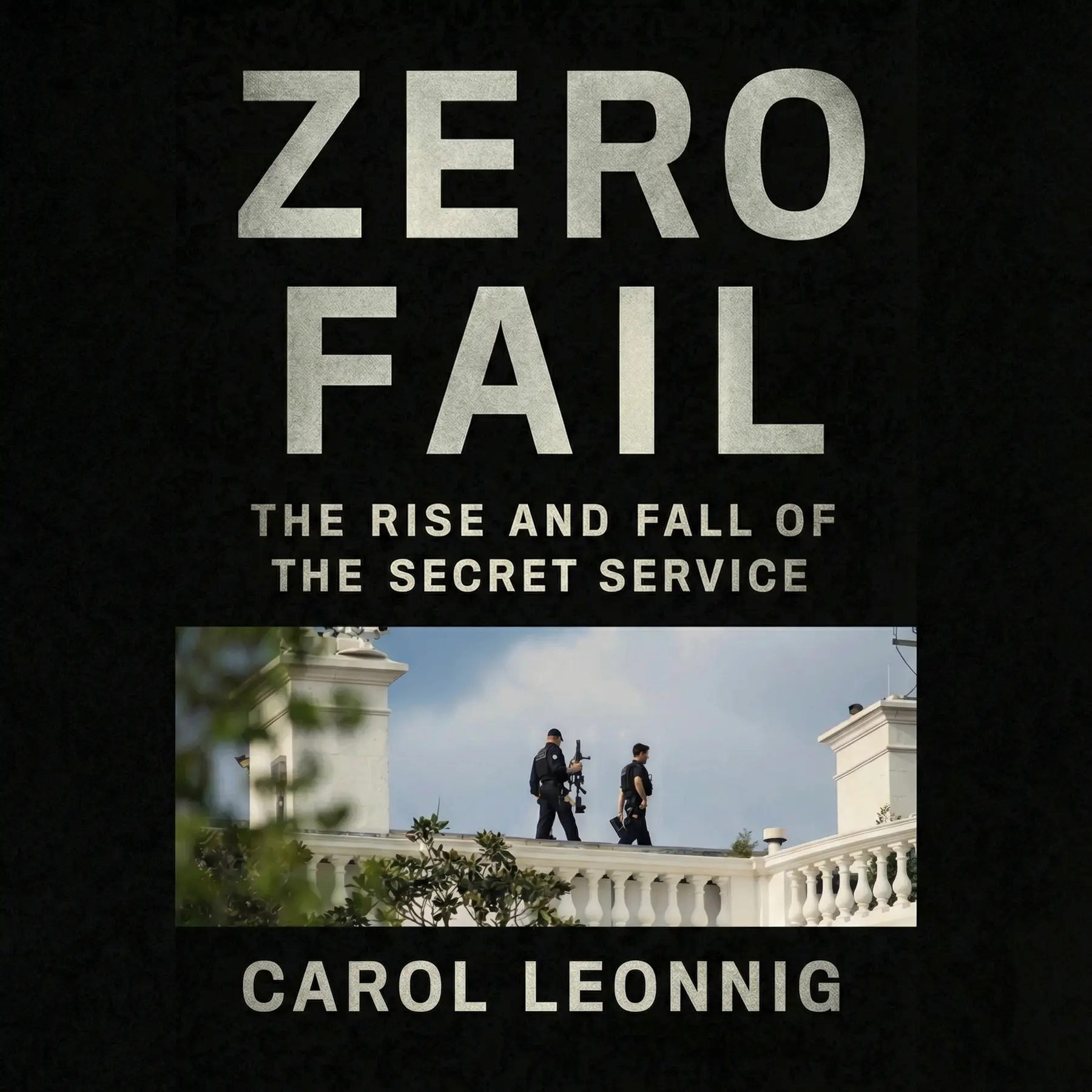
Zero Fail: The Rise and Fall of the Secret Service
Investigative reporter Carol Leonnig traces how the Secret Service drifted from heroic rescues to drunken scandals and security breaches. Her account shows what happens when leaders reward loyalty and keep excusing misconduct.

Table of Content
1. Introduction
53 sec
If you work inside a large organization, you may assume its elite units are the safest. In Zero Fail, Pulitzer Prize-winning Washington Post reporter Carol Leonnig shows how wrong that can be, starting with the night before Dallas, when agents guarding John F. Kennedy drank at a Fort Worth bar until five in the morning. Many were hungover hours later as the motorcade rolled. From there she follows the Secret Service all the way to a man in Crocs walking through the White House front door.
Her case is that an elite agency rots when its leaders reward loyalty to the boss and look away from misconduct, and that individual courage cannot make up for that culture. The story brings the agents who saved Ford and Reagan, the scandals that toppled directors, and warning signs worth checking in any team whose standards are slipping.
2. See how exhaustion and bent rules set up Dallas
1 min 44 sec
The agency guarding presidents was first created for an entirely different purpose. That accident of history shaped the night before Kennedy’s motorcade, and it explains a failure agents relived for decades.
3. Turn every close call into a new rule
1 min 41 sec
Two women came within seconds of killing Gerald Ford in the same month. One agent’s reflexes saved him once, but the second attack exposed a small delay the Service could not afford to repeat.
4. Reward loyalty carefully to keep protectors strong
1 min 45 sec
An agent made a split-second move that kept a wounded president alive, and he spent days convinced he had failed. What came next inside the agency did more lasting harm than the gunman.
5. Recognize when looking away becomes part of the job
1 min 42 sec
Agents jogging beside a presidential candidate were told not to ask what happened behind one gym door. Years later, one agent’s unguarded television interview helped bring a president to impeachment.
6. Your promotion list reveals your real standards
1 min 41 sec
Director Brian Stafford lost his job over the shocking revelations, yet removing him did nothing to halt the spreading rot. Instead, the agency kept sending the same signal through the one decision employees always notice.
7. Sudden punishment cannot fix a habit everyone shared
1 min 44 sec
A payment dispute in a Colombian hotel became an international embarrassment, and the firings were swift. Yet the people inside the agency heard the official explanation to Congress and knew it was not true.
8. Spot small lapses before they become a 29-second breach
1 min 50 sec
A troubled veteran climbed a fence and reached the most guarded building in the country before anyone stopped him. The explanation is not one dramatic failure but a chain of ordinary ones.
9. Follow the money that stretched the agency thinner
1 min 47 sec
Many agents welcomed the new president with open enthusiasm. Within months, his weekend habits and family arrangements were draining the agency’s budget, and part of the bill went straight to his own company.
10. Conclusion
1 min 17 sec
Across more than 150 years, the Secret Service can point to some truly heroic figures. Larry Buendorf’s hand on a pistol and Jerry Parr’s body between Reagan and the gunman saved lives. Yet Leonnig shows those moments belonged to individuals, while the institution around them drifted toward exhaustion, favoritism, frat-house behavior and failing equipment. The courage was real. It never covered for a culture that kept looking away.
That is why the book matters beyond Washington. A team built for zero failure is shaped less by its finest hour than by what its leaders tolerate on an ordinary day. Watch who gets promoted after a scandal, because that tells everyone what the real rules are. When someone tells you to let a risk go, ask who gains from your silence. And treat a close call the way the Service treated Ford’s limo door, as a reason to change a rule while luck still holds.
Leonnig ends cautiously, suggesting the agency might still recover if it faces its failures honestly. The door Omar Gonzalez opened had been left open to anyone long before that September day.
About this book
What is this book about?
The agents standing behind the president look like the most disciplined professionals in government. Carol Leonnig, a Pulitzer Prize-winning Washington Post reporter, shows a very different picture. She follows the Secret Service from its improvised start as the president's guard in 1901 through hungover agents on the morning Kennedy died, a loyal inner circle under Nixon, a purge under Reagan, and the order to ignore Bill Clinton's unscreened visitors. Her story does not deny the heroism. An agent stopped one of the two attempts on Gerald Ford within a single month, and agent Jerry Parr shoved Ronald Reagan into his car as shots were fired. But she argues that these were individual acts inside an institution that kept rewarding agents for pleasing the boss, promoting people tied to scandals and treating misconduct as normal until the public found out. The result was Hookergate in Colombia, a man in Crocs walking through the White House front door, and an agency stretched thin under Donald Trump. Readers get a gripping inside account of presidential protection and a clear lesson about how any high-stakes team loses its standards.
Book Information
Who it's for
Political history buffs
Readers of political history who want an inside account of the agents guarding American presidents.
Managers and team leads
Managers and team leads worried that tolerated misbehavior is eroding their own team's standards.
Interested in presidential security
Anyone curious how Kennedy, Ford, Reagan, Clinton, Obama and Trump shaped the agency sworn to protect them.
About the Author
Carol Leonnig
Carol Leonnig is an American investigative journalist who worked as a staff writer at The Washington Post from 2000 to 2025. She shared the 2014 Pulitzer Prize for Public Service for reporting on the National Security Agency's expanded surveillance of Americans, and won Pulitzer Prizes for National Reporting in 2015 and 2018. She has covered four presidential administrations, exposing government misconduct, corruption and incompetence, and co-wrote A Very Stable Genius with Philip Rucker.
Ratings & Reviews
Ratings at a glance
What people think
Listeners consider this book a necessary read for the public, highlighting its thoroughly investigated history of the Secret Service and insightful look into its secrets. The writing is superb, with one listener noting it reads like a novel, and many find it provides highly engaging material. There are varied responses regarding the storytelling and scariness level, with some describing the author as a terrific storyteller while others find the details disturbing.
Top reviews
Chatchai
Wow. I finished this book feeling genuinely rattled by how often our leaders are saved by pure coincidence rather than tactical perfection. Leonnig reveals a culture where "zero fail" is the motto, but the reality is an agency held together by scotch tape and prayer. The narrative arc from JFK’s tragic motorcade to the modern security lapses in the Trump era is absolutely gripping. You expect a high-tech fortress, but you get a frat-house atmosphere plagued by burnout and budget cuts. It’s a disturbing, essential read that flows with the pace of a thriller despite being rigorous non-fiction. Frankly, the details about the "limo pause" in Dallas will haunt me for a long time.
Show moreMuk
Leonnig has crafted a definitive, albeit terrifying, account of the Secret Service’s institutional decay. Instead of focusing solely on heroic saves, she dives deep into the "good old boys" network that has prioritized internal politics over actual protection. The book masterfully connects the dots between historical failures, like the drinking before the Kennedy assassination, and modern scandals like the Cartagena incident. You see how the agency moved from being a prestigious elite force to a demoralized bureaucracy struggling with high turnover. Truth is, the reporting here is so thorough that it feels like a peek behind a curtain we were never meant to see. Every American citizen should pick this up to understand the fragility of our executive branch's safety.
Show moreChamp
After hearing so many rumors about the Service, I finally got around to reading the full story, and it’s mind-blowing. Leonnig does not hold back on the "Hookergate" scandal or the systemic racism and misogyny that has plagued the agency for years. It’s a massive volume, but it reads like a novel because the stakes are literally world-changing. The fact that an agent had to tackle an intruder with a knife inside the Obama residence is something I’ll never forget. This isn't just an attack on the agents; it’s an indictment of a leadership structure that refuses to adapt. It’s easily one of the most important books on government transparency I’ve read this decade.
Show moreEli
To be fair, the title "Zero Fail" is a bit ironic given the litany of blunders Leonnig catalogues here. From the drunken carousing in Dallas to the security lapses that allowed a shooter to hit the Obama residence, the book is a relentless parade of "what-ifs." I found the sections on Nixon’s attempts to use the Service as a personal spy ring to be absolutely fascinating. It highlights a recurring theme of presidents weaponizing their protection for political gain. This is a meticulously researched book that manages to be both a page-turner and a serious piece of investigative journalism. It’s a must-read for anyone who wants to understand the inner workings of the American executive.
Show moreMonthon
Picked this up after seeing the author on the news, and it definitely delivers on the "shock factor." The sheer amount of data Leonnig pulls from her sources is incredible, especially regarding the financial drain during the Trump presidency. It’s eye-opening to see how much taxpayer money went toward securing golf carts at Mar-a-Lago while the agency's basic detection equipment was literally failing. My only gripe is that the middle sections feel slightly repetitive, as the "bad boy" behavior starts to blend together. Still, the breakdown of the 9/11 response and the vulnerability of the Vice President in the bunker was masterfully written. It’s a sobering look at how thin the line is between order and chaos.
Show moreOn
Ever wonder what really happens when the cameras stop rolling on the President? This book provides a searing look at the human flaws within the Secret Service, from JFK's "counterfeit ivy leaguers" to the modern politicization under Trump. I was fascinated by the descriptions of how different presidents, like Clinton and Kennedy, actively subverted their own details to maintain their public image. It makes you realize that the agents are often fighting against the very people they are sworn to protect. The writing is punchy and accessible, avoiding the dry tone often found in political histories. Personally, I found the chapter on the 2011 White House shooting particularly chilling because of the initial cover-up.
Show moreJune
The sheer amount of luck involved in keeping our presidents alive is the most terrifying takeaway from this book. Leonnig highlights how the response to the Reagan shooting was actually a mix of great training and total fluke. You get a sense of the immense pressure these agents are under, operating in a "zero fail" environment where they are rarely given the resources to succeed. I appreciated how she balanced the historical context with recent events, showing how the mission has expanded far beyond its original scope. Gotta say, the chapters on the Trump family’s travel costs were particularly revealing regarding the agency's budget crisis. It’s a dense read, but the information is too vital to ignore.
Show moreSuthee
This isn’t just a history; it’s a warning. Leonnig effectively argues that the Secret Service is an agency in crisis, held back by a culture that rewards loyalty over merit. I was particularly struck by the accounts of agents being forced to testify during the Clinton-Lewinsky investigation. It shows the impossible position these men and women are put in when politics and protection collide. The prose is sharp, and the pacing is generally excellent, though some of the "bad boy" anecdotes felt a little redundant toward the end. Not gonna lie, I walked away from this feeling much less confident in our national security than I did before I started.
Show moreYaowares
While the research is undeniably impressive, the structure of the book felt a bit disjointed in places. At times, it feels more like a collection of Washington Post exposés stitched together rather than a fluid historical narrative. I wanted more focus on the actual tactical training and less on the petty office grievances of low-level guards. That said, the section on the fence-jumper who made it all the way into the White House was genuinely alarming. It highlights a systemic failure that goes way beyond just individual mistakes. Look, it’s a solid read if you love political gossip and institutional history, but it can be a slog if you’re looking for a tight, operational thriller.
Show moreTan
It’s hard to ignore the blatant bias of some of the sources Leonnig uses, many of whom clearly had axes to grind. While the scandals she uncovers are certainly shocking, I found myself questioning the perspective of the "aggrieved employees" throughout the narrative. The book is very "inside-the-Beltway," focusing heavily on administrative drama and promotion cycles that might bore the average reader. However, the details about the Cartagena scandal and the general lack of air defense on 9/11 are still worth the price of admission. It’s an informative book, but one that requires a bit of a skeptical eye. In my experience, the truth usually lies somewhere in the middle of these accounts.
Show moreQuestions about this book
What is Zero Fail by Carol Leonnig about?
Zero Fail tells the history of the US Secret Service, from its start as a counterfeiting agency handed presidential protection in 1901 to scandals and breaches under Obama and Trump. Leonnig argues the agency declined because leaders rewarded loyalty to the president and repeatedly looked away from misconduct, so that even real acts of heroism, like those that saved Ford and Reagan, could not stop the slide.
What does Zero Fail say about the Kennedy assassination?
Leonnig reports that the night before Kennedy was killed in Dallas, off-duty agents drank at a Fort Worth bar against regulations, some returning to their hotel at five in the morning. Many were short on sleep and hungover during the motorcade. After the first shot, the driver slowed instead of speeding away, and a second bullet struck Kennedy. Agents dissected that failure for years.
What was Hookergate in the Secret Service?
In April 2012, agents preparing for Obama’s visit to Cartagena, Colombia, spent a night in nightclubs and many took sex workers back to their hotels. A payment dispute the next morning drew in local police and became an international scandal. Every agent who had paid a sex worker was fired, though Leonnig shows the behavior was long-standing and had never been punished before.
How did Omar Gonzalez get inside the White House?
In September 2014, Gonzalez, a disabled Iraq War veteran suffering delusions, climbed the fence. A radio alert failed, speakers had been removed from guard booths, the dog handler was on the phone, and a nearby officer chose not to shoot. The front door was not locked. He went from the sidewalk to inside in 29 seconds, and Director Julia Pierson resigned days later.
What lessons can leaders take from Zero Fail?
The book suggests watching what gets rewarded, since promotions given to people linked to scandals taught Secret Service agents that misconduct was acceptable. It warns against orders to ignore risks, like agents told to let Clinton’s gym visits go. And it shows the value of turning near misses into new rules, as the Service did by requiring agents to hold the limo door open after Ford’s close call.
Readers also enjoyed

A Promised Land
Barack Obama


A River in Darkness: One Man’s Escape from North Korea
Masaji Ishikawa

A Splendid Exchange: How Trade Shaped the World
William J. Bernstein

A Theory of Justice
John Rawls

A Spy Among Friends: Philby and the Great Betrayal
Ben Macintyre



A Year in the Life of William Shakespeare: 1599
James Shapiro
AUDIO SUMMARY AVAILABLE
Listen to Zero Fail in 15 minutes
Get the key ideas from Zero Fail by Carol Leonnig, plus 5,000+ more nonfiction titles.
- 5,000+ titles
- Listen as much as you want
- 7-day free trial
- Cancel anytime









