

15 min 46 sec
Available in: English
 ไทย
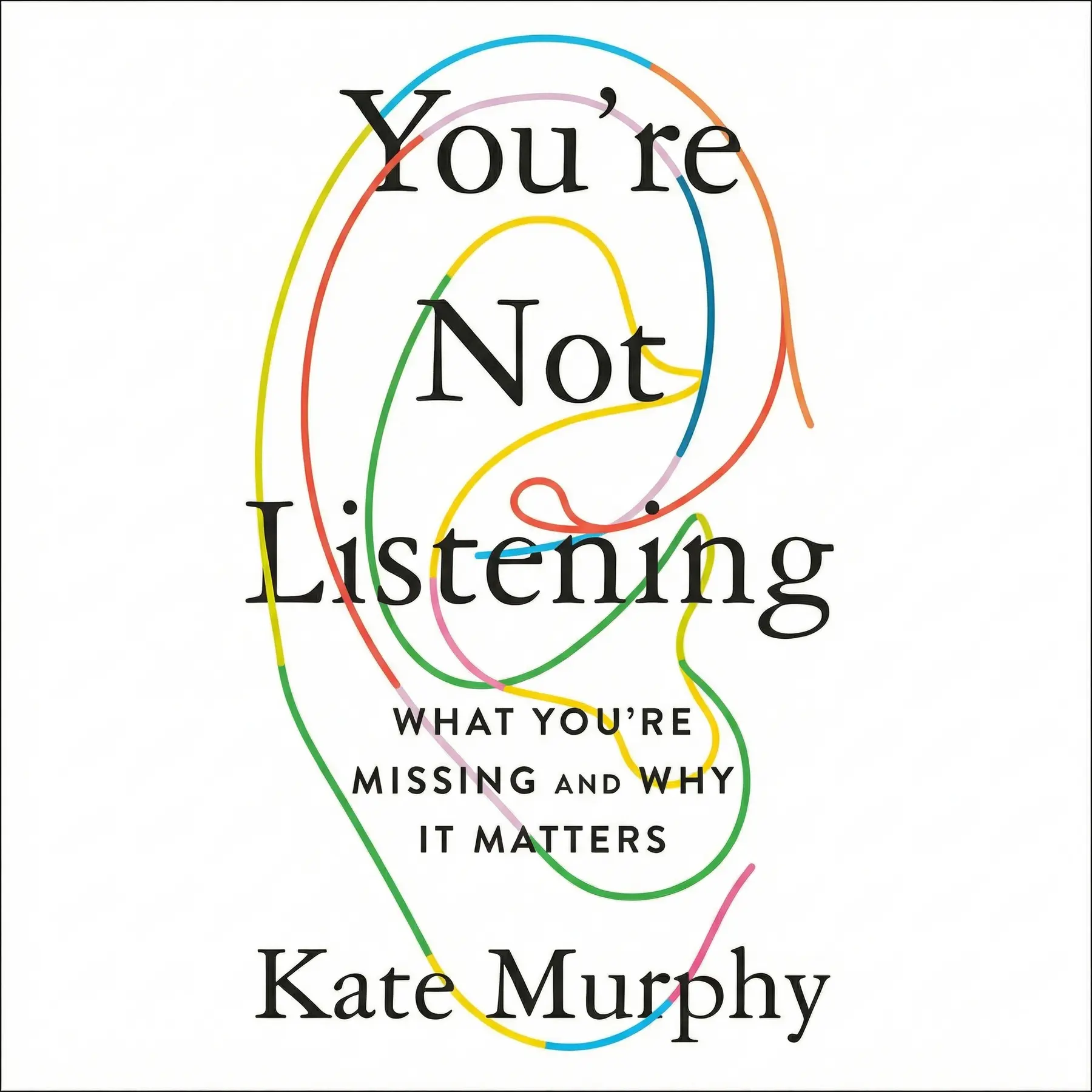
EnglishไทยYou’re Not Listening: What You're Missing and Why It Matters
By Kate Murphy
Shows why real listening has become rare and how to practice it: stay curious, drop assumptions, ask questions that keep the focus on the speaker, and get comfortable with disagreement and silence.
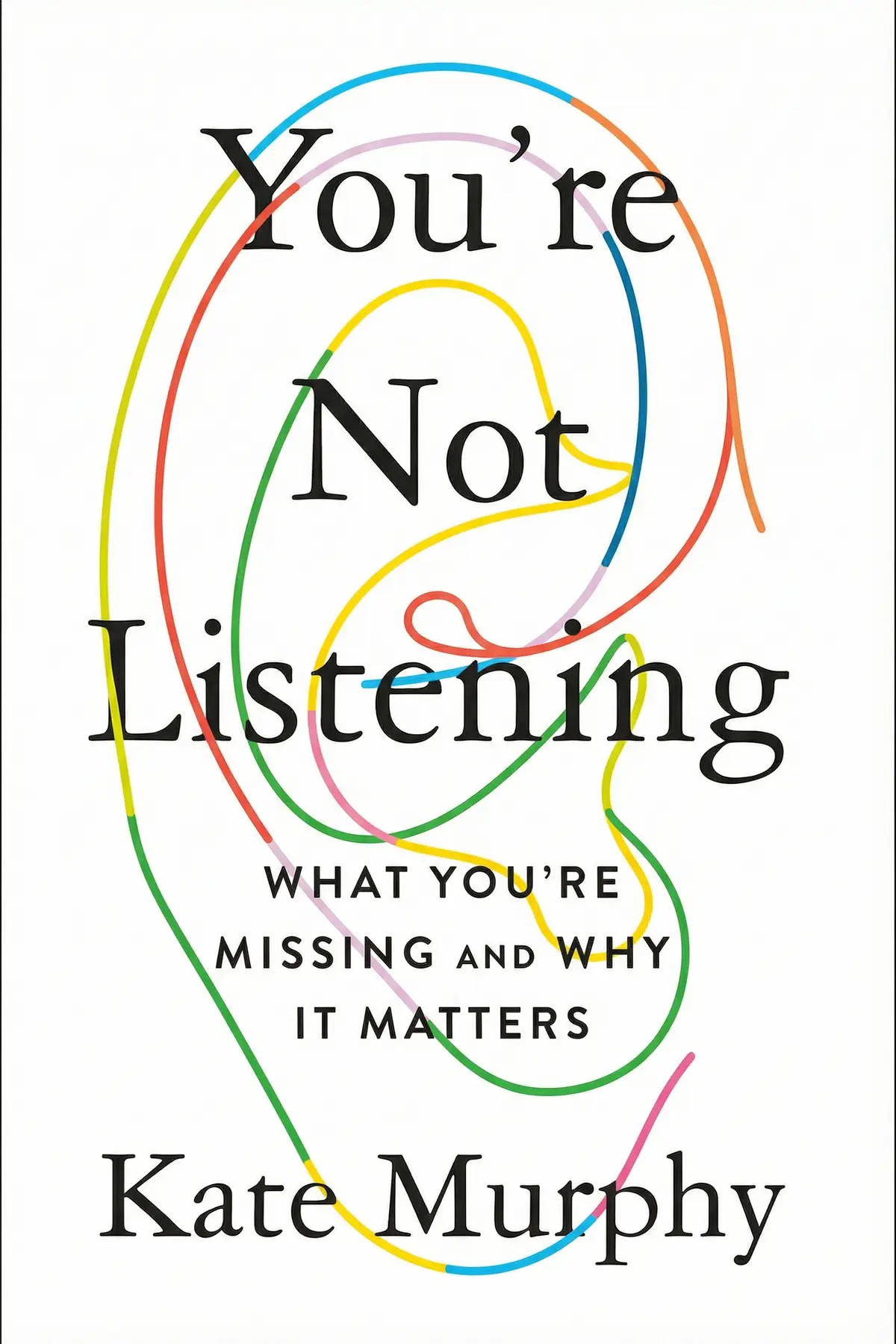
Table of Content
1. Introduction
1 min 07 sec
If you have ever caught yourself planning your reply while a colleague is still mid-sentence, you are part of a much wider problem. In You’re Not Listening, journalist Kate Murphy argues that we have trained ourselves to broadcast and nearly forgotten how to receive, at a time when research by Microsoft puts the average attention span at eight seconds, shorter than a goldfish’s. That scarcity, she says, is exactly what makes real listening so valuable.
Murphy, who interviews people for a living, sought out some of the best listeners she could find: a focus group legend, FBI and CIA veterans, a couples therapist, Quaker committees and improv teachers. Her throughline is that listening can be learned, through curiosity, dropping assumptions, better questions and comfort with silence, and that it rewards the listener as much as the speaker. By the end, you will know how to answer bad news so a friend keeps talking, what to do when disagreement sets off your alarm, and why a pause is nothing to fear.
2. Find the answers a survey will never reach
2 min 03 sec
Big Data can tell a company a great deal, but only about the questions someone already thought to ask. One veteran moderator found a whole new product hiding in a place no spreadsheet would ever look.
3. Let curiosity do most of the talking
1 min 51 sec
A former hostage negotiator spends hotel evenings interviewing strangers at the bar for no professional reason at all. His odd habit, and a CIA interrogation after 9/11, reveal how little a listener actually needs to say.
4. Stop predicting what your partner will say
1 min 49 sec
Many individuals feel more comfortable opening up to someone they have never met than to the husband or wife at home. A couples therapist has watched what happens when a partner finally hears what was being said all along, and it can bring tears.
5. Hear opposing views without running from the bear
2 min 00 sec
Brain scans of people whose political beliefs were challenged looked startlingly like scans of people in physical danger. A nineteenth-century poet offers a way to stay in the conversation when every instinct says leave.
6. Ask supportive questions that keep people talking
2 min 03 sec
Some replies that sound kind actually steal the conversation, including the urge to help. A Quaker practice shows how patient questions, asked twice if needed, can lead someone to a truth about themselves they had missed.
7. Treat silence as part of the conversation
1 min 55 sec
An improv game in Chicago exposes anyone who stopped paying attention, and business negotiators have lost ground just to escape an awkward pause. Both point to a habit most of us avoid at almost any cost.
8. Protect your listening energy and know your limits
1 min 49 sec
Air traffic controllers work short shifts for a reason that applies to every conversation you have. Knowing when you are out of attention, and why some people drain it fastest, may say more about you than about them.
9. Conclusion
1 min 09 sec
Murphy’s best listeners come from unlikely corners: a focus group room, a hotel bar, a CIA interview, a Quaker meeting, an improv stage in Chicago. What they share is not a talent but a posture. They stay curious, stop assuming, ask questions that hand the story back, and sit with silence or disagreement without bolting. Each of those habits runs on attention, which in an eight-second world is among the rarest things one person can give another.
The practice starts close to home. The people you know best are the ones you most often stop hearing, because you believe you can finish their sentences. The next time your partner, a parent or an old friend talks to you, listen as if they were a stranger at a hotel bar: notice the tone of their voice, watch their body, and pay attention to what they leave unsaid. When you feel the urge to top their story, ask what happened next instead.
Murphy expects them to surprise you. Everyone, she believes, is interesting to someone who asks the right questions.
About this book
What is this book about?
We train to speak, post and present, yet many people say they rarely feel heard, and attention spans keep shrinking. Journalist Kate Murphy argues that this shortage is what makes careful listening so valuable, at work, at home and with strangers. Murphy went looking for the people who listen best for a living: a focus group moderator who has heard more than fifty thousand people, former FBI and CIA interrogators, a couples therapist, Quaker committees and improv teachers in Chicago. From them she draws a set of habits. Follow your curiosity and say less. Stop assuming you know what someone means, especially someone close to you. Treat disagreement and misunderstanding as openings. Reply with questions that support the speaker instead of shifting the talk to yourself, and let pauses happen. Readers get concrete ways to respond to bad news, handle a heated difference of opinion, read an audience while speaking and protect their own listening energy, along with a case that listening serves the listener as much as the speaker.
Book Information
Who it's for
Professionals rehearsing their reply
Professionals who rehearse their reply while colleagues are still talking and want meetings that go somewhere.
Managers and team leads
Managers and team leads who need people to tell them what is really going on.
Unsure they still listen
Partners, parents and friends who suspect they stopped hearing the people closest to them.
About the Author
Kate Murphy
Kate Murphy is a journalist based in Houston, Texas, whose essays and articles have appeared in The New York Times, The Wall Street Journal, The Economist, Agence France-Presse and Texas Monthly. She writes about complex subjects, including the science of how people interact. You're Not Listening, her first book, has been published in thirty-two languages and is required reading in interpersonal communication courses at schools and universities around the world. She also holds a commercial pilot's license.
Ratings & Reviews
Ratings at a glance
What people think
Listeners find the book to be thoroughly researched and well-crafted, with one listener highlighting its modern content. It aids people in becoming more effective listeners via curiosity and empathy, and listeners value the way it boosts conversational sensitivity and improves connections. They appreciate how readable and useful it is, with one mentioning that it is required reading for a college class.
Top reviews
Ratchanee
This book should be required reading for anyone who wants to actually connect with the people in their life. Kate Murphy explores why we’ve lost the art of listening, moving way beyond basic tips like nodding your head or paraphrasing. The focus on empathy and genuine curiosity really resonated with me. I’ve already started applying the idea of 'supportive listening' in my marriage, and the shift in our conversations is palpable. While some might say the advice is common sense, the reality is that most of us are too distracted by our devices to actually practice it. It’s a well-researched, deeply human look at how we can bridge the gap between just hearing words and truly understanding someone’s inner world. Truly a life-changing perspective if you’re willing to put in the work.
Show moreSupatra
Ever wonder why so many of our interactions feel like we're just waiting for our own turn to speak? Murphy tackles this head-on with a blend of scientific research and engaging storytelling. I loved the sections on how our brains process sound and why silence is such a powerful tool in communication. Some readers might find her critiques of social media a bit harsh, but I think she’s spot on about how technology has eroded our patience for the slow, messy process of human connection. The book is incredibly readable and doesn’t feel like a dry academic text at all. It’s more of a wake-up call. If you’ve ever felt lonely in a room full of people, this will explain exactly why that’s happening and how to fix it through curiosity.
Show moreZoe
I’m going to do something I almost never do: start this book over from page one immediately after finishing it. There is just so much to absorb here regarding the psychology of connection. Murphy argues that listening is a skill we’ve neglected, and her evidence is both convicting and inspiring. I found myself highlighting entire pages, especially the parts about how we often 'listen' only to confirm our own biases. It’s helped me become more aware of my own conversational habits, specifically how I tend to interrupt when I’m excited. The anecdotes about different professions—from CIA interrogators to focus group moderators—were fascinating and illustrated her points perfectly. This is an essential guide for navigating a world that has become increasingly loud and disconnected.
Show moreNikolai
As someone who works in a client-facing role, I thought I was already a pro at this, but Murphy proved me wrong. The book delves into the nuances of body language and the 'pauses' in speech that we often miss. I appreciated the emphasis on how listening actually shapes our brains and our relationships. My only minor gripe is that the author leans a bit heavily into the 'phones are ruining everything' trope, which can feel a little repetitive after a while. However, her core message about the necessity of empathy is so vital that I can overlook the occasional old-school grumpiness. It’s a thoughtful, practical read that has made me much more sensitive to the cues people give off during everyday chats. Definitely worth your time.
Show moreKanokporn
The chapter on how different cultures handle silence was worth the price of admission alone. I had never really considered how my discomfort with a few seconds of quiet could be hindering my ability to truly hear what others are saying. Kate Murphy does a great job of mixing anecdotes with hard data, making the case that listening is a physical and emotional necessity. I did notice the name-dropping that some other reviewers mentioned, which felt a bit unnecessary at times. Still, the underlying message is powerful. It’s not just about being polite; it’s about being present. Since finishing this, I’ve been making a conscious effort to put my phone away during meals and actually focus on the person across from me. It makes a huge difference.
Show moreJames
Frankly, Kate Murphy writes with the sharp, engaging pace you'd expect from a seasoned journalist. She makes a convincing case that we are living in a 'listening crisis.' While some of the tips—like not interrupting or asking follow-up questions—might seem like basic manners, her explanation of the 'why' behind them adds a lot of depth. I found the section on 'supportive' versus 'shift' responses to be particularly enlightening. It’s a concept that is easy to understand but surprisingly difficult to master in practice. The book is well-organized and keeps you moving, though I wish she’d spent a little more time on how to listen to people we fundamentally disagree with. Overall, it’s a very solid, helpful guide for improving your interpersonal skills.
Show moreOrathai
Picked this up on a whim after a friend wouldn't stop raving about it. I wasn't sure if a whole book about listening could hold my attention, but Murphy’s storytelling is top-notch. She has a way of making research about the inner ear or psychological studies feel relevant to your Tuesday morning coffee run. There’s a certain warmth to the writing, even when she’s being critical of modern habits. I do think she oversimplifies some complex social issues by suggesting that 'listening more' is a universal cure-all, but the personal benefits are undeniable. It has certainly made me a more curious conversationalist. I’m finding that by asking better questions, I’m discovering things about my friends I never knew, despite years of knowing them.
Show morePichaya
It’s rare to find a non-fiction title that balances rigorous research with such readable, human anecdotes. Murphy takes us through various environments—from the workplace to the family dinner table—to show where we’re failing to connect. I particularly enjoyed the discussion on how we often 'fake' listening through superficial gestures without actually processing the information. It’s a convicting read, for sure. My only criticism is that the tone occasionally feels a bit condescending toward younger generations and their tech use. That said, the practical takeaways are too good to ignore. It’s helped me slow down and appreciate the value of a deep, uninterrupted conversation in an age where everything is fragmented into soundbites and notifications. Great for a book club discussion.
Show morePannipa
Not what I expected, though there’s definitely some value to be found if you can get past the tone. To be fair, Murphy raises some excellent points about the role of empathy in communication, but the 'everything was better in the old days' vibe was a bit much for me. I felt like she was constantly wagging her finger at me for owning a smartphone. Some of the advice feels very commonsensical—like, yes, I know I shouldn't look at my laptop while someone is talking to me. Does that really require a whole chapter? However, the actual interviews with professionals who listen for a living were quite interesting and provided some unique insights that I hadn't considered before. It's a decent read, but maybe could have been a long essay instead.
Show moreNarong
Look, I really wanted to love this, but it felt a bit like a long-form article stretched into a book. While I agree with the central premise—that we’re all getting worse at paying attention—the execution felt a bit repetitive. She spends a lot of time mourning the loss of a 'golden age' of conversation that I’m not entirely sure ever existed. Plus, the name-dropping of various experts and high-profile individuals felt a little self-indulgent after a while. On the positive side, the research on how our brains synchronize during a good conversation was genuinely fascinating. I also appreciated the specific tips on how to handle difficult dialogues. It’s a fine book for a casual reader, but if you’re looking for deep, intellectual rigor, you might find it a bit superficial.
Show moreQuestions about this book
What is the main idea of You're Not Listening by Kate Murphy?
Murphy argues that real listening has become rare as attention spans shrink and everyone works on broadcasting themselves, which makes it more valuable than ever. Drawing on a focus group moderator, FBI and CIA interrogators, a couples therapist, Quakers and improv teachers, she shows that listening is a learnable set of habits: curiosity, dropping assumptions, tolerating disagreement, asking supportive questions and accepting silence.
What is the difference between a support response and a shift response?
The terms come from Boston College sociologist Charles Derber. A shift response turns the conversation toward you, such as answering a friend’s story about her runaway dog by saying your own dog never escapes. A support response offers sympathy and then a question, such as where she found the dog, so the speaker can keep telling her story. Murphy warns that questions which imply you already know the answer are shift responses in disguise.
Why is it so hard to listen to opposing views?
Murphy cites a 2016 University of Southern California study in which brain scans of people whose political beliefs were challenged resembled those of someone running from a bear. Duke professor Ahmad Hariri suggests that because our main threats today are social, the amygdala reacts strongly to differences of opinion. Murphy recommends building what Keats called negative capability, the ability to stay with doubt and uncertainty.
How can I apply the ideas in You're Not Listening?
Start with the people closest to you, whom you are most likely to stop hearing. Listen to their tone, watch their body language and notice what they leave unsaid. When someone shares bad news, respond to the part that hurts most instead of saying something polite. Let pauses run longer, ask for clarity when you are confused, and take a break when your listening energy runs out instead of faking attention.
Who should read You're Not Listening?
It suits anyone whose work or relationships depend on understanding other people: managers, researchers, salespeople, negotiators, therapists, and partners or parents who feel they have stopped hearing each other. The book is practical without being a checklist, built around stories such as a focus group that led to Swiffer and a Quaker committee that helped Parker Palmer see why he wanted a job.
Readers also enjoyed





AUDIO SUMMARY AVAILABLE
Listen to You’re Not Listening in 15 minutes
Get the key ideas from You’re Not Listening by Kate Murphy, plus 5,000+ more nonfiction titles.
- 5,000+ titles
- Listen as much as you want
- 7-day free trial
- Cancel anytime









