

14 min 54 sec
Available in: English
Young Money: Inside the Hidden World of Wall Street’s Post-Crash Recruits
By Kevin Roose
Follows young Wall Street analysts after the 2007 crash to show what a coveted finance job really costs in sleep, health, relationships and character, and how to judge a high-paying offer before saying yes.
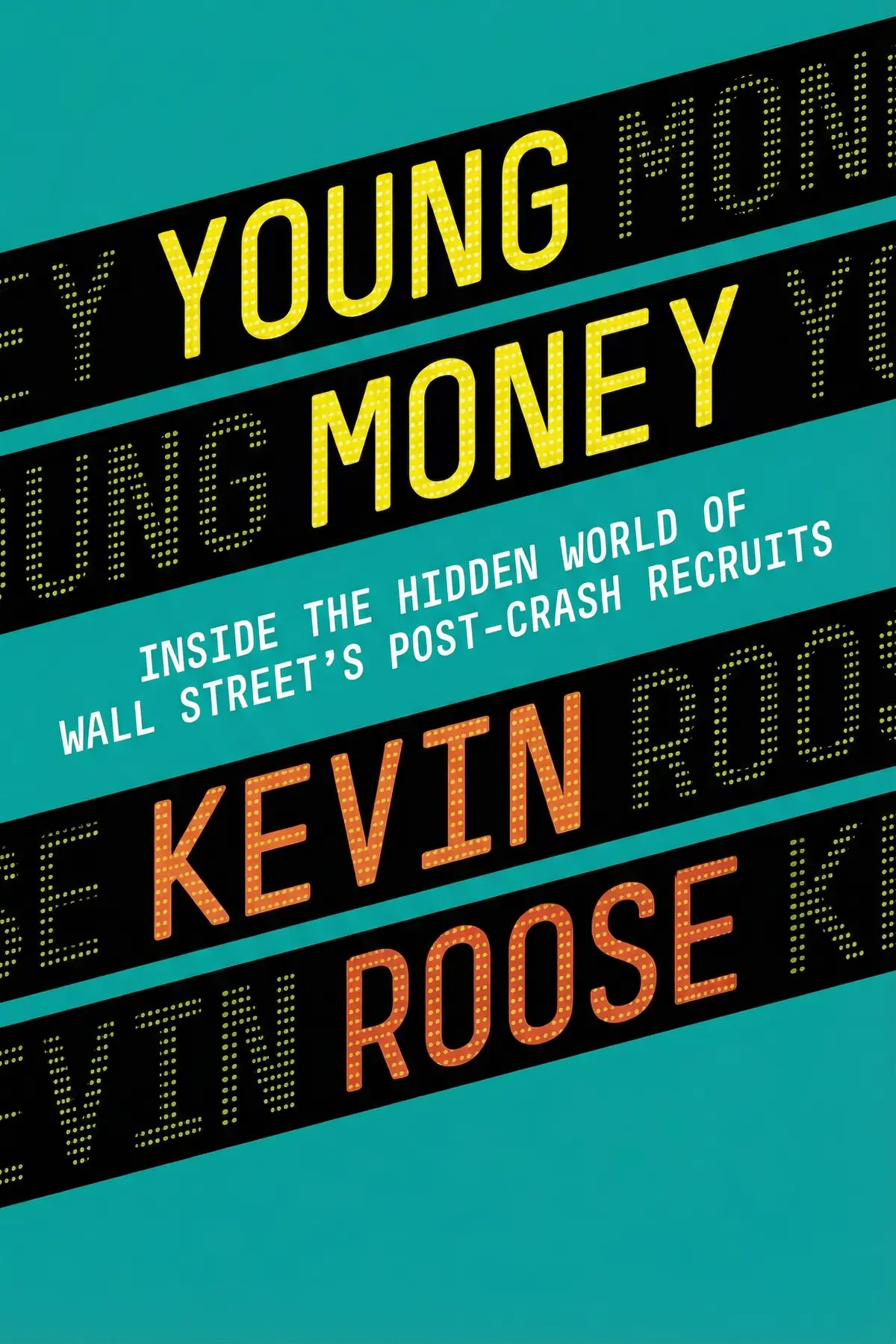
Table of Content
1. Introduction
1 min 01 sec
A $70,000 starting salary plus a bonus sounds like a fast way out of student debt, until one young analyst divided his pay by his real hours and got about $16. In Young Money, journalist Kevin Roose follows new recruits into the banks of Wall Street in the years after the 2007 financial crisis. He finds that the most coveted job for elite graduates is far less glamorous than its reputation.
Many of these analysts never wanted to work in finance. They drifted in because the banks asked first, the money was large and nothing else felt certain. Roose’s case is that this default choice costs more in sleep, health, relationships and character than the paycheck returns, and that the job only makes sense for people who truly want finance.
If a well-paid offer you feel lukewarm about is sitting in your inbox, his reporting gives you a way to price it honestly before you sign.
2. Recognize a recruiting machine built to catch you early
1 min 38 sec
Banks start courting top students months before most employers even plan an interview. The dinners, videos and phone calls feel like flattery, yet the speed of the whole process is doing something students rarely notice.
3. Catch yourself choosing a career by default
1 min 34 sec
A finance background isn’t required, even arts majors from top schools are well placed, and finance often isn’t the recruits’ real passion. Heavy student debt, a thin job market and a two-year plan help explain how they ended up on Wall Street anyway.
4. See what a 100-hour week really demands
1 min 47 sec
The long days are only part of the deal. Analysts say something else wears them down faster, and a mistake over an internal newsletter shows what support looks like when things go wrong.
5. Count the cost to your health and relationships
1 min 53 sec
A four-year relationship ended over dinner plans, and a young analyst landed in a hospital bed. The firms even make it easy never to leave the building, and Roose explains why that convenience is no accident.
6. Junior analysts belong to the 99 percent too
1 min 47 sec
When protesters marched past a Goldman Sachs window, the young analyst inside felt he was standing on the wrong side of the glass. Others shrugged. The gap between them says a lot about doing ordinary work for a powerful name.
7. Notice how staying on reshapes your character
1 min 58 sec
Most analysts plan to leave after two years, yet many never do. Roose traces what the job does to the ones who stay, then sneaks into a secret dinner to see where the climb finally leads.
8. Divide the salary by the hours before signing
2 min 04 sec
On paper, a junior analyst ranks among the country’s top earners. Run the numbers against a real week, though, and the figure shrinks to something few graduates would ever accept from any other employer.
9. Conclusion
1 min 12 sec
Young Money is a story about defaults. The banks recruited early, the pay promised to clear the debt and two years sounded short, so many bright graduates said yes to a life they had never really chosen. Roose shows the bill arriving piece by piece: nights on call, a relationship ended over dinner plans, a young man in a hospital bed, a cheerful graduate turned cynical, a salary that shrinks to $16 an hour. In his view, the crash and the protests did one useful thing. They made the default look less safe, and that may have spared many creative people from a job that would have worn them down.
The lesson reaches well beyond finance. When an attractive offer arrives before you have asked yourself what you want, slow down and work out what it pays for each hour you will actually give it. Talk to someone a year into the job about sleep, mistakes and life outside the office. Then check whether you would still choose the work with other doors open. Jeremy Miller-Reed needed four words to describe leaving. The better plan is never needing them.
About this book
What is this book about?
Every year, banks on Wall Street hire a fresh class of graduates from elite universities, and many of them never meant to work in finance. They drifted there because the firms recruited early, the salaries promised relief from student debt and two years sounded like a short detour. Journalist Kevin Roose followed these young analysts in the years after the 2007 financial crisis to see what the job actually asks of them. What he found is far from glamorous. Analysts work around 100 hours a week, stay on call at 3 a.m. and on Christmas morning, and get shouted at for errors they could not have known to avoid. Relationships end, health breaks down and, for those who stay, cheerful graduates turn cynical. Roose even slips into the dinner of a secret society of the financial elite to see where the ladder leads. The result is a sharp portrait of a career chosen by default, and a practical way to price any prestige offer: count the real hourly rate, the hidden costs and whether the work is something you would choose freely.
Book Information
Who it's for
Students doubting finance offers
Students at top universities weighing an early, well-paid finance offer they feel unsure about.
Graduates with heavy loans
Graduates with heavy student loans tempted to take the safest-looking job first.
Weighing pay against sacrifice
Young professionals already in demanding roles who wonder whether the pay covers what they give up.
About the Author
Kevin Roose
Kevin Roose is an American author and journalist based in San Francisco. He has worked as a technology columnist for The New York Times and has hosted the podcasts Hard Fork and Rabbit Hole. Earlier he wrote for New York magazine and hosted the documentary TV series Real Future. His first book examined Liberty University, an evangelical Christian school, and his other books include The Unlikely Disciple and Futureproof. He was named to the 2015 Forbes 30 Under 30 list.
Ratings & Reviews
Ratings at a glance

What people think
Listeners consider this a vital resource for those aiming for a banking career, praising the quality of the prose and the engaging flow that centers on personal experiences. It delivers a balanced perspective on young Wall Street while sharing useful observations about how the investment banking world operates. Although listeners value the reporting style, some hold a biased perspective toward the investment banking industry.
Top reviews
Bam
Ever wonder what really happens behind the glass doors of those massive investment banks? Kevin Roose delivers a fascinating, fly-on-the-wall account that follows eight recruits as they navigate the soul-crushing reality of 100-hour work weeks. It’s a must-read for any college senior considering a career in finance. Roose manages to humanize a group of people often seen as corporate villains, showing the toll the industry takes on their physical and mental health. The storytelling is incredibly well-paced, making what could be dry financial jargon feel like a high-stakes drama. I found the sections on the social hierarchies particularly enlightening. While some might see these kids as privileged, the book highlights the immense pressure and the 'golden handcuffs' that keep them trapped. Truly an unbiased look at a world most of us will never see from the inside.
Show morePaiboon
Picked this up while looking for a companion to Liar’s Poker, and it did not disappoint. As someone who recently graduated, seeing the transition these analysts make from wide-eyed students to exhausted, cynical workers was incredibly moving. Roose isn't just writing about money; he's writing about the loss of identity in the pursuit of status. The reporting is top-notch, especially the undercover bit at the Kappa Beta Phi dinner—that scene felt like something out of a movie. It’s rare to find a book on finance that focuses so heavily on individual stories rather than just spreadsheets and market trends. The narrative flows smoothly and keeps you engaged through every pivot and career change. If you want to understand the modern Wall Street culture beyond the headlines, this is the book. Plus, the mention of Marina Keegan was a touching, if somber, inclusion.
Show moreArthit
Wow, talk about a reality check. I went into this expecting a hit piece on greedy bankers, but what I found was a compassionate and deeply researched study of young people trying to find their way. The truth is, most of these kids aren't 'bad seeds'—they're just ambitious graduates who get sucked into a corrosive culture that prizes efficiency over everything else. Roose does an excellent job detailing the grueling hours and the intense psychological impact of the job. I appreciated how he followed them for years, showing the progression from the training programs to the eventual burnout or the jump to tech startups. It provides valuable insights into the investment banking system without being overly academic. The writing is punchy, authentic, and stays with you long after you finish the last chapter. Highly recommend for anyone curious about the human cost of the financial industry.
Show moreMint
As someone who survived a stint in corporate law, I found the descriptions of the 'Azkaban' feeling after quitting to be spot on. Kevin Roose has a real gift for capturing the specific brand of exhaustion that comes from being at the beck and call of a senior MD. The book follows eight distinct individuals, and while some are more likable than others, they all feel like real people you’d meet at a bar in the West Village. My only minor gripe is that tracking eight different narratives can get a little confusing at times—I found myself flipping back to remember who was at Goldman and who was at BofA. However, the journalistic approach is fantastic. It’s a breezy read that manages to be both entertaining and informative. It definitely sheds light on why our 'best and brightest' are consistently lured into these roles. It’s a solid addition to the literature of Wall Street.
Show moreTitiluck
Finally finished this over the weekend and I’m still thinking about the 'young money' lifestyle. The book is less about the mechanics of finance and more about the cultural induction into a world of status anxiety and Adderall-fueled nights. Roose is a talented writer who keeps the pace moving, even when he’s describing boring tasks like formatting Excel models at 3:00 AM. I particularly enjoyed the analysis of how Ivy League schools have become feeder tubes for these banks. It’s a bit of a tragedy, really, seeing all that talent go toward moving numbers around a screen. While the book is mostly unbiased, you can tell the author has some reservations about the industry's influence on society. It’s a great piece of reportage that feels very grounded in the post-2008 era. Definitely worth the read if you enjoy character-driven non-fiction.
Show moreTun
Not what I expected from a book about Wall Street, in a good way. Instead of focusing on CEOs, we get the grunts—the analysts who are actually doing the work. Roose captures the transition from college to the real world with painful accuracy. The stories of Jeremy and the others are quite compelling, even if their complaints about 90k salaries can feel a bit tone-deaf to the average reader. To be fair, the author does acknowledge this discrepancy. The chapter on the secret society dinner was definitely a highlight, providing a rare glimpse into the 'Old Wall Street' that still lingers. It’s an insightful look at how the industry has changed, or hasn’t, since the financial crisis. The prose is clean and the pacing is excellent. It’s a very accessible book for those who don’t have a background in finance but want to understand the culture.
Show moreWipawan
The chapter where Jeremy breaks down on his roof is a perfect microcosm of this book—it's a bit melodramatic. Roose clearly spent a lot of time with these recruits, and while the access is impressive, the book lacks a strong central thesis. Is it a critique of capitalism? A coming-of-age story? A PR piece for banks to show they aren't all evil? It tries to be all three and ends up feeling a bit muddled. The writing is decent, and some of the anecdotes are genuinely funny, but the constant 'poor me' vibe from kids making more than most families is hard to stomach after a while. I was hoping for more talk about actual financial malfeasance rather than just complaints about mean bosses and lack of sleep. It’s a light, breezy read, but don't expect it to change your worldview or offer a deep policy analysis. It's okay, just a bit superficial.
Show moreRafael
Frankly, I think Roose is a much better writer when he sticks to tech topics. This book felt a little bit like he was trying too hard to make us feel sorry for people who chose to work in a high-stress, high-reward environment. We get it: the hours are long and the bosses can be jerks. But that's true in many industries that pay a fraction of what these analysts make. The book is well-paced and the individual stories are interesting enough to keep you turning the pages, but it lacks the 'bite' of something like Liar’s Poker. It feels more like a long-form magazine article stretched into a book. There are some gems of insight regarding the recruiting process on campuses, but I wanted more from the Kappa Beta Phi section. It felt a bit sensationalist without actually proving much. A decent read, but not a must-read.
Show moreChanon
Look, cry me a river about these kids making 90k right out of the gate and then complaining that they have to work hard. I found the 'whiny' tone of the subjects—and the author’s sympathetic framing of it—really grating. Roose wants us to believe that these are the 'best and brightest,' but most of them just seem like status-obsessed twenty-somethings who can't handle a demanding job. The book often reads like a PR piece designed to show that bankers are just 'normal people' who are misunderstood. Where is the actual investigative journalism? Where are the scandals? Instead of uncovering corruption, we get scenes of guys crying in the rain because they had to fix a spreadsheet. It’s remarkably boring for a book about the center of the global economy. If you want to learn about finance, watch paint dry instead. You’ll get more useful information.
Show moreElena
To be fair, the research into how Ivy League schools feed the banks is excellent, but the rest of the book falls flat. It’s incredibly repetitive. Every chapter is basically: an analyst works late, drinks too much coffee, feels sad, and wonders if they should move to San Francisco. Roose doesn't seem to have a point other than 'Wall Street is hard.' We knew that already. The supposedly 'secret' meetings he crashed felt like a distraction from the fact that nothing actually happens in the main narrative. I also struggled with how much the author inserted himself into the story, virtue-signaling about how 'decent' these kids were despite their jobs. It felt patronizing. If you're an aspiring banker, maybe you'll find some tips here, but for everyone else, it’s just a collection of anecdotes about privileged people being tired. I expected much more from a writer of Roose’s caliber.
Show moreQuestions about this book
What is Young Money by Kevin Roose about?
Roose follows young analysts who joined Wall Street banks after the 2007 financial crisis. He shows how firms recruit elite graduates early, why many join without any passion for finance, and what the job costs them: 100-hour weeks, constant availability, harsh bosses, broken relationships and damaged health. His central argument is that the costs usually outweigh the pay unless finance is what you truly want.
How much do Wall Street analysts earn according to Young Money?
Roose reports a base salary of about $70,000 a year plus a bonus of $20,000 to $90,000, enough to place analysts among the country’s top earners. But one analyst who divided his pay by the hours he actually worked, overtime included, found he was earning roughly $16 an hour, a modest figure for 100-hour weeks of tedious work.
Why do so many graduates end up working on Wall Street?
In Roose’s account, many are accidental financiers. Banks recruit at Ivy League schools as early as the fall of senior year, see top-school students as strong candidates even if they are arts majors, and offer a two and out deal of two years as an analyst. For a graduate with large student loans and no clear plan, a big salary for a short stint looks like an easy, sensible choice.
How can I use Young Money when deciding on a job offer?
The book suggests a few checks. Work out your real hourly rate by dividing the pay by the hours you will actually work. Ask people a year or two into the role when they can switch off and how mistakes are handled. Notice whether you are choosing the job or simply defaulting into it, and ask whether you would pick it with other offers on the table.
Readers also enjoyed


A Bigger Prize: How We Can Do Better Than the Competition
Margaret Heffernan



60 Seconds & You’re Hired!
Robin Ryan


AUDIO SUMMARY AVAILABLE
Listen to Young Money in 15 minutes
Get the key ideas from Young Money by Kevin Roose, plus 5,000+ more nonfiction titles.
- 5,000+ titles
- Listen as much as you want
- 7-day free trial
- Cancel anytime









