

59 Seconds: Change Your Life in Under a Minute
Richard Wiseman
 English
Eric Thomas shows how to drop the victim mindset, find the talent that energizes you, practice it until opportunities appear and then charge what your work is actually worth.
1 min 06 sec
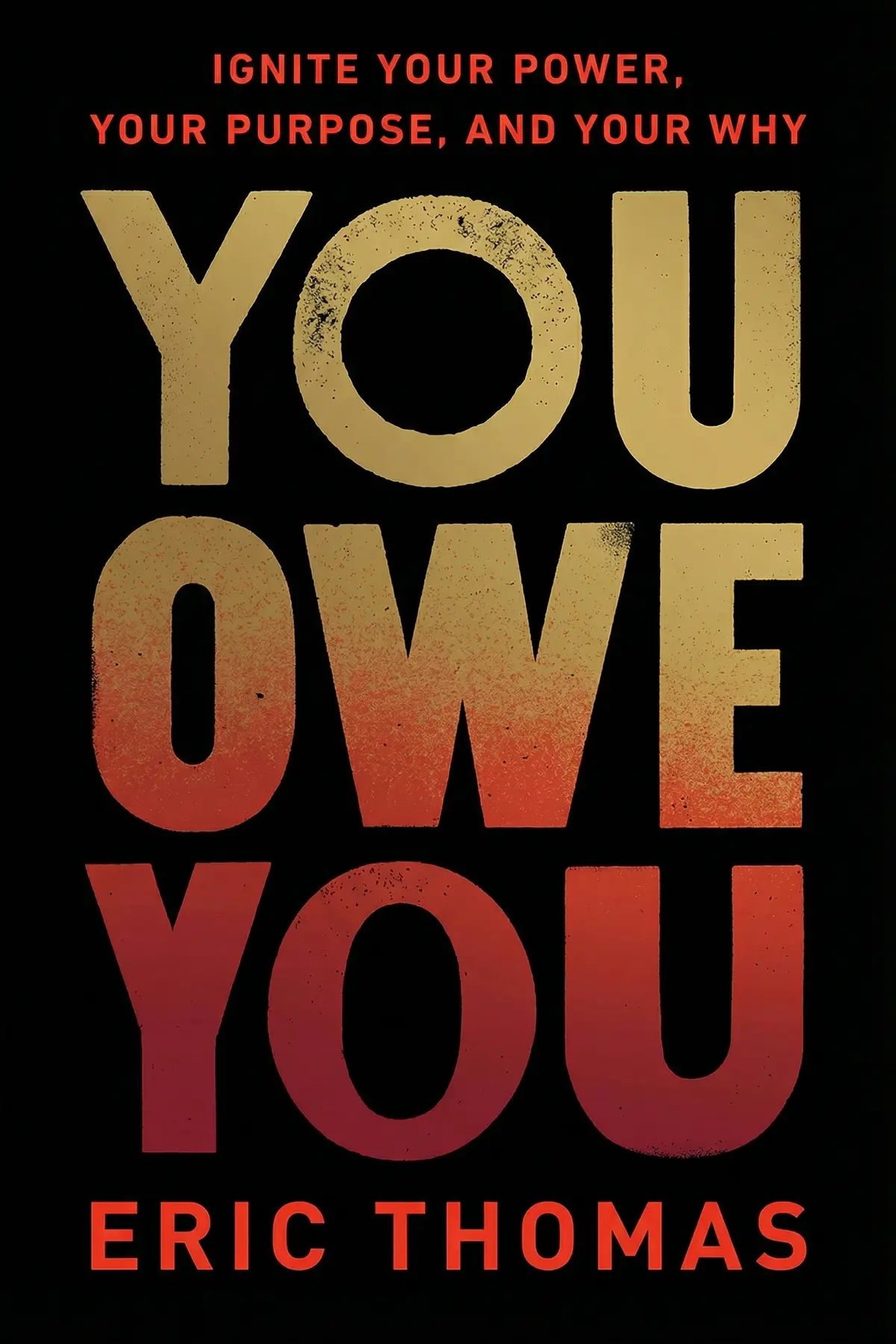
If the big decisions in your life seem to be made by someone else, Eric Thomas has a blunt reply: nobody owes you anything, so you owe it to yourself. In You Owe You, the speaker, educator and pastor known as ET argues that a better life starts the day you stop waiting to be rescued and appoint yourself the chief executive of your own affairs.
He knows the alternative well. Thomas grew up where segregation, and slavery before it, had pushed Black families into certain neighborhoods and certain jobs. For most people around him, the ceiling was a place on a car assembly line in Detroit.
His argument runs in a clear order. Take responsibility first. Then find the talent that energizes you, and practice it daily with intention. Do that, he says, and what other people call luck turns into opportunity you have earned. Along the way you get a test for spotting your strongest gift, a plan for getting fluent in your field and a solid reason to ask for a higher fee.
2 min 00 sec
When you truly lack control, blaming others feels fair. Thomas argues that playing the victim weakens your ability to act, and he lays out four moves for getting the controls back.
2 min 01 sec
Most career advice asks what you are good at. Thomas asks something sharper, and a boy listening closely to famous voices shows why the answer might already be visible in your past.
2 min 12 sec
One unpaid evening introducing a famous psychologist changed the direction of Thomas’s life. It looks like fortune, until you see what he had been doing for years before anyone noticed him.
2 min 07 sec
Skilled people often stall in rooms where everyone speaks a language they never learned. Thomas describes three abilities that make peers open up, and a shortcut for newcomers who feel lost.
2 min 02 sec
Thomas once accepted a six-figure speaking deal and felt he had made it. A mentor’s advice showed him how much he had been leaving on the table, and why gratitude can be expensive.
1 min 09 sec
Thomas’s book opens with a hard sentence and ends somewhere generous. Nobody owes you anything. But the person who accepts that is free to build work that serves far more people than themselves. The distance between a community that hoped, at best, for assembly-line jobs and a seat in NBA locker rooms was covered by choices. Thomas owned his choices, followed the pull of great speakers and said yes to unpaid stages. He learned the codes of the rooms he wanted to enter, and in the end he asked for a bigger fee than he had dared to.
The habits this supports are small enough to start now. Replace one excuse you have been leaning on with a standard you actually keep. Write down what gives you energy and what you value most, then find a place, paid or not, to use that gift every day. And the next time someone offers you a number, remember the mentor who told Thomas to ask for more.
What waits at the end, in Thomas’s view, is more than income. It is fulfilling work that lifts everyone it touches. You owe yourself that much.
Many people feel that the decisions shaping their lives are made by someone else, and that feeling is often strongest among people from marginalized groups. Eric Thomas, the speaker known as ET, grew up in a community where the best most people could hope for was assembly-line work in Detroit. His response is blunt: nobody owes you anything, so you owe it to yourself to take charge. You Owe You turns that idea into a sequence. First you appoint yourself the chief executive of your own life by owning your choices and setting standards. Then you find your superpower, the activity that gives you energy, and connect it to your why, the thing you value most. Daily, intentional practice puts you where lucky breaks happen. Knowledge, performance and clear expression make you a triple threat, and thinking like a business lets you charge properly for what you do. Readers get Thomas's own story, from unpaid speaking gigs to NBA locker rooms and 300,000 self-published books, along with practical steps for each stage.
Young professionals and students who feel held back by where they started and want a plan they control.
Career switchers trying to name their strongest talent and break into a field whose language they don't speak yet.
Freelancers and speakers who undercharge and need the nerve to ask for their real rate.
Eric Thomas, known as ET, is a speaker, author, educator and pastor who speaks openly about homelessness, never knowing his biological father and struggling at school. He earned a master's degree from Michigan State University in 2005, where he built the Advantage Program to help high-risk undergraduates stay in college. He leads the consulting firm Eric Thomas and Associates and has worked with Nike, General Electric and the NBA. His other books include The Secret to Success, Greatness Is Upon You and Average Skill Phenomenal Will.

Listeners find the material highly accessible with practical exercises at the end of each chapter and value the motivational themes, ranking it among the most influential and life-altering books they have experienced. The text delivers a deep well of personal development insights, stresses self-accountability, and incorporates reflective prompts throughout. Additionally, listeners applaud the author’s delivery; one listener characterizes it as a straight-forward no-excuses approach, while another highlights the focus on taking responsibility for one's situation.
Wow. Hearing about ET’s journey from being homeless on the streets of Detroit to becoming a PhD and world-class speaker is nothing short of incredible. This isn't just another dry business book; it’s an emotional roadmap for anyone who feels like the deck is stacked against them. I loved the concept of "miracle territory"—the idea that success isn't luck but the result of grinding until opportunity has no choice but to find you. The writing style is conversational and punchy, making it easy to digest even when the truth hurts. This book reminded me that I am the only one responsible for my current situation.
Show morePicked this up because I was feeling stuck in my career, and the "Triple Threat" chapter was a game-changer. ET breaks down why you need to master your craft, your performance, and your expression all at once. The exercises at the end of the chapters aren't just busy work; they actually help you map out your "superpower." I’ve read a lot of personal development books, but few address the specific struggles of marginalized groups with such a raw, no-nonsense perspective. It’s about taking ownership when the world hasn't given you a head start. Truly a life-changing perspective on what it means to be successful.
Show moreThe chapter on finding your "why" changed everything for me. Personally, I’ve struggled with direction for years, but ET’s breakdown of identifying your superpower helped me realize I was focusing on the wrong things. He explains that your "why" is that intangible thing you value above everything else, and once you find it, the grind doesn't feel like a chore anymore. This book is a masterclass in self-accountability. It’s easy to read, the formatting with the reflective questions is perfect for journaling, and the tone is incredibly supportive yet firm. You can tell he truly wants his readers to win.
Show moreFinally got around to reading this and I’m kicking myself for waiting so long. The way ET describes knowledge as a "coded language" that you need to learn to enter new circles is brilliant. It’s a very practical way to look at networking and professional growth beyond just "knowing people." The book is structured so well that you can jump to specific areas where you feel weak, like performance or expression. Got to say, the "CEO of your life" mentality is something I’ll be carrying with me into my next business venture. It’s straight-forward, no-excuses, and exactly the kind of push I needed this year.
Show moreEric Thomas has a way of cutting through the noise that most gurus miss. He doesn't just say "work hard," he demands that you take the "CEO" position of your own life and stop blaming your upbringing or surroundings. I appreciated the self-reflective questions at the end of each section because they forced me to look in the mirror. Truth is, some parts felt a bit repetitive, and he spends a lot of time justifying his personal success. However, the core message about shedding victimhood is exactly what I needed to hear right now. It’s a fast read but packs a punch. If you're tired of making excuses, this is your wake-up call.
Show moreAs someone who has followed ET for years, this felt like the definitive version of his "Breathe" philosophy. The focus on finding your "why" and using it to fuel your daily routine is articulated better here than in his short clips. I found the section on "knowledge as an ATM" particularly insightful because it shifts the focus from just working hard to working smart. My only gripe is that the layout of the book is a bit chaotic at times, jumping between personal anecdotes and advice quite rapidly. Still, the underlying message that you owe it to yourself to be great is impossible to ignore.
Show moreEver wonder what it takes to stop playing the victim? This book answers that question with a sledgehammer. Eric doesn't sugarcoat the fact that life is hard and often unfair. He uses his own background to show that your "script" can be rewritten if you’re willing to be uncomfortable. The concept of "miracle territory" was a standout for me—it’s about positioning yourself so that success becomes inevitable through sheer persistence. I did find some of the business advice at the end a bit generic, but the psychological shift he advocates for is worth the price of admission alone. Great for a quick motivation boost.
Show moreAfter hearing Eric speak in person, I knew I had to grab his latest book. It captures his voice perfectly—it’s loud, demanding, and deeply caring all at once. The core idea that "you owe you" excellence is a powerful antidote to the complacency that so many of us fall into. I especially liked the "1% better" quote because it makes the massive goal of self-improvement feel attainable through small, daily wins. My only minor complaint is that some of the street-preacher style doesn't translate as well to the page as it does to audio. Still, it’s a high-energy read that will definitely get you moving.
Show moreTo be fair, I expected a bit more "how-to" and a bit less "me-too" from this one. While Eric Thomas is undeniably one of the most electric voices in the industry, the book feels like it leans more toward a memoir than a practical self-help guide. There is a lot of filler where he justifies his speaking fees and his lifestyle, which felt a bit defensive to me as a reader. Look, the "1% better every day" philosophy is great, but it’s stuff we’ve heard before in his YouTube videos. It’s a solid 3-star read for the inspiration, but don't expect a revolutionary new framework. Borrow it from the library first.
Show moreNot what I expected based on the hype surrounding Eric Thomas. Frankly, it felt like I was reading a long justification for why he charges so much for his services and why he owns a second home in California. I understand that everyone needs to make a living, but the constant focus on his personal wealth and business model distracted from the actual self-help advice. The table of contents basically tells you everything you need to know: take responsibility and work hard. There’s a lot of fluff here that could have been edited down to a long blog post. If you want his best stuff, just watch his free videos.
Show moreThomas argues that nobody owes you anything, so you owe it to yourself to take charge of your life. That means dropping the victim mindset, finding the talent that energizes you, linking it to what you value most and practicing it every day. In his view, this turns apparent luck into earned opportunity and, eventually, into work that people will pay properly for.
Your superpower is the activity that gives you energy and absorbs you for hours. Thomas found his early on, since as a boy he was drawn to the voices of Maya Angelou, Barbara Walters and James Earl Jones, which pointed him toward speaking. He says you find yours by listing what energizes you, trying it out, practicing it daily and pairing it with your why, the thing you value most.
A triple threat combines three abilities: deep knowledge of their field, excellent performance and clear expression. Thomas stresses learning the code of your trade, the specialized language of lawyers, finance people or any community, and finding translators when you are new. He also wants you to keep your own style, blending the language of the room with what your background gave you.
Start by naming one setback you have blamed on others and setting one standard you will keep. List what energizes you, then use that talent daily, even through unpaid opportunities, as Thomas did before his break at Michigan State. When you are paid, know the market rate, set your own and ask for it, the way a mentor pushed Thomas to ask for more.
It suits people who feel limited by where they started and want to take control: students, young professionals, career changers and self-employed people. Thomas draws on his own path, from a community where assembly-line work was the ceiling to advising students at Michigan State and speaking for NBA teams, and he offers concrete steps for each stage.
Richard Wiseman





William B. Irvine


Andrew D. Thompson


Deepak Chopra
AUDIO SUMMARY AVAILABLE
Get the key ideas from You Owe You by Eric Thomas, plus 5,000+ more nonfiction titles.









