

14 min 42 sec
Available in: English
You Can Fix Your Brain: Just 1 Hour a Week to the Best Memory, Productivity, and Sleep You've Ever Had
By Tom O’Bryan
Explains why brain fog, memory lapses and low mood may signal inflammation and which markers to discuss with a doctor. It also shows how changes to posture, stress, diet and electronic devices can help the brain recover.
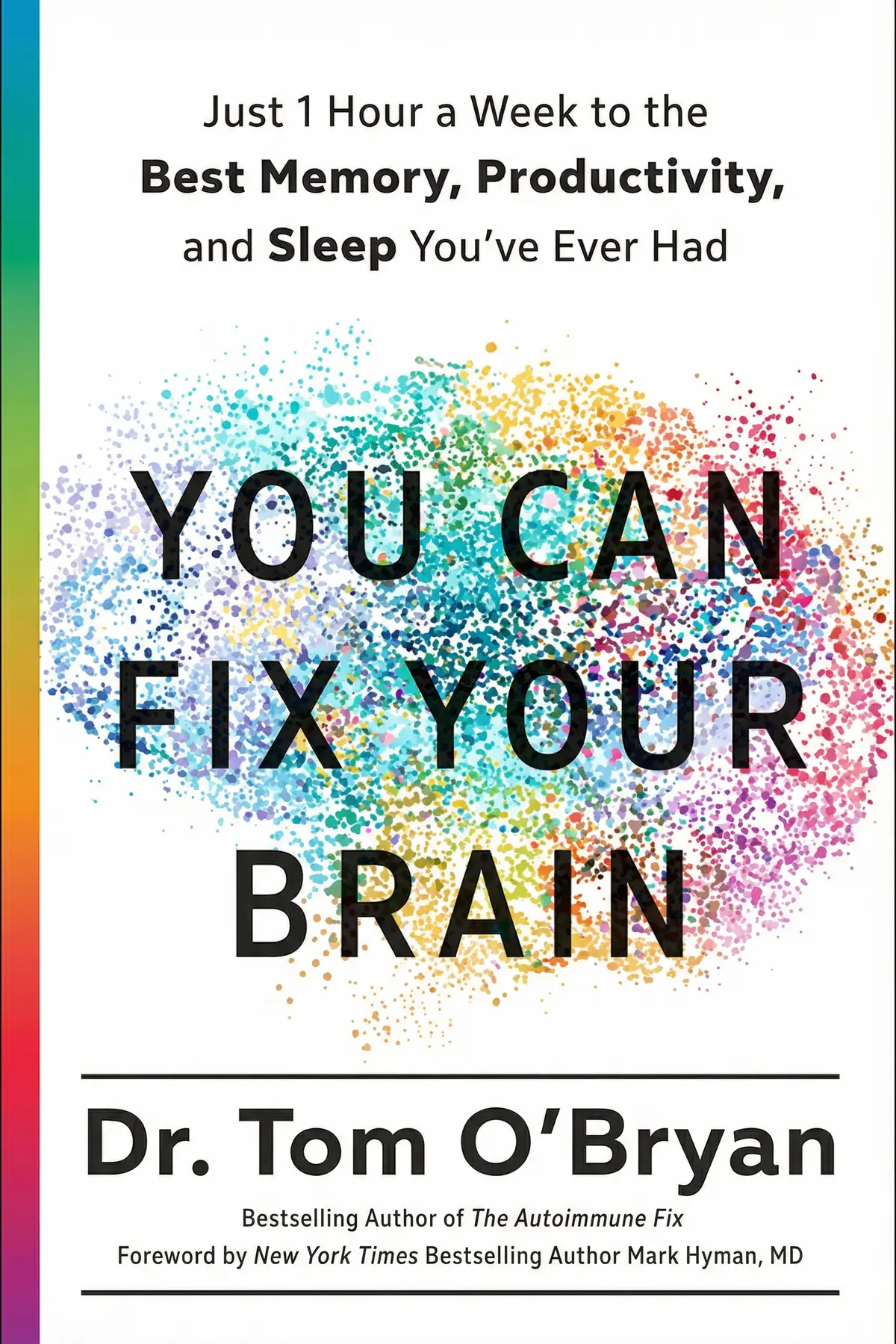
Table of Content
1. Introduction
1 min 01 sec
If your thoughts move through fog at your desk, or a detail slips away before you can find a pen, Tom O’Bryan has an explanation that is unsettling and hopeful at once. In You Can Fix Your Brain, the functional medicine practitioner argues that memory lapses, brain fog, anxiety and even dementia trace back to inflammation and an immune system that has turned on the body’s own tissue. If inflammation is the cause, he reasons, then finding and removing what sets it off can bring clarity back.
That is the line running through the whole book. Your brain symptoms are warning lights, you can test for what lies behind them, and you can lower the load through four areas of daily life, which O’Bryan calls structure, mindset, biochemistry and electromagnetism. Along the way come the blood markers worth raising with a doctor, a weekly exercise target, a three-food elimination experiment and a few bedroom changes that cost nothing at all.
2. See what your brain fog may be signaling
1 min 42 sec
Most people shrug off forgotten details and foggy afternoons as tiredness or age. O’Bryan sees a common thread running from mild forgetfulness all the way to dementia, and it starts with a defense system that has lost its judgment.
3. Protect the two filters that guard your brain
1 min 45 sec
The brain sits behind a barrier finer than any other in the body, so harmful substances should never reach it. O’Bryan explains how they get through anyway, and why his repair plan begins somewhere far from your head.
4. Ask your doctor for the right warning lights
2 min 15 sec
A car flashes a light long before the engine fails. O’Bryan argues the body does something similar, sometimes years ahead of disease, and he names the specific signals worth asking a doctor to check.
5. Build your brain's base with posture and sweat
1 min 50 sec
It seems strange that the way you sit in a car could matter for how clearly you think. O’Bryan traces a chain from a stiff joint to an immune response, and offers a weekly target that works on several fronts at once.
6. Lower inflammation without waiting for less stress
1 min 40 sec
Telling a busy professional to simply relax rarely helps, because the pressure is real and will not go away. The research O’Bryan cites suggests something more useful about what happens inside the body while the stress continues.
7. Clear out toxins with fasting and food experiments
1 min 49 sec
Ancient Greek writers prescribed fasting before medicine, and O’Bryan builds on that old advice with a modern eating window. He pairs it with a short dietary trial that some people find changes how sharply they think.
8. A quieter bedroom for a better night
1 min 30 sec
The devices that keep you connected all day also keep running beside you all night. O’Bryan suggests a handful of free changes, most of them taking seconds, aimed at the hours when the brain repairs itself.
9. Conclusion
1 min 10 sec
O’Bryan’s picture of the brain is a protected organ under slow siege. Food, chemicals, posture, stress and the devices around us can all keep the immune system on alert, and when the body’s filters give way, that alert shows up as fog, forgetfulness and low mood. His response is deliberately broad. The body is a set of interacting systems, he says, so there is no silver bullet, and anyone with symptoms needs full commitment to change. Progress comes from many small wins piling up.
The book also lays out a basic sequence of testing, intervening, and then testing again. Start by discussing antibody markers and toxin screens with a doctor, then make changes and retest after six months to a year. In the meantime, choose one change from each face of the pyramid, perhaps a daily half hour of sweaty exercise, ten minutes of meditation, a month without wheat, dairy and sugar, and a phone that spends the night in another room.
The fog, in O’Bryan’s account, is the light on the dashboard. Pull over, and look for the leak.
About this book
What is this book about?
Many people treat brain fog, forgotten details and a fading ability to focus as normal costs of a busy life or of getting older. Tom O'Bryan, a functional medicine practitioner, disagrees. He argues that dementia, depression, anxiety and memory loss grow from inflammation and from an immune system that attacks the body's own tissue, and that removing what triggers it can help the brain heal. His account follows harmful substances from a leaky gut through a breached blood-brain barrier into brain tissue. He also points to newer science showing that brain cells can regenerate. He then offers a dashboard of antibody markers and toxin screens to discuss with a doctor, so problems can be spotted early and progress can be measured. The practical heart of the book is a pyramid with four faces: structure, mindset, biochemistry and electromagnetism. Readers get specific steps for each, from posture checks and a weekly exercise target to meditation, intermittent fasting, a trial without wheat, dairy and sugar, and a bedroom with fewer wireless devices.
Book Information
Who it's for
Office workers losing focus
Office workers who lose focus to afternoon brain fog and keep forgetting small details.
Gluten or autoimmune concerns
People with gluten sensitivity or autoimmune concerns who want to understand links to memory and mood.
Ready to change routines
Anyone ready to test, change their routines and retest instead of waiting for symptoms to worsen.
About the Author
Tom O’Bryan
Dr. Tom O'Bryan is a functional medicine practitioner who has spent more than 30 years in the field, with a particular focus on gluten-related disorders. He has served as an adjunct professor at the Institute for Functional Medicine and works as a speaker and writer. Besides You Can Fix Your Brain, his books include The Autoimmune Fix.
Ratings & Reviews
Ratings at a glance
What people think
Listeners find the book highly educational and accessible, highlighting the straightforward steps it provides. They value the actionable techniques for boosting cognitive function and overall health, with one listener specifically mentioning the thorough details on gut damage. Listeners appreciate the book's material and feel it is a worthwhile use of their time and money.
Top reviews
Ethan
Finally got around to finishing this, and I have to say, my perspective on "brain fog" has completely changed. This book provides a deeply informative look at how our environment affects our cognitive health in ways we rarely consider. O’Bryan breaks down complex autoimmune responses into simple terms that anyone can understand without a medical degree. I especially appreciated the focus on "leaky brain" and the steps provided to repair the intestinal lining to protect the mind. The strategies are practical and easy to follow, focusing on what you can control in your own home. Not gonna lie, the first few chapters are a bit scary regarding environmental toxins, but the solutions offered in the latter half are empowering. It’s a must-read for anyone who feels like they aren't firing on all cylinders anymore. Well worth the money for the recipes alone!
Show morePim
After hearing several interviews with the author, I decided to dive into the full text. This book is a masterclass in understanding the link between gut health and neurological function. It offers comprehensive information on how everyday choices impact our overall well-being. I loved the "small wins" approach, which helped me realize that I don't have to change my entire life overnight to see results. The practical strategies for optimizing brain health are laid out clearly, making it very easy to implement the suggestions into a busy schedule. Some people might find the warnings about gluten and dairy a bit extreme, but if you’ve been struggling with chronic fatigue or mental slowness, it’s worth trying his protocols. Truth is, our modern world is full of things that weren't here a hundred years ago, and O’Bryan explains why that matters. Highly recommended for those looking for a deep dive into functional medicine.
Show moreSirirat
Wow, I wasn't expecting such a deep dive into how our environment impacts our gray matter. This book was very beneficial for me, providing a clear roadmap to improving my overall health. It’s filled with research topics that I now want to explore further on my own, which is always the sign of a good non-fiction book. The holistic approach is refreshing, even if it does mean giving up some of my favorite snacks. Gotta say, the link between "leaky gut" and "leaky brain" was a revelation that makes so much sense given my recent health history. O’Bryan makes the science easy to understand without dumbing it down too much. While he does push his own products, the actual advice in the book stands on its own. If you’re tired of feeling foggy and want to take control of your well-being, this book is absolutely worth your time and money. It’s one of the better lifestyle guides I’ve read this year.
Show moreElias
Dr. O’Bryan definitely doesn't hold back in this one. While some might find his approach a bit intense or even alarmist, the sheer amount of information on gut damage and its impact on the brain is eye-opening. I found the "base hits" concept incredibly helpful because it makes the massive lifestyle shifts feel more manageable. Instead of feeling overwhelmed by the idea of cutting out everything at once, you’re encouraged to make small, consistent improvements. To be fair, the section on electromagnetic fields felt a bit like a reach for me, but the core advice on reducing inflammation and processed sugars is solid. It's a comprehensive guide for anyone wanting to optimize their mental clarity through better nutrition. It isn't a light read, but if you're serious about your health, it's worth the investment. Just be prepared for a very firm tone throughout the chapters.
Show moreDylan
This book was a bit of a wake-up call for me regarding household toxins. I never really thought about how my cleaning supplies or the plastic in my kitchen could be affecting my memory. O’Bryan provides simple steps to follow that don’t require a total lifestyle overhaul right away. Personally, I found the chapter on the "leaky brain" to be the most fascinating part of the entire read. The science is presented in a way that is easy to understand, even if some of the conclusions feel a bit like "leaps" of logic. My only real gripe is that the tone can be very alarmist, which might stress out readers who are already prone to health anxiety. If you can move past the "everything is killing you" vibe, there is a wealth of actionable advice here. It’s a solid resource for anyone wanting to take a proactive stance on their long-term health.
Show moreAroha
The information regarding gut damage in this book is incredibly detailed and useful. It goes beyond the typical "eat your veggies" advice and explains the actual mechanisms behind autoimmune triggers. I found the strategies for optimizing brain health to be very practical, especially the recipes and the specific lists of foods to avoid. While the author’s tone can be a bit intense—he really does sound like he's yelling sometimes—the core message is one of empowerment. You don't have to be a victim of your genetics. It’s an informative read that offers simple steps to follow to start feeling better almost immediately. I’ve already started cutting back on sugar and noticed a difference in my energy levels. It’s a great resource for anyone looking to understand the "why" behind their health issues. Just take the EMF stuff with a grain of salt.
Show moreLeah
Is it possible to fix your brain through your diet? Dr. Tom O’Bryan certainly thinks so, presenting a holistic lens that focuses on environmental triggers and autoimmune issues. There is a lot of good stuff in here about reducing inflammation and the dangers of a high-sugar lifestyle. However, I struggled with the tone at times. The author can be quite aggressive in his assertions, and the frequent references to his own product line made me a bit suspicious of the underlying motives. Look, I’m all for avoiding toxins, but some of the claims about electromagnetic pollution felt a bit out there for a mainstream health book. It's a mixed bag of genuine insights and questionable "science" that doesn't always have a peer-reviewed backing. I’d recommend it for the general health tips, but keep your skepticism high when he starts talking about tinfoil-adjacent theories. It’s a decent starting point if you want to overhaul your habits.
Show moreThawee
Picked this up because I’ve been struggling with some cognitive lag lately. The explanations O’Bryan gives for why we feel foggy or slow are certainly plausible, especially regarding how our epigenetics are shifting. I appreciate the holistic lens he uses, looking at the environment rather than just suggesting a pill to fix everything. That said, I’m still not entirely convinced by some of his more radical claims. The jury is still out on a lot of this research, and some of his references feel a bit shaky compared to the scientific method. In my experience, the audiobook version was actually quite well-paced and clear, which helped me get through the denser parts. However, the constant reminder that "your doctor won't tell you this" followed by a link to his own site felt a bit like a used car salesman. It’s worth a look, but definitely seek out a second opinion before making massive changes.
Show moreAisha
The writing style here felt like being shouted at by a salesman for three hundred pages. I went into this hoping for actionable advice on improving my memory and focus, but I left feeling mostly anxious. The author makes some massive leaps from theory to conclusion without providing the kind of rigorous scientific evidence I prefer. Specifically, the constant push to buy supplements from his own website felt like a major red flag that undermined his credibility. Frankly, I can get behind the idea that sugar is bad for you, but calling gluten "poison" for everyone seems like a huge stretch. Some of the biochemistry explanations were actually quite good, but they were buried under layers of paranoia about household cleaners and EMFs. It’s hard to find the "fix" when everything in the world is presented as a lethal threat to your neurons. I stopped halfway through because the stress of reading it was probably worse for my brain than the bread I ate for lunch.
Show moreSuthinee
What I expected was a guide on productivity and better habits, but what I got was a manifesto on why everything I eat is toxic. I’m not saying there isn't some truth to the gut-brain connection, but the way it's presented here is just overblown. The author claims that living gluten, dairy, and sugar-free is the only way to avoid Alzheimer’s, which feels like a massive exaggeration of current nutritional science. He also spends a significant amount of time talking about "leaky brain" in a way that feels more like a marketing buzzword than a medical diagnosis. I almost DNF'd this several times because the "hard sell" for his website and testing kits was so off-putting. It felt like I was reading a very long advertisement rather than a helpful health book. To be fair, the breakdown of protein behavior was interesting, but not enough to save the book for me. There are better, less paranoid books out there on this topic.
Show moreQuestions about this book
What is the main idea of You Can Fix Your Brain?
Tom O’Bryan argues that brain fog, memory loss, anxiety, depression and dementia stem from inflammation and autoimmunity. Harmful substances pass through a leaky gut and a breached blood-brain barrier, and the immune system then attacks brain tissue. Because he holds that brain cells can regenerate, he believes function can be restored by finding the triggers and removing them through changes in structure, mindset, biochemistry and electromagnetic exposure.
Which tests does Tom O'Bryan recommend for brain health?
He suggests discussing several antibody groups with a doctor: antibodies to zonulin, actin and lipopolysaccharides, which he links to leaky gut and a leaky blood-brain barrier; antibodies to neuron-specific enolase, gliofibrillar acid protein and S100B; and antibodies to transglutaminase proteins such as TG2, TG3 and TG6. He also recommends screens for reactions to BPA, phthalates, PCBs and dioxin, plus tests for mold and heavy metals.
What is the pyramid of brain health?
It is O’Bryan’s model of four areas to work on. Structure covers posture, spinal alignment and exercise. Mindset covers stress, meditation, breathing, therapy and prayer. Biochemistry covers detoxification, intermittent fasting, water, cleaner household products and diet. Electromagnetism covers exposure to fields from phones, Wi-Fi and wiring. He argues that small changes across all four add up to recovery.
What diet changes does You Can Fix Your Brain suggest?
O’Bryan suggests experimenting with removing wheat, dairy and sugar, which he calls the Big Three, while eating more fresh vegetables and fruit. He also recommends eating within a daily window, such as twelve hours, and drinking enough water. For a stronger reset, he describes a ketogenic diet for one to three months, followed by a slow return of other foods while tracking how you feel and your markers.
How can I apply the book's advice this week?
Pick one step from each area. Check your posture at your desk, in the car and in bed, and start building toward 30 minutes of sweaty exercise six days a week. Add a few minutes of meditation or slow breathing. Try a daily eating window. At night, unplug the Wi-Fi router and leave your phone outside the bedroom, or put it in airplane mode.
Readers also enjoyed



AUDIO SUMMARY AVAILABLE
Listen to You Can Fix Your Brain in 15 minutes
Get the key ideas from You Can Fix Your Brain by Tom O’Bryan, plus 5,000+ more nonfiction titles.
- 5,000+ titles
- Listen as much as you want
- 7-day free trial
- Cancel anytime









