

59 Seconds: Change Your Life in Under a Minute
Richard Wiseman
 English
A practical guide to noticing when a successful life is built on other people's expectations, then using simple writing, reflection and meditation exercises to define your own purpose and keep moving toward it.
1 min 03 sec
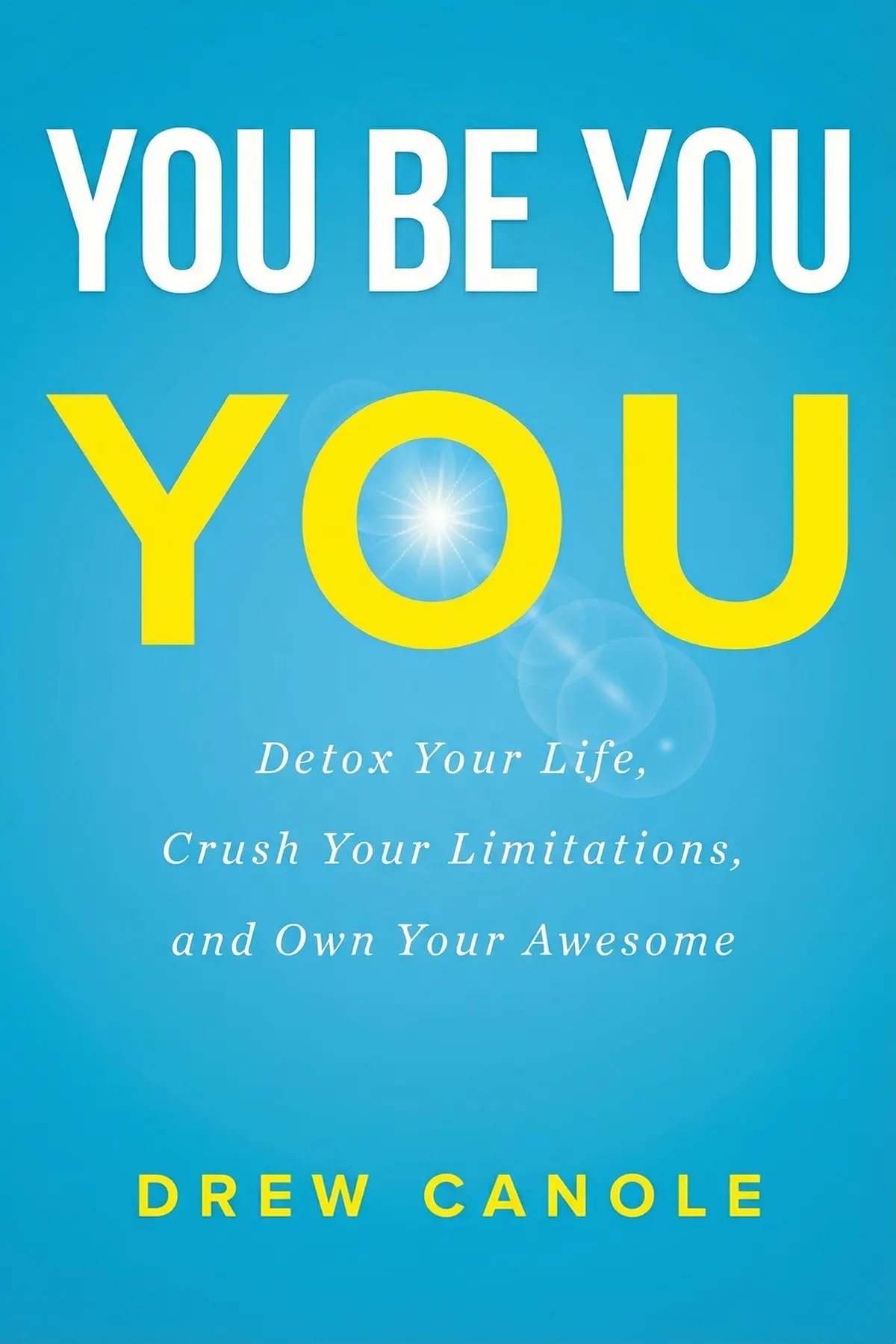
A life can tick every box, with the good salary, the title and the comfortable home, and still feel like it belongs to someone else. In You Be You, nutrition and transformation coach Drew Canole argues that this gap rarely closes through outside changes. It closes when you commit to living from what he calls your whydentity, the version of you whose actions and purpose finally match.
His case is that lasting change starts with a firm, honest decision about who you are, and that it survives only if you keep a clear picture of your future self in view through the doubt and fear that follow. The method is a set of writing and reflection exercises, and the story of an engineer named Djamel shows where it can lead.
Along the way you get a way to score your life as it is today, a letter written from five years ahead, a routine for the slow middle stretch of any change and a fresh reading of fear that turns it from a stop sign into a signal.
1 min 35 sec
An engineer with a strong salary and a fast-rising career felt empty and could not explain why. One frank conversation revealed whose plan he had really been following, and it changed the direction of his working life.
1 min 48 sec
Rather than settling for vague resolutions, you are asked to make a firm, actionable decision, starting with an honest look at where you currently stand. A simple scoring exercise and ten quiet minutes give change something solid to push against.
1 min 55 sec
Knowing what is wrong rarely gets anyone moving. Canole asks you to describe a single ordinary day five years from now in such detail that your mind starts treating it as a place you could actually reach.
1 min 41 sec
Every new plan reaches a stretch where progress slows, doubt grows and the old routine starts to look comfortable again. Canole argues that this uncomfortable phase means something very different from what it feels like.
1 min 51 sec
Leaving a job or a relationship that no longer fits brings a strong urge to retreat. Two short phrases built from a single word offer a way to decide what that urge really means.
1 min 44 sec
Months into any change, the excitement turns into routine and setbacks start to pile up. Canole’s answer draws on an unexpected source of guidance, and on a room that exists only in your imagination.
1 min 09 sec
You Be You is finally about who sets the terms of your life. Djamel’s turn came the moment he saw that his goals belonged to his family, and every exercise in the book is a way of reaching that moment yourself, then refusing to slide back. Canole is frank that the slide back is tempting. Doubt makes the old routine look safe, fear makes the unknown look dangerous, and the daily grind makes any vision look far away.
His picture of transformation is unglamorous. It means showing up each day, trusting your instincts, keeping some gratitude and accepting that progress will often feel slow.
If one exercise earns a place in your week, make it the letter from five years ahead, written in detail and kept where you will see it each morning. And the next time doubt or fear makes your old life look comfortable, read it as a sign that you have left familiar ground. Give the feeling its five minutes, then take one small step.
The life you picture may already exist in outline. Your daily choices are what fill it in.
Plenty of people have the job, the income and the comfortable life, yet still feel that none of it is really theirs. Drew Canole, a nutrition and transformation coach, argues that this unease usually means your goals were set by family, society or the pursuit of status, and that real change starts with a firm commitment to who you actually are. Canole calls that deeper self your whydentity: the version of you whose actions and purpose line up. He tells the story of Djamel, a well-paid aerospace engineer who discovered he had been living out his family's plan, and who went on to lead a company helping others change their lives. The book is built around exercises. Readers score seven areas of their life, write a journal entry from five years in the future, map a detailed vision of their ideal days, reframe the doubts of the slow middle stretch, read fear as a choice between running and rising, and build momentum through dream journaling, meditation and finishing tasks they have been avoiding.
Professionals with a solid career who still feel their life was designed by someone else.
People weighing a job change or a new direction who keep losing nerve halfway.
Anyone who likes journaling, meditation and practical exercises for personal change.
Drew Canole is a nutrition and transformation specialist and a public advocate of juicing vegetables for health and vitality. He founded FitLife.tv, which publishes videos and articles on health, fitness, healing and longevity, and he also founded the superfood brand Organifi. His first book, Juicing Recipes for Vitality and Health, brought him national attention. As a coach, he has worked with celebrities, entrepreneurs, CEOs and authors on changing how they live.

Listeners describe this book as an accessible read and value its inspiring nature, and one listener mentions that it offers a base of light and positivity. Furthermore, the content is deeply knowledgeable; one listener points out that it effectively shows how to apply the teachings in real life. Listeners also appreciate the useful activities and encouraging tone, with one listener commenting on how it improved their self-awareness.
Drew Canole delivers a powerhouse manual for anyone feeling disconnected from their core purpose. The Awesomeness Audit was a total game-changer for me because it forced an honest, numerical assessment of where my life actually stands today. I realized I was scoring high on paper success but failing miserably in spiritual alignment. This book doesn't just offer fluff; it provides a roadmap for the messy middle where most of us usually give up. By stripping away the layers of societal programming that we've accumulated over decades, the author helps readers rediscover that authentic version of themselves that has been buried under expectations. If you're tired of living for others, this is the permission slip you’ve been waiting for.
Show moreFinally got around to finishing this, and I am genuinely moved by the Soul Map concept. We often think of our lives as linear, but Canole challenges that by asking us to vision cast from a place of future fulfillment. I’ve spent years feeling like a victim of my circumstances, but the exercises in this book shifted my perspective toward radical responsibility. The section on Face Everything and Rise turned my fear into a tool for progress rather than a wall. It’s not an easy journey, but having specific prompts like Manifest Your Meditations makes the process feel far less daunting and much more achievable. Truly a light in the dark for those seeking their whydentity.
Show moreEver wonder why you feel like you’re playing a character in your own life? This book addresses that exact feeling of disconnection with such compassion and clarity. I loved the Manifest Your Meditations technique because it bridges the gap between quiet reflection and actual, tangible action items. Most books tell you to meditate, but Canole actually tells you what to do with the insights that pop up during your practice. The writing is incredibly supportive, almost like having a mentor whispering in your ear that you are capable of greatness. It helped me understand my internal barriers in a way that felt empowering rather than heavy or judgmental. Absolute game changer for my mental health.
Show morePicked this up during a rut and it served as a much-needed catalyst for change. Drew Canole writes in a style that is incredibly accessible, making complex spiritual concepts feel grounded and doable for the average person. I particularly appreciated the focus on building a foundation of positivity without it feeling like toxic positivity. The book demonstrates practical applications of self-love that I hadn't considered before, especially concerning daily momentum. While some of the advice felt a bit familiar to the self-help genre, the specific framing of becoming yourself resonates deeply. It’s a solid guide for anyone feeling trapped by what society expects of them.
Show moreThe chapter on Whydentity alone made this purchase worthwhile for my personal library. I had been struggling to figure out why my career felt so empty despite the promotions, and Canole’s distinction between societal goals and genuine desires hit home. His focus on segment intending has already started to change how I approach my hectic mornings and stressful afternoons. I do wish there was more scientific backing for some of the claims, but the emotional resonance is definitely there throughout the text. The book provides a practical framework for anyone looking to bridge the gap between who they are and who they want to be. It’s a very motivating, light-filled read for the modern professional.
Show moreWow, this really helped me navigate a particularly difficult messy middle in my own career transition. The idea that discomfort is a sign of growth rather than a signal to quit was exactly what I needed to hear this week. Drew’s perspective on False Evidence Appearing Real gave me a new way to categorize my anxieties so they don't paralyze me anymore. While I found the section on dreamwork a little brief and underdeveloped, the rest of the book offers a solid foundation for rebuilding your life. It’s a bright, energetic guide that encourages you to stop apologizing for your existence and just start living your truth. Highly recommend for the practical exercises alone.
Show moreAs someone who consumes a lot of motivational literature, I found this book to be a decent entry point but nothing revolutionary. The tone is undeniably uplifting, providing a consistent source of light and encouragement throughout the various chapters. I liked the Write from the Future exercise, as it helped me articulate goals I hadn’t quite put into words yet. However, the middle sections felt a bit padded with anecdotes that didn't always land for me personally. It’s a helpful, supportive approach for those needing a nudge, but it lacks the grit of more intensive transformation guides. It’s a good book, just not a must-read if your shelf is already full of self-help classics.
Show moreTruth is, I have mixed feelings about the You Be You philosophy presented in these pages. On one hand, the emphasis on positive habits and daily momentum is essential for any real change to take hold. On the other hand, the book leans heavily into vision casting and manifestation, which might be a bit too woo-woo for more analytical readers. I appreciated the Trophy Room visualization exercise as a way to celebrate small wins, though. It’s a well-informed book in terms of the current self-help landscape, but it doesn't offer much in the way of addressing deep-seated trauma. Use it as a motivational spark, not a total solution for your life.
Show moreTo be fair, the author seems like a genuine guy, but this felt like a collection of blog posts I’ve read a dozen times before. The concepts are very basic and, quite frankly, a bit superficial if you’ve already done any significant amount of inner work. I found the constant encouragement to trust your intuition a bit vague without deeper psychological grounding or scientific data. It’s a quick read, sure, but I didn't find any groundbreaking insights that warranted an entire book. If you are brand new to personal growth, you might find value here. Otherwise, you might find yourself skimming through the repetitive calls to manifest your reality.
Show moreNot what I expected at all, and frankly, a bit of a disappointment given the hype surrounding Canole lately. The advice here is the definition of generic self-help, filled with acronyms like FEAR that have been used since the early nineties. I felt like I was reading a long-form marketing brochure for a lifestyle brand rather than a book with actual substance. Save your hard-earned money and book a session with a real therapist instead. You will likely uncover more about your authentic self in ten minutes of professional counseling than in these two hundred pages. It just felt hollow and unoriginal to me from start to finish.
Show moreCanole argues that many people feel unfulfilled because their goals come from family, society or the pursuit of wealth and status. Real change, he says, starts with a firm commitment to live from your own purpose, then depends on keeping a detailed picture of your future self in view. The book offers exercises for each stage, from scoring your current life to handling the doubt, fear and routine that follow the first burst of excitement.
Whydentity is Canole’s word for the deeper purpose that guides your life. It goes beyond identity, meaning your roles and titles, and describes who you are when your actions and your reasons fully line up. He illustrates it with Djamel, a successful aerospace engineer who realized he was meeting his family’s expectations, left that career for health and personal development, and became CEO of a company that helps people change their lives.
It works as a self-assessment in which you rate seven life areas on a scale of 1 to 5, covering your friendships, romantic ties, career, money, health, household, and spiritual path. Canole stresses honesty and clarity over judgment. After scoring, you imagine how each area would look if it were easier and closer to what you want, and you use that ideal picture as the starting point for deliberate change.
Canole suggests reading fear differently. One phrase built from its letters treats it as False Evidence Appearing Real, since many fears rest on imagined threats. A further phrase presents a pair of reactions, namely to Forget Everything and Run, or to Face Everything and Rise. He says the choice is always yours. For fear of change, he recommends small, consistent actions and reminding yourself what excites you about the change and why it matters.
Start with the Write from the Future exercise: describe your life five years from now, lived fully from your purpose, and keep the page visible. When doubts arrive, list three to five negative emotions and rewrite each in a more hopeful form, or give a hard feeling a set time before moving on. To build momentum, keep a dream journal, try simple meditation and finish three tasks you have been avoiding.
Richard Wiseman





William B. Irvine


Andrew D. Thompson


Deepak Chopra
AUDIO SUMMARY AVAILABLE
Get the key ideas from You Be You by Drew Canole, plus 5,000+ more nonfiction titles.









