
Leadership: Six Studies in World Strategy
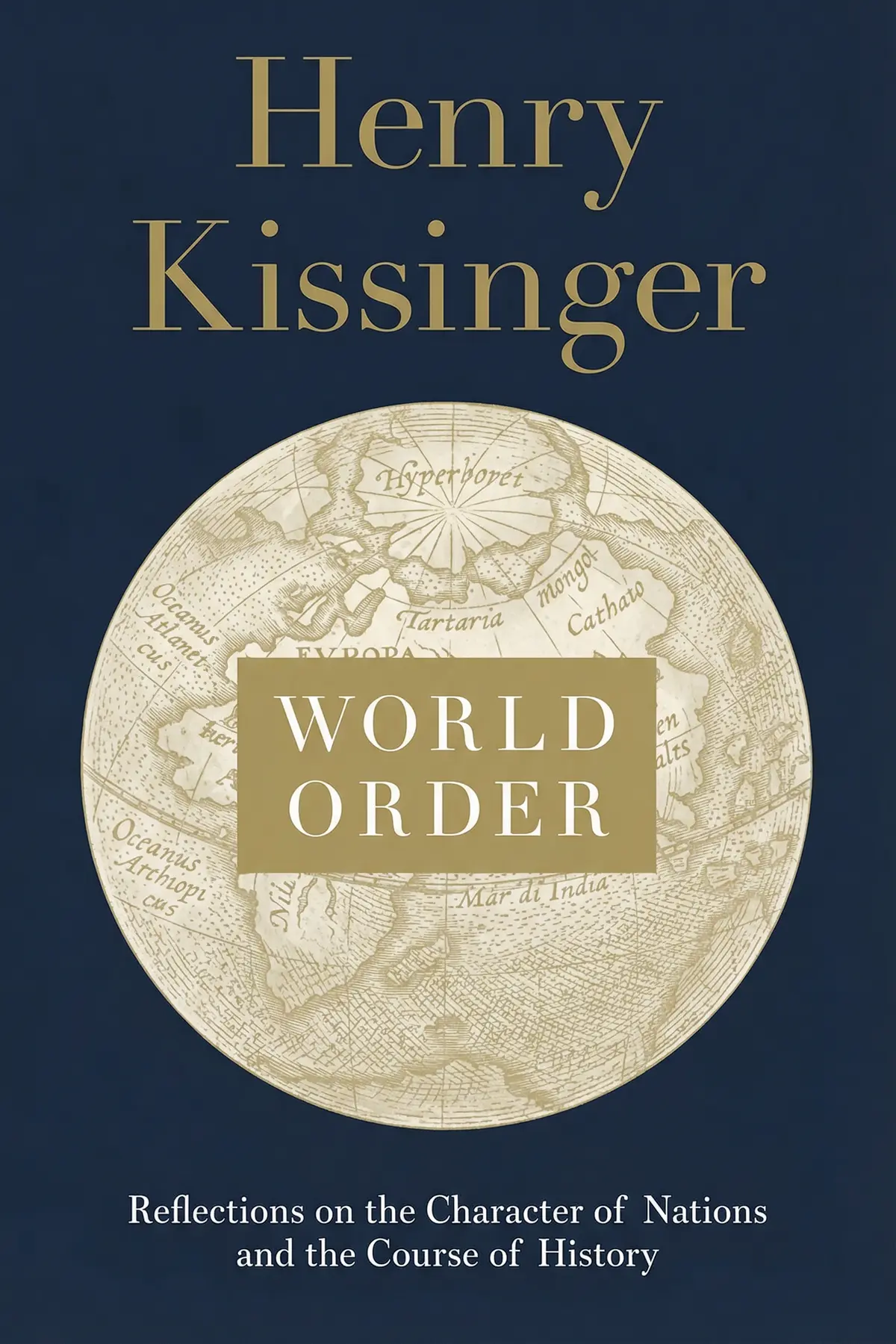
Henry Kissinger
 English
 ไทย
Kissinger explains how each nation's history-shaped beliefs about how the world should run drive its foreign policy. He also shows why peace lasts when those beliefs allow balance, flexible alliances and respect for sovereignty.
1 min 06 sec
Peace talks can run for hundreds of hours and still fail, and the reason is rarely poor negotiating. In World Order, former US Secretary of State Henry Kissinger argues that every nation acts on its own picture of how the whole world should work, a picture shaped by its history. When those pictures leave room for one another, as Europe’s did after its most brutal war, peace can last for generations. When one of them claims the entire planet, conflict follows.
That thread runs from the Thirty Years’ War through Napoleon, Bismarck and the Cold War to the Middle East today. Follow it and stalled diplomacy starts to make sense. It explains how an even standoff kept two nuclear powers from war and how one country’s unification undid a continent’s balance. It also shows why a Mongol invasion still shapes Russian policy. Along the way comes one habit from a seventeenth-century conference table that works in any tense meeting.
1 min 30 sec
Every government says it wants peace, yet their actions point in very different directions. Kissinger names the hidden thing that decides what each one will accept, and it is bigger than any single treaty or leader.
1 min 35 sec
For decades two superpowers glared at each other across nuclear arsenals and never fought directly. The reason sounds like a recipe for paralysis, yet many politicians actively prefer it when outright victory is out of reach.
1 min 36 sec
After three decades of slaughter, a group of diplomats agreed on an idea that sounds almost too plain to matter. It held a continent together for centuries and still shapes how nations deal with each other.
1 min 47 sec
Europe once had a reliable defense against any country trying to swallow the rest. Then a single act of humiliation in a French palace helped turn that defense into the trap that dragged a continent into world war.
1 min 37 sec
The country most people link with Europe’s catastrophes was once the quiet key to its stability. Kissinger explains how its shape kept the peace, and what happened the moment that shape changed.
1 min 35 sec
Two brilliant diplomats of the same century reached opposite views of what diplomacy is for. Their childhoods explain the gap, and the same logic explains why Russia still remembers an invasion from eight hundred years ago.
1 min 50 sec
Some disputes survive every round of talks because the two sides are not really arguing about land or money. Kissinger shows what they are fighting over, and why one vision leaves no room for any other.
1 min 35 sec
A fleet of 16 ships called the White Fleet once sailed around the globe on what was officially a training trip. Kissinger reads it as a lesson in how a rising power can be checked without a single attack.
1 min 18 sec
Kissinger’s book adds up to a new way of hearing the news. Behind every summit and standoff sits a belief about how the whole world should be arranged, carved by history: Russia’s memory of the Mongols, Europe’s memory of thirty years of slaughter, Metternich’s childhood near the French border, Bismarck’s Prussian household. Orders that leave room for others, built on balance, sovereignty and partners free to shift, have kept the peace for long stretches. Alliances that harden into fixed fronts, and visions that claim the entire planet, have pulled continents into war.
The same habits work on a smaller scale. When a negotiation stalls, look for the picture of the world each side is defending before you argue about terms. Before asking anyone to lower a guard, learn what their past taught them it protects. And in a heated room, greet and treat every person the same way, the most powerful and the least, as the diplomats at Westphalia did with envoys from great and small nations alike. That plain equality helped close a war that had killed millions.
Peace, in Kissinger’s account, began when each side accepted that the other had a picture of the world too.
Wars drag on and peace talks stall even after endless rounds of mediation. Henry Kissinger, former US Secretary of State, traces the cause to world orders: the shared beliefs a nation or civilization holds about how the whole world ought to be arranged. These beliefs grow out of history, and they set a country's foreign policy and its long-term strategy. Kissinger follows one especially durable order, born at the Peace of Westphalia after the Thirty Years' War, and shows what kept it working. Balanced power, respect for every state's sovereignty and alliances free to shift held Europe together until rigid fronts and a newly unified Germany broke it apart. He turns the same lens on the Cold War standoff, on Russia's distrust of disarmament, on clashing visions in the Middle East and on the way the United States adopted the European model as its own. Readers come away with a way of seeing the news. Behind most standoffs, Kissinger argues, two pictures of the world are colliding. The book also offers a lesson in respect, taken from the Westphalian conference table, that works in any tense room.
Readers who follow world news and want to understand why some conflicts never seem to end.
Students of history or politics looking for one frame that links Westphalia, Napoleon, the Cold War and today's Middle East.
Managers and negotiators who deal with people whose past shapes what they will accept.
Henry Kissinger was born in Fürth, Germany, in 1923 and came to America in 1938 as a Jewish refugee from the Nazis. After serving in the US Army in the Second World War, he studied at Harvard and later taught government there. In office he championed Realpolitik and détente with the Soviet Union, and he received the 1973 Nobel Peace Prize, a controversial award, for helping negotiate the Paris Peace Accords. He ran Kissinger Associates from 1982 until his death in 2023.
Henry Kissinger
Henry Kissinger

Listeners describe this work as exceptionally perceptive and skillfully composed, delivering an extensive survey of global history and political dynamics. It provides a robust basis for grasping contemporary global affairs through a deep examination of how various countries and cultures interact and view the world. Listeners value the text's evidence-based style and clear prose, considering it essential for anyone fascinated by international relations and political science.
This book is a master class in statecraft that only someone with Kissinger's unique resume could produce. He takes the complex concept of the Westphalian system and makes it feel like a living, breathing blueprint for how the world currently functions. I was particularly struck by how he connects 17th-century European treaties to modern-day frictions in Asia and the Middle East. While some might find his prose a bit dense, the sheer depth of knowledge on display is staggering and deeply rewarding for any history buff. Frankly, it provides a much-needed foundation for anyone trying to make sense of the chaotic headlines we see every day. It’s an essential read for those who want to look past the surface-level noise of international relations.
Show moreFinally got around to finishing this massive tome, and I must say it was worth every hour spent. Kissinger has a remarkable ability to distill centuries of geopolitical evolution into a coherent and surprisingly readable story. The chapter on the Iran nuclear deal and the nuances of Islamic governance was especially eye-opening for me. Gotta say, I appreciated how he didn't just focus on the West but gave significant space to how other civilizations view the concept of world order. It’s a factual and comprehensive overview that feels incredibly timely despite being published a few years ago. You don't have to agree with his politics to appreciate the brilliance of his strategic mind. This is definitely a foundational text for anyone interested in the future of global stability.
Show moreWow. This is easily one of the most comprehensive books I've ever read on the nature of international relations. Kissinger doesn't just look back; he looks forward at how the cyber world and rapid technological changes are undermining traditional borders. He raises some truly terrifying questions about how we can maintain order when a single laptop can disable a nation's infrastructure. The way he weaves together the philosophy of the past with the challenges of the future is nothing short of brilliant. In my experience, most political books date very quickly, but this one feels like it will remain relevant for decades. It’s a sobering reminder that order is not a natural state but a fragile human achievement that requires constant work.
Show moreThe chapter on the Peace of Westphalia alone is worth the price of admission. Kissinger illustrates how a group of exhausted diplomats managed to build a system that lasted for centuries out of the rubble of the Thirty Years' War. It’s a powerful testament to the importance of statesmanship and the need for a shared framework of rules. I loved the way he describes the various historical figures as if he were discussing old colleagues. It gives the narrative a personal touch that you don’t often get in books on diplomacy. Frankly, the world needs more of this kind of long-term strategic thinking right now. It is a dense read, but if you take your time with it, you’ll come away with a much clearer picture of how global power works.
Show moreEver wonder why certain nations seem to play by different rules on the global stage? Kissinger’s analysis of Japan, China, and India provides a brilliant framework for understanding these diverging perspectives on sovereignty and power. He writes with a level of eloquence that is rare in political science texts, turning a dry subject into a compelling narrative. To be fair, he does gloss over some of the more controversial aspects of his own legacy, focusing instead on the abstract mechanics of order. Some readers might find his take on American exceptionalism a bit too idealistic given the historical reality of US interventions. However, the insights into how cultural history shapes current foreign policy are far too valuable to ignore.
Show morePicked this up on a recommendation from a friend, and it's quite the deep dive into how nations interact. Kissinger traces the concept of world order from the Peace of Westphalia all the way to the digital age. His breakdown of the interplay between legitimacy and power is profound and helps explain why the Middle East remains such a volatile region. I found the sections on China's historical view of itself as the center of the world particularly helpful for understanding current tensions. Personally, I think he’s a bit too soft on modern presidents, which robs the analysis of some much-needed bite. Still, the breadth of the research makes it a solid choice for anyone seeking a more sophisticated understanding of global affairs.
Show moreNot what I expected, but in a good way. I thought this would be a dry, academic slog, but Kissinger’s prose is actually quite accessible and engaging. He provides a solid foundation for understanding the current world scene without drowning the reader in too much jargon. The section on the Middle East and the clash between Westphalian principles and religious fundamentalism was particularly insightful. Truth is, it’s rare to find a book that manages to be both this broad in scope and this detailed in execution. I did feel that his sections on Israel were a bit lacking in depth compared to his treatment of other regions. Nonetheless, it’s a great starting point for anyone who wants to move beyond the talking points on cable news.
Show moreAfter hearing so much about Kissinger's 'realpolitik' approach, I wanted to see how he justified it in writing. He makes a compelling case for the balance of power, even if his vision of American exceptionalism feels a bit dated in the current political climate. The book is incredibly well-written and offers a thorough analysis of international interactions across different cultures. I appreciated his focus on how the internet and social media are changing the way we define truth and engage with one another. Not gonna lie, some of his conclusions are a bit bleak, but they are grounded in a deep understanding of history. It’s a thought-provoking read that challenged my perspectives on how peace is actually maintained between rival powers.
Show moreAs someone who enjoys a good history book, I had mixed feelings about this one. On one hand, Kissinger’s grasp of European history and the development of the nation-state is genuinely impressive. On the other hand, his analysis of more recent events feels somewhat treacly and defensive. He seems almost pathologically unwilling to say a negative word about the leaders who once sought his counsel. This lack of critical edge makes some chapters feel more like a diplomatic memo than a rigorous academic study. Look, the information is there, and his writing style is undeniably elegant, but you have to wade through a lot of self-justification. It’s a good resource for the historical basics, but don’t expect any radical honesty regarding recent US foreign policy failures.
Show moreIt is impossible to read these 'high-minded' theories without thinking about the actual human cost of the author's real-world decisions. Kissinger speaks of the Westphalian system and 'acting for all mankind' while ignoring the ghosts of Cambodia and Vietnam that haunt his career. The truth is, the book feels like a calculated attempt to sanitize a bloody legacy through academic jargon and sweeping historical analogies. He treats the world like a giant chessboard where people are merely pawns in a grand balance of power. While the history of the Thirty Years' War is well-written, the hypocrisy regarding 'international peace' is a bit much to stomach. If you’re looking for a factual history of diplomacy, look elsewhere, or at least read this with a very critical eye.
Show moreKissinger argues that every nation or civilization holds a world order, a set of beliefs about how the whole world should be arranged and who should hold power. These beliefs, shaped by history, drive foreign policy and long-term strategy. Some orders, like the one Europe built at the Peace of Westphalia, rest on respect for sovereignty and help prevent conflict. Others claim to apply everywhere and leave little room for compromise.
It was the settlement that ended the Thirty Years’ War, which ran from 1618 to 1648 and killed millions. Diplomats meeting in Westphalia agreed that every nation, whatever its size, controls its own affairs and may follow its own religion. Kissinger calls this respect for sovereignty a new idea at the time. It gave Europe a fairly stable system into the twentieth century and came closer than any other order to spanning the globe.
Kissinger credits the balance of power. The United States and the Soviet Union were so evenly matched that each felt as threatened as the other, and any first strike would have brought devastating retaliation, with nuclear stockpiles on both sides. Neither could gain a decisive edge, so neither moved. The standoff ended only when the Soviet Union collapsed from within.
Before 1871, Germany was a patchwork of small states united by language. They threatened no one alone but could raise a strong army together, and their central position kept neighbors cautious. Kissinger sees that arrangement as central to Europe’s balance. When the states unified under Otto von Bismarck in 1871, the new country was too big and powerful for the old balance, laying the ground for the world wars.
The book suggests a few habits. Before pushing someone to drop a defense, consider what their history taught them it protects, as Russia’s past invasions explain its distrust of disarmament. When a dispute will not settle, check whether each side can accept the other’s view existing. And in heated discussions, treat everyone the same way, as the Westphalia diplomats did regardless of their nation’s power.

John Rawls

Ben Macintyre




James Shapiro

Miles Taylor

Ben Macintyre

Charles C. Mann
AUDIO SUMMARY AVAILABLE
Get the key ideas from World Order by Henry Kissinger, plus 5,000+ more nonfiction titles.









