
14 min 55 sec
Available in: English
Word by Word: The Secret Life of Dictionaries
By Kory Stamper
Kory Stamper takes you inside Merriam-Webster to show how dictionaries are really made. She explains why they record how people actually use words instead of deciding what is correct, moral or true.
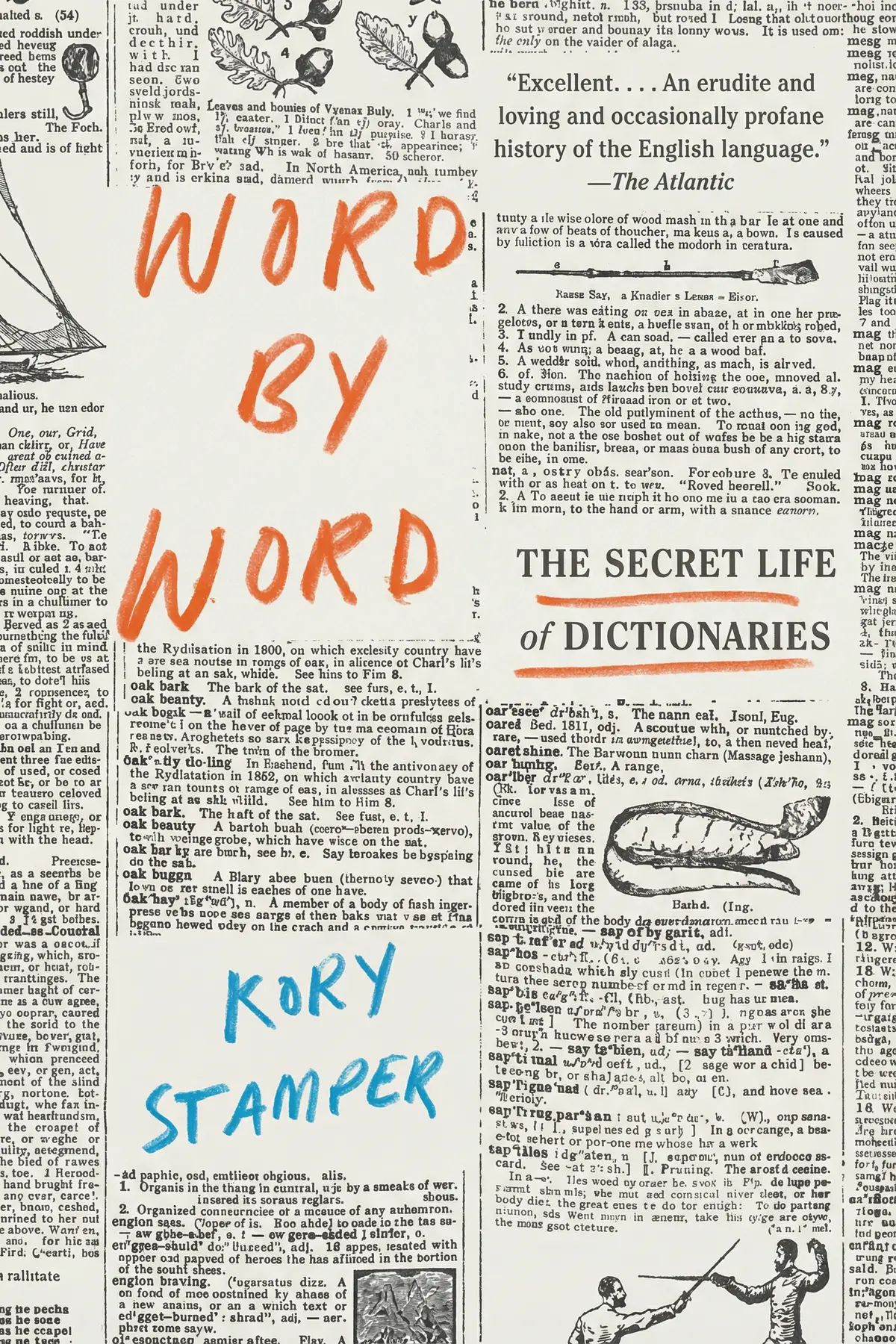
Table of Content
1. Introduction
1 min 01 sec
If a sign that says ten items or less makes you wince, you are holding on to a rule that dictionary makers themselves set aside. In Word by Word, Kory Stamper, who spent nearly two decades as an editor at Merriam-Webster, shows that a dictionary records how people actually use words instead of deciding which ones are correct.
That single fact explains almost everything strange about dictionaries. It explains why they keep a word like irregardless, why their example sentences are so dull, and why a definition of love leaves readers unhappy. It also explains how one small change to the entry for marriage buried an editor in complaints.
Stamper’s own lessons, several of them embarrassing, run through the whole book. Follow her from a silent editorial floor to the middle of a political storm and the urge to police other people’s English starts to fade. In its place comes curiosity, and a much sharper sense of what a dictionary can settle and what it never claimed to.
2. Stop judging people by their grammar
1 min 47 sec
A Merriam-Webster trainee confidently gave a textbook answer about one of the most common words in English. Minutes earlier, her own speech had proved it wrong, and the evidence behind her mistake stretches back a millennium.
3. Learn why the smallest words break the rules
1 min 58 sec
Two editors looked at a six-word sentence and reached different answers, and neither could be settled for certain. Meanwhile one of the most common words in English sits under a label nobody can fully explain.
4. Check the history before calling a word wrong
1 min 43 sec
One particular word looks like nonsense at first glance, and one reader wrote in to claim its dictionary entry was a mistake. A letter from Mississippi sent an editor into century-old files, and what she found there complicated the easy verdict.
5. Know what a definition can and cannot tell you
1 min 47 sec
Visitors to one online dictionary entry leave passionate comments protesting that it misses the point entirely. They are right about the subject and wrong about the book, and the difference changes how you should use any definition.
6. Learn what a word needs to earn its dictionary place
1 min 49 sec
A colorful insult for a person without principles was cut from a major dictionary, then suddenly resurfaced on television. The embarrassment shows how hard it is to judge which words deserve to stay.
7. Choose plain examples that let meaning show
1 min 45 sec
Dictionary editors hunt for sentences so dull they are almost painful to read, and they have good reasons. Now and then a lexicographer sneaks something flamboyant past them anyway.
8. Read every entry as a report on usage
1 min 48 sec
One small addition to a common word went unnoticed for years. Then a single day in 2009 turned an editor’s inbox into a battlefield, and the fight rested on a basic misunderstanding.
9. Conclusion
1 min 17 sec
What Stamper offers in the end is a new posture toward language. The dictionary on the shelf looks like a book of laws, fixed and finished. Up close it is a living record kept by people in silent cubicles, people who argue over a word like but, dig through century-old citations to answer a letter from Mississippi, and field hundreds of angry emails over one line under marriage. Every entry reports how people talk, and every report can be revised when the talk changes.
That view asks something of you. The next time a sign or a colleague’s sentence makes you wince, check the history of the usage before you correct it; good has worked as an adverb for a thousand years. When you look up a word, read the definition as a description of use, and keep your own thinking for what the thing itself means. Stamper also suggests opening a printed dictionary now and then. On a paper page your eye catches neighboring words, unexpected entries and a word’s origins, things a quick online search tends to skip.
The rules you were taught still have their uses. They describe one small corner of a language that belongs to everyone who speaks it.
About this book
What is this book about?
The dictionary is treated by most people as a book of rules. We quote it to win arguments, we trust it to tell us which words are real, and we expect it to explain what love or marriage truly mean. Kory Stamper spent nearly two decades writing and editing dictionaries at Merriam-Webster, and she argues that this picture is wrong from the start. A dictionary, in her account, is a careful record of how people really speak and write. That one idea explains a great deal: why good has worked as an adverb for a thousand years, why irregardless keeps its entry, why snollygoster vanished and then came back into use, why example sentences are deliberately dull, and why one quiet change to the entry for marriage set off a flood of angry email. Stamper tells it from the inside, with her own mistakes included. Readers get a clear view of how lexicographers decide what goes in and what stays out. They also get a better way to think about grammar, usage and the authority people grant to a book on the shelf.
Book Information
Who it's for
Correcting others' English
Writers, editors and managers who correct other people's English and want to know when a rule really holds.
Fascinated by language
Language lovers curious about how words get into a dictionary and why some fall out.
Quoting dictionaries in arguments
Anyone who has quoted a dictionary to win an argument and wants to know what it can actually prove.
About the Author
Kory Stamper
Kory Stamper is a lexicographer who worked for nearly two decades at Merriam-Webster as an associate editor, writing and editing dictionary entries. Her writing has appeared in The Washington Post, The Guardian, The Boston Globe and The New York Times. She has spoken about language and lexicography in many countries and appeared in Netflix's The History of Swear Words. Trained as a medievalist, she knows several languages, most of them no longer spoken.
Ratings & Reviews
Ratings at a glance

What people think
Listeners find this work both amusing and scholarly, as it provides an intriguing perspective on language and the inner workings of lexicography. The prose breathes life into the dictionary-making process, and listeners value the small treasures of anecdotes and factual nuggets peppered throughout. They describe it as a guaranteed captivating experience for language lovers, with one listener observing that it serves as a quality addition to the field of linguistics.
Top reviews
Ratchanee
This book is a love letter to the English language that manages to be both profoundly educational and surprisingly hilarious. Stamper takes us behind the scenes at Merriam-Webster, showing that lexicographers aren't dusty relics but real people grappling with a living, breathing beast. I found her breakdown of the word 'nude' particularly moving because it shows how much social responsibility goes into a simple definition. The way she describes the hunt for evidence—from snapping photos of eyeshadow in the supermarket to scouring Google Images—makes the process feel like a high-stakes detective novel. It’s breathless, witty, and entirely necessary for anyone who thinks they know how a dictionary works. Not gonna lie, I will never look at a definition for 'irregardless' the same way again.
Show moreRungtip
Picked this up on a whim and was absolutely floored by how much drama exists in the world of defining words. Stamper’s writing is sharp and self-effacing, especially when she recounts her early days as an ingénue trying to understand the 'descriptive' nature of the job. The chapter on the 'marriage' definition controversy was eye-opening; it’s wild to think about the stress and anxiety caused by fielding write-in campaigns from people who think dictionaries are moral arbiters. She handles the vitriol with a mix of professional calm and personal honesty that is really refreshing. It’s a perfect reminder of the human craft behind those dusty volumes propping our doors open. If you love 'fart goblin' etymologies and deep dives into usage, buy this immediately.
Show moreWatcharaporn
After hearing so much about John Simpson’s 'The Word Detective,' I wasn't sure if there was room for another lexicography memoir, but Stamper’s perspective is completely different. Where Simpson is calm and professional, Stamper is a whirlwind of snark and deep-seated passion for the messiness of English. She treats the dictionary not as a set of rules, but as a record of how we actually talk. I loved her breakdown of the 'nude' revision and how she struggled with the racial implications of old definitions. It is a brilliant case study in how society and language dance around each other. Frankly, this is the most fun I’ve ever had reading about etymology and grammar. She makes the 'dictionary life' sound like a grand adventure.
Show moreSven
Finally got around to reading this and I’m kicking myself for waiting so long. As someone who worships at the altar of the Merriam-Webster Dictionary of English Usage, seeing Kory Stamper talk about being trained by E. Ward Gilman (Gil!) made me absolutely starry-eyed. Her approach to descriptivism is an inspiration; she shows that a dictionary’s job is to tell the truth about language, not to be a gatekeeper of correctness. The way she handles the 'irregardless' debate is masterclass in evidence-based linguistics. She manages to make the 'monastic' life of a lexicographer seem vibrant and essential. This is a must-own for anyone who cares about the evolution of English. It’s witty, smart, and profoundly respectful of the people who use the words she defines.
Show moreMattanee
Frankly, I didn't think a book about writing the dictionary could make me feel so much, but Stamper’s dedication to the craft is genuinely moving. She captures the silent fist pumps of a perfect definition and the sheer anxiety of public backlash with equal skill. The way she describes the 'dictionary life' choosing her felt so authentic and relatable to anyone who has ever felt like an outsider. I particularly enjoyed the alphabetized acknowledgments at the end; it was such a clever, nerd-tastic touch. This book proves that language isn't a static thing to be protected, but a living creature that we all help shape. It’s an essential, rapturous read for anyone who loves the secret histories hidden in plain sight.
Show moreBun
Ever wonder what happens inside those quiet cubicles at Merriam-Webster? Kory Stamper pulls back the curtain with a voice that is part expert and part enthusiast. I was particularly fascinated by the section on how 'irregardless' ended up in the dictionary, a word that makes most people’s skin crawl but has a legitimate history of use. Truth is, the book is a bit disorganized as it bounces from Philly slang like 'done work' to the technicalities of the word 'is,' but Stamper’s humor keeps things moving. Her description of lexicography as a 'monastic' devotion really resonated with me. While some of the pronunciation chapters were a bit skimmable, the sheer personality on display makes this a must-read for any word nerd.
Show moreSavannah
Wow, I had no idea that lexicographers were so intensely passionate—and funny! Kory Stamper writes with a conversational tone that makes you feel like you’re sharing a drink with the smartest, quirkiest person in the room. I loved the little gems of facts sprinkled throughout, like the German origins of 'pumpernickel' or the way 'irregardless' became her signature social media topic. My only gripe is that it felt a little disjointed in places, jumping between personal anecdotes and hardcore linguistics without a clear transition. Still, the insight into how a team decides what becomes 'official' is fascinating. It’s a great addition to the world of linguistics books and far more entertaining than your average grammar guide.
Show moreSebastian
The chapter on the word 'marriage' alone is worth the price of admission. It’s a sobering look at how even a dictionary can become a battlefield in the culture wars. Stamper describes the 'frenzied' atmosphere of her office during that time with such vividness that you can almost feel her screaming in terror at her inbox. To be fair, some readers might find her 'breathless' style a bit much after a while, but I found it charmingly human. It’s not just a book about words; it’s a book about how we communicate and why we get so angry when things change. It’s a bit disorganized in the middle, but the gems of trivia—like the 'done work' Philly regionalism—keep you hooked. Definitely a satisfying read.
Show moreWatcharin
As a self-proclaimed word nerd, I found parts of this absolutely riveting, while other chapters felt like they needed a serious edit. Stamper is at her best when she’s recounting the human drama, like the vitriol she faced over the definition of 'marriage' or the quirky history of words like 'pumpernickel.' However, the book sometimes loses its momentum when it dives into the technical grinding repetitive nature of defining small words like 'take.' Personally, I think the middle sections on pronunciation and proprietary markings could have been trimmed down to keep the pace up. It’s a solid look into a hidden world, but it requires a lot of patience for the slower, more technical passages. Not quite the 'rapturous' read I expected, but decent.
Show moreChanida
Look, I really wanted to love this because I enjoy reading about language, but it just didn't click for me. I expected a more straightforward memoir about a career, but it often felt bogged down in the extreme minutiae of pronunciation markings and phrasal verbs. While Stamper is clearly brilliant and her enthusiasm is obvious, the prose occasionally felt a bit hyperactive and disorganized for my taste. There were sections that dragged on forever, especially when she went into the technical weeds of how many entries they produce a year. To be fair, if you are a hard-core linguistics student, you’ll probably find this gold, but for a casual reader looking for a narrative, it was a bit of a slog.
Show moreQuestions about this book
What is the main idea of Word by Word by Kory Stamper?
Stamper argues that dictionaries record how people actually use words and do not rule on what is correct, moral or true. Drawing on nearly two decades at Merriam-Webster, she shows how this explains why good counts as both adjective and adverb, why irregardless stays in, why example sentences are dull, and why adding same-sex unions to the entry for marriage caused an outcry.
Is irregardless a real word according to Word by Word?
Merriam-Webster lists irregardless, labels it nonstandard and recommends regardless instead, as most dictionaries do. Stamper explains that it is probably a blend of irrespective and regardless. After a Mississippi reader claimed it worked as a stronger form of regardless, she found citations going back to the nineteenth century. Some could be read as intensifiers, but its exact meaning remains open.
How does a word get into the dictionary?
Stamper describes three tests. A word must appear regularly across many publications, not just in one specialist magazine. It must last instead of being a passing fad, which is tricky: snollygoster was dropped in the early 1980s and then revived on television in the 1990s. And it must be used to mean something, which is why antidisestablishmentarianism rarely qualifies.
Why can't a dictionary tell you what love really is?
Stamper separates real defining, which philosophers and theologians do when they seek the essence of a thing, from lexical defining, which only describes how a word is used. Dictionaries do the second. Their entry for love reports that people use it for strong affection or as a stand-in for like, which is why some readers leave frustrated comments under it online.
How can I apply the ideas in Word by Word?
Before correcting someone’s grammar, check whether the usage is truly wrong or just unfamiliar; good has worked as an adverb for a thousand years. Treat definitions as descriptions of usage, not proof in an argument. When explaining terms at work, choose plain, typical examples. And browse a printed dictionary sometimes, where nearby words and origins catch your eye.
Readers also enjoyed




AUDIO SUMMARY AVAILABLE
Listen to Word by Word in 15 minutes
Get the key ideas from Word by Word by Kory Stamper, plus 5,000+ more nonfiction titles.
- 5,000+ titles
- Listen as much as you want
- 7-day free trial
- Cancel anytime









