

14 min 13 sec
Available in: English
Women Rowing North: Navigating Life’s Currents and Flourishing As We Age
By Mary Pipher
Many women dread their sixties and seventies. This book shows how they can face ageism, caregiving and illness and still find joy and purpose, through attitude, local action and lasting friendships.
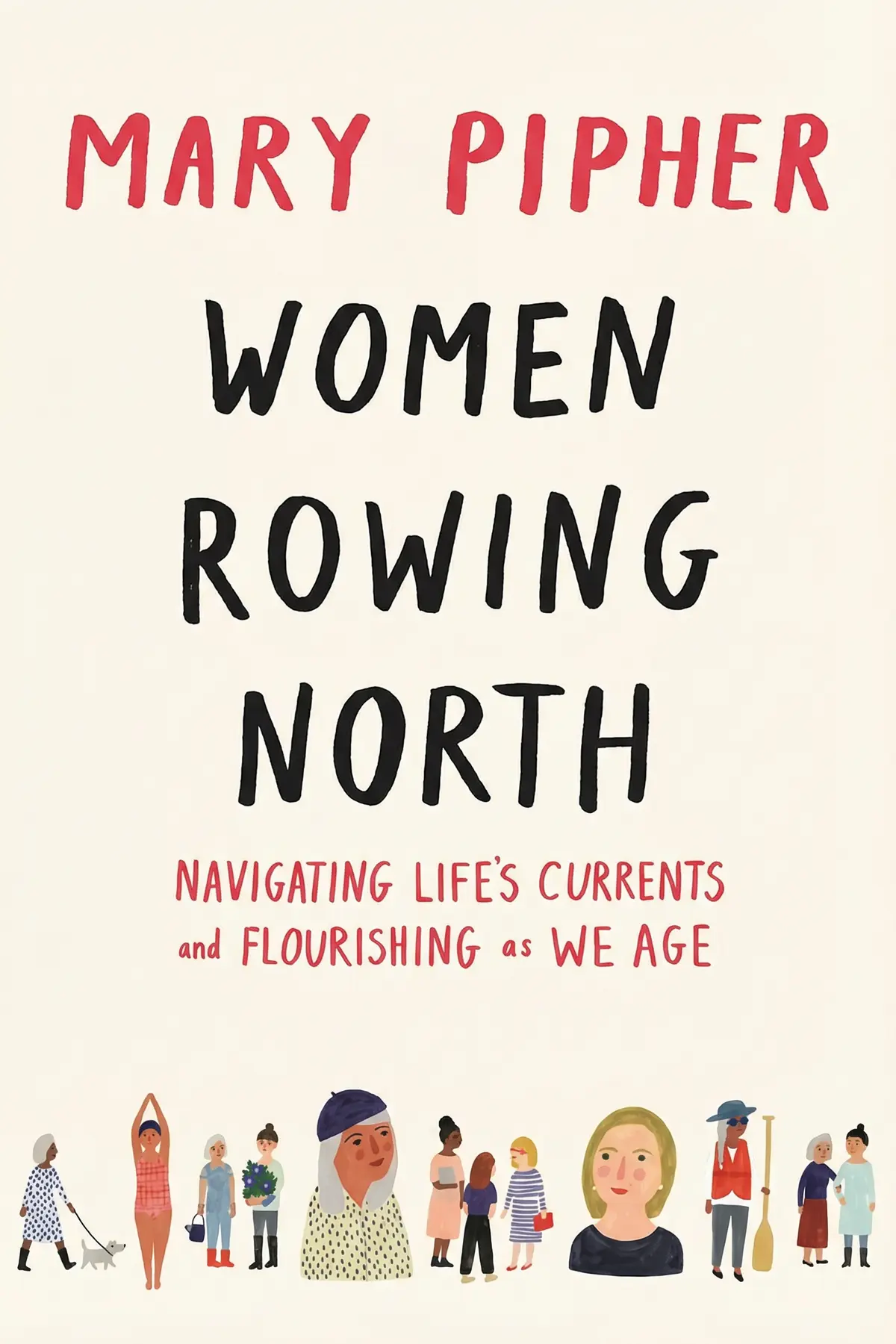
Table of Content
1. Introduction
1 min 03 sec
Many women enter their sixties and seventies expecting to fade slowly from view. In Women Rowing North, clinical psychologist and cultural anthropologist Mary Pipher, now in her own seventies, argues that these years can bring joy, courage and even bliss. Her reason is that much of happiness depends on attitude and daily choices, and those stay in our hands even when circumstances do not.
Pipher is honest that the later decades are hard. Ageism, caring for a sick partner and serious illness all get their due. Through the women she interviewed, though, she shows how the same pressures can leave a person warmer, wiser and happier. Her argument is that age brings real losses, and that the women who flourish choose their outlook, put their experience to work close to home and lean on their friends.
Along the way you meet a woman in subsidized housing who insists on joy, a retired couple who built a park and a dying friend who found bliss beside a lake.
2. Spot the ageism before it shapes you
2 min 02 sec
A small child’s innocent question in a park reveals something uncomfortable about how a whole culture sees older women. Pipher traces that blind spot to a surprising root, and it is one most of us share.
3. Turn the weight of caregiving into growth
2 min 07 sec
Two out of three caregivers struggle with depression, and most caregivers are women. One woman who gave up her career to care for her husband discovered something the statistics leave out.
4. Choose joy, then build your days around it
2 min 04 sec
A divorced woman living in poverty, with lifelong epilepsy, says she is happy, and research suggests she is not fooling herself. The catch is what most retirees do with their free hours.
5. Make your neighborhood the place you change things
1 min 57 sec
Retirement is often pictured as powering down. One couple spent four years of theirs building something their neighbors will use long after they are gone, and Pipher thinks older women are built for this work.
6. Tend the friendships that will carry you
1 min 55 sec
Families usually cast older women as the ones who give care. Pipher describes a different kind of relationship where the roles reverse, and explains why it fades unless you feed it on purpose.
7. Find wonder even at life's hardest edge
1 min 51 sec
A woman dying of cancer, in pain and angry at her fate, told her friend by a lake that she had found happiness. What changed for her says a lot about how to live long before the end.
8. Conclusion
1 min 14 sec
What Pipher offers is a different map of the later decades. The culture tells women that age means disappearing, and the losses she describes are real: a husband who can no longer dress himself, bones that break, a child who cannot picture where old ladies come from. Yet the women in her pages keep finding that hardship does not settle whether they are happy. Marlene in subsidized housing, Willow beside Saul and Jackie on her bench by the lake each found a joy their circumstances did not predict.
The book supports a few concrete moves. Treat your attitude as something you can work on, reframing the present the way Willow found gratitude in caregiving. Take back some of the hours that slip into television and spend them where people and problems are close at hand, as Nora and Roger did with four years and a park. And keep investing in friends now, with visits and small kindnesses like Louise’s pastries, so that someone is looking after you when the time comes.
Growing older will bring its share of grief. Pipher’s claim is that it can also bring a wider, warmer life, and the oars are still in your hands.
About this book
What is this book about?
For many women, growing older means disappearing. Films leave older women out, jokes cast them as nagging mothers-in-law, and the decades after sixty often bring a partner who needs constant care, a career that has ended and illness close at hand. Mary Pipher, a clinical psychologist and cultural anthropologist writing in her own seventies, takes those losses seriously. She does not believe they decide how a woman's later life will feel. Drawing on interviews with older women and on research into happiness, caregiving and ageism, Pipher argues that even when circumstances can't be changed, attitude and behavior still play a real part in how happy we are. She follows a caregiver whose husband developed Parkinson's disease, a woman living in poverty who decided to be happy anyway, a retired couple who spent four years building a neighborhood park, and a friend with terminal cancer who found bliss beside a lake. Readers get a clear view of where ageism comes from. They also get practical ways to reframe hard circumstances, spend retirement hours well, put decades of experience to work locally and keep the friendships that hold up the final stretch of life.
Book Information
Who it's for
Women around sixty
Women nearing or past sixty who dread growing older and want a hopeful, practical view.
Exhausted caregivers
Caregivers worn down by looking after a sick partner or parent.
Recently retired
New retirees wondering how to spend their time, energy and experience well.
About the Author
Mary Pipher
Mary Pipher is a clinical psychologist and cultural anthropologist. She studied anthropology at the University of California, Berkeley, graduating in 1969, and earned her doctorate in clinical psychology at the University of Nebraska–Lincoln in 1977. She wrote the 1994 bestseller Reviving Ophelia, along with The Shelter of Each Other, Another Country and The Green Boat. She has twice received the American Psychological Association's Presidential Citation, and in 2001 she was a Rockefeller Scholar in Residence at Bellagio. As of 2019 she lived in Lincoln, Nebraska.
Ratings & Reviews
Ratings at a glance

What people think
Listeners view this work as an exceptional choice for people of any age or gender, noting it is rich with sagacity and diverse viewpoints. The prose is beautifully composed, and listeners value the approachable tone that makes the experience feel like a discussion with a brilliant friend. Furthermore, the book offers practical techniques and is especially pertinent to women, functioning as a guide for the specific life events and difficulties older women navigate. However, responses to the subject matter are varied, as some find the narrative heartwarming while others feel it is somewhat depressing.
Top reviews
Gabriel
Finally got around to reading this, and it feels like a warm embrace from a wise mentor. Pipher’s conversational style makes complex psychological transitions feel manageable, almost like you're sitting on a porch having a long chat with a smart friend. I appreciated the roadmap she provides for the emotional hurdles of our later years. While some might find it a bit too optimistic, for me, the focus on gratitude and authenticity was exactly what I needed. It's not just about surviving; it's about thriving through intentional choices. Aging isn't just something that happens to us; it's a process we can actively engage with. I'll be keeping this on my nightstand for those days when the river of time feels a bit too choppy.
Show moreSuthee
Wow, what a timely read for anyone feeling adrift in the later stages of life. Dr. Pipher has this incredible ability to make you feel seen and understood through her varied perspectives. The book is less of a clinical manual and more of a spiritual guide to finding bliss amidst the inevitable sorrows of aging. I loved the distinction she makes between floating and rowing; it gave me a renewed sense of agency. The anecdotes about women finding new purposes and deeper authenticities were particularly moving. It’s a beautiful, life-affirming book that I know I will return to whenever I need a boost of courage. It truly serves as a roadmap for the soul as we move north.
Show moreAmy
As a woman currently navigating the transition into my sixties, I found the rowing metaphor incredibly apt. Unlike sailing, which implies being blown by the wind, rowing requires consistent effort and a deliberate sense of direction. Pipher emphasizes that happiness in old age is a skill set we have to cultivate through grit and resiliency. To be fair, the book can be a bit repetitive, hammering home the same points about community and gratitude. However, the stories of pluck and gumption from various women were genuinely inspiring. It’s a solid guide for anyone looking to reframe their personal narrative from one of loss to one of growth. It provides a helpful perspective on how to be a 'good tool' in the world.
Show moreVera
Is aging a privilege or a slog? Pipher argues it's both, but leans heavily into the former. I appreciated her focus on 'lookism' and the specific challenges women face as they become invisible in society. The writing is wonderfully crafted, avoiding the clinical tone of many self-help books in favor of something much more personal and conversational. Personally, I found the sections on managing our internal narratives to be the most helpful. It’s a reminder that while we can’t control the biological aging process, we can control how we react to the loss and loneliness that often accompany it. A very worthy read for anyone feeling apprehensive about the coming years and seeking a bit of light.
Show moreFrida
Look, getting older isn't for the faint of heart, and this book doesn't pretend otherwise. Pipher strikes a nice balance between acknowledging the losses—caregiving, loneliness, and physical changes—and celebrating the rewards like enhanced perspective and authenticity. I found the section on travel skills for the journey north to be particularly practical. It’s not just fluff; there’s a real emphasis on the hard work of maintaining a positive attitude and choosing to be present. Some parts felt a bit overly sentimental for my taste, but the core message of resilience and interdependence is one that every woman needs to hear. It’s about making the most of the time we have left with grace and pluck.
Show moreRatchada
Even though I'm not the primary target demographic, I found a surprising amount of wisdom in these pages. Aging is, after all, a universal experience we’re all moving toward. The book acts as a roadmap for the psychological transitions that await us all, regardless of gender. Pipher’s writing is exceptionally crafted, making even the more self-help heavy sections feel like an intimate conversation. I did notice the middle-class bias mentioned by other readers, which is a valid critique that limits the book's reach. Still, the overarching theme of finding use for oneself like a good tool is a powerful and necessary message. It’s an outstanding read for anyone looking to understand the women in their lives better.
Show moreDivya
The truth is, this book feels like a lovely afternoon tea that goes on just a little too long. There is some wonderful, comforting advice here about the importance of long-term relationships and finding a use for oneself. But good heavens, the repetition! It felt like the same few points—be grateful, stay connected, keep moving—were recycled in every single chapter. I enjoyed the quotes from authors like Madeleine L’Engle, yet I found myself skimming the middle sections. It’s a heartwarming read, but it lacks the intellectual depth I was expecting from a psychologist of Pipher's stature. It’s perfect for a book club discussion, but don't expect any earth-shattering revelations if you're already self-aware.
Show moreRohan
Picked this up after seeing it recommended in my local book club, and I have mixed feelings. On one hand, the emphasis on building a lifeboat of supportive friends is vital advice. On the other hand, it often feels like it's written exclusively for a very specific demographic: the well-educated, upper-middle-class woman. There’s a certain rose-colored quality to the prose that occasionally masks the reality of physical decline. Not gonna lie, I was hoping for more grit and less savoring the moment over a glass of wine. It’s a pleasant read that makes you feel filled up temporarily, but perhaps it's a bit too light on the heavy stuff for my taste.
Show moreJai
While I appreciated the individual stories shared by the women Pipher interviewed, the book left me feeling a bit conflicted. The advice is sound—meditation, forgiveness, and community are obviously good things. Yet, there’s a repetitive nature to the chapters that makes the reading experience feel a bit stagnant at times. To be fair, Pipher’s casual and humorous style keeps it from being a total chore. I just wish she had addressed the difficulties of those without discretionary income or excellent healthcare with more than just a passing glance. It’s a feel-good book that works best if you don't look too closely at the socio-economic gaps. It is helpful, but certainly not a universal guide for everyone.
Show moreAraya
I really wanted to love this, but I struggled to get past the relentless platitudes. Frankly, the book feels swaddled in a vague pink mist that glosses over the harsh realities of poverty, chronic illness, and systemic ageism. Most of the examples involve women with significant financial resources and robust support systems, which isn't the reality for everyone. It left me with the uncomfortable impression that aging well is simply a function of having made 'good decisions' decades ago. If you’re looking for practical advice for the working class or those without a safety net, you won't find much here. It’s mostly just mindfulness and yoga suggestions we’ve already heard a thousand times. Quite disappointing.
Show moreQuestions about this book
What is the main idea of Women Rowing North?
Mary Pipher argues that growing older as a woman brings real challenges, including ageism, heavy caregiving and serious illness, but that these years can still be joyful. Drawing on research suggesting much of happiness depends on attitude and behavior, she shows how women who reframe their circumstances, act in their communities and invest in friendships can become warmer, wiser and happier with age.
Why does Mary Pipher say ageism exists?
Pipher traces ageism to ignorance. Older people have been children, teenagers and middle-aged adults, but no younger person has been old, so the young find it hard to imagine and to empathize. She points to studies showing older women are nearly absent from Academy Award winning films and that Facebook groups about the elderly mostly used negative stereotypes.
How can older women be happier according to Women Rowing North?
Pipher cites psychology professor Sonja Lyubomirsky, whose work suggests genes account for up to half of happiness and the rest comes from attitude, behavior and circumstances. Since circumstances often cannot change, women can reframe the present more positively and replace passive habits, such as the roughly 50 weekly hours of television retirees watch on average, with activities that build skills and connection.
What does the book say about caregiving?
Pipher acknowledges that caregiving falls mostly on women and takes a heavy toll: a 2015 study found about two in three caregivers experience depression. Yet she also sees meaning in it. Willow, who left her job to care for her husband with Parkinson’s disease, came to see herself as a willing volunteer rather than a victim, and says the work made her a better person.
Who should read Women Rowing North?
It suits women in or approaching their sixties and seventies who feel uneasy about aging, women caring for an ill partner or relative, and new retirees looking for purpose. Its examples, from a couple who spent four years building a neighborhood park to a dying friend who found bliss by a lake, make the case concrete for anyone facing the later decades.
Readers also enjoyed




A Guide to the Good Life: The Ancient Art of Stoic Joy
William B. Irvine


A High-Performing Mind: Strengthen Your Mind and Live Your Best Life
Andrew D. Thompson


Abundance: The Inner Path to Wealth
Deepak Chopra

AUDIO SUMMARY AVAILABLE
Listen to Women Rowing North in 15 minutes
Get the key ideas from Women Rowing North by Mary Pipher, plus 5,000+ more nonfiction titles.
- 5,000+ titles
- Listen as much as you want
- 7-day free trial
- Cancel anytime









