
14 min 24 sec
Available in: English
Wild Problems: A Guide to the Decisions That Define Us
By Russ Roberts
Shows how to make life's biggest choices about marriage, children and career when no list of pros and cons can help: aim to flourish, hold firmly to your principles and keep room to change course.
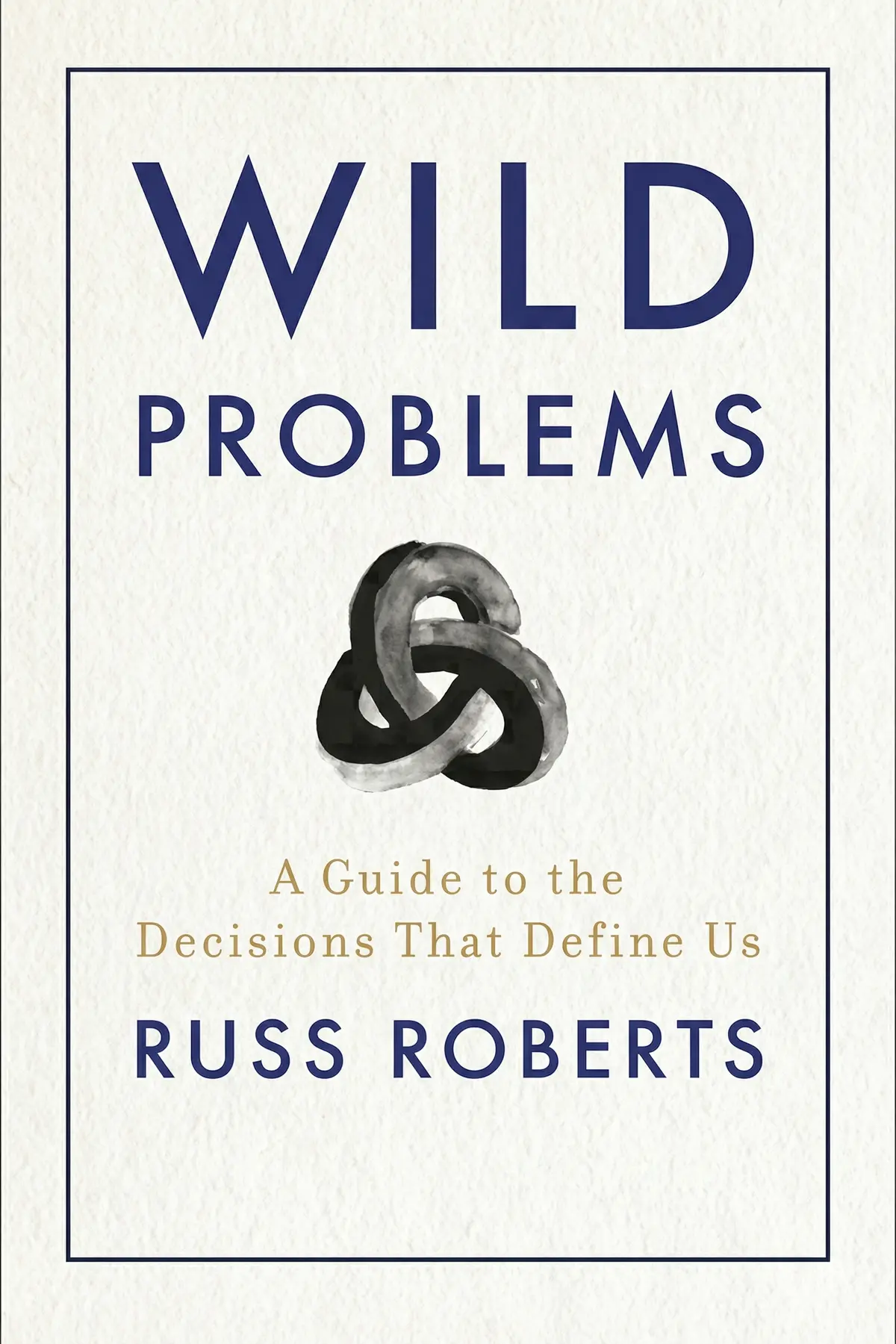
Table of Content
1. Introduction
1 min 00 sec
Most people facing a marriage, a child or a career change reach for the same tool: a list of pros and cons. In Wild Problems, author Russ Roberts argues that this tool fails exactly where it matters most, because the biggest choices change the person making them. He separates tame problems, which logic and data can solve, from wild ones, where no app, expert or spreadsheet can give the answer.
His case is that wild problems are best decided by who you want to be. Aim for a flourishing life, let firm principles break the tie, and keep enough room to change course when a choice goes wrong. Along the way come Charles Darwin and Franz Kafka weighing marriage on paper, a hotel cleaner and a lost diamond earring, and a famous football coach who trades away his top picks. By the end, you have a sentence to finish about yourself and a steadier way to face choices that cannot be calculated.
2. Spot the choices no calculation can settle
1 min 56 sec
Some decisions deserve endless research and comparison. Others swallow any amount of data without getting closer to an answer, and treating one kind like the other is where many people get stuck.
3. Make peace with choices that change you
1 min 28 sec
Imagine judging a new life before you have lived a single day of it. Roberts uses an odd thought experiment to show why certain choices can never be weighed fairly in advance.
4. Judge a big decision by how you'll flourish
1 min 59 sec
Darwin and Kafka both sat down with long lists to decide whether to marry. They reached opposite answers, and the way both lives turned out suggests a different yardstick for success.
5. Choose the companion before the itinerary
1 min 38 sec
Planning every day of a trip to Rome from other people’s advice tends to disappoint. Roberts suggests a better place to put your effort, and the same idea applies to choosing a spouse.
6. Let one sentence about yourself decide
1 min 58 sec
A hotel cleaner found a diamond earring, had every material reason to keep it, and went out of her way to return it. Her reasoning offers a test for your hardest choices.
7. Keep your options open and forgive mistakes
1 min 54 sec
One of the most successful football coaches keeps trading away his best draft picks. The habit looks odd until you see what it says about deciding under uncertainty and recovering from errors.
8. Treat your life like a work in progress
1 min 29 sec
A great novelist described letting his characters lead while he followed behind. That way of working, demanding and open at once, offers a model for living with questions that have no fixed answer.
9. Conclusion
1 min 02 sec
Wild Problems ends up as an economist’s case against running your life like a spreadsheet. Roberts accepts that numbers serve well when the goal is clear, like a route to the airport or the choice of a surgeon. The choices that define us are of another kind. They change the chooser and resist prediction, and no single answer holds for everyone, as Darwin’s large family and Kafka’s single life both show.
What remains is character, plus the nerve to act without certainty. When a big decision is stuck, complete the phrase “I am the kind of person who” and drop any option that would betray your answer. Ask which path lets you flourish, counting the hard climb along with the view from the top. Then open a few doors rather than hunting for the perfect one, and give yourself permission to walk back through one that turns out wrong.
Teodora had no list in her hand when she found the earring. She knew who she was, and the decision followed.
About this book
What is this book about?
Some decisions can be researched until the answer is clear: the fastest route, the best-reviewed restaurant, the surgeon with the strongest record. Others cannot. Whether to marry, have children, change careers or move to another country are what author Russ Roberts calls wild problems. They have no right answer, and they change the person making them, so no list of pros and cons can predict how they will feel. Roberts draws on the ancient Greek idea of eudaemonia, or flourishing. His stories include Charles Darwin and Franz Kafka weighing marriage on paper, a hotel cleaner who returned a lost diamond earring, and a football coach who happily trades away his top draft picks. His approach rests on three supports: aim for a flourishing life that can include pain, let your principles decide when calculation fails, and keep your options open so mistakes can be undone. Readers get a calmer, more personal way to face the choices that define them, starting with one sentence to finish about who they are.
Book Information
Who it's for
Adults stuck on decisions
People stuck on a decision about marriage, children or a career change that no amount of research settles.
Young adults choosing paths
Students and young professionals choosing a university, a field or a city to live in.
Mistake-wary list makers
Habitual list-makers who fear a wrong choice so much that they cannot decide at all.
About the Author
Russ Roberts
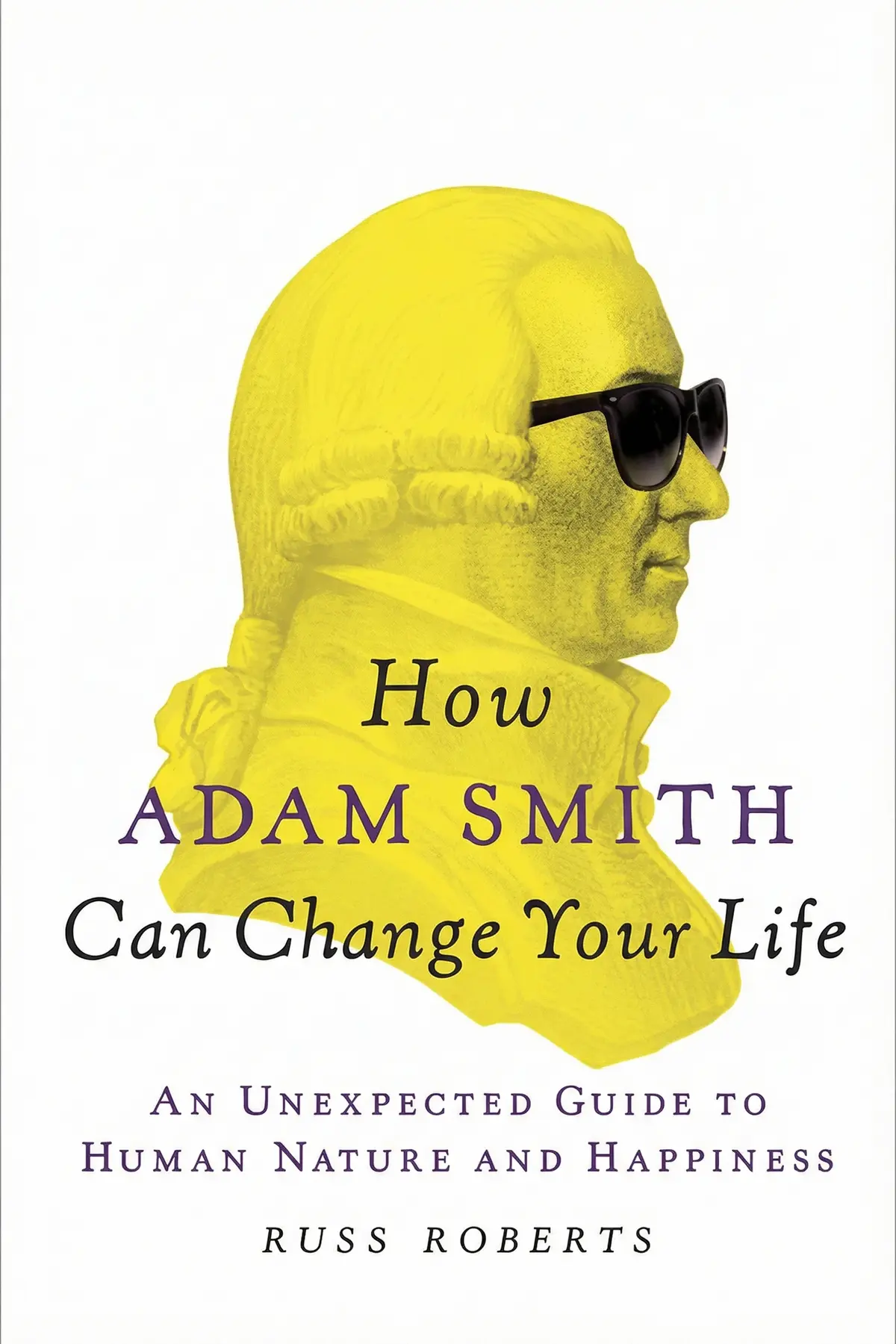
Russ Roberts has written several books on economics and is a research fellow at Stanford University's Hoover Institution. On EconTalk, guests have included Milton Friedman, Martha Nussbaum and Emily Oster. He also co-created the Keynes-Hayek rap videos, which have passed 12 million views on YouTube. His other books include How Adam Smith Can Change Your Life, which sits alongside Wild Problems in our catalog.
Ratings & Reviews
Ratings at a glance

What people think
Listeners find the work remarkably easy to read, with one listener noting it is approachable for audiences of all levels. It provides useful insights and handles intricate subjects in a clear way. Listeners also value the fast tempo and prose style, with one listener describing it as compelling.
Top reviews
Yothaka
Wow. I didn’t expect a book written by an economist to be so profoundly human and poetic. Russ Roberts takes the cold, calculating world of utility functions and turns it on its head, arguing that the biggest choices—who we marry or whether we have children—cannot be solved with a simple spreadsheet. The concept of being 'loved and lovely' borrowed from Adam Smith really resonated with me. It’s a refreshing departure from the modern obsession with optimizing every waking second of our lives. The writing is incredibly accessible, moving at a quick pace without sacrificing depth. I found myself highlighting passages about flourishing and the 'vampire problem' to share with my spouse. Truly, this is the kind of wisdom I wish I had encountered in my early twenties before trying to 'solve' my life like a math equation.
Show moreSkylar
That quote from Elizabeth Stone about having your heart go walking around outside your body perfectly captures the emotional core of this book. Roberts isn't just giving us a strategy for making choices; he's giving us a philosophy for living fully. He successfully debunks the idea that everything can be boiled down to a single number or 'scalar.' The truth is, life is to be experienced, not solved. I loved the sections on Adam Smith and the concept of 'satisficing' versus optimizing. As someone who often feels paralyzed by the need to make the 'perfect' choice, this book was incredibly liberating. It’s a quick read, but the wisdom within lingers long after you finish. If you feel like your life has become a series of optimizations, read this to remember what it means to actually flourish.
Show moreLiam
Ever wonder why those pros and cons lists never actually help you make a big decision? Roberts explains that for transformative experiences, you aren't the same person on the other side of the choice, which makes traditional cost-benefit analysis useless. This 'vampire problem'—the idea that you can't know what it's like to be a vampire until you are one—is a brilliant way to frame the uncertainty of parenthood and career shifts. The book is written in a very conversational, engaging style that makes complex philosophical ideas feel approachable for readers of all levels. I appreciated the chapter on Darwin’s marriage list; it was both hilarious and illuminating to see a great scientist struggle with the limits of his own logic. It's a solid 4-star read that encourages a healthy dose of epistemic humility in an over-quantified world.
Show moreTee
After hearing Russ Roberts on EconTalk for years, reading this felt like sitting down for a long coffee with a wise mentor. You can almost hear his voice in the prose—measured, curious, and deeply principled. He tackles the 'great scourge' of modern non-fiction by keeping the chapters short and the insights actionable, even if they aren't earth-shattering. I particularly enjoyed the distinction between Type 1 and Type 2 experiences; it changed how I look at the 'pain' of raising toddlers versus the long-term satisfaction of building a family. While the book is quite short, the value is in the reframing of how we approach life's crossroads. It’s a great gift for a college graduate who is currently paralyzed by the infinite choices of adulthood. A very readable and clear exploration of why some problems just can’t be tamed.
Show moreDiego
Picked this up during a major career transition and found the 'lexicographic' approach to ethics to be exactly what I needed to hear. Roberts argues that for some things, we shouldn't even consider trade-offs—we should just do the right thing because it's part of our essence. It’s a bold stance for an economist to take. The book moves at a brisk pace and handles heavy topics like the 'vampire problem' and Darwinian logic with a light touch. It’s accessible and avoids the dense jargon that usually bogs down books on decision theory. My only minor gripe is that some of the later examples, like the bit on the Rubik's Cube, felt a little disconnected from the visceral 'wildness' of the earlier chapters. Still, the core message about embracing the mystery of life is powerful and well-delivered.
Show moreSam
As someone who has always leaned toward a utilitarian worldview, this book was a much-needed challenge to my assumptions. Roberts asks us to exercise epistemic humility and acknowledge that we often don't know who we will become after a major life change. His critique of how we use 'flashlights' to look only where the light is better—ignoring the keys lost in the shadows—is a metaphor that will stay with me. The writing is engaging and clear, making it an easy recommendation for anyone who feels overwhelmed by life's big questions. I especially liked the discussion on 'Chesterton's Fence' and why we shouldn't tear down traditions we don't understand. It’s a thoughtful, reflective piece of work that prioritizes character and virtue over mere 'happiness' or efficiency.
Show moreKatya
The writing style in Wild Problems is refreshingly direct and free of the usual academic fluff you’d expect from an economist. Roberts has a way of taking complex ideas—like Euler’s number in the secretary problem—and making them feel like common sense. I appreciated how he balanced the mathematical beauty of optimization with the messy, 'wild' reality of human relationships. While he definitely has a bias toward traditional family structures, his arguments for why these paths offer a unique kind of 'flourishing' are compelling and well-articulated. It’s a quick, fast-paced read that manages to feel both modern and timeless. Not every chapter is a home run, but the overall message is a vital corrective to our 'measure everything' culture. Definitely worth a read for anyone standing at a crossroads.
Show moreHana
This book starts with an incredible premise about 'wild problems' versus 'tame' ones, but it doesn't quite sustain that momentum through the second half. Roberts is a gifted storyteller, and his critique of utilitarianism is sharp, especially when he discusses why we can't measure the 'value' of a child. However, the advice eventually feels a bit repetitive. To be fair, the heuristics provided are useful, but I was looking for a more robust framework rather than just being told to 'privilege my principles.' By the time he started stretching the metaphor to include the New England Patriots and investment strategies, it felt like the central theme was being spread a bit thin. It’s a fast, engaging read that offers some genuine 'aha' moments, but it might have been more effective as a long-form essay or a few podcast episodes rather than a full book.
Show moreNadia
Frankly, the core idea here is fantastic, but the execution left me wanting a bit more meat on the bones. The distinction between tame and wild problems is a vital one for anyone living in the age of big data, yet the 'system' Roberts offers for dealing with them is fairly basic. He provides a few heuristics and general guidance to 'be more humble,' which is good advice, but not exactly a robust framework. The storytelling kept me engaged, and I finished it in just two sittings because the writing style is so fluid. However, I can't help but feel that a book-length treatment wasn't entirely earned here. It’s a good introduction to the limits of rationalism, but seasoned readers of philosophy or behavioral economics might find the insights a bit too familiar.
Show moreSarocha
I was coming here to write a critique of how this book seems tailored for a very specific type of rationalist who thinks humans are just calculators, but even as a critique of that mindset, it fails to be objective. Roberts clearly has a preferred answer for every 'wild' problem he presents: you should get married, and you should definitely have kids. His biases are thinly veiled behind talk of 'flourishing,' yet he barely acknowledges that for many, these traditional paths don't lead to the richness he describes. The wealth of examples supporting his worldview is barely offset by a few passing mentions of people like Kafka who chose differently. Frankly, the arguments felt a bit textureless and the prescriptive advice in the later chapters seemed obvious. If you already agree with the author's lifestyle, you'll love it, but if you're looking for an unbiased look at decision-making, look elsewhere.
Show moreQuestions about this book
What is the main idea of Wild Problems by Russ Roberts?
Roberts separates tame problems, which data and logic can solve, from wild problems such as whether to marry, have children or change careers. Wild problems change the person who decides, so their outcome cannot be known in advance and a pro-con list fails. He argues for deciding them by aiming to flourish, holding firmly to your principles and keeping the freedom to change course when a choice turns out wrong.
What is the vampire problem in Wild Problems?
It is Roberts’ name for choices you cannot judge until you have made them. If you were offered the chance to become a vampire, you could imagine the life but never know how it feels until you became one, and then you could not go back. Becoming a parent, marrying or moving abroad work the same way: the experience changes you, including the preferences you would use to evaluate it.
How can I apply Wild Problems to a big decision?
Start by completing the phrase “I am the kind of person who” and treat your answer as a rule your choice must respect, as the hotel cleaner Teodora did when she returned a lost diamond earring with no reward in sight. Then ask which option lets you flourish over the long run, try things where you can, and forgive yourself and change course if a choice fails.
Who should read Wild Problems?
It suits people facing decisions that no spreadsheet can settle: whether to marry or have children, which career to follow, where to live or study. It also helps anyone who has written pro-con lists and still feels stuck, or who fears a wrong choice so much that they cannot move. Roberts offers a way of deciding from character and values when formulas run out.
Readers also enjoyed





A Guide to the Good Life: The Ancient Art of Stoic Joy
William B. Irvine


A High-Performing Mind: Strengthen Your Mind and Live Your Best Life
Andrew D. Thompson


Abundance: The Inner Path to Wealth
Deepak Chopra

AUDIO SUMMARY AVAILABLE
Listen to Wild Problems in 15 minutes
Get the key ideas from Wild Problems by Russ Roberts, plus 5,000+ more nonfiction titles.
- 5,000+ titles
- Listen as much as you want
- 7-day free trial
- Cancel anytime









