

15 min 26 sec
Available in: English
Why Women Have Better Sex Under Socialism: And Other Arguments for Economic Independence
Shows how pay gaps, résumé gaps and unpaid care push women into financial dependence on men. It also shows which public policies, from paid leave to board quotas, give them independence at work and at home.
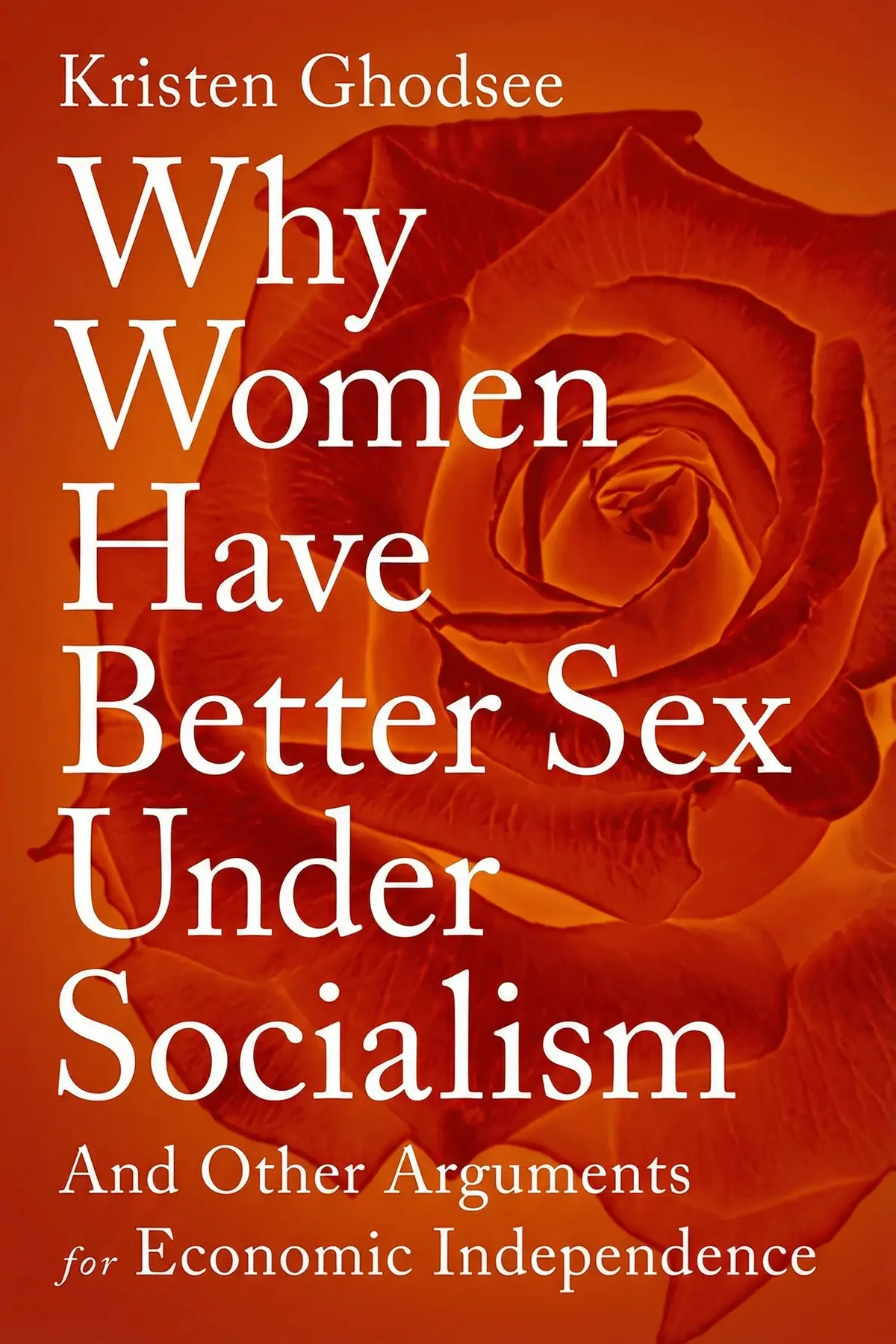
Table of Content
1. Introduction
1 min 00 sec
Many working women face a choice nobody should have to make: keep a career that barely covers the daycare bill, or step away and live on a partner’s income. In Why Women Have Better Sex Under Socialism, ethnographer Kristen Ghodsee argues that markets build this choice into women’s lives, and that public policy can take it away. Her most provocative evidence comes from divided Germany. There, studies found that 82 percent of East German women felt happy after sex, against 52 percent in the West.
The link, Ghodsee says, is money. Women who can support themselves meet men as equals, at work and at home. Her case starts with an employer’s guesswork and a professor whose monthly take-home pay fell to 70 cents. From there it moves to Norwegian boardrooms and East German marriages. Follow it, and a daycare invoice, a hiring decision or a career break starts to look like a question of freedom.
2. Separate the two socialisms before you argue
1 min 51 sec
One word can mean a police state, a Nordic welfare system or a daydream. Ghodsee insists on a distinction that lets her praise parts of a regime she openly condemns, and it changes how the rest of her case lands.
3. What Eastern Bloc mothers had that Western mothers lack
2 min 03 sec
A woman reached space twenty years before her American counterpart, and half of a superpower’s engineers were women. The reason had less to do with talent than with who paid for the children.
4. See how an employer's guess becomes a pay gap
1 min 49 sec
A hiring manager who never meets a single mother can still lower every woman’s salary. Ghodsee shows how one reasonable-sounding shortcut feeds on itself until the assumption makes itself come true.
5. Count the real cost of a career break
1 min 51 sec
An American professor kept working after her baby arrived and ended each month with almost nothing to show for it. She had good reasons, and they reveal a trap built by deliberate policy choices.
6. Mandatory quotas put women in the boardroom
2 min 01 sec
Two European countries wanted more women on corporate boards. One asked companies nicely and the other wrote a rule. By 2016 the gap between them was wide enough to make the point.
7. See who pays when families provide the care
1 min 46 sec
Raising the next generation of workers is expensive, and businesses depend on it. Ghodsee asks who ends up paying that bill, and her answer turns the strain on mothers into an economic subsidy.
8. Learn what economic independence does for intimacy
1 min 53 sec
A country split in two by the Cold War created an unplanned test of love and money. The women on one side reported far happier sex lives, and Ghodsee thinks she knows why.
9. Conclusion
1 min 12 sec
Ghodsee’s title sounds like a joke, but her argument follows money all the way into private life. A hiring manager’s guess becomes a pay gap. The pay gap makes the mother the one who stays home. Staying home leaves a résumé gap, and the gap leaves her dependent on a partner she may not be free to leave. At every step, the market saves money by letting women carry the cost. A government that steps back turns one hard year into a trap.
The fixes she proposes are specific: paid parental leave, subsidized childcare, equal-pay laws that are actually enforced and mandatory quotas for boards. None of them requires a one-party state. Iceland and Norway already use versions of them.
The book’s ideas also apply to ordinary life. Before a career break, add up its full cost, including the years after you return. Treat the caring done in your household as work, and argue for leave policies as if that work had a price, because it does. When someone laughs at the idea that policy shapes intimacy, think of the East German wives who could walk away, and the husbands who learned to pay attention.
About this book
What is this book about?
Many women still face a hard choice after having a child: pay almost all their salary for daycare, or leave work and depend on a partner. Kristen Ghodsee argues that this choice is not bad luck. It comes from how free markets treat women's labor and from governments that leave childcare to families. Ghodsee separates the authoritarian state socialism of the Soviet Union and the Eastern Bloc from the democratic socialism of the Nordic countries. Then she borrows lessons from both. She traces how an employer's guesswork about mothers turns into a pay gap and how a career break leaves a lasting mark on a résumé. She also explains why unpaid care is useful to a system that would rather not pay for it. Her evidence runs from Soviet workforce figures and Norwegian board quotas to an American professor left with 70 cents a month after daycare. The payoff is the claim in the title. Ghodsee points to divided Germany, where women with more economic freedom reported happier sex lives, and argues that independence changes how partners treat each other. Readers get a clear chain of cause and effect, from hiring decisions to marriages, and a short list of policies that break it.
Book Information
Who it's for
Working parents weighing daycare
Working parents, especially mothers, weighing daycare costs against a career break.
Managers and HR leads
Managers and HR leads who set pay and want to spot bias in their own decisions.
Curious about socialism
Readers curious about socialism who want an argument grounded in women's everyday lives, not slogans.
About the Author
Kristen Ghodsee
Kristen Ghodsee is an American ethnographer who teaches at the University of Pennsylvania, where she is also part of the Graduate Group in Anthropology. She is best known for her fieldwork in post-Communist Bulgaria and her work in postsocialist gender studies. Her research also covers Muslim minorities after Communist rule, communist nostalgia, the legacies of Marxist feminism and the history of utopian thought. Her essays have appeared in The New York Times, Foreign Affairs, Jacobin and Dissent, and she hosts A.K. 47, a podcast about the Bolshevik Alexandra Kollontai.
Ratings & Reviews
Ratings at a glance
What people think
Listeners find the text highly accessible and value the caliber of its research, while one listener specifically praises the detailed investigation into socialism throughout Eastern Europe.
Top reviews
Wararat
As someone who grew up in the US during the tail end of the Cold War, the history of Eastern Europe was always presented through a very specific, grim lens. This book completely flipped the script for me. Ghodsee is an academic historian, and her research into the state-sponsored programs of the Eastern Bloc is genuinely eye-opening. She explores how guaranteed employment, state-funded childcare, and legal protections for mothers actually provided women a level of autonomy that many in the West still lack today. Truth is, when you aren't tethered to a partner just for healthcare or rent, your romantic choices change entirely. The writing is accessible and doesn't get bogged down in dense jargon, making it a quick but profound read. It’s not about praising dictatorships, but about looking at what actually worked for women's independence. I highly recommend it if you’re tired of the 'girlboss' version of feminism that only helps those at the top.
Show moreEleni
Picked this up because the title made me laugh, but I stayed for the rigorous deep-dive into how economic structures dictate our most intimate choices. Ghodsee’s explanation of sexual economics theory is a total game-changer for anyone trying to understand why dating feels so broken right now. When women have their own sources of income and the state guarantees social security, they don't have to stay in unfulfilling or abusive relationships for survival. The book is incredibly readable and the research quality is top-notch, pulling from decades of work in Eastern Europe. I loved the way she dispels the myth that everyone under socialism was just a miserable prisoner. It turns out that when your basic needs are met, you actually have the mental space to enjoy your life and your partners. It’s an essential read for anyone interested in the intersection of politics and personhood.
Show moreOrm
The chapter on sexual economics theory was a total revelation for me. I’ve always felt that the 'American model' of dating was weirdly transactional, but I couldn't put my finger on why until reading this. Ghodsee explains that in a system where women are economically dependent on men, sex becomes a commodity to be traded for security. In contrast, under systems with strong safety nets, sex can just be... sex. In my experience, this is one of the few 'feminist' books that actually looks at the root cause of inequality rather than just telling women to 'lean in' or work harder. It’s a short, punchy book that doesn't waste any time getting to the point. Even if you don't agree with every one of her conclusions, the data she presents about women's happiness in the former Eastern Bloc is impossible to ignore.
Show moreSavannah
Wow, I didn't realize how much my financial anxiety was actually killing my libido until I read this. It sounds like a joke, but Ghodsee makes a scientifically grounded case for why the stress of capitalism is fundamentally bad for our sex lives. The book is packed with data from the Cold War era that shows women in East Germany reported much higher levels of sexual satisfaction than their counterparts in the West. Why? Because they had job security, free childcare, and didn't have to worry about being homeless if they dumped a mediocre boyfriend. This book is a quick, engaging read that manages to make complex economic theories feel totally relevant to your everyday life. It’s not just a history lesson; it’s a blueprint for a better way of living. If you’ve ever felt like your relationship was being crushed by the weight of bills and housework, you need to read this.
Show moreWit
This book is far more nuanced than that provocative, clickbaity title might lead you to believe. Instead of a salacious tell-all, it’s a grounded analysis of 'sexual economics theory' and how capitalism turns our intimate lives into a series of transactions. I really appreciated how Ghodsee compared the Soviet models with the modern Nordic model, showing that social safety nets aren't just about 'free stuff'—they are about the freedom to leave a bad relationship. My only gripe is that the writing style felt a bit messy in the middle chapters, jumping between historical data and personal anecdotes in a way that was sometimes hard to follow. To be fair, she makes a compelling case for why American women are uniquely disadvantaged by our current lack of paid parental leave and affordable daycare. It’s a solid 4-star read that will definitely spark some intense conversations at your next book club.
Show moreKae
Ever wonder why a book about sex spends so much time talking about public transportation, laundry facilities, and universal childcare? It’s because Ghodsee successfully argues that these boring policy details are the actual foundation of a satisfying personal life. Look, the title is definitely meant to grab your attention, but the content is a serious look at how the 'winner-take-all' brand of capitalism in the US ruins our relationships. I found the sections on how the Eastern Bloc countries promoted women into high-ranking roles particularly interesting, even if it was partially for propaganda purposes. Some of the humor felt a little forced and 'academic trying to be cool,' but the overall message is vital. It’s a readable, well-researched argument that challenges the idea that the free market is the best way to organize our private lives. Definitely worth picking up.
Show moreAudrey
Look, Ghodsee is an academic historian, and that expertise shines through in her use of data from former socialist countries, though the writing leans toward the casual side. It’s a weird mix, but it mostly works. She’s very clear that she isn't an apologist for Stalinism or the various human rights abuses of the 20th century. Instead, she’s performing a sort of 'salvage operation' to see which policies actually benefited women. The idea that capitalism relies on women's unpaid domestic labor is nothing new, but seeing the historical alternatives laid out so clearly was fascinating. I did find some of her 'recommended reading' a bit random, and the final chapter’s focus on voting felt a little weak compared to the radical history she had just spent 200 pages describing. Still, it’s a necessary intervention in US political discourse that moves beyond the typical 'socialism is scary' talking points.
Show moreWan
Frankly, I expected to love this, but I ended up feeling pretty conflicted. As an avowed Marxist, I found Ghodsee’s focus on 'powerful women' in leadership roles to be a bit too close to the neoliberal feminism she claims to despise. The point of socialism isn't just to get a few elite women into high-ranking positions; it’s about the liberation of the entire working class. I also thought her writing style was a bit messy and repetitive in places. She spends a lot of time talking about the Nordic model, which is great, but that’s still capitalism with a safety net, not true socialism. To be fair, the book is very accessible and will probably be a good 'gateway' text for people who are new to these ideas. However, if you’re already familiar with socialist feminist theory, you might find this a bit surface-level and intellectually inconsistent.
Show moreJan
Finally got around to reading this and I am torn. On one hand, the central thesis—that our romantic lives are inextricably linked to our economic security—is absolutely vital and needs to be discussed more. On the other hand, the writing style felt incredibly messy and sometimes a bit immature for an academic. I found the chapter on getting women into powerful leadership positions to be a bit of a 'lean in' distraction from the real issues facing the working class. Also, what was up with those weird jokes about AI? They felt really out of place. Personally, I think the final chapter was written from a position of privilege and could have used a much more intersectional lens. It’s an interesting read with some great research on Eastern Europe, but it tries to do too much and ends up being a bit of a disappointment.
Show moreSofia
Not what I expected, and frankly, quite a letdown. This book feels like it is built on a foundation of cherry-picked data and romanticized views of the Eastern Bloc that simply do not match the historical reality of living under those regimes. Ghodsee never actually lived in these countries, yet she uses their old state propaganda to argue that women were better off, ignoring the scarcity, the endless queues for food, and the lack of basic appliances like washing machines that made life a living hell for women. If you want a real account of life under communism, read something like Alexievich instead of this mystical preaching. It's a provocative title for a book that ultimately feels like a bunch of false info that cannot be proven scientifically. To write a book with such a misleading premise is one thing, but ignoring the human rights abuses of these dictatorships is another. Total disappointment.
Show moreQuestions about this book
What is the main argument of Why Women Have Better Sex Under Socialism?
Kristen Ghodsee argues that free-market capitalism, especially its neoliberal form, makes many women financially dependent on men. It does this through pay discrimination, career breaks and unpaid care. That dependence limits women’s careers, keeps them out of leadership and weakens their position in relationships. Policies such as paid parental leave, subsidized childcare, enforced equal pay and board quotas restore women’s independence, which she says improves their lives at work and at home.
Does Kristen Ghodsee defend Soviet communism?
No. She separates authoritarian state socialism in the USSR and the Eastern Bloc from democratic socialism in the Nordic countries, and she supports the second. She openly names the labor camps, secret police and food shortages of the old regimes. Her claim is narrower: those states pushed women into the workforce through guaranteed jobs and public childcare, and today’s democracies can learn from that.
What evidence shows women had better sex in East Germany?
Ghodsee cites several studies from 1988 to 1992. In one, 82 percent of East German women reported feeling happy after sex, compared with 52 percent in West Germany. Two more found East German women had orgasms more often, at 80 percent against 63 percent in one study. She links this to economic independence: East German women could leave unhappy marriages, so husbands paid more attention to their needs.
What is statistical discrimination in the book?
It is the habit of judging a person by the average of their group. An employer who cannot predict whether a particular woman will leave after having a child assumes she might, because women on average do, and offers her less. Lower pay makes it more likely she will be the parent who quits. Each departure then strengthens the employer’s assumption, and the gap grows.
How can I apply the ideas from this book?
Before taking or recommending a career break, count both the cost of childcare and the long-term cost of a gap in your résumé. If you hire, judge each candidate on her own record, not on averages for women. Inside an organization, ask whether diversity targets carry real consequences, since Norway’s mandatory board quotas did much better than Germany’s voluntary ones.
Readers also enjoyed

A Promised Land
Barack Obama

A River in Darkness: One Man’s Escape from North Korea
Masaji Ishikawa

A Theory of Justice
John Rawls



A Warning
Miles Taylor



A Biography of Loneliness: The History of an Emotion
Fay Bound Alberti
AUDIO SUMMARY AVAILABLE
Listen to Why Women Have Better Sex Under Socialism in 15 minutes
Get the key ideas from Why Women Have Better Sex Under Socialism by Kristen Ghodsee, plus 5,000+ more nonfiction titles.
- 5,000+ titles
- Listen as much as you want
- 7-day free trial
- Cancel anytime









