
15 min 20 sec
Available in: English
Why The West Rules – For Now: The Patterns of History, and What They Reveal About the Future
By Ian Morris
Ian Morris explains why the West dominates today without appealing to race or culture. He shows how geography, climate and organization have passed the lead between East and West for millennia, and why it may pass again.
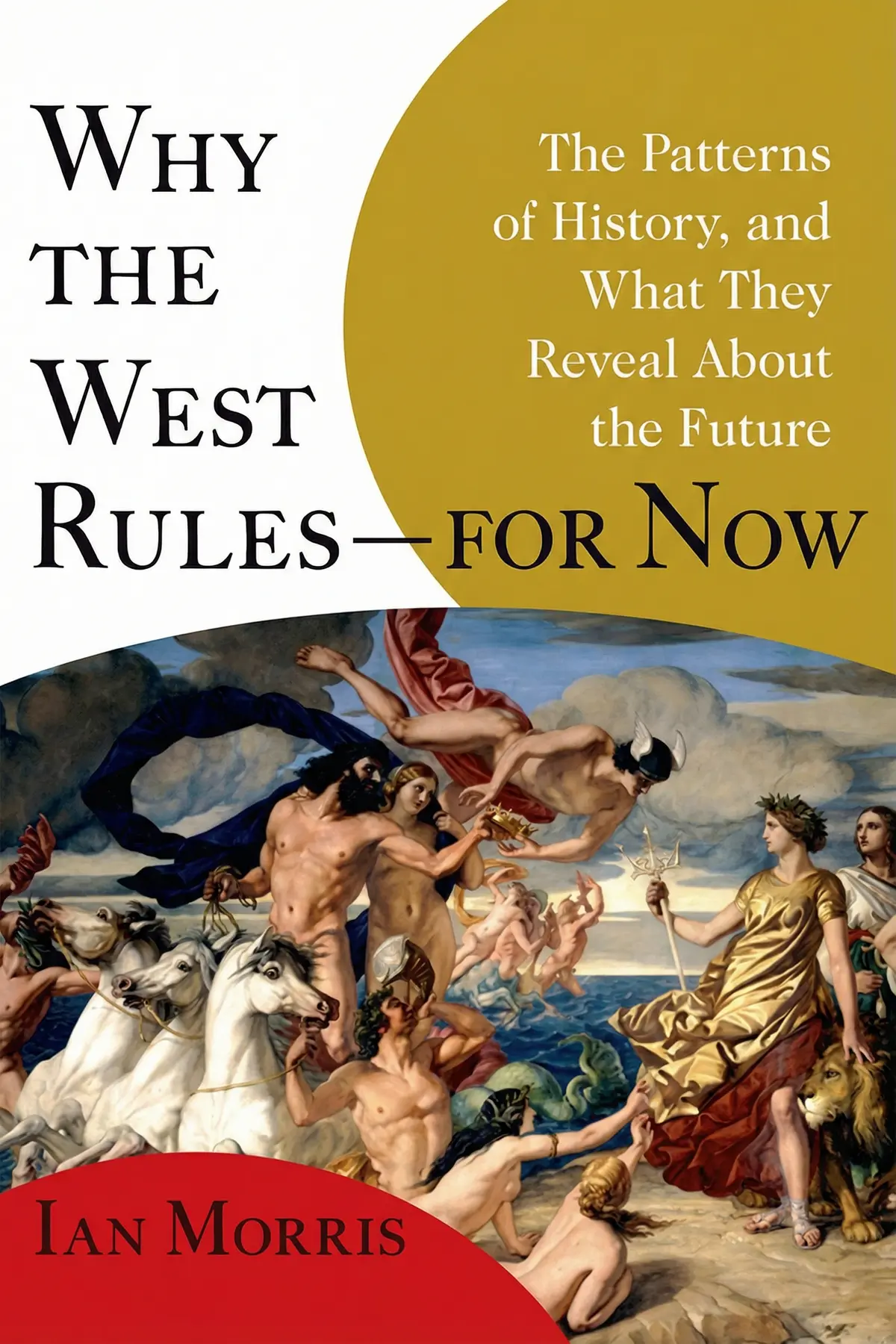
Table of Content
1. Introduction
1 min 02 sec
Most explanations for why the West dominates the modern world rest on luck or on some deep Western superiority, and Ian Morris argues that both collapse under the evidence. In Why The West Rules – For Now, the Stanford classics professor and archaeologist scores Eastern and Western civilization on one index from 14,000 BCE onward and finds them developing along strikingly similar lines. The lead has changed hands before: China pulled ahead around 1100 CE, and Western rule began only with the steam engine.
Morris’s case is that geography, working with biology and sociology, decided each turn of the contest, and that the same forces now point East. Follow his argument and a vague sense of Western destiny gives way to a clear model of how advantages are won and lost, plus a date to remember: 2103, when his numbers suggest the West’s lead runs out.
2. Test any claim of built-in superiority
1 min 44 sec
Some theorists say Western dominance was fixed hundreds of thousands of years ago, in genes or in a creative spark visible on cave walls. Morris takes both claims apart, and a cold climate plays a surprising role.
3. Compare civilizations with a four-part scorecard
1 min 45 sec
Claiming one civilization is ahead of another sounds easy until you try to measure it. Morris built a scorecard stretching back to the Ice Age, and its results challenge the idea of two very different worlds.
4. Trace the first head start to wild grasses
1 min 49 sec
When the last Ice Age ended, one region began farming up to two thousand years before China. Morris locates the reason in what happened to grow and graze there, and it says nothing about talent.
5. Spot the shared pressures that topple rival empires
2 min 11 sec
Rome and Han China had a lot in common, and their stories run in close parallel, from their rise to their breakup. The match reveals what really decides how long any great power lasts.
6. See when the lead passed to China and back
1 min 59 sec
Marco Polo described a China richer than anything in Europe, yet that world had already crumbled by the time he wrote. A warm climate, a Mongol war and an ocean’s width explain the reversal.
7. Steam power explains two centuries of Western rule
2 min 01 sec
In 1750 a visitor would have found East and West strikingly alike. A century later the gap was enormous. One Scottish invention made the difference, and its effects survived two world wars.
8. Learn when the East may lead again, by 2103
1 min 35 sec
Projecting his index forward gives Morris a specific year for the end of Western rule. Banks and accountants offer their own dates, and some forces could still rewrite the forecast entirely.
9. Conclusion
1 min 14 sec
Morris’s history ends by rejecting both comfortable stories. Western rule is no destiny written in genes or culture, and no fluke of recent centuries either. It is the latest turn in a long contest in which East and West climbed similar curves, the lead passing back and forth as geography, climate and organization favored one side, then the other. Wild grasses in the Hilly Flanks, a warm spell over northern China, a 3,000 mile ocean and a Scottish engine each tipped the balance for a time.
That view changes how you read any success story. When a group’s rise is credited to innate superiority, look for the circumstances underneath, the way the Altamira painters turn out to have been sheltering from the cold. Before comparing rivals, agree on what you are measuring. And hold any lead lightly, your own included, because it rests on conditions that can shift, just as steam once freed power from the places where wind and water happened to be.
The West rules, Morris insists, only for now, and so does anyone who is ahead.
About this book
What is this book about?
Ask why Europe and North America dominate the modern world and most answers fall into two camps. One says the West got lucky in recent centuries. The other says something in Western genes or culture settled the matter long ago. Ian Morris, a Stanford classics professor and field archaeologist, argues that neither holds up. To test them, he builds a social development index that scores Eastern and Western civilization from 14,000 BCE onward on four traits: energy capture, urbanism, information processing and the capacity to wage war. The two regions turn out to follow strikingly similar curves. The lead has changed hands repeatedly, through an early farming head start in the Hilly Flanks, the Late Bronze Age collapse, the twin rise and fall of Rome and Han China, a Chinese golden age around 1100 CE, the Mongol wars and finally James Watt's steam engine. Readers get a single, clear model of world history in which geography, interacting with biology and sociology, decides each turn of the contest. They also get Morris's forecast, built from the same numbers, that the East will regain the lead by 2103, along with the unknowns that could upset it.
Book Information
Who it's for
Curious how history connects
Curious readers who want one clear argument linking prehistory, ancient empires and today's rise of China.
Following power moving east
Professionals and investors trying to understand the long shift of economic power from West to East.
Students rejecting race-based explanations
Students tired of explanations of history that rest on race or cultural superiority.
About the Author
Ian Morris
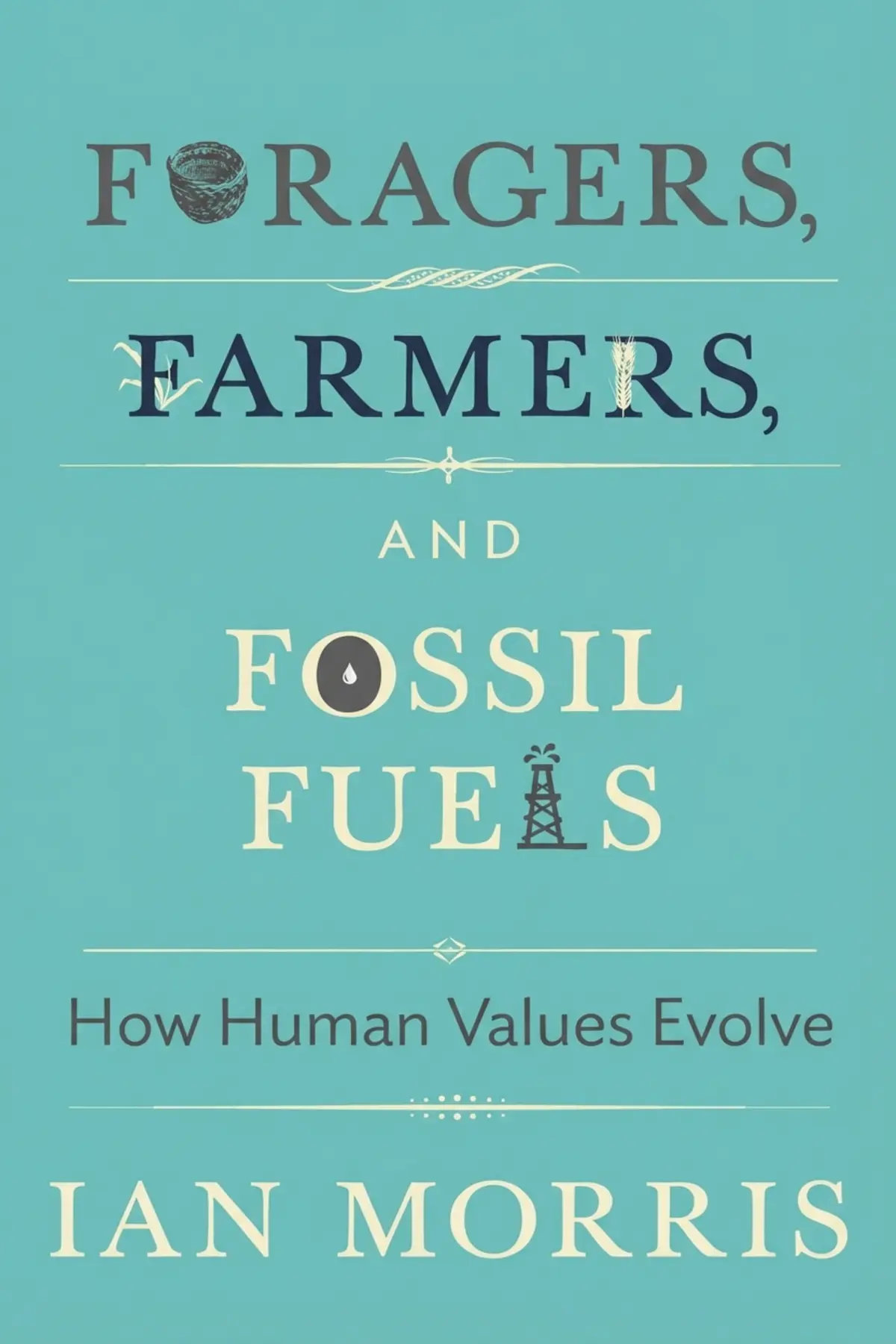
Ian Morris, born in Stoke-on-Trent in 1960, is a professor of classics at Stanford University. He has directed archaeological digs in Greece and Italy and co-founded the Stanford Archaeology Center. Why The West Rules – For Now won the PEN Center USA Literary Award for Creative Nonfiction in 2011, and his other books include Foragers, Farmers, and Fossil Fuels. DePauw University and Birmingham University have both awarded him honorary degrees.
Ratings & Reviews
Ratings at a glance

What people think
Listeners find that this work provides a useful lens for exploring the history of humanity and respect its thoroughly researched approach filled with abundant data and evidence. The narrative is approachable and lacks scholarly pretense, offering an accessible experience for non-experts, with one listener characterizing it as a spirited journey through the whole of human history. It is lauded for its lucidity and stimulating ideas, with one review specifically noting its broad, long-term historical view. While some listeners are convinced by the logic presented, others dispute the central thesis, and the book's overall pace gets conflicting feedback.
Top reviews
Naomi
Wow. This is hands down one of the most ambitious attempts to quantify the trajectory of human civilization I’ve ever come across. Morris moves beyond mere storytelling to implement a rigorous 'social development index' based on energy capture, urbanization, and information technology. It is fascinating to see how he traces these metrics from the end of the last Ice Age all the way to our modern era. The way he describes cities as products of captured solar energy really changed how I view infrastructure and progress. While the book is a massive 750-page doorstopper, the writing remains surprisingly light and accessible, avoiding the dry 'academese' that usually plagues such grand histories. He manages to balance archaeological data with a narrative that feels urgent and relevant. If you want to understand the deep-seated patterns that led to Western dominance, this is the essential starting point.
Show morePrae
Picked this up because I loved Guns, Germs, and Steel, but Morris actually goes much deeper into the 'why' of development. He isn't just looking at biology; he’s looking at how societies capture energy and turn it into power. The book is incredibly well-researched, with a bibliography that could keep you busy for a lifetime, yet it reads like a lively jaunt through time. I loved the small anecdotes, like the stories of empresses plucking out eyes to secure power, which kept the narrative from feeling too clinical. Morris argues that the West’s lead was never a sure thing, but rather a result of physical locations and resources. It’s a refreshing departure from theories that rely on racial or cultural superiority. Truly a masterpiece of big-picture history that makes you rethink the very foundations of modern global power.
Show moreGame
This book creates a brilliant framework for analyzing human history without getting bogged down in dense, academic jargon. Morris has a gift for making complex archaeological data feel like a page-turning narrative, often interjecting humor and pop culture references. The long view of history he takes—starting 15,000 years ago—is exactly what’s needed to understand our current geopolitical climate. I was particularly struck by his explanation of why the Industrial Revolution happened in Britain rather than China, focusing on the Atlantic's role as a 'hard' geographical factor. It’s rare to find a book that is this scholarly yet remains so eminently readable. Every chapter felt like it was unlocking a new part of the puzzle. If you enjoy Jared Diamond or Yuval Noah Harari, you absolutely need to add this to your collection.
Show moreSaengdao
To be fair, I didn't think a book about long-term social development could be this witty and engaging. The inclusion of science fiction references alongside deep archaeological analysis makes the text feel grounded and modern. Morris avoids the trap of Eurocentrism by showing just how many millennia the East was actually in the lead. The 'Morris Theorem' provides a hilarious but realistic lens through which to view human progress. I walked away from this book with a much deeper understanding of how resources and location dictate the fate of nations. It's a massive volume, but it's packed with facts that will make you the smartest person in the room at your next dinner party. For any history buff or curious layman, this is a five-star achievement that deserves a spot on your shelf.
Show moreNoppadol
Finally got around to this behemoth after it sat on my shelf for months. The way Morris utilizes his four-factor analytical tool provides a surprisingly concrete framework for comparing East and West across millennia. I especially appreciated his take on the 'Morris Theorem'—the idea that lazy, greedy, and frightened people are the primary drivers of innovation. It adds a touch of cynical humor to an otherwise dense subject. The chapters on the rise and fall of Chinese dynasties were a bit of a forced march, but the payoff in the final chapters is worth the effort. He doesn't just look backward; he uses his data to speculate on whether we will hit a 'singularity' or a total collapse. It’s a thought-provoking read that bridges the gap between archaeology and futurology, even if the middle section drags a bit.
Show moreSophia
As someone who has always been skeptical of the 'Great Man Theory of History,' I found Morris’s perspective incredibly refreshing and well-argued. He treats history as a series of inevitable pressures and responses rather than the result of a few lucky geniuses. The book is remarkably engaging for a work written by a Stanford professor; he clearly knows how to write for a general audience without dumbing down the science. His focus on 'energy capture' as the primary metric of success is a stroke of genius that clarifies a lot of confusing historical shifts. I did feel that he focused a bit too much on a West-China binary, largely ignoring the contributions of the Islamic world and India during the Middle Ages. However, as a framework for understanding global shifts, it’s hard to beat. A very strong and informative read.
Show moreTeng
Ever wonder why the West rules the world today despite China being more advanced for most of human history? Morris tackles this head-on with a massive amount of evidence and a very convincing central argument. Personally, I found his breakdown of the four benchmarks of social development—energy, urbanization, IT, and war—to be the most helpful part of the book. It gives you a way to compare two completely different civilizations on an even playing field. The book does have its dry spots, and some of the graphs are a bit confusing if you aren't looking closely at the axes. But the insights into how 'lazy, greedy, and frightened' humans actually built the modern world are worth the price of admission. It’s a dense but rewarding journey through the rise and fall of empires.
Show moreIsabelle
After hearing so much buzz about this, I was pleasantly surprised by how much I actually enjoyed the writing style. Morris manages to stay conversational even when discussing the nuances of prehistoric pottery or Roman economics. He effectively debunks the idea that Western rule was a historical accident or a result of superior culture, instead pointing toward the cold, hard facts of geography. My only real gripe is that the book's subtitle promises more about the future than it actually delivers. The final chapters feel a bit speculative and rushed compared to the meticulously researched history that precedes them. Still, the journey through the past is so well-executed that it’s easy to forgive a slightly noncommittal conclusion. It is a fantastic piece of synthesis that brings together multiple disciplines into a coherent whole.
Show moreBam
Look, this is a real commitment that requires a serious time investment from any reader. There are sections, particularly concerning the early medieval periods, where the pacing slows down to a crawl. I felt like Morris was occasionally repeating his core thesis about geography just to fill the page count. While his 'social development index' is clever, it sometimes feels like he’s trying to quantify things that are inherently unquantifiable, like the 'capacity for war.' That said, his rejection of the 'Great Man' approach is well-argued, even if I think he underestimates how much individual decisions can change the course of a century. It’s a solid 3-star read for me because of the sheer effort involved in finishing it. It’s a valuable resource, but you might find yourself skimming through the endless lists of dynastic successions.
Show moreTakeshi
Not what I expected. While the scope is undeniably massive, Morris’s argument that geography is the ultimate destiny feels like a reductive oversimplification of human agency. He dismisses the 'Great Man Theory' so aggressively that he almost ignores the cultural nuances that make different civilizations unique. To be fair, his 'social development index' is a neat tool, but assigning arbitrary numbers to complex societies felt forced and often ignored the 'wild cards' of history. I found the 1,200-year period where the West lagged behind the East to be the most interesting part, yet he treats it as a mere blip. The tone can be a bit condescending at times, especially when he uses terms like 'ape-man' to simplify evolution. It’s a slog to get through, and frankly, I’m not convinced that geography explains everything from the industrial revolution to modern social structures.
Show moreQuestions about this book
What is the main argument of Why The West Rules – For Now?
Ian Morris argues that Western dominance is neither a short-term accident nor locked in by Western genes or culture. Using a social development index from 14,000 BCE onward, he shows East and West developing along similar curves, with the lead changing hands several times. Geography, interacting with biology and sociology, decided each shift, and the Industrial Revolution gave the West its current lead.
How does Ian Morris measure social development?
Morris scores societies on four traits. Energy capture measures the kilocalories consumed per person each day. Urbanism stands in for organizing ability and is read from population figures. Information processing captures how well a society stores and shares knowledge, such as reliable maps. The fourth trait is the capacity to wage war. Combined, they show a community’s ability to get things done.
When does Ian Morris think the East will overtake the West?
Projecting his index forward, Morris calculates that the East will regain the lead by 2103. China’s economy moves fastest, with growth of 7.5 percent a year, and forecasters at Goldman Sachs and PricewaterhouseCoopers expect its output to match America’s by 2027 or 2025. Military strength, information technology and energy per person should take longer, assuming the East keeps improving after 2050.
Why did farming begin earlier in the West according to Morris?
Morris credits geography. Agriculture started in the Hilly Flanks of southwest Asia some 1,500 to 2,000 years before it did in China, because the wild grasses behind cereals such as wheat and barley were concentrated there, along with easily tamed animals like sheep, goats, cows and pigs. China started later because it lacked those conditions, not because its people were inferior.
What lessons can I apply from Why The West Rules – For Now?
The book suggests a few habits. When a group’s success is explained by innate superiority, look at the circumstances behind it, as Morris does with the Altamira cave paintings. Define what you are measuring before comparing rivals. And treat any lead as temporary, since history shows advantages lasting only as long as the conditions that created them.
Readers also enjoyed
A History of Iran: Empire of the Mind
Michael Axworthy
A History of the World in 6 Glasses
Tom Standage

A Long Way Gone: Memoirs of a Boy Soldier
Ishmael Beah




A Splendid Exchange: How Trade Shaped the World
William J. Bernstein

A Spy Among Friends: Philby and the Great Betrayal
Ben Macintyre


AUDIO SUMMARY AVAILABLE
Listen to Why The West Rules – For Now in 15 minutes
Get the key ideas from Why The West Rules – For Now by Ian Morris, plus 5,000+ more nonfiction titles.
- 5,000+ titles
- Listen as much as you want
- 7-day free trial
- Cancel anytime









