
13 min 13 sec
Available in: English
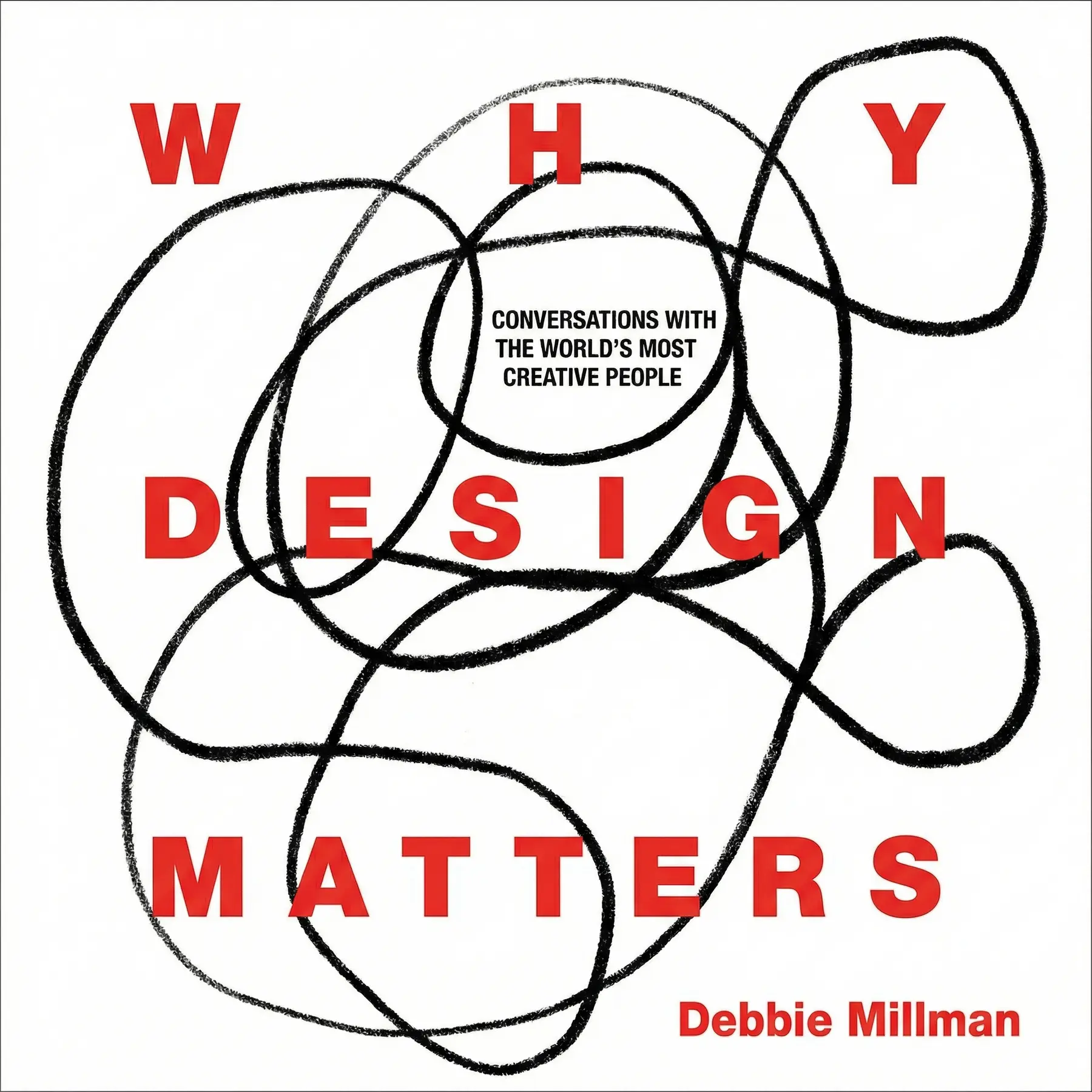
Why Design Matters: Conversations with the World’s Most Creative People
Debbie Millman's conversations with designers, writers, musicians and photographers show why design carries moral weight, and how respected creatives use limits, persistence and repetition to keep working through rejection, doubt and fear.
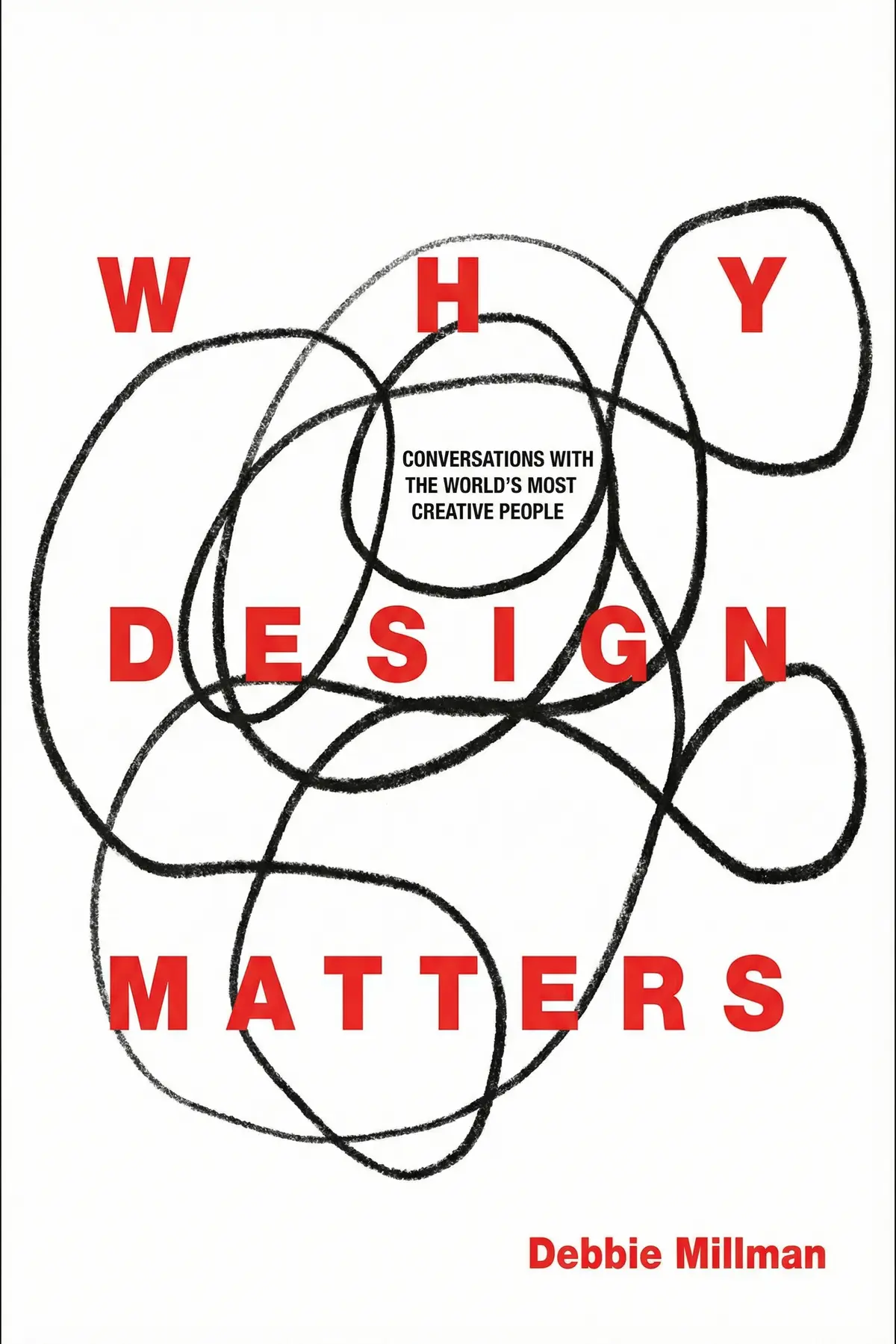
Table of Content
1. Introduction
1 min 00 sec
Most people who make things for a living assume the stars of their field began confident and free, so they read their own fear and rejections as proof they lack talent. In Why Design Matters, designer and podcast host Debbie Millman collects conversations that show otherwise: Seth Godin once sat two weeks from bankruptcy beside 900 rejection letters, and Michael Bierut dreads clients who let him do anything he likes. Since 2005 Millman has talked with designers, writers, musicians, photographers and playwrights about how they work.
One argument runs through those talks. Design is communication, so it carries moral weight, and the people who do it well rely on chosen limits, stubborn persistence and a working truce with fear. Expect a line to draw before your next brief, a question that restarts a stalled story, and a way to make the next rejection sting less.
2. Decide what you won't sell before someone asks
1 min 56 sec
Every package on a supermarket shelf was shaped by someone who chose how far to stretch the truth. A legend of graphic design argues that each of those choices moves a career toward hell or away from it.
3. Separate your ideas from yourself to survive rejection
1 min 41 sec
Among the most influential entrepreneurs America has produced, one man once found himself next to a stack of 900 rejection letters, only weeks away from bankruptcy. The habit that kept him pitching changes what the word no actually means.
4. Turn fear into skill through steady repetition
1 min 51 sec
The creator of Humans of New York was terrified of talking to strangers, and a famous photographer needed well over a decade to trust his own eye. Both found the same slow way through.
5. Make work that helps people feel for strangers
1 min 51 sec
A Cuban boy without a word of English found a way to speak to his classmates. Years later, the same skill put a headless Statue of Liberty on a magazine cover.
6. A tight brief gives you freer, bolder work
1 min 54 sec
A leading designer turns down clients who give him total freedom, and a Motown songwriting trio wrote lasting hits as salaried staff. Their reasoning will make you rethink what an open brief really costs.
7. Let doubt drive the work instead of stopping it
1 min 44 sec
An acclaimed illustrator with dozens of books still calls her own work terrible. She puts that voice to work rather than silencing it, and other guests have their own ways of escaping the spotlight’s pressure.
8. Conclusion
1 min 16 sec
Millman’s guests work in very different trades, from Motown songs to magazine covers to a playwright’s script, yet they describe the same craft. Design is how ideas reach people, which gives every choice weight, and the ones who make it well have stopped waiting to feel ready. Godin facing 900 rejections, Stanton dreading a stranger’s reaction, Kalman tormented by her own drawings: none of them got rid of fear. They found ways to keep working beside it.
That changes what a creative career asks of you. Before the next brief, decide which misleading claims you will refuse to help sell, as Glaser urges and Fairey practices with each offer. When a pitch is turned down, remember that an idea was rejected, while you were not, and keep offering it to people it can help. When a page stays blank, give yourself a narrow frame, a few ingredients or one question about what a character wants. And when a task scares you, repeat it until the 20 attempts shrink to five.
Rodriguez had no English when he reached Florida, only a pencil. His drawings spoke for him in a Florida school long before they spoke from the cover of Time.
About this book
What is this book about?
Since 2005, Debbie Millman has interviewed creative people on her Design Matters podcast, from graphic design legends to Broadway directors, songwriters, photographers and writers. This collection draws on those talks to make two arguments. The first is that design is everywhere: on packaging, stages, screens and clothes. Because it communicates, it can push people toward good choices or harmful ones. The second argument is about how good work actually gets made. Millman's guests describe careers that zigzag instead of climbing in a straight line. Seth Godin faced bankruptcy and 900 rejections. Edel Rodriguez arrived from Cuba without a word of English. Brandon Stanton was terrified of approaching strangers, and Maira Kalman is still convinced her work is terrible. What carries them is persistence, a taste for tight limits, empathy and a way of living with fear instead of waiting for it to leave. Readers get practical habits from people at the top of their fields: drawing an ethical line before a client asks, treating rejection as a verdict on an idea, choosing constraints that free the imagination and asking one simple question to break through writer's block.
Book Information
Who it's for
Creatives taking rejection personally
Designers, writers and other creative workers who take rejection personally and stall at the blank page.
Marketing and brand professionals
Marketers and brand people wrestling with how far persuasion should go.
Changing careers
Career switchers who want to hear how respected creatives built their voice slowly, through plenty of setbacks.
About the Author
Debbie Millman
Debbie Millman is an American designer, writer, educator, artist and curator who has hosted the Design Matters podcast since 2005. She spent years in branding at Sterling Brands in New York City, working with clients such as Pepsi and Nestlé. With Steven Heller she co-founded a graduate branding program at the School of Visual Arts, which she chairs. She is President Emeritus of the American Institute of Graphic Arts, a co-owner and editorial director of Print magazine, and in 2024 Harvard Business School named her an Executive Fellow.
Ratings & Reviews
Ratings at a glance
What people think
Listeners find the work visually striking and offer praise for the top-tier creatives included. They value its readability, with one listener mentioning that leafing through the pages is a genuine pleasure.
Top reviews
Narong
Finally got around to cracking open this massive tome, and I’m genuinely floored by the sheer volume of wisdom Millman has collected here. It isn’t just a book about graphic design; it’s an exploration of the human condition through the lens of some of the most influential minds of our time. I loved seeing the interviews with legends like David Byrne and Maria Popova laid out with such care and beautiful photography. Truth is, the intimate nature of the questions—asking about childhood fears or formative failures—makes these giants feel human. Some might find the deep dives into personal history a bit much, but for me, that’s where the magic lies. It’s a thick book, nearly 800 pages on digital, but every page feels like a curated conversation you're lucky to overhear. Truly a masterpiece for anyone who values the 'why' behind the 'what.'
Show moreTakeshi
Wow, what an incredible compendium of creative energy! I spent the weekend sifting through these pages and found myself highlighted almost every other paragraph. The way Maira Kalman talks about the 'duality of the artist'—the mix of fierce drive and crippling insecurity—resonated with me on a spiritual level. Millman doesn't just ask about the work; she asks about the person behind the work, which is why design actually matters. It’s about communication and human connection. Not gonna lie, the book is quite large and heavy, making it a bit difficult to read in bed, but the quality of the paper and the sharpness of the portraits make it worth the wrist strain. This is the kind of book you keep for a lifetime and pass down to the next generation of makers. Ten stars if I could.
Show moreNannapat
This is a gorgeous masterclass in the art of the interview. Debbie Millman has been doing this for sixteen years, and her expertise shines through on every page. Personally, I love the 'uninteresting' questions about childhood or personal fears because those are the things that actually shape a person’s creative output. Reading about how someone like Maira Kalman deals with being 'constantly tormented' by her work makes my own creative struggles feel more valid. The book is an absolute unit, packed with beautiful imagery and thoughtful transcriptions that allow you to hear the voices of the subjects in your head. It’s a deep, soulful look at what it means to live a creative life. Whether you are a professional designer or just someone who appreciates art, this book will change how you look at the world.
Show moreIce
After hearing so much buzz about this release, I finally picked it up, and it’s easily the most beautiful book I own. The sheer variety of guests is staggering—from the punk-rock ethics of Shepard Fairey to the theatrical brilliance of David Byrne. It’s more than a collection of interviews; it’s a record of a culture. Millman’s ability to weave together the professional and the personal is masterful. I found myself particularly drawn to the sections discussing how design can manipulate minds or serve as a tool for social change. In my experience, most design books are either too technical or too shallow, but this hits the perfect middle ground of being both visually inspiring and intellectually stimulating. It's a pleasure to sift through these pages and get a glimpse into the minds of the top 0.1% of the creative world.
Show moreBrooklyn
The chapter on Milton Glaser really set the tone for my experience with this collection, focusing on the heavy responsibility that comes with being a communicator in a noisy world. Debbie Millman has this uncanny ability to draw out the vulnerabilities of her subjects, making even the most elite designers seem relatable and grounded. While I occasionally found some of the artists a little too precious about their internal 'struggles'—considering they are at the absolute peak of their fields—the insights into their creative processes are undeniable. It's a heavy book, both physically and intellectually, and not something you can just breeze through in one sitting. I found myself needing to take breaks between interviews to process the weight of the social purpose being discussed. It’s a beautiful artifact for any studio shelf, even if some parts feel a bit like a verbatim transcript that could have used a tighter edit.
Show moreAiden
As a longtime listener of the podcast, I wasn't sure if I needed a printed version of interviews I’ve already heard, but seeing them paired with such striking photography changed my mind. The layout is clean and the curation of the 80 subjects feels very intentional. I particularly enjoyed the section on Shepard Fairey and his thoughts on the 'delicate balance' of commercial versus street art. It's fascinating to see how these icons navigate their doubts. My only gripe is that because it's a compilation of transcripts, the pacing can feel a bit repetitive if you read too many in a row. It is definitely better suited as a coffee table book that you dip into occasionally rather than reading cover-to-cover. Still, it’s a wonderful tribute to sixteen years of brilliant cultural commentary.
Show moreSuda
Designers often forget that our tools can be used for both good and bad, and this book serves as a powerful reminder of that ethical weight. The conversations with Steven Heller about design serving a social purpose were particularly moving. Millman’s style is very intimate, and she has a way of making her guests open up about things they usually keep private. I appreciated the inclusion of a wide variety of creatives, not just graphic designers, but musicians and writers too. Frankly, some of the subjects come across as a bit pretentious, but that’s par for the course with high-level artists. It’s a beautiful, well-designed object in its own right, which is exactly what you’d expect from Debbie Millman. A great gift for any creative professional looking for a bit of inspiration on a rainy afternoon.
Show moreAom
Look, the physical book is stunning and Millman is clearly a pioneer in the interviewing world, but I found the actual reading experience a bit hit-or-miss. Some interviews are absolutely riveting and offer profound insights into the '12 steps' of a designer's conscience, while others feel like a lot of fluff and mutual ego-stroking. I ended up skipping around quite a bit to the people I was actually familiar with, like Ira Glass or Stefan Sagmeister. The intros were helpful, but sometimes I just wanted more 'design' and less 'how did you feel at age seven?' It's a nice collection for fans of the show, but if you’re looking for a book that teaches you the principles of design, this isn't it. It's more of a biography anthology.
Show moreDuang
This felt less like a deep dive into design and more like a collection of therapy sessions for people who have already made it. To be fair, Millman is a skilled interviewer, but I struggled with the tone of many of these conversations. Why are we spending so much time on what these people’s childhood daydreams were like? Honestly, it feels a bit self-indulgent and detached from the actual work of being a designer. I was expecting more technical insight or perhaps more diverse perspectives, but instead, I got a lot of high-level creatives complaining about their insecurities despite receiving constant adulation. The book itself is visually stunning, which is the only reason I didn't rate it lower, but the content felt fluffy and overly sentimental for my taste. If you love the podcast, you’ll probably enjoy this, but for those of us looking for substance over 'feelings,' it’s a bit of a letdown.
Show moreNiramai
Not what I expected at all. I thought this would be a book *about* why design matters, featuring essays or deep analysis of design history. Instead, it’s just a bunch of podcast interviews written out. If I wanted that, I’d just listen to the podcast for free! Many of the interviewees seem to spend their time complaining about the pressures of being famous and successful, which got old very fast. The questions are often way too 'precious' and touchy-feely for my liking. 'What were your childhood daydreams?' No one cares. It feels like a project for a very specific type of New York creative circle that I just don't belong to. It’s a pretty book to look at, sure, but the actual content left me wanting much more substance and much less sentimentality.
Show moreQuestions about this book
What is Why Design Matters by Debbie Millman about?
The book gathers lessons from Millman’s Design Matters conversations with designers, illustrators, writers, musicians and photographers. It argues that design is everywhere and is a form of communication, so designers carry responsibility for how they persuade. It also shows how respected creatives actually work: they draw ethical lines, welcome tight limits, persist through rejection and keep working alongside fear and doubt instead of waiting for confidence to arrive.
How did Seth Godin handle rejection, according to Why Design Matters?
In his twenties Godin was at one point two weeks from bankruptcy, facing 900 rejection letters. He kept going through what he calls generous persistence. He separates his ideas from himself, so a rejected idea is not a rejected person, and he sees what he offers as worth more than its price. A pitch then becomes a favor he is doing, not one he is asking for.
Why do designers like Michael Bierut prefer limitations?
Bierut, a partner at Pentagram, says an instruction to do whatever you want is among the worst briefs, and he turns down projects without a real challenge. He points to the Motown songwriters Dozier, Holland and Holland, who wrote lasting hits within the label’s limits. Composer Nico Muhly adds that a solid, familiar structure leaves more room to be adventurous on top of it.
How can I beat writer's block using ideas from Why Design Matters?
Playwright Michael R. Jackson uses a shorthand his writing teacher gave him. Put simply, a story is about a character with a desire. That character meets obstacles, and then achieves the goal, abandons it, or fails to reach it. When writer’s block sets in, he steps back and asks what the character wants, how they are chasing it, and whether they will win, lose, or change and drop the desire.
Who should read Why Design Matters?
It suits designers, writers, illustrators and other creative workers who struggle with rejection, fear or self-doubt, and marketers thinking about where persuasion becomes misleading. It also helps anyone building a creative career slowly, since guests like Albert Watson, who needed about 14 years to master his craft, and Brandon Stanton, who taught himself photography by shooting many angles, show that skill grows through repetition.
Readers also enjoyed





AUDIO SUMMARY AVAILABLE
Listen to Why Design Matters in 15 minutes
Get the key ideas from Why Design Matters by Debbie Millman, plus 5,000+ more nonfiction titles.
- 5,000+ titles
- Listen as much as you want
- 7-day free trial
- Cancel anytime









