
15 min 16 sec
Available in: English
 ไทย
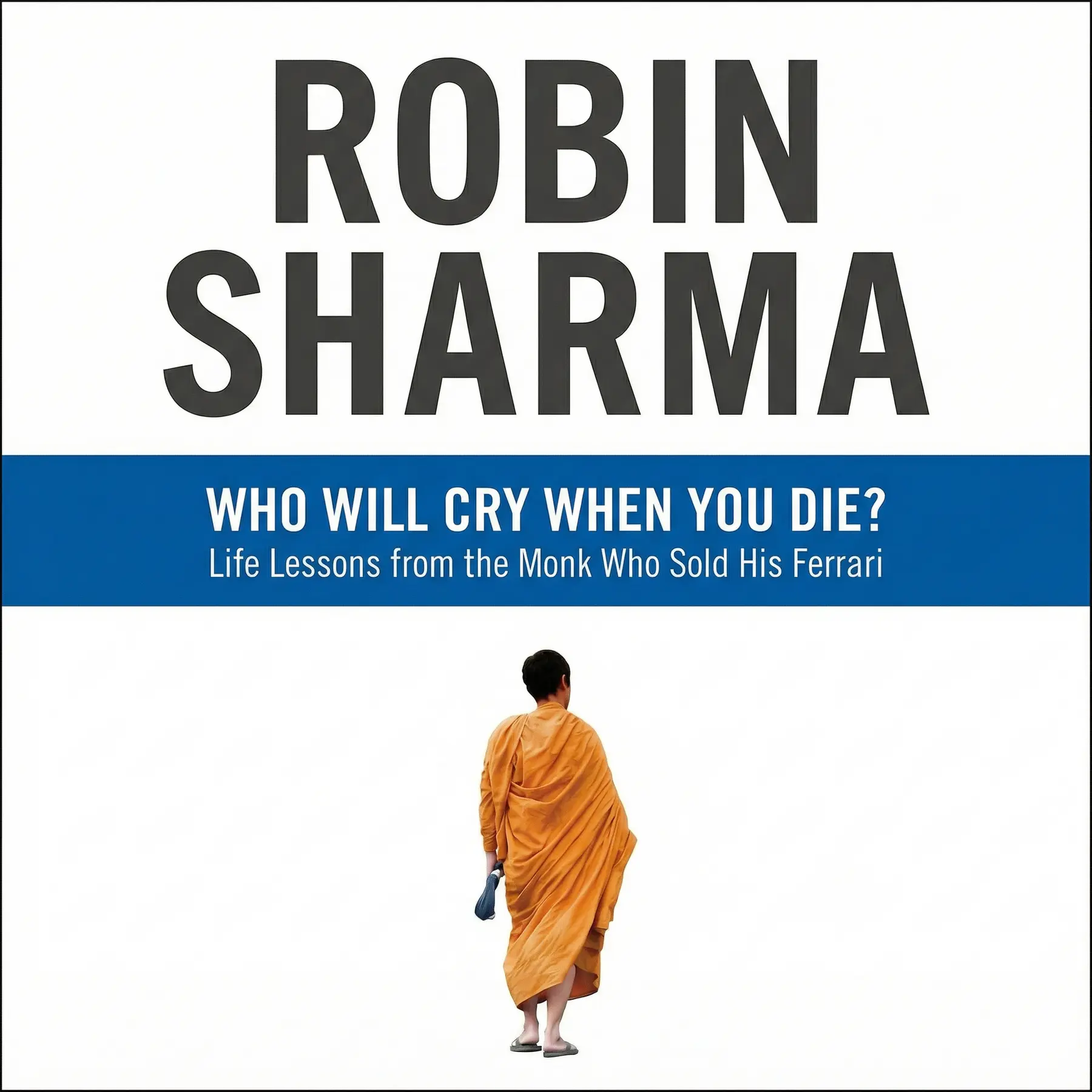
EnglishไทยWho Will Cry When You Die?: Life Lessons from the Monk Who Sold His Ferrari
By Robin Sharma
Robin Sharma's short lessons show how everyday choices add up to a meaningful life that other people would genuinely miss, from keeping small promises and calming your temper to resting well and using your commute.
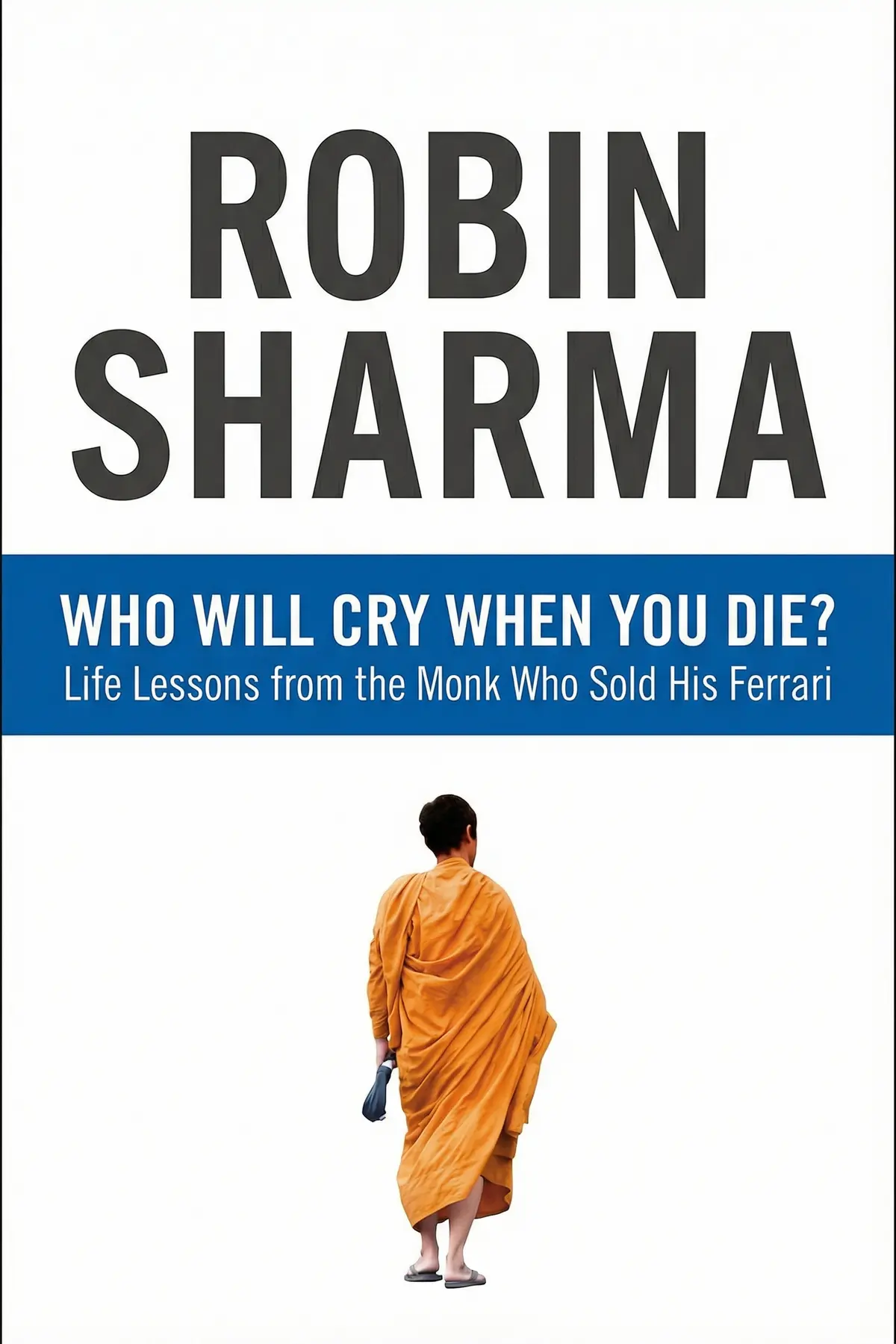
Table of Content
1. Introduction
58 sec
Most busy people measure their lives by the next promotion or a bigger house, and still feel the days slipping past without meaning. In Who Will Cry When You Die?, former litigation lawyer Robin Sharma offers a sharper test: picture your own funeral and ask who would truly mourn you. Your arrival, he notes, was probably met with cries of joy. His hope is that you leave the world so fulfilled that the tears at the end carry joy as well.
Sharma’s case is that such a life grows from ordinary daily choices. How you react to a small insult matters. So does whether you keep a casual promise and what you do with your commute or a flash of anger. Each lesson ahead is one of those choices, paired with a way to practice it this week, from counting to a hundred before you reply to booking hours of rest as firmly as any meeting.
2. Stop taking small slights personally
1 min 32 sec
A closing elevator door can ruin a whole morning if you let it. A famous physicist offered a way to see such moments that makes them almost impossible to stay angry about.
3. Become someone whose word people trust
1 min 23 sec
Almost everyone has offered to lend a book over dinner and then forgotten all about it. Sharma sees real damage in these harmless-looking habits, and he suggests a one-week experiment to test yourself.
4. Turn failure into your best teacher
1 min 33 sec
Fear of failing can cost you the career you once dreamed of. Sharma noticed something unexpected about people who had been through the worst, and it changes how a setback might look to you.
5. Protect focus and schedule real rest
1 min 48 sec
A Chinese king expected a mystical answer when he asked a master sword-maker about his skill. What he heard instead, and what Michael Jordan never did himself, says a lot about where your energy goes.
6. Get your joy and energy back
1 min 32 sec
Children who pick the soft middle out of their bread drive parents mad. Sharma thinks they know something adults forget, and a large study of university graduates adds a striking number about time and health.
7. Measure growth by who you become along the way
1 min 42 sec
Passing a driving test feels like the whole achievement. Sharma argues the real prize lies somewhere else, and his own embarrassing replay of a television appearance shows how to find it.
8. Win back hours from temper and commute
1 min 59 sec
Everyone says they have no time, yet hours vanish every week in ways few people notice. Sharma points to two big leaks, one inside your head and one on your way to work.
9. Trade complaints for contributions others will miss
1 min 39 sec
Griping about the economy or pollution feels like doing something. Sharma suggests a small first step that makes complaining look pointless, and he explains why society values some professionals so highly.
10. Conclusion
1 min 10 sec
Sharma’s title works like a mirror. If you suspect few people would miss you, he sees it as a signal to start changing, and the changes he asks for are modest. None of them needs a new career or a heroic act. They ask for patience with a stranger at an elevator, a promise kept when nobody is checking, a calm count to a hundred, and an hour on the treadmill that may return three. The best version of you, he argues, grows out of habits like these on its own, when you treasure your time, pursue what matters, keep room for fun and enjoy life as it happens.
A good place to start is the journal he recommends. Each evening, write down what happened and how the weaker moments could have gone better. That record shows your strengths and weak spots, which Sharma treats as the condition for any real change. Then put two quiet hours of rest into the coming week and guard them like an important meeting.
Your first cry was met with joy. Sharma’s book is an argument for earning that same sound at the very end.
About this book
What is this book about?
Many busy people chase the next promotion, the bigger house or the newer car, yet still feel their days rushing past without much meaning. Robin Sharma asks them to try a harder test: imagine your own funeral and ask who would really cry. His answer to that test is practical. A life worth mourning does not depend on dramatic sacrifice. It grows from small, repeatable choices. Sharma draws on Stephen Hawking's view of our tiny planet, an old Chinese tale of a sword-maker, Michael Jordan's simple job description, a Harvard study of 18,000 graduates and his own struggle with speaking too fast on television. Each one carries a rule for daily life: keep perspective, keep your word, treat failure as a teacher, focus on what is essential, book regular rest, enjoy life like a child, look after your body, and count to a hundred before you answer in anger. Readers get a set of habits they can start this week: a log of small lies, short weekly sabbaticals, a better use of the commute, a nightly journal, and a clear idea of the value they can add to other people's lives.
Book Information
Who it's for
Busy professionals wanting meaning
Busy professionals who feel their days racing by and want a simple daily code for a more meaningful life.
Losing friendships to anger
People who lose time and friendships to anger, broken promises or constant complaining.
Wanting small practical habits
Anyone who wants practical small habits for rest, health and self-awareness rather than a dramatic overhaul.
About the Author
Robin Sharma
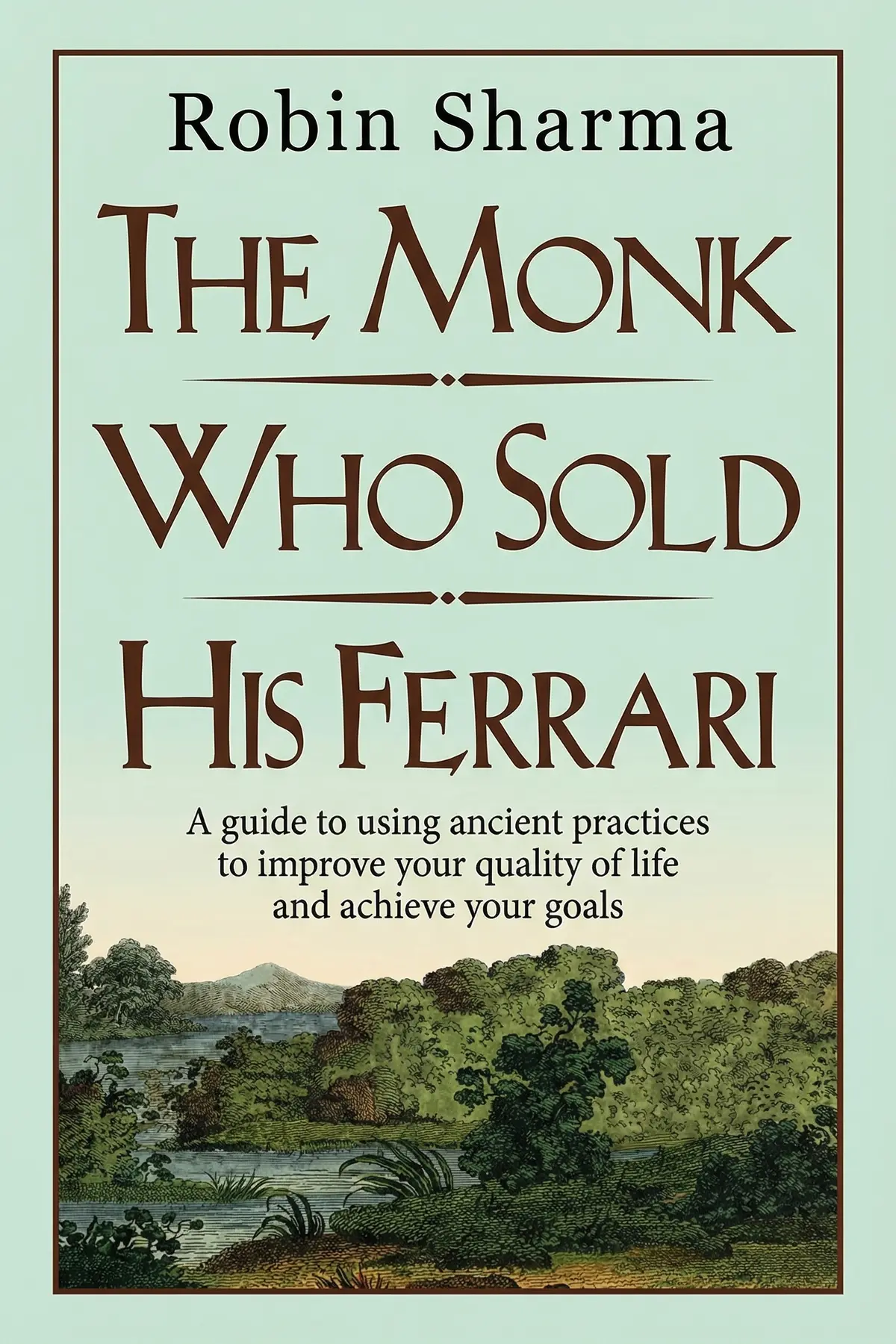
Robin Sharma worked as a litigation lawyer until the age of 25. In 1994 he self-published MegaLiving, a book on stress management and spirituality. The Monk Who Sold His Ferrari also started out self-published before HarperCollins took over its wider distribution. Sharma founded the training company Sharma Leadership International and works as a keynote speaker, with appearances at events for large companies including Microsoft, FedEx and IBM.
Ratings & Reviews
Ratings at a glance
What people think
Listeners consider this an outstanding listen, featuring accessible and practical insights that guide people toward a more joyful existence. The writing is well-regarded, with one listener noting that the style carries a "powerful punch." Furthermore, listeners value the inclusion of many pertinent quotes and the author's overall excellence, with one listener specifically pointing out the significance of utilizing God-given talents.
Top reviews
Wichai
This book hits with considerable force in such a compact format. While some might find the 101 short chapters a bit overwhelming at first, the bite-sized nature of the lessons makes it incredibly easy to digest one per day. Sharma has a way of taking complex life philosophies and distilling them into practical wisdom that anyone can apply immediately. I particularly loved the focus on using our innate gifts to serve others, which felt much more grounded than your typical 'get rich' self-help manual. It isn't a deep narrative. Don't expect a story like his previous work. But as a manual for daily living, it excels. Some of the advice on productivity felt a bit dated, yet the core message about living with purpose remains timeless. It’s the kind of read you keep on your nightstand for those moments when you need a quick boost of perspective.
Show morePawinee
Ever wonder why we spend so much time on the mundane instead of focusing on our true purpose? This book asks that question on every page and provides 101 actionable answers that are both simple and profound. Sharma’s writing is exceptionally reader-friendly, making it a perfect choice for those who claim they don’t have time to read. I loved the emphasis on seeing every person who enters your life as a teacher with a unique story to tell. It’s a perspective that completely changes how you navigate a busy workday or a crowded commute. My only gripe is that it can feel a bit like a collection of social media posts rather than a cohesive book, but the quality of the insights is top-notch. It truly encourages you to use your natural-born abilities to leave a legacy, ensuring that your life isn't just a mechanical routine. A must-read for anyone looking to find more joy in the small things.
Show moreLuke
The chapter on loving your work really hit home because it emphasizes that fulfilment comes from how you think about your daily tasks. This book is incredibly reader-friendly and manages to communicate vital life lessons without being overly academic or dry. Sharma encourages us to die with fulfillment rather than regret, which is a powerful motivator for changing small habits today. I found his simple language to be an asset, as it makes the wisdom accessible to people from all walks of life. I’ll admit that some of the suggestions felt a little 'old school,' but the core values of integrity and hard work are never out of style. It’s the type of book that insists you stop worrying about who will cry at your funeral and start focusing on being happy now. Truly a powerful read for those who feel like they are just going through the motions.
Show moreNora
Picked this up after reading The Monk Who Sold His Ferrari and found it to be a more practical, bite-sized companion to Sharma’s earlier philosophy. Instead of a fictional narrative, we get a direct list of 101 ways to improve our lives, ranging from waking up early to practicing silence. Not gonna lie, some of the chapters feel like filler or are a bit repetitive if you’ve read a lot of motivational literature, but the overall impact is undeniably positive. The writing style is crisp. He doesn't waste words. I appreciate that in a world of 300-page books that could have been emails. It’s like a shot of espresso for the soul—quick, intense, and effective at getting you moving. I didn't agree with every single tip, especially the stuff about constant productivity, but the gems in here are worth the price of admission. It’s a solid guide for anyone feeling stuck in a mechanical routine.
Show moreGift
After hearing so much buzz about Robin Sharma, I finally dove into this collection of life reflections. The truth is, it’s like a mental bath—you need it regularly to stay fresh and motivated. Each chapter is only a couple of pages long, which is perfect for someone with a busy schedule who needs an impactful delivery of inspiration. I found the chapter on loving your work particularly insightful because it shifts the focus from the job title to the mindset behind the labor. While some of the advice feels very rooted in a specific cultural context that might seem obvious to some, the global appeal is clear. It’s about slowing down and making sure you aren't just busy, but actually productive in ways that matter. I did find a few sections a bit repetitive, as if the author was trying to hit a specific chapter count. Regardless, it remains a great resource for personal growth.
Show moreSaranya
Finally got around to finishing this, and I can say it really helped me reframe my mindset during a particularly rough patch. There’s something about Sharma’s voice that is incredibly comforting yet firm, like a mentor nudging you to do better. He doesn't sugarcoat the fact that a fulfilling life requires discipline and the willingness to make hard decisions. The structure of the book, with its 100+ tiny chapters, allowed me to pick it up whenever I had five minutes to spare. Personally, I think the advice on optimizing your commute was a bit much—sometimes we just need to be bored!—but the rest of the tips are gold. It’s a very practical guide that focuses on the 'how' of living well rather than just the 'why.' If you’re having a bad day, just opening to a random page can give you the push you need to keep going. It’s not a masterpiece of literature, but it’s an effective tool.
Show moreEvelyn
Honestly, I was skeptical about another self-help book, but Robin Sharma’s writing has a way of cutting through the noise. Unlike some authors who hide behind jargon, he uses straightforward anecdotes and practical tips that feel immediately applicable. I've been trying to incorporate at least five of these chapters into my daily routine, and the difference in my stress levels is noticeable. The book is essentially a collection of 101 wisdoms that remind us to use our inherent potential rather than letting it go to waste. To be fair, if you’ve read 'The Monk Who Sold His Ferrari,' some of this will feel like a retread of the same ground. However, the format here is much more 'get to the point,' which I prefer for daily motivation. It’s an excellent read for anyone who needs a reminder to prioritize their well-being in a mechanical world. I’d recommend it to anyone looking for a quick, impactful boost.
Show moreRodrigo
To be fair, much of what Robin Sharma shares here feels like intuitive logic packaged in a very accessible way. If you are already a student of philosophy or a heavy reader of the genre, you might find the 'lessons' a bit too basic or even obvious. However, the beauty lies in the simplicity and the way he uses powerful quotes to anchor each short chapter. It’s not a book you read once; it’s more of a checklist for a fulfilling life that you glance at when you’ve lost your way. I found the tone a bit preachy at times, and the frequent references to his own success can be a bit grating for some readers. But frankly, the reminder to 'eat the frog' and focus on the things that truly matter is something we all need to hear periodically. It’s a good entry-level book for those who have a hectic lifestyle and need a quick reset without getting bogged down in dense theory.
Show moreKoi
Look, if you’re searching for a complex philosophical treatise on the meaning of mortality, this isn't it. This is punchy, down-to-earth advice designed for the modern world where everyone is too busy to breathe. The chapters are built around great quotations, which I found to be a nice touch, even if the writing sometimes felt like it was just filler for those quotes. I appreciated the reminder to stop complaining and start living, especially the 'eat the frog' concept which has actually helped my morning productivity. Some might say it’s a bit too simple, but isn't that the point? We often overcomplicate our problems, and Sharma strips them back to the basics of human virtue and kindness. I gave it three stars because while it's helpful, it does feel a bit repetitive by the time you reach the halfway mark. It’s a good book to keep in your bag for quick bursts of motivation.
Show moreErn
Not what I expected, as it felt less like a cohesive book and more like a long, repetitive checklist of things I already knew. Perhaps it is because I grew up in a culture where these values are taught from childhood, but I found many of the 'revelations' to be incredibly basic. It’s the kind of book that gives you a quick emotional high, like a beer, but then the effect fades once you face real-world complexities. Sharma’s writing is simple. That's a plus. But I was hoping for something more thought-provoking or philosophically deep. Instead, it’s a lot of 'stop complaining' and 'be kind,' which is great advice but hardly revolutionary. I also felt like the author spent a bit too much time referencing the success of his previous work, which felt a little self-indulgent. It’s a fine read if you’ve never touched a self-help book before, but seasoned readers might find it shallow.
Show moreQuestions about this book
What is the main idea of Who Will Cry When You Die?
Robin Sharma argues that a life others will truly miss is built from small daily choices. He asks readers to imagine who would cry at their funeral, then offers simple rules: keep perspective, keep your word, learn from failure, focus on what is essential, rest regularly, care for your body, manage time and temper, and contribute to others instead of complaining.
What practical habits does Robin Sharma recommend?
Sharma suggests logging the small lies you tell and then trying a full week of complete honesty. He recommends short weekly sabbaticals of two to three hours, counting to a hundred before replying when someone provokes you, and taking at least 30 minutes to calm down when angry. He also advises using your commute for audiobooks, podcasts, reading or meditation, and keeping a daily journal.
What does Sharma say about exercise and health?
Sharma notes that the ancient Romans saw a healthy body as the basis for a healthy mind. He cites a Harvard University study of 18,000 graduates which found that each hour of exercise added, on average, three hours to a person’s life. He stresses that exercise does not have to be extreme, since a regular treadmill routine already goes a long way.
How does the book suggest dealing with failure?
Sharma sees difficult experiences as the source of life’s best lessons. In his experience, people who survive serious illness often become the happiest and healthiest later on. He urges readers to take risks and live fully, using the example of someone who gives up a dream of becoming a surgeon out of fear. Even failed attempts, he argues, become useful later, often by pointing to a better career path.
Who should read Who Will Cry When You Die?
It suits busy people who feel their days slipping by without meaning, and anyone who wants a short set of everyday rules for living better. Readers struggling with anger, procrastination, broken promises or constant complaining will find concrete fixes, while those chasing goals will find Sharma’s case for valuing the process and the self-awareness it builds.
Readers also enjoyed

59 Seconds: Change Your Life in Under a Minute
Richard Wiseman





A Guide to the Good Life: The Ancient Art of Stoic Joy
William B. Irvine


A High-Performing Mind: Strengthen Your Mind and Live Your Best Life
Andrew D. Thompson


Abundance: The Inner Path to Wealth
Deepak Chopra
AUDIO SUMMARY AVAILABLE
Listen to Who Will Cry When You Die? in 15 minutes
Get the key ideas from Who Will Cry When You Die? by Robin Sharma, plus 5,000+ more nonfiction titles.
- 5,000+ titles
- Listen as much as you want
- 7-day free trial
- Cancel anytime









