

A Promised Land
Barack Obama
 English
John Ganz shows how a recession, a riot and a cast of outsiders broke the Republican consensus in 1992. The losers of that election went on to write the playbook for the populist right that followed.
55 sec
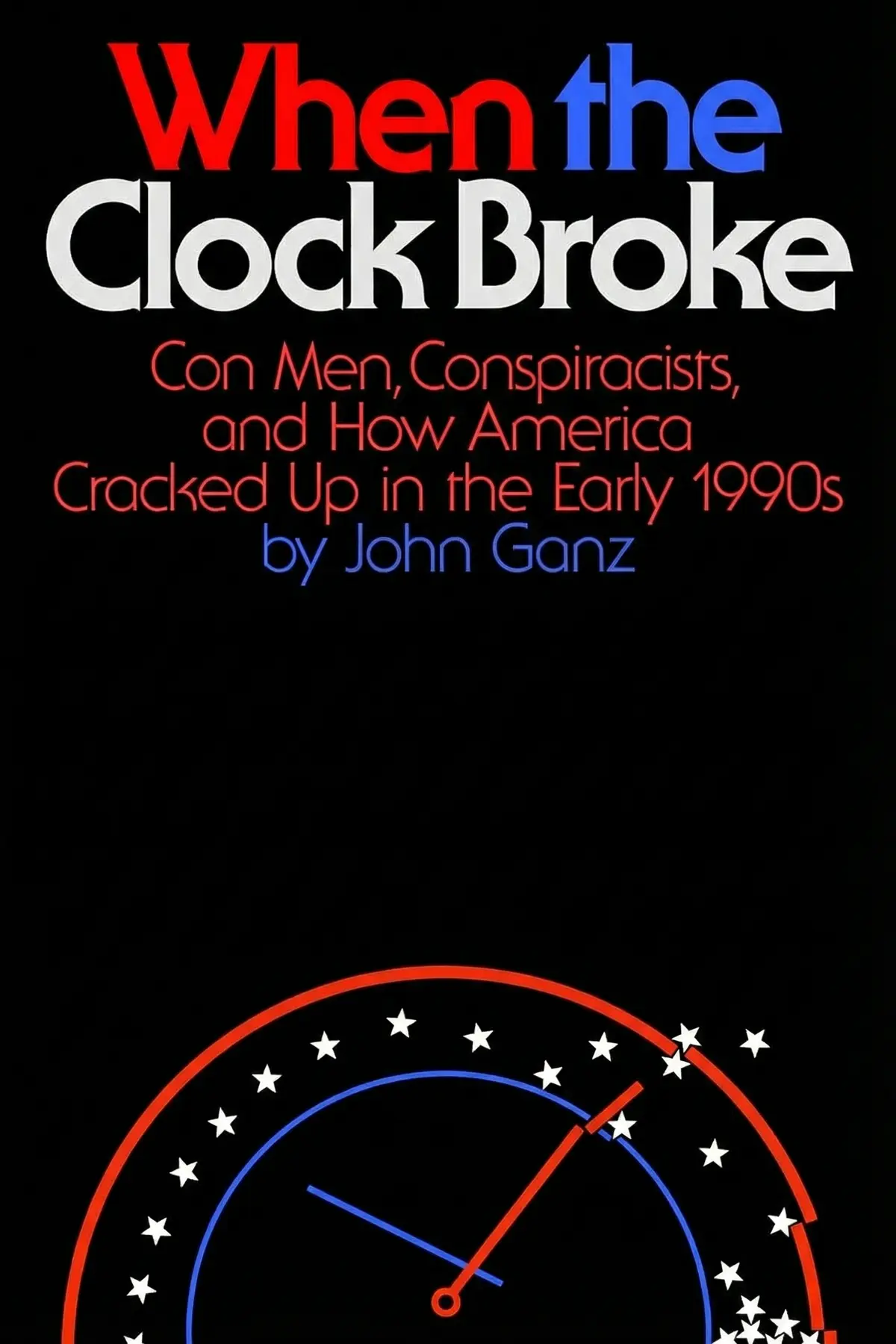
If today’s angry, nationalist politics seems to have come from nowhere, John Ganz gives it a starting date: 1992. In When the Clock Broke, the journalist and historian shows that the movement later tied to Donald Trump was already being built three decades earlier, out of a recession, a riot and a cast of con men and conspiracists. The title comes from libertarian leader Murray Rothbard. He told the new movement that turning back the clock was no longer enough. It was time to break it, along with the New Deal and the Great Society.
Ganz’s throughline is that economic pain and cultural fear let outsiders crack the old Republican consensus in 1992. They lost that election, but they wrote the script the party later followed. Follow the cast, from a former Klan leader in Louisiana to a Texas tech founder on talk shows, and the present starts to sound like a sequel you can recognize.
1 min 51 sec
A former Klan leader won a Louisiana election that his own party’s leaders tried to stop. One newspaper writer who met him afterward saw something the establishment missed, and built a whole political theory on it.
1 min 51 sec
A president who had just won a war watched his approval fall by almost half. The challenger who rose from inside his own party pulled together two groups that almost never agree.
1 min 54 sec
A shy boy from Missouri found his voice behind a microphone, and a Texas businessman found his audience on a talk show. Together they show how isolation, given the right channel, turns into votes.
2 min 07 sec
Incomes at the top soared while most families stood still, and a campaign looked for someone to blame. The blame landed on real people, and then a jury verdict set a whole city alight.
1 min 53 sec
After the riots, one candidate blamed a sitcom, another attacked a rapper, and a third simply walked away. Only one of those moves paid off, and the reason says a lot about modern campaigns.
1 min 56 sec
Nearly a thousand people waved flags outside a mob boss’s trial and called the government their enemy. Two right-wing thinkers watched the same mood and found their political model in a movie.
1 min 56 sec
Clinton won on the economy and a third-party candidate made history, yet the most important plans were made by the losers. A week later, a casino owner was already being cast in the leading role.
1 min 10 sec
In Ganz’s telling, 1992 is the year the economy broke first and the politics followed. Clinton won by naming the money problem, but the energy of that year belonged to people promising something rawer: Duke in Louisiana, Buchanan on the convention stage, Perot on talk shows, Giuliani at the head of an angry crowd of police. Beneath the recession sat a lonely, disaffected middle class that wanted someone to fight for it, and thinkers like Sam Francis and Murray Rothbard were ready to tell it whom to fight.
The book offers a way to read your own moment. When a fringe candidate does surprisingly well, ask what grievance the mainstream is ignoring. When leaders blame a foreign rival or a group of neighbors for hard times, watch who gets hurt. And when crowds cheer a man on trial, or a strongman who promises protection, treat it as a sign that faith in ordinary institutions is running low.
Rothbard said the clock should be broken. In 1992 his side lost the election. They kept the hammer.
Many people date today's angry, nationalist politics to 2016. John Ganz dates it to 1992. That year the economy was sliding, President George H. W. Bush's approval was collapsing, and a new coalition of hard-right conservatives and libertarians decided that defending the old order was no longer enough. In the words of libertarian leader Murray Rothbard, it was time to break the clock. Ganz tells this story through its characters. David Duke was a former Klan leader who won white votes in Louisiana. Pat Buchanan ran an America first campaign against his own party's president. Rush Limbaugh and Ross Perot turned loneliness and talk radio into political force. In Los Angeles, the Rodney King verdict set off riots. In New York, crowds cheered a mob boss on trial, and Rudy Giuliani rode police anger toward the mayor's office. Behind all of them stood writers like Sam Francis, who wanted a cultural revolution on the right. Readers get a clear account of how hard times, media and grievance combined, and why a movement that lost in 1992 still shaped the Republican Party that came after it.
Readers trying to understand where Trump-era populism came from, and why it took hold.
Students and teachers of American politics who want a vivid account of the 1992 election.
Professionals who follow the news and want to recognize early signs of political upheaval.
John Ganz is an American journalist and historian whose writing has appeared in publications including The New Republic and The Washington Post. His work examines how politics, culture and economic change connect, which is the lens he brings to When the Clock Broke. In it he looks at the early 1990s, when recession and cultural conflict reshaped the American right.
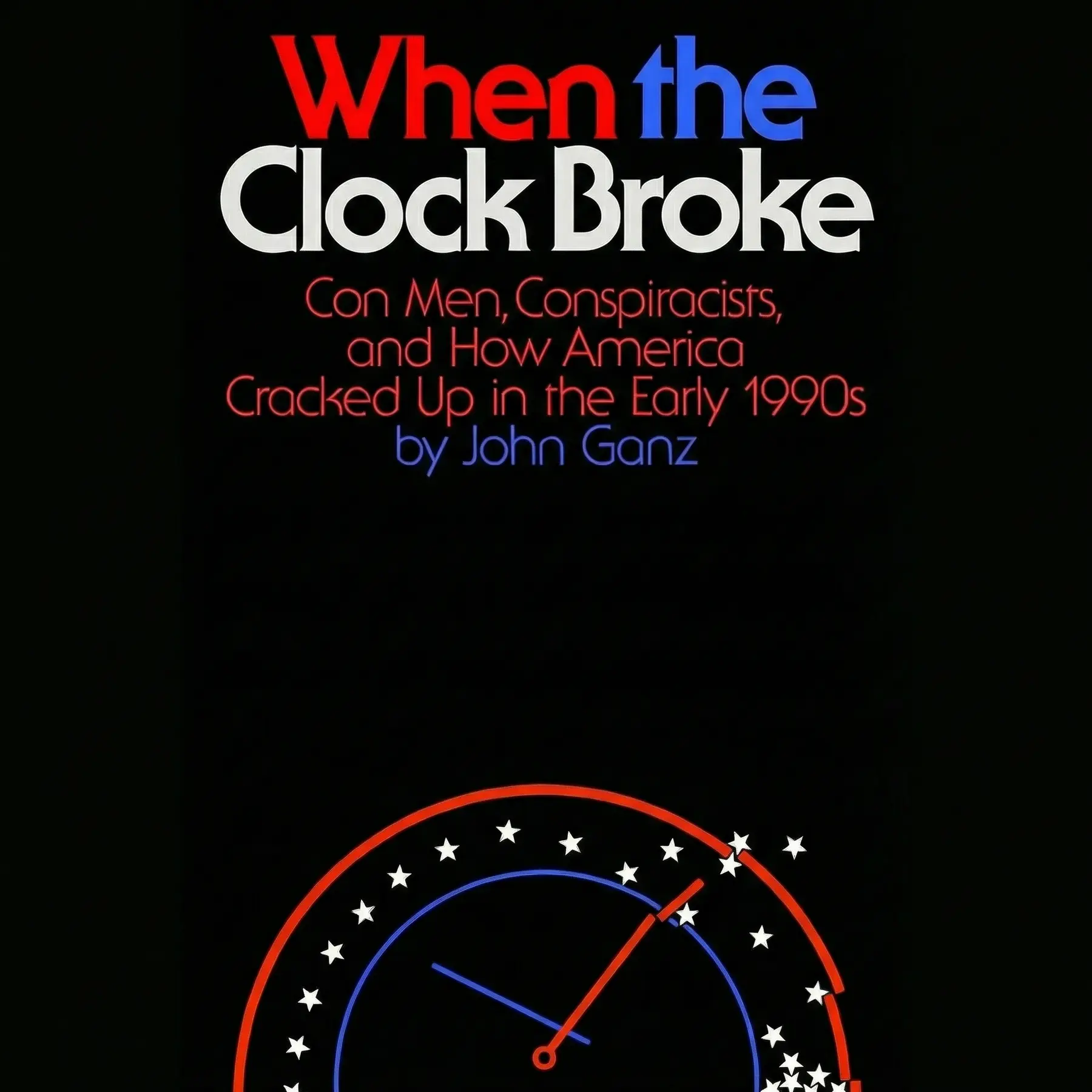
Listeners find the account both engaging and educational, with one listener noting that it provides an exceptional perspective on the social and political shifts of the 1990s. Furthermore, the book is praised for its accessibility and strong craftsmanship, with listeners describing it as brilliantly written.
After hearing Ganz on a few podcasts, I had high expectations, and this didn’t disappoint. He manages to weave together the disparate threads of the early 90s into a coherent, if terrifying, tapestry of how the modern right was born. The section on Pat Buchanan’s 1992 campaign is particularly enlightening, showing how the 'culture war' wasn't just a slogan but a deliberate strategy. Ganz writes with a witty, sharp prose that makes dense political theory feel like a page-turner. It’s a brilliant look at the losers of history who actually ended up winning the long game. My only gripe is that it can feel a bit NYC-centric at times, but the L.A. and Louisiana chapters balance it out.
Show moreWow, what a wild ride through the so-called Bozosphere. I wasn’t expecting a history book to be this entertaining, but Ganz treats the figures of the 90s like characters in a prestige drama. Seeing the early links between Rudy Giuliani, John Gotti, and a younger Donald Trump was eye-opening and deeply relevant to everything happening now. The way the author connects the Ruby Ridge incident to a broader loss of trust in government is masterful. It’s rare to find a book that balances deep intellectualism with such a readable, almost cinematic style. If you want to understand the seeds of the current conservative movement, this is required reading.
Show moreThe chapter on David Duke alone is worth the price of admission for its sheer insight into American populist anger. Ganz doesn't just recount facts; he builds a forensic analysis of how the Republican party began to cannibalize itself from the right. I loved the focus on the 'losers' of history because, as it turns out, their ideas are the ones currently running the show. The prose is smooth, blending erudition with a biting wit that kept me engaged through some pretty grim subject matter. It’s a vital contribution to our understanding of the 'culture war' and its origins in the post-Cold War vacuum. Definitely one of the most important history books I’ve read this year.
Show moreFinally got around to reading this and it’s an absolute banger of a history book. The way Ganz frames the 1990s as a period of 'breaking the clock' of the New Deal and the Great Society is genius. I was fascinated by the story of the Weaver family at Ruby Ridge and how it fueled a specific brand of anti-government rage that still exists today. The book is witty, fast-paced, and filled with the kind of 'wait, that really happened?' details that I love in narrative non-fiction. It’s a brilliant inquiry into the 'Bozosphere' that gave us our current political reality. Highly recommended for anyone who likes their history with a side of sharp social commentary.
Show moreThis book is essentially an autopsy of the American Dream's slow decay in the early nineties, and it's fascinating. I was particularly struck by the focus on the 'fearsome toad' Sam Francis; it’s a name I hadn't heard much, but his influence on paleoconservatism is undeniable. Ganz has a knack for highlighting the foibles of these politicians without making them into caricatures. The parallels between the 1992 election and our current landscape are startling, especially regarding the populist anger fueled by economic instability. At times the book gets a bit bogged down in the minutiae of New York City police politics, but it recovers quickly. It’s a solid, erudite piece of history that explains the roots of our 'cold civil war' quite effectively.
Show moreAs someone who came of age during the Bush senior years, reading this felt like looking at old family photos through a much darker lens. Ganz does an incredible job of showing how the seeds of our current political divisions were planted during the 1992 election cycle. The analysis of David Duke’s 'bulletproof' campaign was particularly chilling, showing how he used white grievance as a political tool. The book is well-researched and avoids being dry, though I did find some of the theoretical sections on libertarianism a bit dense. Still, the way he weaves together cultural, social, and economic threads is impressive. It’s an enlightening, albeit sobering, look at how the 'clock' of social democracy began to break.
Show moreEver wonder how we actually got to where we are today? Ganz provides a brilliant view of the 1990s that makes our current 'unprecedented' era look very precedented indeed. I was particularly interested in the sections on the NYC police riots and how Rudy Giuliani used that chaos to build his brand. It’s a smooth blend of political analysis and cultural history that avoids being too academic or too superficial. My only real complaint is that I wanted more on the fallout after 1992, as the book ends somewhat abruptly. Still, the depth of knowledge on display here is staggering. It’s a great piece of near-past history writing that feels incredibly timely.
Show moreI really wanted to love this, but frankly, it felt like a lot of information I had already processed elsewhere. While Ganz makes a compelling case for Louisiana being a bellwether for our current national sickness, I found the narrative a bit disjointed. He covers characters like David Duke and Ross Perot with great detail, yet the connections to today are sometimes left so implicit they feel vague. To be fair, the writing is high-quality and there’s a lot of deep-cut research here. If you aren't familiar with figures like Murray Rothbard, you’ll likely get more out of it than I did. It’s an okay read, just not the revelation I was hoping for.
Show moreThere is no denying that Ganz is a brilliant writer, but this book felt a bit like a collection of very long blog posts. I enjoyed the individual chapters on people like Ross Perot and Rush Limbaugh, but the overarching thesis felt a little buried under the sheer volume of characters. It’s a thorough inquiry, almost too thorough, and I found myself losing the thread during the deep dives into 19th-century Louisiana history. Not gonna lie, it’s a bit of a slog if you aren’t already obsessed with political theory or the specific era. However, his ability to draw parallels between the early 90s recession and our modern economy is sharp. A decent read, but it requires a lot of patience.
Show moreLook, I found this book deeply depressing, which I suppose is the point. It highlights how we as a society seem to keep making the same mistakes and falling for the same populist conmen over and over. While the writing is excellent and Ganz clearly knows his stuff, I felt like the book confirmed my worst fears rather than offering new insights. The connections between the 1992 election and the 2016 election are undeniable, but I’m not sure we needed 400 pages to prove it. Personally, I found the chapters on Murray Rothbard and the Paleolibertarians to be the most unique part of the book. It’s a well-made work, but it left me feeling quite cynical about the future.
Show moreIt covers the early 1990s, especially the 1992 presidential election, as the moment the American right began to break with the Reagan and Bush style of conservatism. Ganz follows figures like David Duke, Pat Buchanan, Ross Perot, Rush Limbaugh and Rudy Giuliani, and writers like Sam Francis and Murray Rothbard. Together, he argues, they planted the populist, nationalist politics that later shaped the party of Donald Trump.
It comes from libertarian leader Murray Rothbard, speaking to the new right-wing coalition in the early 1990s. He told them that the time for trying to turn back the clock was over and that the clock itself should now be broken, along with social democrats, the New Deal and the Great Society. The phrase captures the movement’s aim of tearing down the postwar order rather than restoring it.
Middle American Radicals, or MARs, was Sam Francis’s term for white, lower-middle-class Americans he saw as the nation’s true backbone. As he saw it, they were weary of being condescended to by the wealthy and weighed down by policies that favored minorities. Francis believed they could power a new political force that would overthrow the elites, and Pat Buchanan’s 1992 campaign spoke directly to them.
Clinton won with 43 percent, but Perot took 18.9 percent, the biggest third-party share since 1912, and Buchanan had pushed the Republican Party toward a darker, angrier message. After the vote, Sam Francis called for a grassroots conservative counterculture built on charged cultural issues. Ganz shows that the losers of 1992 shaped the party’s future more than the winner did.
The book suggests watching fringe victories as early warnings, since Duke’s results in Louisiana foreshadowed Buchanan. It shows how scapegoating a foreign rival, as Buchanan did with Japan, can fuel real violence. And it shows how talk radio and outsider candidates turned loneliness and economic pain into political energy that outlasted a single election.
Barack Obama


Masaji Ishikawa

William J. Bernstein

John Rawls

Ben Macintyre




James Shapiro
AUDIO SUMMARY AVAILABLE
Get the key ideas from When the Clock Broke by John Ganz, plus 5,000+ more nonfiction titles.









