

59 Seconds: Change Your Life in Under a Minute
Richard Wiseman
 English
Shows how to meet constant change by building a future-ready mindset: small daily experiments, a habit of chasing better instead of perfect, reframing problems as questions, and real openness to people and new ideas.
1 min 02 sec
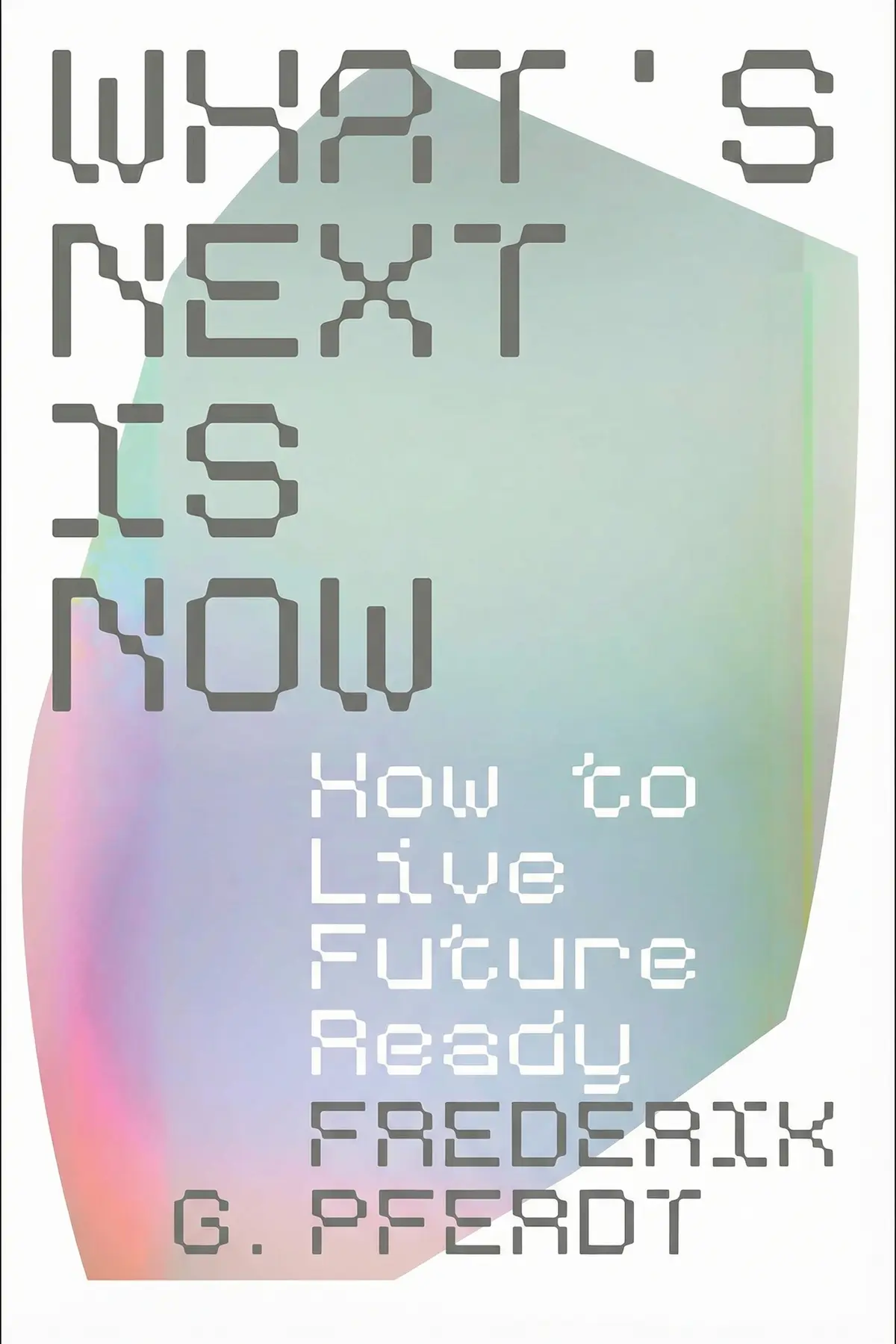
Change can feel like weather that simply happens to you, a storm to wait out while you hope the roof holds. In What’s Next Is Now, Frederik Pferdt, who held the title of first Chief Innovation Evangelist at Google, argues the opposite: the future is made, mostly by small choices you make today. He learned that lesson with a wildfire closing in on his family’s home.
His book describes a way of meeting uncertainty that he calls a future-ready mindstate, built from openness, curiosity, experimentation, empathy and a stubborn kind of optimism. The idea that runs through all of it is easy to carry around: you get ready for an unknown future by practicing, in small daily moves, the habits that turn surprises into chances.
What follows are those moves, from noticing new things on a commute to chasing better instead of perfect, sharing half-formed ideas and seeking out people who disagree with you. Each one is something to try before the week is out.
1 min 37 sec
A family spends eleven days in a camper van while a wildfire moves toward their house. What they packed mattered less than a decision they made about how to spend those days of waiting.
1 min 51 sec
Pferdt compares the right attitude toward change to a jazz musician and to an athlete who refuses to train only one muscle. The everyday tool he recommends starts somewhere surprisingly ordinary.
1 min 35 sec
Science fiction trains us to picture the future as a distant spectacle. Pferdt proposes a much closer picture, and a single question that can get a long-postponed dream moving this week.
1 min 45 sec
Settling for good enough leaves you stuck, and holding out for perfect leaves you stuck too. Pferdt describes a third target, and a way of rewording problems that turns complaints into plans.
1 min 22 sec
Some people shrug off a ruined plan while others are thrown by the smallest detour. Pferdt traces the difference to one habit of mind, and it shows up in office arguments as much as in big risks.
1 min 37 sec
A weekly meeting where any employee can question the founders, and a lottery that decides who eats lunch together. Pferdt uses both to show how openness spreads from a company into an ordinary life.
1 min 07 sec
Pferdt’s family came home from the fire with an insight about readiness. The emergency bag by the door mattered, but the more useful thing to pack was a way of seeing. That is the book’s real offer. Uncertainty will keep arriving, sometimes as a wildfire and sometimes as a reorganization at work or a plan that falls apart. What stays in your hands is the next choice, and a set of habits that make the next choice a good one.
None of those habits is grand. A different street on the way to work, a few hundred words written before bed, a problem rewritten as a question about what you could do, an unfinished idea shown to a friend, a novel from a culture you know little about. Each one widens what you notice, and what you notice shapes what you try.
So pick the dream you keep postponing and find the step small enough for today. When a problem refuses to move, turn it into a question. When an idea arrives, share it before it is finished.
The future Pferdt describes sits closer than any forecast. It starts with whatever you decide to do next.
Change keeps arriving, from personal setbacks to global crises, and many people respond by bracing for impact and waiting for stability that never comes. Frederik Pferdt, who helped shape Google's creative culture, argues that the future is made, not simply endured, and that it is made mostly through ordinary choices we make today. His case begins with a wildfire that forced his family from their home in the Santa Cruz Mountains, and the lesson they drew from it: preparation means having a mind ready to turn a setback into an opening. He calls that state of mind future-ready and builds it from openness, curiosity, experimentation, empathy and radical optimism. Readers get practical ways to train each quality: collecting new input on a daily commute, shrinking a big dream to one step for today, reframing a stubborn problem as a question about what they could do, sharing unfinished ideas, and seeking out people who see the world differently. The result is a calmer, more creative way to face whatever comes next.
Professionals worn down by constant change at work who want a calmer, more creative way to respond.
People with a long-postponed goal, such as writing a book or switching careers, who need a way to start small.
Team leads who want rituals that make colleagues more open, honest and willing to share ideas.
Dr. Frederik G. Pferdt calls himself a Future Optimist. He helped shape the creative culture at Google, where he was the company's first Chief Innovation Evangelist, and he has also taught students at Stanford University. His work focuses on helping people develop their creativity so they can imagine and build a better future, the idea at the heart of What's Next Is Now.
Listeners find the book highly insightful, with one person calling it a goldmine of practical tips and another emphasizing its useful system for developing both personally and professionally. The work also garners praise for being inspirational, as one listener explains how it shifted their capacity to live in the moment. Furthermore, listeners value how easy it is to read, its focus on curiosity, and its fresh material, including one mention of the wealth of real-life innovation stories provided. They also appreciate the transparent nature of the writing and the included activities, like the "Best Worst Ideas" exercise.
Wow, this book really shifted my perspective on how to handle uncertainty! I’ve read a lot of business books, but this one feels more human and actionable. The way Frederik describes curiosity as a muscle you have to train is spot on. I found the 'Dimension X' concept to be a brilliant way of thinking about one's unique contribution to a team. The book is packed with true stories that make the abstract concepts feel real. It’s inspiring without being overly 'woo-woo.' I especially loved the emphasis on experimentation and taking small risks. It’s not just about thinking; it’s about doing. This is a treasure trove of advice for anyone who wants to stop fearing the future and start building it. Highly recommended for leaders and creatives alike.
Show moreAfter hearing Frederik speak on a podcast, I had to dive into the full book, and it did not disappoint. It provides a fantastic framework for navigating the constant shifts in our modern world. The sections on optimism and openness were exactly what I needed to hear right now. Most 'futurist' books are scary or overly technical, but this is the opposite—it's empowering. The inclusion of diverse perspectives from his time at Google adds a layer of credibility that many self-help books lack. I found the 'Best Worst Ideas' exercise to be a game-changer for my creative process. It’s a quick read but one that you’ll want to keep on your desk to reference whenever you’re feeling stuck. Truly a great guide for personal and professional evolution.
Show moreFinally got around to reading this and I actually found the exercises quite refreshing, especially the 'Best Worst Ideas' activity. This isn't a book about gadgets or AI; it's about the internal hardware of your mind. Pferdt breaks down the 'future-ready' state into manageable dimensions like empathy and experimentation. I found the section on prototyping small risks particularly helpful for my professional growth. While some of the chapters feel repetitive, the real-world stories about innovation are engaging enough to keep you turning the pages. The book is visually interesting too, with drawings that help highlight key takeaways. It’s a solid guide for anyone feeling stuck in their current routine and looking for a nudge to embrace change. I’ve already started using some of the prompts with my team at work.
Show moreAs someone who struggles with change, Pferdt’s approach to the 'future-ready mindstate' was surprisingly grounded and helpful. I enjoyed the focus on empathy as a tool for innovation because we often forget the human element when talking about the future. The writing style is very accessible—almost like having a conversation with a mentor over coffee. My only gripe is that I wish there were summary bullet points at the end of each chapter. Because the author tends to ramble, it’s easy to lose the thread of the main argument. Still, the core framework is practical. I particularly liked the 'What can I do today to create an opportunity for tomorrow?' mindset. It’s a very encouraging read that focuses on personal agency in an uncertain world.
Show moreIs this groundbreaking? Maybe not for everyone, but it’s definitely a high-quality toolkit for the modern professional. I enjoyed the blend of theory and practice. The book pushes you to move beyond fear and start leveraging opportunities through a specific mindset. I noticed some people complained about the chapter boundaries being fuzzy, and while that’s true, I think it reflects how these traits work in real life. You can't really have experimentation without curiosity, right? The Audible version is also great if you prefer listening. My favorite takeaway was the emphasis on 'reframing' problems. It’s a simple concept but so hard to do in the heat of the moment. Solid four stars for making complex innovation concepts feel accessible to anyone.
Show moreEver wonder why some people just seem to ride the wave of change effortlessly? This book attempts to answer that by breaking down the specific attitudes required to be 'future-ready.' I found the chapter on empathy to be the strongest. It’s rare to see a tech-adjacent book prioritize human connection so highly. The exercises are fun and break up the text well, preventing it from feeling like a dry lecture. While some of the graphs were a bit abstract for my taste, the overall message of the book is powerful. It’s about taking control of your own narrative. I’ve shared several quotes with my family already. It’s a great gift for a recent grad or someone transitioning careers. Definitely worth the time for the 'Best Worst Ideas' section alone!
Show morePicked this up because I was curious about Google’s innovation secrets, but it turned out to be a collection of fairly standard advice. Look, the core message about being open and curious is important, but if you’ve read any self-help in the last decade, you’ve heard most of this before. The writing tends to ramble with anecdotes that don't always land. For instance, the example of the elevator company reframing a speed problem as a boredom problem felt more like basic psychology than 'future-ready' innovation. The book includes various bios of people living 'future ready,' but these stories are sprinkled so far apart that I forgot who was who by the time they reappeared. It’s a decent introductory text for someone new to the genre, but seasoned readers might find it a bit too cliché.
Show moreThe truth is, this book feels like a long list of 'open doors'—concepts like seeking diversity and getting different perspectives that everyone already agrees with. I appreciated the positive energy Frederik brings to the page, and he clearly practices what he preaches. However, the systematic process for becoming future-ready is surprisingly vague. I kept waiting for a breakthrough moment, especially regarding 'Dimension X,' but the exercise to find your 'superpower' was underwhelming compared to established tools like DISC surveys. It’s a quick, light read with some nice quotes to share with colleagues. Does it actually prepare you for the future? I'm not so sure. It’s more of an enlightenment piece than a practical manual. It's okay, but maybe a bit too unfocused for my taste.
Show moreFrankly, I struggled to stay engaged past the first few chapters because it felt a bit repetitive. The author is clearly very talented and has a great track record, but the book relies heavily on cliches like 'be open' and 'say yes.' Personally, I found the chapter on Dimension X to be more confusing than helpful due to the odd diagrams. It felt like the book was trying to be too many things at once: a career guide, a psychology text, and a business memoir. The stories about Google employees were interesting, but they felt disconnected from the actual lessons at times. It’s an easy read with a very positive tone, which I appreciated, but it didn't offer the 'next level' insights I was hoping for. Better for beginners than for those who have already read extensively on innovation.
Show moreNot what I expected based on the author’s prestigious background at Google. While the premise of a 'future-ready mindstate' sounds promising, the execution felt scattered and the organization left a lot to be desired. Specifically, the boundaries between the dimensions like optimism and curiosity are incredibly fuzzy, leading to a lot of overlap that makes the chapters bleed into each other. I found the 'Dimension X' chapter particularly frustrating because of the nonsensical graphs. One graph attempts to plot life milestones, but the x-axis doesn't represent time or any discernible metric, making it impossible to interpret the data meaningfully. To be fair, the tone is casual and optimistic, which makes for an easy read, but it lacks the depth I wanted. It’s essentially a self-help book wrapped in innovation branding. If you are looking for insights into future technology, you should look elsewhere.
Show moreFrederik Pferdt argues that the future is shaped by the everyday choices we make now, not left to futurists and their predictions. To face uncertainty well, he recommends building a future-ready mindstate that combines openness, curiosity, experimentation, empathy and radical optimism. He grounds the idea in his family’s evacuation from a wildfire in the Santa Cruz Mountains in 2020, when they decided their attitude, unlike the fire, was within their control.
Radical optimism is the steady pursuit of better. Pferdt contrasts it with settling for good enough and with chasing perfect, both of which leave people stuck. Radical optimists believe improvement is always possible through repeated small progress. They hold their current ideas loosely because they expect a better one soon, and they meet change with a willingness to say yes rather than with dread.
Start small. Notice five new things on your commute or take a different street. Shrink a big goal to one step, such as writing 200 words a day. Reframe a problem as a question about what you could change, the way someone in a drought might start biking or eating local food. Share rough ideas with a trusted friend and seek out views that challenge yours.
Pferdt points to Google’s weekly TGIF meetings, where employees at any level can ask the founders hard questions directly. In his view, teams become more willing to risk failure, offer ideas and learn from mistakes when their leaders show honesty and vulnerability themselves. He also describes Lunch Lottery, which pairs employees at random for a meal and builds connections across departments that otherwise rarely mix.
Richard Wiseman





William B. Irvine


Andrew D. Thompson


Deepak Chopra
AUDIO SUMMARY AVAILABLE
Get the key ideas from What’s Next Is Now by Frederik Pferdt, plus 5,000+ more nonfiction titles.









