

A Planet of Viruses
Carl Zimmer
 English
A neuroscientist shows how the brain's survival circuits for prediction, thirst, hunger, sleep, fear and fairness drive people into war and decide battles, and how self-knowledge can make conflict rarer and wiser.
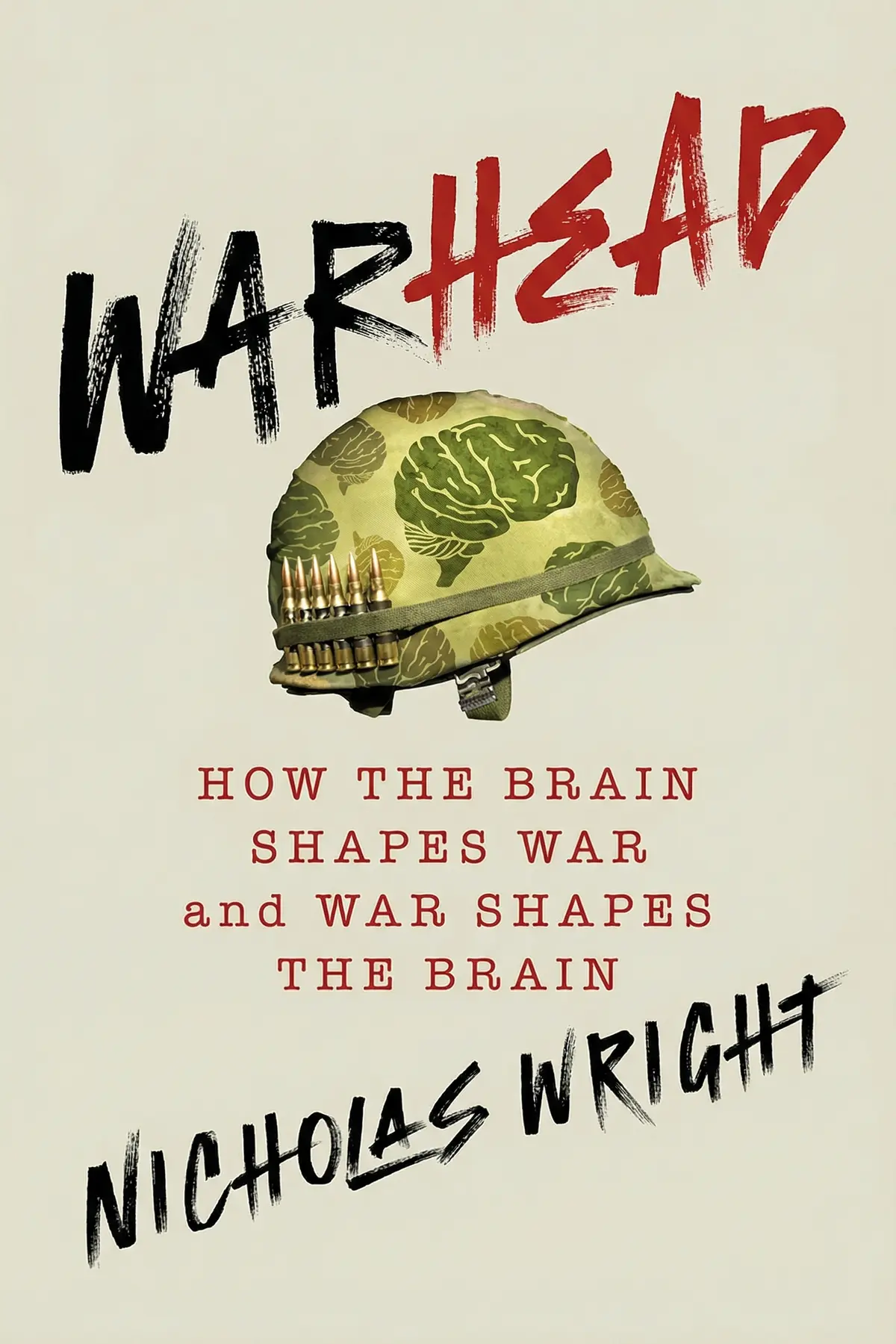
1 min 07 sec
Most of us read about war as something distant, decided by faraway leaders and hard to understand. In Warhead, neuroscientist and Pentagon advisor Nicholas Wright argues that war begins much closer, in the oldest parts of every human brain. When he told friends he was writing about war, they laughed that nobody fought wars anymore. Only months afterward, early in 2022, Ukraine was invaded by Russia, which set off the biggest war in Europe since World War II.
Wright’s case is that the machinery that keeps us alive, the circuits for prediction, thirst, hunger, sleep, family, fear and fairness, also pulls us into conflict and decides who wins it. Understanding that machinery is his route to fewer and wiser wars. Along the way come French commanders in tears in 1940, Athenian soldiers drinking within reach of Spartan troops and a woman who could not feel fear. The reward is a clearer read of the news, and of your own reactions when you feel threatened.
1 min 32 sec
A bird hunting insects and a wounded soldier who feels nothing share the same hidden equipment. Wright starts with it, because it explains why some blows land far harder than their size suggests.
1 min 42 sec
London was bombed in two world wars, and the smaller raids did the deeper damage. A historian’s verdict on the fall of France in 1940 points to the same strange pattern.
1 min 59 sec
Soldiers have walked into enemy fire for a drink of water, and governments have planned famines as strategy. Wright shows which of the body’s basic needs does the most damage to clear thinking.
1 min 45 sec
The hormones that bind parents to children seem like the opposite of war. Wright argues they are part of its fuel, and that one small brain region also helps explain who usually does the fighting.
1 min 55 sec
A woman who could not feel fear was far from safe, and an army that felt too much of it committed one of history’s worst crimes. The difference lies in how emotion is managed.
1 min 33 sec
Given a choice between a bad deal and nothing, people often choose nothing. That stubborn reflex looks like a matter of principle, yet Wright traces it somewhere far older, with consequences that reach whole nations.
1 min 40 sec
Wright puts a sobering number on the odds of another world-scale catastrophe within a generation. Yet he insists he is an optimist, and his reason lies in a small region at the very front of the brain.
1 min 13 sec
Warhead adds up to an uncomfortable but useful picture. The brain that wages war is not a special organ reserved for generals and dictators. It is the ordinary brain, the one that forecasts the next moment, needs water and sleep, guards its children, feels fear and refuses a bad deal. Those same circuits help explain why a sudden German strike broke the French army in 1940, and why hungry, exhausted soldiers in Nanjing crossed into atrocity.
Wright’s hope rests on that same organ. Because we can think about our own thinking, we can learn why we fight, and leaders can behave more like Churchill and Eisenhower than like men who lose control.
The knowledge works in smaller conflicts too. When a surprise lands hard, recognize it as a broken prediction and give your brain time to update. Before a decision with high stakes, take care of hunger, thirst and sleep first. And when anger rises, ask whether you feel cornered or treated unfairly, then let the slower part of the brain have its say.
War may never disappear, Wright argues, but a species that understands its own brain can choose its fights with far more wisdom.
When Nicholas Wright began writing about war, his friends laughed that nobody fought wars anymore. Months later, Russia invaded Ukraine. Wright, a neuroscientist who advises the Pentagon, argues that conflict will stay possible because it grows out of human nature, and specifically out of the oldest parts of the brain. He takes the reader through those parts in turn. The brainstem builds models of the world and learns from failed predictions, which helps explain why surprise attacks such as the Blitzkrieg of 1940 broke an entire army. The hypothalamus manages thirst, hunger, sleep, warmth and reproduction, drives that armies must protect and that enemies have turned into weapons. The amygdala handles fear, which can save a life or, with rage, end in atrocities like the Nanjing Massacre. A deep biological rejection of unfairness has fueled revolutions. Wright expects more wars, yet he is hopeful. The same brain can think about its own thinking, and leaders who used that capacity, like Churchill and Eisenhower, fought with restraint as well as force. Readers get a clear map of the instincts behind war and a sharper sense of their own reactions under threat.
Readers who follow the news from Ukraine and beyond and want to understand why wars keep happening.
Managers and team leads who handle pressure, bad news and conflict and want to know how fear, fatigue and unfairness shape reactions.
Students of history, politics or neuroscience looking for a bridge between the two.
Nicholas Wright is a neuroscientist who researches at University College London and Georgetown University and works at the Center for Strategic and International Studies in Washington DC. He advises the Pentagon Joint Staff and works with governments and the private sector. Before that he practiced as a neurologist in London and Oxford. His research has been covered by the BBC and the New York Times, and he writes for Foreign Affairs, Foreign Policy, the Atlantic and Slate.

Listeners find this a stimulating examination of how neuroscience overlaps with military history. Although views on the book’s structure differ—specifically, some listeners believe the shifts from brain biology to historical stories are occasionally sudden—the majority value the author's deep background as both a neuroscientist and a Pentagon advisor. Furthermore, the wide-ranging examples, from the Battle of Waterloo to contemporary global politics, are often cited as a significant highlight. They also remark that the work provides deep perspectives on human choices, with one listener noting it successfully reframes warfare as an extension of our neural architecture rather than just an external event.
The chapter on the brain stem and how it connects to our survival instincts in combat was absolutely mind-blowing. I’ve always viewed warfare as a matter of politics and logistics, but Wright makes a compelling case that it’s actually a matter of biology and decision-making. Seeing the parallels between a rat’s defensive reaction and a soldier’s response to trauma provided a visceral perspective I hadn't considered before. This book isn't just for military buffs; it's a deep dive into what makes us human and why we struggle so much with conflict. The writing is clear, authoritative, and surprisingly accessible for such a complex subject. Frankly, it changed how I look at the news every night. I highly recommend it for anyone who wants to understand the 'why' behind the world's most violent events. It is a true five-star achievement.
Show morePicked this up during a long commute and ended up finishing the audiobook in record time because the content was so engaging. Nicholas Wright has a way of making high-level neuroscience feel personal, especially when discussing how war shapes the brain over generations. As someone with family in the military, the sections on how we build trust—and how easily it breaks—really resonated with me. It’s not just a book about combat; it’s a book about the fragile institutions we build to keep our darker impulses in check. The metaphor of the rat in the corner chasing its pursuer stuck with me as a perfect illustration of trauma. This is essential reading for anyone trying to make sense of why humanity keeps repeating its mistakes. Powerful stuff.
Show moreFinally got around to reading this, and I’m honestly impressed by the breadth of knowledge Wright brings to the table. Most books on war focus on the weapons or the generals, but this focuses on the organ that controls both. The way he links the biological capacity for reconciliation to the need for better international diplomacy was a highlight for me. It’s rare to find a book that is this grounded in hard science while remaining so deeply humane and optimistic about our future. Some might find the lack of a singular, driving thesis frustrating, but I enjoyed the wandering journey through psychology and history. A truly fascinating read that I've already recommended to several friends who work in policy. Five stars for the ambition alone.
Show moreNicholas Wright’s expertise as a Pentagon advisor really shines through in the way he dissects military strategy through a biological lens. It’s a fascinating look at how our neural architecture influences everything from the Battle of Waterloo to modern-day tensions in the Taiwan Strait. I found the discussion on why France collapsed in WWII particularly gripping, as it challenges the traditional view of firepower versus tactics. While the transitions between the hard neuroscience and historical anecdotes are sometimes a bit jarring, the core argument is incredibly persuasive. It reframes war not as some external catastrophe, but as an inevitable output of how our brains are wired. If you enjoy books that bridge the gap between science and history, this is a solid choice. Just be prepared for some heavy lifting when the technical jargon starts flying. It is a dense but rewarding read.
Show moreAs a history buff, I found the way this book re-examines the Red Army and Churchill's decision-making through neuroscience to be quite fresh. We often attribute military success to "instinct," but Wright breaks down exactly what those instincts look like in the prefrontal cortex. It’s a thought-provoking exploration that makes you realize how much our biological limitations shape our national security policies. There are moments where the science feels a bit dense, and I did feel the author glossed over certain historical nuances to fit his model. However, the overall impact is strong and the section on how we can potentially use this knowledge to foster peace was surprisingly optimistic. It’s a heavy read, but one that pays off if you’re willing to sit with the complexity and the occasional academic dry spell.
Show moreAfter hearing about Wright’s work with the Pentagon, I had high expectations for "Warhead," and for the most part, it delivered. The exploration of how our brains process surprise and shock during an invasion is terrifyingly relevant in today’s world. I particularly appreciated the discussion on how different cultures, like China, perceive threats and how that’s rooted in collective neural processing. Some of the transitions are definitely abrupt, and you might find yourself re-reading sections to find the thread of the argument. But the insights into human behavior and the future of conflict are too good to pass up. It's a gritty, intellectual look at the most dangerous part of our anatomy. Definitely worth the time if you're interested in global strategy.
Show moreEver wonder why some armies fail despite having every tactical advantage? This book argues that the answer lies in the cognitive models leaders use to navigate high-stress environments. Wright does an excellent job explaining how uncertainty can hijack our circuitry, leading to the kind of catastrophic miscalculations we saw in WWII. The structure is unique, moving from basic brain functions up to complex social behaviors, which helps ground the theory. My only gripe is that it can be a bit repetitive in its "brain-as-a-weapon" theme. Still, it’s an ambitious project that offers plenty of "aha!" moments for curious readers. It’s definitely not your typical military history book, and I learned more than I expected.
Show moreTo be fair, I expected a more traditional "war stories" book, but what I got was a sophisticated look at the intersection of biology and strategy. The author's background as a doctor and advisor gives him a unique vantage point that you don't often see in the genre. I loved the case study on Shaka Zulu and how it contrasted with modern wargaming at the Pentagon. It’s a lot to process, and the formatting could be a bit cleaner to help the reader navigate the dense information. But the insights into how we "model" the world—and how war shatters those models—are worth the effort. It’s a dense, rewarding challenge that will leave you thinking long after the final page.
Show moreI really wanted to like this, especially given the author’s credentials, but the lack of organization made it a chore to finish. One minute we’re talking about neurotransmitters and the next we’re suddenly at the Battle of Waterloo without a clear bridge between the two. Truth is, the book feels more like a collection of disjointed essays than a cohesive argument about how the brain shapes war. I was hoping for a more focused discussion on trauma and recovery, but the author drifts into geopolitics and AI far too often. It’s clear that Wright is brilliant, but he needs a much stronger editor to keep the narrative on track. For a 400-page book, I expected more solid evidence and fewer speculative leaps. Not gonna lie, I was disappointed by the execution.
Show moreThis was a major disappointment because I was expecting a rigorous academic study on trauma and instead got a book of opinions. The writing made me unhappy; it jumps from concept to concept without building a logical case for the reader to follow. There are no proper inline references, which makes the author's claims about "brain wiring" feel more like pop-psychology than actual science. I felt like the historical examples were cherry-picked to suit a specific narrative rather than being analyzed objectively. To be fair, the author has a great resume, but that doesn't excuse the lack of academic rigor here. If you're looking for a serious discussion on neuroscience, you're better off looking elsewhere. This felt like a missed opportunity to bridge two important fields and I barely finished it.
Show moreWright argues that war grows out of the basic survival machinery of the human brain. The brainstem predicts and learns from surprise, the hypothalamus manages thirst, hunger, sleep and family bonds, and the amygdala handles fear. These circuits help push people into conflict and often decide who wins. Wright sees war as inevitable, yet he believes self-knowledge and wiser leadership can make the world more peaceful.
He links the defeat to prediction error, the brain’s reaction when its forecasts fail. The German Blitzkrieg combined tanks, airborne troops and special forces in a sudden attack the French had not expected. The army was caught off balance and surrendered quickly, with reports of commanders in tears. The historian Ernest May also judged that surprise was the main reason for the scale and speed of Germany’s victory.
Wright shows that these basic needs can decide battles. Thirst drove Athenian soldiers into a river within reach of Spartan troops, and hunger saps strength, stamina and focus. Lack of sleep harms thinking most, causing micro sleeps in which soldiers miss responses entirely. Enemies have also used these needs as weapons, as with the German Hunger Plan of 1941 and Islamic State poisoning water in 2014.
Partly. In his view war cannot be avoided, and he puts the odds at roughly one in three that his children will live through a disaster as large as a world war. But he calls himself hopeful. The frontal pole lets humans think about their own thinking, and leaders like Churchill and Eisenhower combined force with alliances, teamwork, generosity and restraint. Self-knowledge, he argues, can make conflict wiser and rarer.
The book’s mechanisms work in ordinary conflicts too. Warning people before bad news softens the shock, as warnings did for London in the Second World War. Looking after hunger, thirst and sleep protects your thinking before a big decision. When you feel cornered, stressed or treated unfairly, recognizing those triggers helps you keep control instead of acting on impulse, the composure Wright admires.
Carl Zimmer
James Comey

Anthony Pratkanis

Bill Bryson

Jeff Hawkins



Barack Obama

AUDIO SUMMARY AVAILABLE
Get the key ideas from Warhead by Nicholas Wright, plus 5,000+ more nonfiction titles.









