
16 min 07 sec
Available in: English
Wagnerism: Art and Politics in the Shadow of Music
By Alex Ross
Alex Ross traces how Richard Wagner's ambiguous operas shaped novels, painting, film and politics. He also explains how Zionists, Black intellectuals, Bolsheviks and Nazis could all claim the same composer as their own.
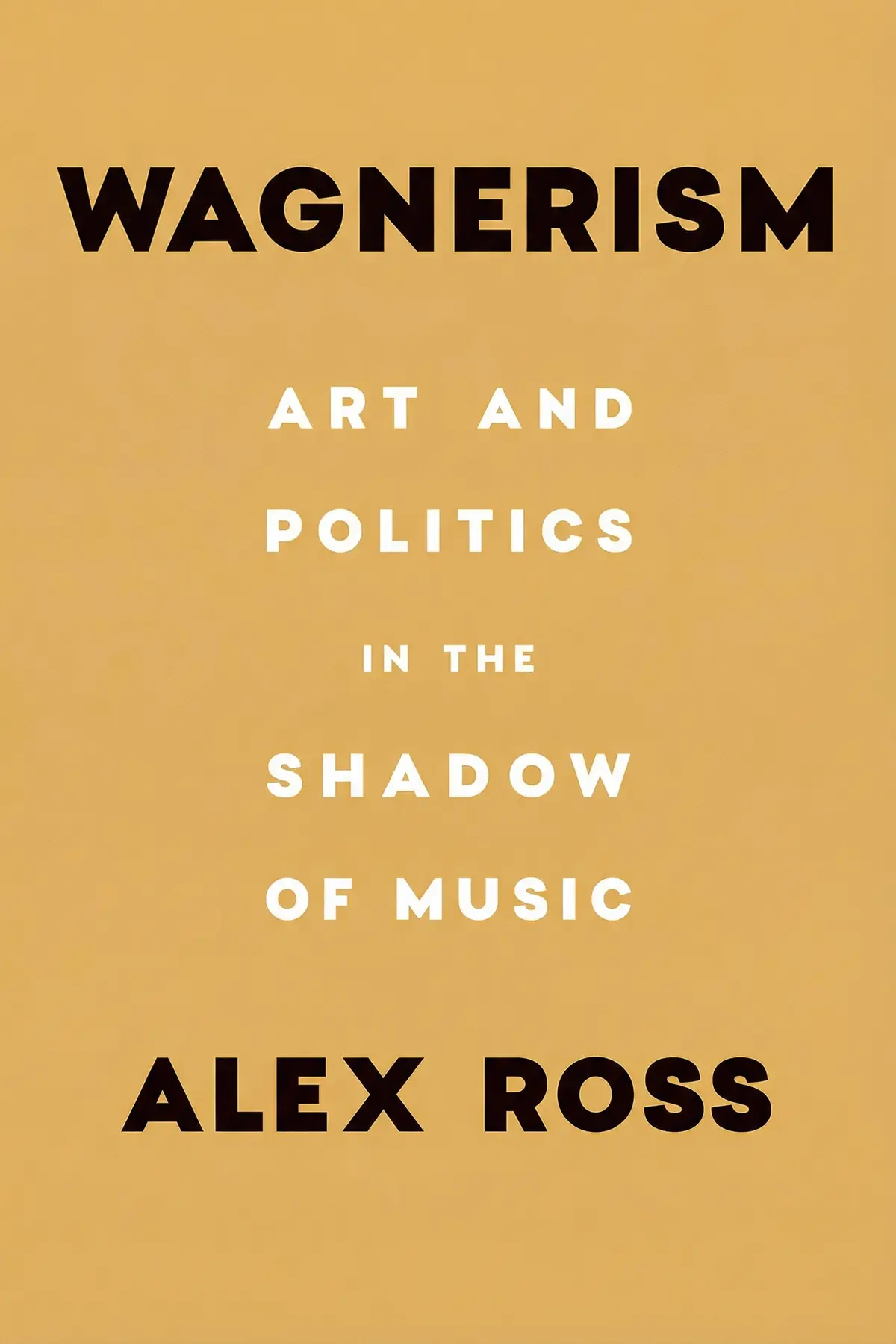
Table of Content
1. Introduction
57 sec
If Richard Wagner means little more to you than Hitler’s favorite composer, you are hearing a small part of a much larger story. In Wagnerism, the New Yorker writer Alex Ross shows that Wagner reached further beyond music than any other composer, into novels, paintings, film scores and political movements of the left as well as the right. Ross argues that Wagner’s works are so ambiguous that every country, movement and listener found their own reflection in them. The Nazi reading became the dominant one, but it was one appropriation among many.
That idea turns an old museum piece into a live question about how art gets used. By the end, you can explain why a Zionist congress, a Black American scholar, the Bolsheviks and Hitler all claimed the same composer. And the next time a war film plays Ride of the Valkyries, you will know what it carries with it.
2. Grasp how one composer outgrew music itself
1 min 53 sec
A death in Venice set off grief, radical tributes and a street riot within weeks. Those clashing reactions hint at why one composer’s reach would stretch far past the concert hall, and why a former friend could never let him go.
3. Spot Wagner inside the novels and westerns you know
2 min 03 sec
A nameless cowboy, a modernist poem and a famous final monologue in Joyce share an unexpected ancestor. The trail runs from a letter written in Paris in 1860 all the way to the westerns of Clint Eastwood.
4. Recognize when love of an artist turns nationalist
2 min 03 sec
Wagner bathtubs and candlesticks sold alongside earnest books on Germanness, while Klimt saw a progressive artist. One Italian novelist shows where the darker reading could lead, and how close that road ran to Hitler.
5. Hear how the people Wagner scorned still loved him
2 min 03 sec
Wagner wrote one of the most notorious anti-Semitic essays in music. Yet the father of Zionism and a great Black American scholar both found hope in his operas, and they were far from alone.
6. Watch generals and Bolsheviks claim the same operas
2 min 01 sec
German generals named battle lines after his heroes, while British theaters kept playing him and Russian revolutionaries ranked his essay beside the Communist Manifesto. The same contradictory music was about to meet its most dangerous listener.
7. Answer anyone who calls Wagner simply a Nazi
1 min 59 sec
In 1933 a famous novelist stood up in Amsterdam and told the world the Nazis had Wagner wrong. It cost him his country, and the operas themselves suggest his case was stronger than it looked.
8. Hear the Ride of the Valkyries with fresh ears
1 min 59 sec
A helicopter scene meant to expose the horror of war ended up blaring in real wars. From silent films to Star Wars to a burning Valhalla on stage, the same music keeps changing what it means.
9. Conclusion
1 min 09 sec
What Ross finally offers is a history of listening. The French heard decadence and German nationalists heard pride. Modernist writers heard a pioneer, Herzl heard a homeland, Du Bois heard transcendence, the Bolsheviks heard revolution and Hitler heard a weapon. Each caught something real in the music, and none caught all of it. The Nazi version won for a time, which is why their shadow still falls across Wagner’s name. Yet the Ring itself ends with a stolen thing returned and a god ashamed of what he did.
Nietzsche advised keeping the word perhaps close whenever Wagner comes up, and that habit travels well. Before accepting that a great but troubling work means only one thing, look at who else has claimed it, the way Herzl, Du Bois and Mann did. When stirring music turns up in a film, a commercial or a rally, ask whether it is there to warn you or to rouse you.
Nobody doubts the force of Wagner’s music. Whether it gives you beauty or darkness depends on what you bring to the listening.
About this book
What is this book about?
Richard Wagner is often remembered as Hitler's favorite composer. Alex Ross argues that this image, however earned, hides one of the strangest stories in cultural history. No other composer spread so far beyond music. Wagner's music dramas left their mark on French poets and English novelists, American westerns and modernist classics, Viennese painters, Hollywood scores and the stages of Bayreuth. He also became a political prize. At different times Wagner was an anarchist and a nationalist, and he was always an anti-Semite. Yet Theodor Herzl drew on him while imagining a Jewish state, W.E.B. Du Bois found transcendence in Lohengrin, and gay listeners heard their own forbidden longing in his operas. In World War I, German generals named military plans and positions after characters from the Ring, while British theaters kept staging him and the Bolsheviks praised his writing. The Nazis finally forced one meaning on him, over the protest of Thomas Mann. Ross reads the operas themselves as too morally ambiguous for any single owner. Readers get a map of how one body of work moved through a century, and a sharper sense of how art is claimed, misused and reclaimed.
Book Information
Who it's for
Classical and opera fans
Opera and classical music lovers who want to understand why Wagner still divides audiences.
Modernism and cinema fans
Readers of modernist fiction and film fans curious where leitmotifs and nameless heroes came from.
History and politics students
Students of history and politics weighing how great art by a bigoted artist gets claimed and misused.
About the Author
Alex Ross
Alex Ross wrote for The New York Times from 1992 to 1996 and then joined The New Yorker, where he wrote the music column until July 2026. That month he announced he would give it up but stay at the magazine and write about broader subjects. He trained at Harvard University and studied with the composer Peter Lieberson. His first book, The Rest Is Noise, came out in 2007. It was a finalist for the Pulitzer Prize and earned a National Book Critics Circle Award and the Guardian First Book Award. In 2008 he became a MacArthur Fellow.
Ratings & Reviews
Ratings at a glance
What people think
Listeners consider the book to be exceptionally researched and a definitive source of information, with one listener noting it contains many fascinating anecdotes. The writing style is excellent, and listeners value its exploration of cultural and political influence, as one listener points to the analysis of late 19th and 20th-century politics. Furthermore, the work is praised for its comprehensive music coverage, which one listener describes as a deep reading of Wagner’s compositions. However, listeners express varied opinions regarding the authenticity of the content.
Top reviews
Owen
Ross has managed to write something that feels like the definitive text on cultural influence. It isn't a biography, which might trip some people up, but a map of how one man's ego and art infected everything from Willa Cather to modern film scores. Truth is, the research is so prodigious it makes your head spin. I particularly loved the sections on the French Symbolists and Baudelaire; it really connects the dots between music and the "artists of silence." The prose is elegant and never feels like a dry academic list, even when he’s juggling a dozen different thinkers at once. If you’re interested in how art can be both transcendent and deeply problematic, this is essential. It's a massive commitment, but the payoff is a much deeper understanding of the modern world. Truly fantastic.
Show moreWillow
Picked this up after loving 'The Rest is Noise' and I was not disappointed. Ross tackles the "Nosferatu shadow" of Wagner’s antisemitism head-on, refusing to give the composer a pass while still acknowledging his genius. The scope is just wild. You move from the heights of Bayreuth to the grit of "Kill da Wabbit" cartoons. It’s a fascinating look at how art survives its creator, for better or worse. The way Ross explores the intersection of 19th-century politics and 20th-century tragedy is both chilling and illuminating. Every page seems to have five new stories I’d never heard before. For anyone who cares about the moral complexities of liking "troublesome" art, this is a must-read. It’s a dense, beautiful, mind-stretching monster of a book.
Show moreWachira
The sheer breadth of research on display here is staggering. Ross examines Wagnerism as a chaotic posthumous cult that moved far beyond the opera house. From Thomas Mann to Willa Cather, the literary connections are particularly strong and well-argued. I was especially struck by the "gay camp" and feminist interpretations, which provide a necessary counter-narrative to the standard "Wagner equals Hitler" trope. The truth is, Wagner’s legacy is a mirror—everyone sees what they want in it. Ross captures that duality perfectly. The book is physically heavy, but the prose is light and engaging, making the 600+ pages fly by faster than you’d expect. This is a brilliant piece of cultural criticism that will likely be the standard on the subject for decades.
Show moreAnucha
The chapter on Hitler and the Third Reich is probably the most nuanced thing I’ve read on the subject. Ross avoids the easy "Wagner caused the Holocaust" narrative, instead showing the complex reality of how the Nazis shorn the music of its ambiguities. It’s a master class in situating art historically without being reductive. Personally, I found the discussion of the "artists of silence"—the painters and poets—to be the most rewarding part of the book. It’s a work of prodigious scholarship that feels urgent and relevant, especially in our current era of "canceling" complicated figures. The writing quality is top-tier; Ross has a way of making even the most dense philosophy feel accessible and alive. Truly a fantastic achievement in modern non-fiction.
Show moreEye
As a classical music enthusiast, I expected a deep dive into the Ring Cycle, but what I got was much more complex. Ross uses Wagner as a lens to examine every major movement in the last 150 years. Frankly, it’s a lot to process. The book is at its best when discussing the "malleability" of Wagner—how he could be a hero to both the radical left and the fascist right. I did find myself skimming some of the more esoteric philosophy sections toward the middle, as it can get a bit repetitive. However, the anecdotes about W.E.B. Du Bois and the Black appreciation of Wagner were eye-opening and totally unexpected. It’s an exhaustive study that occasionally feels exhausting, but the writing quality remains consistently high throughout.
Show moreBua
Ever wonder why a single composer still haunts every corner of Western art? Ross provides the answer in this behemoth of a book. It’s a deeply researched journey through the 19th and 20th centuries, showing how Wagner’s aesthetics shaped everything from the architecture of movies to the psyche of modernism. I appreciated how the author didn't shy away from the darker elements, specifically the Third Reich's appropriation of the music. To be honest, there were moments where the sheer volume of information felt overwhelming, and I had to put it down for a few days to reset. But the writing is so crisp that I always found myself pulled back in. It’s not just for opera buffs; it’s for anyone interested in the machinery of culture.
Show moreScarlett
Finally got around to finishing this monster of a book and I’m still reeling from the amount of info. Ross is an incredible guide through the murky waters of intellectual history. I loved the way he tracked the evolution of the "Wagnerist lens" across different mediums. Seeing how he influenced filmmakers like Chaplin and Hitchcock was a highlight for me. However, I’ll be frank: some chapters are definitely more engaging than others. The deep dives into French Symbolism were a bit slow, whereas the 20th-century political sections were gripping. It’s a book that demands your full attention, so don't expect a light beach read. If you’re willing to put in the work, it offers a profound understanding of how art moves through time.
Show moreChatri
Wagnerism is a trip through the 19th and 20th centuries that you won't soon forget. It’s less about the man himself and more about the "vibe" he created—a kind of aesthetic tidal wave that hit everything from the Civil War to the avant-garde. I was fascinated by the diverse groups that found meaning in his work, including his popularity among Black intellectuals like W.E.B. Du Bois. My only real gripe is that it can feel a bit repetitive when Ross lists yet another group of admirers. But in my experience, that’s just the nature of such a comprehensive study. It’s an essential addition to any music lover's library, even if you find Wagner’s own personality to be totally repellant. A deep, rewarding, and occasionally exhausting reading experience.
Show moreKatya
To be fair, this is less a book about music and more an encyclopedia of people who had an opinion on music. I felt like I needed a few extra degrees just to keep up with the references to Derrida and Nietzsche. While the research is undeniably impressive, the narrative can feel like a never-ending list of names and quotes. One minute you're with James Joyce, the next you're with some obscure occultist. Not gonna lie, I missed the more personal, human touch that made Ross's previous work so approachable. It’s an incredible resource for scholars, but for a casual reader, it’s a bit of a slog. It’s certainly a master class in cultural history, but I wish it spent more time on the actual sounds of the operas themselves.
Show moreDimitri
Look, I really wanted to love this, but it felt more like a reference tome than a popular history book. There is no denying that Alex Ross is a brilliant writer, and his due diligence is clear on every single page. But after the hundredth name-drop of a 19th-century poet, my eyes started to glaze over. It's a lot of "Person X read Wagner and then wrote Work Y," which gets formulaic after a while. I was hoping for more musical analysis, something to help me hear the leitmotifs differently. Instead, it’s a very academic look at the "shadow" of the music. It’s a great source of knowledge if you’re writing a thesis, but as a general read, it’s a bit of a grind. Valuable, but dense.
Show moreQuestions about this book
What is Wagnerism by Alex Ross about?
Alex Ross traces Richard Wagner’s influence on culture and politics from his death in 1883 to the present. He follows Wagner through French poetry, English and American novels, modernist literature, Viennese painting, both world wars, Hollywood and the Bayreuth stage. His central argument is that the operas are ambiguous enough for every movement to see itself in them, so the Nazi reading was one appropriation among many, not the only true one.
Why did the Nazis adopt Wagner?
Hitler wrote in Mein Kampf that Lohengrin had captivated him as a young man, and he was a regular at Bayreuth from 1925, where he impressed Wagner’s heirs. Wagner’s anti-Semitism, his forceful music and his deep ties to German culture made him easy to recruit. Ross argues the Nazis forced one meaning onto complex works and ignored moments such as the return of the stolen ring and Wotan’s shame at the chaos he caused.
Did Jewish people admire Wagner despite his anti-Semitism?
Many did, even after his essay Judaism in Music. Theodor Herzl, father of the Zionist movement, drew on Tannhäuser for his vision of a Jewish state, and the 1898 Zionist congress even featured excerpts from it. Later, Thomas Mann wrote Joseph and His Brothers, a four-part novel that deliberately echoes the Ring with Jewish characters at its center, as a challenge to the Nazi version of Wagner.
How did Wagner influence movies?
Live orchestras played Wagner at screenings of the racist 1915 silent film The Birth of a Nation, and directors including Sergei Eisenstein, Fritz Lang and F.W. Murnau felt his influence. Erich Wolfgang Korngold made the leitmotif a Hollywood staple, a line that leads to John Williams’s Star Wars score. Coppola’s Apocalypse Now set a helicopter attack to Ride of the Valkyries, and the piece later sounded in the 1991 Gulf War and in Iraq in 2004.
Who should read Wagnerism?
It suits opera and classical music lovers who want to know why Wagner still divides people, and readers of modernist literature who keep meeting his echoes in Eliot, Joyce and Woolf. Film fans curious about leitmotifs and nameless western heroes will find origins here. It also helps anyone thinking about how to approach great art made by a bigot, since Ross shows Jewish, Black and gay listeners finding their own meaning in Wagner.
Readers also enjoyed

Alexander Hamilton
Ron Chernow

Alexander the Great
Philip Freeman


A History of Iran: Empire of the Mind
Michael Axworthy
A History of the World in 6 Glasses
Tom Standage

A Long Way Gone: Memoirs of a Boy Soldier
Ishmael Beah


AUDIO SUMMARY AVAILABLE
Listen to Wagnerism in 15 minutes
Get the key ideas from Wagnerism by Alex Ross, plus 5,000+ more nonfiction titles.
- 5,000+ titles
- Listen as much as you want
- 7-day free trial
- Cancel anytime









