
12 min 01 sec
Available in: English
Unlearn: 101 Simple Truths for a Better Life
A former teacher turned poet questions common beliefs about happiness, love, success and truth. He shows how dropping them brings contentment back into the present, so it stops waiting for a perfect future.
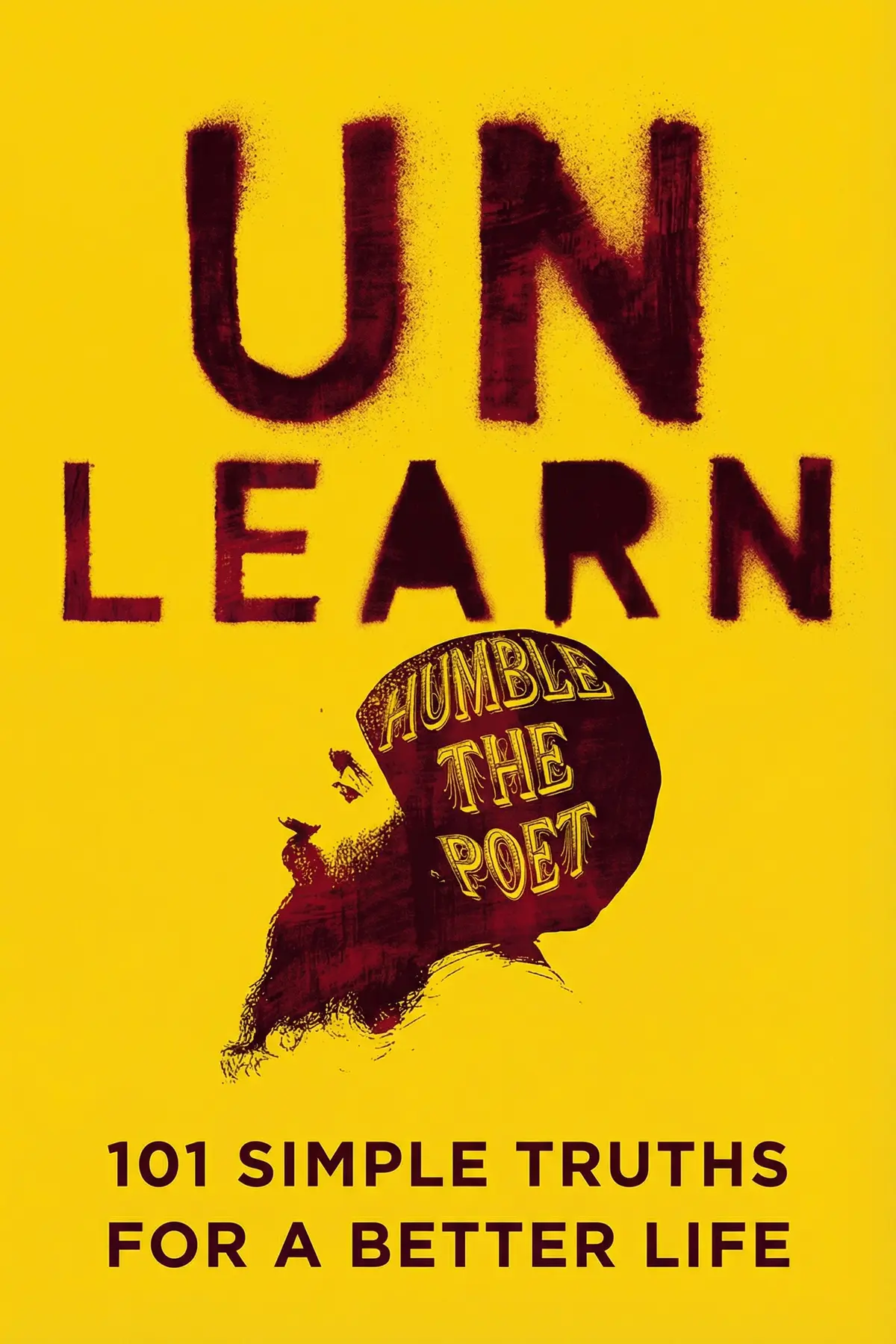
Table of Content
1. Introduction
1 min 04 sec
Most of us carry beliefs about happiness, love and success that we never chose. We soaked them up as children, and over time they hardened into rules. In Unlearn, the Canadian poet and former elementary school teacher Kanwer Singh, who performs as Humble the Poet, argues that some of those rules are simply false and keep us from ever feeling satisfied. His first correction is blunt. Unhappiness, he says, is nothing more than the distance between the picture in your head and the scene in front of you.
That puts happiness much closer than it looks. Singh’s case is that a better life often begins by dropping what was never true, because the old scripts keep pushing fulfillment into some future that never arrives. He tests this in four areas where the false beliefs do the most damage: happiness, love, success and truth itself. Each one ends with a plainer definition and a habit you can use the same day.
2. Happiness that does not wait for perfect conditions
1 min 42 sec
Many people believe contentment arrives only when work, money, health and love finally line up together. Singh offers a much smaller definition, and it moves happiness from the world outside into the way you meet each moment.
3. Stop postponing happiness until the obstacles end
1 min 53 sec
After the exams, after the debt, after the reorganization: there is always a reason to feel good later. Singh explains why that plan never pays out, and what to pay attention to instead.
4. Bring a list of what you can give
2 min 01 sec
Waiting for the one feels romantic, yet Singh argues it tends to hold people back. His alternative sounds selfish at first, until you see what it does for both partners and for how others see you.
5. Ambition with clear eyes and fewer disappointments
1 min 59 sec
Growing fame did not make Singh any calmer, and the people at the top rarely feel comfortable either. Here is what success really asks of you, and why money is a poor way to keep score.
6. Be good without expecting life to pay you back
1 min 56 sec
Two facts are pushed out of sight more than any others, and facing them can feel discouraging at first. Singh argues that accepting both gives you a steadier kind of strength than any comforting story.
7. Conclusion
1 min 26 sec
Unlearn reads like a set of corrections written in the margin of an old lesson. Singh once taught classrooms of restless six-year-olds, and in the end he asks adults to do something children do easily: stay open to being wrong. The scripts he challenges all make the same move. They place fulfillment somewhere ahead of us, in a life without obstacles, a perfect partner, a fortune or a world that keeps score fairly, and so they keep us from noticing what is already here.
His replacement definitions are plainer and harder. Happiness means being present. Love begins in your own company. Success means daily effort and discomfort that never fully goes away. Truth includes death and injustice, and accepting both makes life feel more valuable.
The book supports a few concrete habits. When disappointment hits, name the picture you were holding and see how much of the pain comes from the comparison. Once your basic needs are met, give some attention each day to what you already have before reaching for more. Bring a list of what you can give to your next relationship conversation. When a big goal tempts you, count the doubt along with the reward.
Singh admits that seeing clearly means seeing the weeds as well as the flowers. That full view, he insists, is the only one that leads to real fulfillment.
About this book
What is this book about?
Many people keep feeling unsatisfied even when life goes reasonably well. Humble the Poet, born Kanwer Singh and once an elementary school teacher, argues that the cause is often a set of beliefs we absorbed as children and never questioned. Over the years these scripts harden. Because family, friends, school and society all repeated them, we treat them as true. In Unlearn, Singh takes on four of these scripts. He redefines happiness as presence and unhappiness as the distance between expectation and reality. He swaps the fairytale of finding the one for loving yourself first. He strips the glamour from success and treats money as a tool. And he asks readers to accept two hard truths: everyone dies, and life is not fair. The result is a short, direct set of corrections. Each one closes the gap between how we think life should be and how it is, and each comes with a habit you can start today. Examples include naming what you already have, writing down what you can give a partner, and doing good without expecting a reward.
Book Information
Who it's for
Professionals unsatisfied by success
Busy professionals who keep hitting goals yet still feel unsatisfied.
Youth questioning inherited beliefs
Young people questioning the scripts about love, money and success they grew up with.
Worn down by comparison
Anyone feeling worn down by comparison who wants plain, direct principles to steady them.
About the Author
Humble the Poet
Kanwer Singh, born in Canada, performs as Humble the Poet. He is a rapper, spoken-word artist, poet and blogger who once taught at an elementary school. Unlearn and Things No One Else Can Teach Us are both international bestsellers, and he also wrote How to be Love(d). He has performed at festivals including Lollapalooza, and his work has been featured in the New York Times, Vogue, Rolling Stone and BuzzFeed.
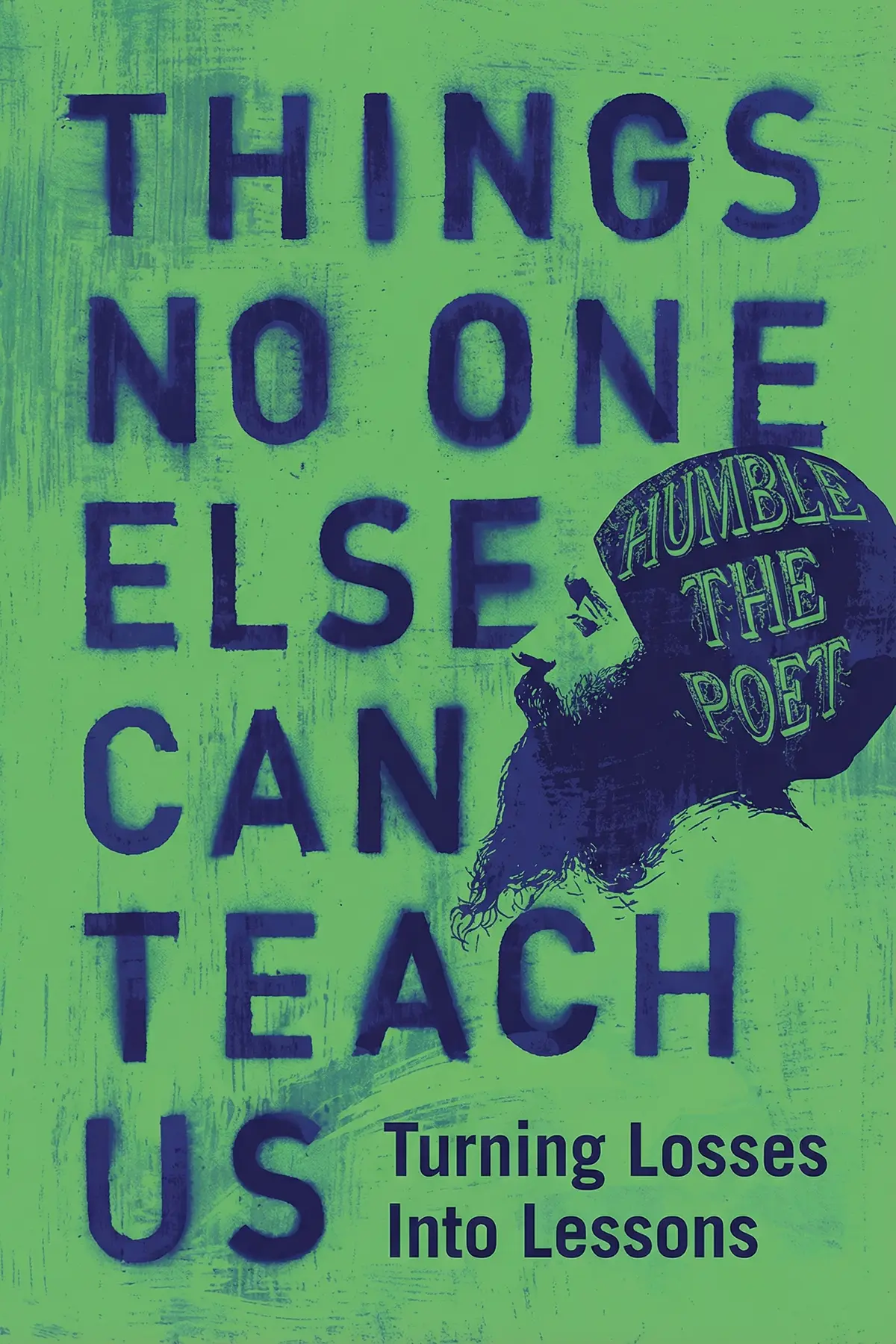
Things No One Else Can Teach Us: Turning Losses Into Lessons
Humble the Poet
Ratings & Reviews
Ratings at a glance
What people think
Listeners find this work to be a fantastic book featuring valuable wisdom in every chapter, loaded with useful advice for approaching life from new angles. Furthermore, the material is very easy to consume, and one listener mentions that the simplicity allows for effortless rereading of certain segments. Listeners also call the content encouraging and moving, with one noting it helped awaken things in their heart, while another remarks on how it changed their life for the better. Listeners value the sincere tone and stimulating ideas that foster an entirely new way of thinking.
Top reviews
Takeshi
Finally got around to reading this, and it feels like a total mental detox. Humble the Poet has this way of taking these massive, overwhelming life situations and distilling them into practical knowledge that actually feels attainable. It’s not just fluffy motivation; it’s about looking at your daily habits from a completely different mindset. I found myself highlighting golden nuggets in almost every chapter, especially the bits about how we value ourselves versus how others see us. To be fair, the writing is extremely simple, but that’s exactly why it works for me. It’s the kind of book you can sit and read for twenty minutes and walk away feeling like something has been awakened in your heart. It changed my life for the better by forcing me to confront my own ego. If you’re looking for an honest approach to self-growth without the corporate jargon, this is the one.
Show moreSamart
A total game-changer for my morning routine. I’ve been reading one chapter a day as suggested, and it has completely shifted how I view my daily challenges. The author provides these bite-sized pieces of wisdom that help you develop a completely different perspective on failure and success. I love how it doesn't try to be overly academic or flowery. It’s just raw, honest, and impactful advice that hits you right where you need it. Some might call the writing too simplistic, but I find that simplicity to be its greatest strength. It makes the lessons easy to digest and even easier to put into practice. This is definitely a book I will keep on my nightstand to reread sections whenever I feel like I'm losing my way. It’s filled with so much heart and soul that you can’t help but feel inspired after finishing it.
Show moreJeeranan
Ever wonder why you keep making the same mistakes? This book tackle exactly that. It provides golden nuggets of wisdom that are easy to understand but profound in their application. I found the chapter on beliefs particularly thought-provoking because it challenges you to reflect on where your values actually come from. Personally, I found the honesty of the author refreshing. He doesn't sugarcoat the fact that the biggest battles we fight are with ourselves. Every moment is a brushstroke on your life’s masterpiece, and this book helps you ensure you’re the one holding the brush. It’s an impactful read that helped me view my personal life situations from a much healthier perspective. I’ve already recommended it to three friends who are going through major life transitions. It’s simple, it’s raw, and it’s exactly what I needed to hear right now.
Show moreKatya
This book is basically a mental detox for anyone feeling overwhelmed by the pressure to be perfect. It’s filled with golden nuggets of wisdom that are both practical and deeply moving. I loved how honest the author was about his own struggles, which made the advice feel much more authentic than your typical self-help manual. It’s an uplifting read that helps you see your life situations from a broader perspective, focusing on what you can control rather than what you can’t. The chapters are short and punchy, making it easy to digest even if you have a busy schedule. I’ve found myself rereading sections whenever I need a reminder that my value isn't determined by anyone but me. It’s a beautiful, life-changing piece of work that encourages you to get out of your comfort zone and start creating your own masterpiece. Absolutely worth every penny.
Show moreChloe
Picked this up on a whim after hearing a lot of hype, and I have to say, it’s a very interesting guide for the modern era. The book is essentially a collection of 101 truths designed to help you unlearn the habits that hold you back. While some of the points felt a little repetitive, I think that might be intentional to help the concepts sink in. Look, it isn't Shakespeare, and it doesn't pretend to be. The writing style is very conversational and casual, which makes it an easy read for anyone who usually finds self-help books too dense. I especially liked the sections on internal peace and paving your own road regardless of the approval of others. It’s a very honest look at the human condition. Even though the editing could be tighter, the core message is strong enough to make it a worthwhile purchase for your collection.
Show moreIsabella
Listening to the audiobook was definitely the right choice here. Humble the Poet has a great voice for this material, and it makes the simple language feel more like a conversation than a lecture. I recommend taking it slow—maybe one chapter a day—to fully grasp the implications of what he’s saying. The book is filled with practical knowledge that encourages you to stop seeking external validation. While it does get repetitive at times, I found those reminders helpful for reinforcing the mindset shift he’s advocating for. He makes valid points about how we often sabotage our own happiness by clinging to outdated beliefs. It’s a short, easy read that serves as a great reminder of the important words we should live by. Despite some of the editing issues mentioned by others, the emotional resonance of the content really shines through in the audio format.
Show moreRome
Humble the Poet has a very specific way of cutting through the noise and getting straight to the point. This book isn't about teaching you new things as much as it is about reminding you of things you already know but have forgotten. The simplicity of the text makes it accessible to everyone, which I think is the point. It’s a collection of advice that helps you develop a different mindset toward failure and growth. I did notice some of the quote issues and the lack of editing that other reviewers pointed out, which is why I can’t give it a full five stars. However, the impact it had on my mood was undeniable. I felt more optimistic and motivated after every session. It’s the kind of book that’s easy to sit and read, but the thoughts it provokes will stay with you long after you’ve put it down.
Show morePhimwan
The truth is, I’m deeply conflicted about this collection. On one hand, the messages are incredibly uplifting and there were moments where the author’s honest approach really resonated with my own struggles. On the other hand, the lack of professional editing is impossible to ignore. There are glaring punctuation errors and grammatical flaws that make the reading experience feel a bit disjointed. Frankly, it reads more like a series of compiled blog posts than a cohesive book. The tone also feels like a bit of a rollercoaster; one minute it’s somber and heavy, and the next it’s pushing this millennial hustle culture that I find a bit exhausting. I appreciate the wisdom found in the simplicity of these 101 points, but the presentation felt a little lazy for a published work. It’s a decent guide for beginners in self-reflection, but seasoned readers might find it a bit shallow.
Show moreKamol
As someone who appreciates a good self-help guide, I found this to be a bit hit-or-miss. The core philosophy is solid: we need to unlearn the social conditioning that makes us miserable. However, the tone inconsistency made it hard to stay engaged. One chapter feels very lighter and inspiring, while the next feels incredibly heavy and somber. Not gonna lie, I struggled with the grammar and punctuation errors throughout the text. It felt like the author published his first draft without a second glance. That said, there is value here if you can look past the technical flaws. The second half of the book is significantly stronger than the first, with some really beautiful lines about self-approval. If you can handle the simplistic writing and the occasional contradiction, you’ll find some useful tools for your personal growth journey. It’s just not the masterpiece I was expecting.
Show moreSelin
I really wanted to like this, but the execution was just too lacking for me. It felt like I was sitting in a men’s locker room listening to a guy give generic life advice that he hadn't fully researched. For instance, the author includes famous quotes—like the Maya Angelou one about how people feel—without any attribution. He even admits to being too lazy to look up a Dita Von Teese quote because it was 4:30 AM. That’s not 'authentic'; it’s just poor craftsmanship. The book advises against positive thinking in one breath and then tells you to find the positive in everything in the next. It’s a confusing mess of contradictions that feels like it was rushed through production without an editor. While there are a few decent reminders about self-worth, the overall tone was far too harsh and ignored the realities of mental health or systemic struggles. It just didn't land for me.
Show moreQuestions about this book
What is the main idea of Unlearn by Humble the Poet?
Humble the Poet argues that many beliefs we absorbed as children, about happiness, love, success and truth, are false and keep us from feeling fulfilled. A better life often comes from dropping those scripts. He redefines unhappiness as the gap between expectation and reality, and happiness as being present with what is, then applies the same clear-eyed approach to relationships, ambition, death and fairness.
How does Humble the Poet define happiness?
He describes unhappiness as our reaction when reality does not match the picture we held in our heads, and happiness as being present with what actually is. Since we control little of what happens to us, he focuses on how we interpret events. Once basic needs like food, water and shelter are met, he says happiness comes from needing less and appreciating what you already have.
What does Unlearn say about love and relationships?
Singh warns against fairytale ideas of waiting for the one. He argues the relationship with yourself matters most, and that healthy partnerships form between two people who each arrive already whole, without dependency. His practical advice is to bring a list of what you are ready to give, not a list of what you want to receive. Self-love also builds confidence, which he calls highly attractive.
How can I apply the ideas in Unlearn?
When you feel let down, name the expectation you were holding and check whether the situation is really bad or only different. Spend attention each day on what you already have. Go into relationships with a list of what you can offer. Before chasing a goal, accept that it will take daily effort and will not bring comfort. Do good things for their own sake, without expecting fairness in return.
Readers also enjoyed





A Guide to the Good Life: The Ancient Art of Stoic Joy
William B. Irvine


A High-Performing Mind: Strengthen Your Mind and Live Your Best Life
Andrew D. Thompson


Abundance: The Inner Path to Wealth
Deepak Chopra
AUDIO SUMMARY AVAILABLE
Listen to Unlearn in 15 minutes
Get the key ideas from Unlearn by Humble the Poet, plus 5,000+ more nonfiction titles.
- 5,000+ titles
- Listen as much as you want
- 7-day free trial
- Cancel anytime









