

59 Seconds: Change Your Life in Under a Minute
Richard Wiseman
 English
Shows why constant comparison leaves people exhausted, envious and isolated, and how to step out of it by handling envy, setting boundaries, celebrating others' wins, resting properly and defining success on your own terms.
1 min 00 sec
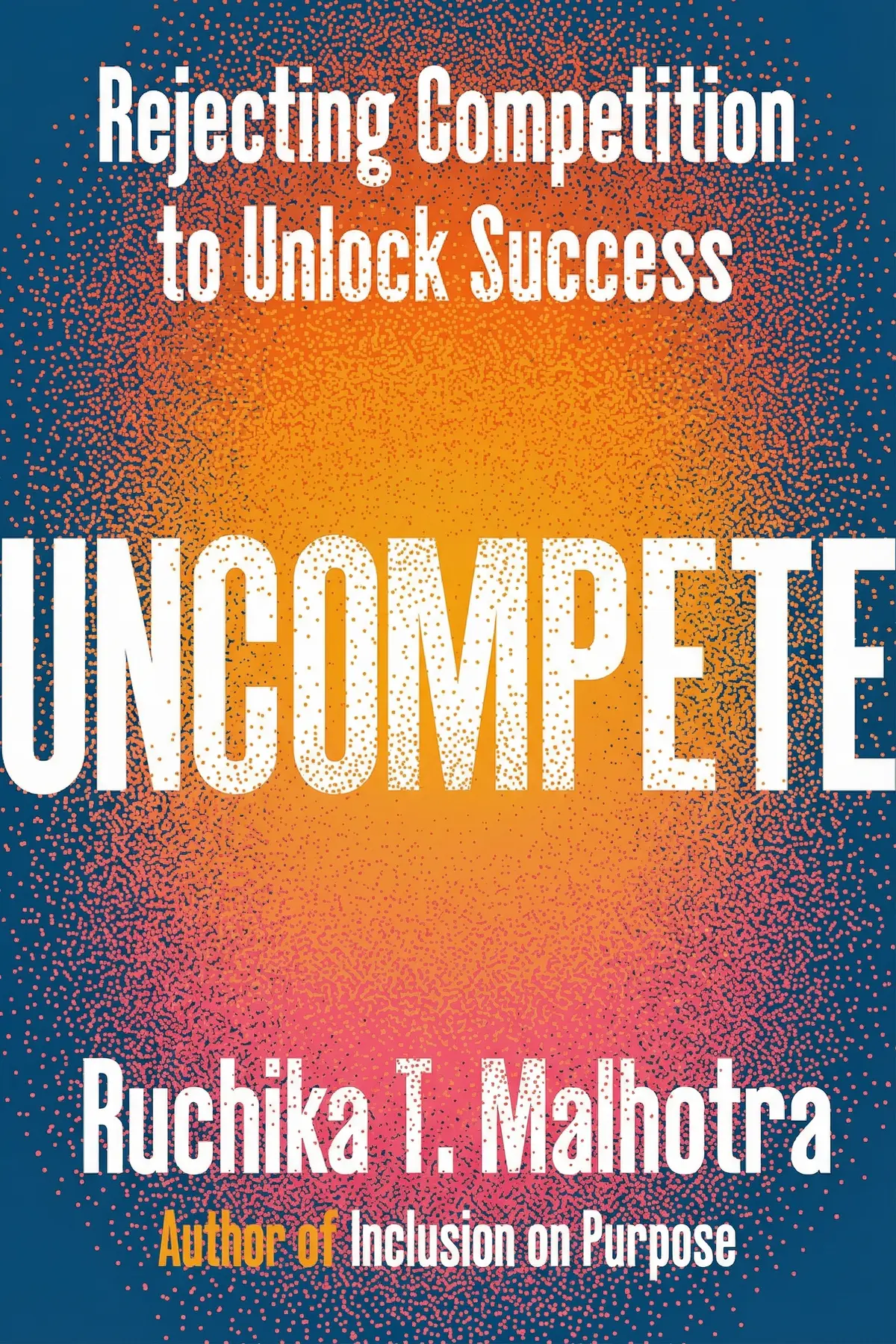
If a friend’s promotion post leaves a knot in your stomach, or you work late every night and still feel behind, the problem may not be you. In Uncompete, inclusion strategist and former business journalist Ruchika T. Malhotra argues that competition is a habit we were trained into, and that it drains our health, our joy and our friendships while promising success. She treats rivalry as a choice, which means it can be refused.
Her throughline is direct: stepping out of the race, by celebrating others, protecting your body and writing your own definition of success, leads to better achievement and genuine community. Malhotra also argues that competitive systems press hardest on people facing discrimination and on caregivers. What follows is a way to spot the moment comparison takes over, to answer envy with something better, and to build a working life that does not depend on someone else losing.
1 min 40 sec
Rivalry is sold as the thing that makes people sharper and stronger. Malhotra counts its price in three places most of us never add up, and the total explains a tiredness that rest alone has not fixed.
1 min 45 sec
Survival of the fittest seems to settle the question of human nature. Malhotra looks again at forests, bees and family dinners, and finds a very different origin for the reflex that makes you rank yourself.
1 min 49 sec
Envy feels like a single emotion you either have or hide. Malhotra splits it in two, and the difference between the halves decides whether someone else’s good news makes you better or slowly makes you bitter.
1 min 49 sec
Your phone is built to make you feel slightly behind, and an overfull calendar does the same job offline. Malhotra explains who profits from that feeling and how small refusals start giving your energy back.
1 min 44 sec
Clapping for a peer can feel like admitting you lost. Malhotra describes a shift in how you see achievement that turns other people’s success into a steady source of energy for you and your team.
1 min 53 sec
Sleep is only one kind of rest, and missing the others can drag you straight back into the grind. Malhotra maps what your body is quietly asking for, and what a success built around it could look like.
1 min 12 sec
Malhotra’s case comes down to a trade most people never knew they were making. Competition offers success and pays out in burnout and loneliness, and it pays least to those the system already disadvantages. Collaboration, generosity and solidarity, she argues, produce achievement that means something, and people to share it with.
What makes the book usable is that the exit runs through small, repeatable moments. The next time a friend’s news stings, ask what you think you have lost, then congratulate them and mean it. Prune your feeds and your calendar until both reflect what you value. Notice which kind of rest you keep skipping, and treat it as part of the work. And write down what success looks like on your own terms, even if the picture includes a walk or a garden.
Malhotra sees each of these choices as larger than personal. One person stepping off the track gives the people around them permission to do the same, and that, she believes, is how cultures change. The race only feels endless while everyone keeps running it.
Many capable people work long hours, scroll past other people's victories and still feel behind. Ruchika T. Malhotra argues that this feeling is not a personal flaw. It is the product of a competitive mindset taught from childhood through grades, family comparisons and workplace rankings, and it costs people their health, their joy and their relationships. She adds that systems built on competition usually favor people who already have power, while placing the heaviest burden on caregivers and marginalized groups. Malhotra's answer is to treat competition as a choice. Her uncompete mindset rests on refusing rivalry when it appears, deciding with the wider group in mind and resisting norms that exclude others. She shows how to tell helpful envy from the harmful kind, how to set limits on social media and fear of missing out, and how to take real pleasure in other people's success. The book also turns to the body, describing six kinds of rest and warning against wellness hacks and gamified self-care. Readers come away with a set of daily practices and permission to measure success by their own values and their own pace.
Professionals who feel a pang at every colleague's promotion and want to stop measuring themselves against others.
Overworked people close to burnout who sense that hustle culture is costing their health.
Team leads and mentors who want to build cooperative, inclusive teams instead of internal rivalries.
Ruchika T. Malhotra founded Candour, a practice focused on inclusion strategy, after working as an international business journalist. Originally from Singapore, she has lived and worked across four continents. Her earlier books include The Diversity Advantage, on leadership strategies for advancing women at work, and Inclusion on Purpose, MIT Press's top-selling book of 2022. She has written about workplace equity for the New York Times and Harvard Business Review, and in 2019 she was named to the Thinkers50 On the Radar list.
Listeners value how this work rethinks conventional rivalry, presenting an inspiring model centered on abundance and partnership rather than endless competition. While some listeners consider the methodology somewhat idealistic for intense corporate climates, they also point out that the text offers useful techniques for lowering burnout and finding personal happiness again. Furthermore, many are touched by the author’s relatable stories and the emphasis on "amplification," with one listener remarking that the idea of sponsoring others without expectation is "powerful stuff." The practices for uncompeting are viewed as compassionate and timely, helping listeners redefine success on their own terms.
Picked up Uncompete while I was drowning in a sea of KPIs and comparison, and it provided an immediate lifeline. Ruchika T. Malhotra doesn't just tell you to 'relax'; she explains why our brains are literally wired for this exhausting race. The concept of moving from a scarcity mindset to one of abundance felt revolutionary, even if it’s hard to practice daily. I’ve started catching myself whenever I feel that familiar twinge of envy when a colleague gets a win. Instead of spiraling, I’m trying to use her 'amplification' technique to lift others up alongside me. It’s not an overnight fix, but the book offers a roadmap that feels both sustainable and deeply humane. If you're tired of the hustle culture that treats rest as a sin, you need this on your nightstand. It is a powerful reminder that our worth isn't a rank.
Show moreWow. As an immigrant woman, I found the chapters on how colonization and systemic pressure shape our need to over-perform to be absolutely transformative. Ruchika T. Malhotra articulates feelings I’ve had for decades but could never quite put into words. We are taught that there is only one seat at the table, so we fight each other for it instead of building a larger table for everyone. The idea of 'uncompeting' isn't about being lazy or lacking ambition; it’s about redirecting that energy toward collective thriving. I particularly loved the section on sponsorship—moving beyond just mentorship to actually using your privilege to boost others. It’s a powerful call to action that makes you realize your success doesn’t have to come at anyone else’s expense. This is easily one of the most impactful books I’ve read this year. It changed my perspective on everything.
Show moreUncompete is the manifesto for the modern worker that we didn't know we desperately needed until now. Malhotra argues that this 'arrival fallacy' is a direct result of measuring our worth against others rather than our own internal values. The book is packed with actionable tools for reimagining success, focusing on community and rest as essential components rather than rewards. I found the chapter on social media particularly convicting; I didn't realize how much my digital habits were fueling my scarcity thinking. By setting boundaries and focusing on amplification, I’ve already felt a shift in my daily stress levels. It’s a compassionate guide that asks us to stop running a race we never signed up for. Truly a must-read for anyone feeling the weight of the endless 'more, more, more' culture that defines our current era.
Show moreAfter hearing the author speak on a podcast, I had to dive into the full text, and the chapter on amplification changed my networking strategy. Ruchika T. Malhotra provides a masterclass on how to use your influence to sponsor others without expecting anything in return. This concept of abundance—that there is enough room for everyone to succeed—is the exact opposite of what we’re usually told. In my experience, shifting from a mindset of rivalry to one of coalition building makes the work itself much more rewarding. The book is written with a lot of grace, acknowledging that this shift is difficult and goes against most of our training. It’s a very practical guide for anyone looking to lead with more empathy and less ego. I’m already seeing the ripple effects of these ideas in my own professional circle.
Show moreNot what I expected at all—in a good way! I thought this would be another 'be nice' self-help book, but it’s actually a sharp critique of the systems that profit from our anxiety. Malhotra shows how the 'winner takes all' mentality is a choice, not a biological necessity. The writing is punchy and the sentence structures kept me engaged throughout the entire reading experience. I particularly appreciated the focus on how competition erodes our physical health over time through constant cortisol spikes. It’s a sobering look at what we sacrifice when we prioritize ranking over relationship. To be fair, some sections on rest felt a little long, but the core message is too vital to ignore. This book will definitely stay with me for a long time, and I’ve already started recommending it to my colleagues.
Show moreThis book provides a necessary framework for surviving the modern workforce without losing your soul. Malhotra is brilliant at deconstructing the 'survival of the fittest' narrative that we’ve been fed since elementary school. She proves that cooperation is actually just as natural as competition, which was a huge relief to read. The author’s points about systemic inequality and how competition favors those already in power were incredibly sharp. I appreciated the blend of social critique and personal anecdotes that made the theory feel much more grounded. It's a refreshing take that forces you to look at your professional relationships through a lens of solidarity rather than rivalry. We need more voices like Ruchika's in the business world to challenge the destructive norms we've accepted as default.
Show moreFinally got around to reading this, and the timing couldn't have been better for my mental health. As someone who has always struggled with 'imposter syndrome,' Malhotra’s perspective was incredibly eye-opening. She suggests that what we call imposter syndrome is often just a rational response to being in environments that weren't built for us. By 'uncompeting,' we stop trying to fit into these narrow, exclusionary definitions of success. It’s a compassionate, well-researched, and deeply necessary read for anyone tired of the constant pressure to perform. The distinction between harmful envy and growth-oriented observation was a total game-changer for me personally. It’s time we all stopped measuring our worth by who we’ve managed to leave behind and started focusing on how many people we can bring along.
Show moreEver wonder why we’re so quick to see someone else’s success as our own failure? Malhotra tackles this head-on by exploring the roots of envy and the ways our institutions reward division. The book is a beautiful blend of lived experience and social analysis, making it feel both personal and professional. I was especially struck by her discussion on how competitive systems penalize caregivers and people with disabilities. It’s not just about personal mindset; it’s about recognizing the structural injustices that competition often hides. While the tone is mostly encouraging, it doesn't shy away from the hard work of unlearning decades of conditioning. My only minor gripe is that I wanted even more case studies on collaborative business models. Overall, it’s a brilliant rejection of the status quo that left me feeling much less alone.
Show moreGotta say, I didn’t realize how much of my identity was tied to being 'better than' until I read Malhotra’s breakdown of childhood conditioning. The book is timely and necessary, guiding you away from competition back to what we were built to do—collaboration! It will help you understand your scarcity, your envy, and leave you with actionable tools for reimagining abundance. Personally, I found the specific advice on digital boundaries to be the most helpful part of the text. While some of the corporate applications felt a bit optimistic for my current workplace, the internal shift in my mindset has been undeniable. This book challenges the traditional view of competition and offers a refreshing framework for reclaimining personal joy. It's a solid 4 stars that I'll likely revisit whenever I feel that urge to compare myself again.
Show moreTruth is, I have mixed feelings about this one despite really wanting to love it completely. The writing is compassionate and the research on how stress hormones affect our decision-making is fascinating. I can see how rejecting a competitive mindset would lead to better mental health and more joy. But looking at it from my position in a high-pressure sales environment, some of these concepts felt like they belonged in a different world. It’s hard to 'uncompete' when your mortgage depends on outperforming the person in the next cubicle. That said, the author’s critique of hustle culture is spot on and made me question why I’ve accepted this level of anxiety for so long. It’s a thought-provoking read, even if the practical application feels a bit out of reach for certain cutthroat industries right now.
Show moreMalhotra argues that competition is a learned habit, taught through grades, family comparisons and workplace rankings, and that it damages health, joy and relationships while favoring those who already hold power. Because it is learned, it can be refused. She proposes an uncompete mindset built on choosing not to compete, deciding with the wider group in mind and resisting exclusionary norms, backed by practices around envy, boundaries, rest and personal definitions of success.
In Malhotra’s account, benign envy appears when you see an admirable achievement and feel motivated to improve yourself. Malignant envy pushes you to resent or diminish the other person, and she argues it rests on negative judgment of yourself. Her advice is to question the belief that you lack something, ask whether their success actually reduces your chances, and then give them specific, sincere credit.
Malhotra describes social media as a system that profits from envy by showing curated highlights. She recommends limiting scrolling time, reminding yourself that you are seeing selected moments rather than full lives, and stopping entirely when envy becomes overwhelming. She also suggests reshaping your feeds by following people who lift others up and amplifying messages of collaboration and mutual support.
Malhotra names several kinds of rest: social rest to recover from draining interactions, emotional rest from constant performing, physical rest from activity, mental rest to ease the load of making decisions, creative rest from the pressure to produce, and sensory rest from overstimulation. She warns that neglecting any of them creates an imbalance that can pull you back into stress-driven competition, and she also cautions against turning self-care into another contest.
It suits professionals who feel trapped in constant comparison, people heading toward burnout from overwork, and managers or mentors who want more cooperative teams. It also speaks to readers from marginalized groups and caregivers, whom Malhotra sees as paying the steepest price in competitive workplaces, and to anyone ready to define success by their own values and pace.
Richard Wiseman





Margaret Heffernan

William B. Irvine



AUDIO SUMMARY AVAILABLE
Get the key ideas from Uncompete by Ruchika T. Malhotra, plus 5,000+ more nonfiction titles.









