

A Year in the Life of William Shakespeare: 1599
James Shapiro
 English
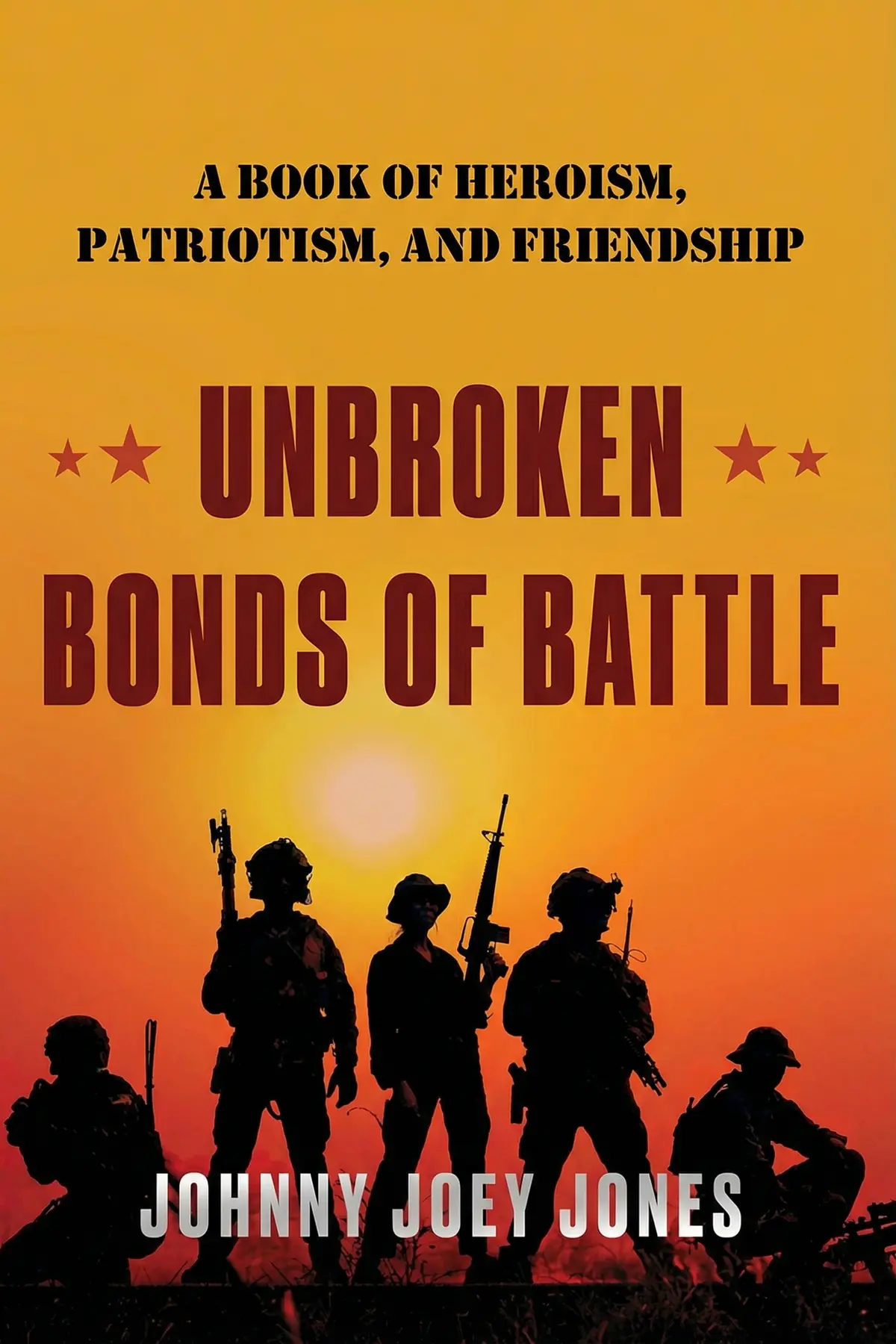
Five military veterans, among them the author, tell how they served, lost and rebuilt, and what they learned about responsibility, belief in others, speaking honestly about pain and keeping friendships alive after coming home.
1 min 09 sec
Most of us will never wear a uniform, yet we all face the tests these veterans did: how to live with purpose, how to carry loss, and how to keep the people who hold us up. In Unbroken Bonds of Battle, former Marine bomb technician Johnny Joey Jones gathers memoirs from fellow service members, and five of them carry one plain lesson. The strength that gets people through combat, and through the harder trip home, comes mostly from other people.
You will meet an Apache pilot who stayed in a firefight for seven hours, a refugee-camp volunteer who became a Green Beret and then a professional football player, an Air Force instructor who rewrote a failing student’s grades, a Marine thrown into the air by a tank mine, and Jones himself, who lost both legs in Afghanistan. Each life shows one way a bond is built or kept. Between them, they offer a short code anyone can use at work or at home: step up, lend your belief, speak honestly about pain, and keep showing up for friends.
1 min 49 sec
Every aid group he applied to turned him down for lacking a degree. What one young man did next took him to Africa, to war and onto a professional football field.
1 min 51 sec
Pinned soldiers needed air cover, his helicopter was taking hits and the fuel kept running low. An Apache pilot explains what his father taught him about whose job it is to help.
1 min 55 sec
A struggling foreign trainee was older than his classmates, behind on the technical work and losing hope. His instructor did something with the grade sheet that no rulebook would allow.
2 min 12 sec
His grandfather and uncle never spoke of their wars, so their stories reached him only through his grandmother. After a mine nearly killed him, he chose to break that family silence.
1 min 54 sec
After the blast in Safar Bazaar, he could never again serve beside his unit in combat. He found another way to stand by them, and it costs more effort than courage.
1 min 06 sec
In these stories the hardest fight often begins after the last mission. Every one of these veterans eventually came home, some whole and some badly hurt, and each had to find a new way to serve. What helped them was what had kept them alive overseas: people who would not let them stand alone, and the chance to be that person for someone else. Jones adds that the telling itself matters, because veterans who can share their triumphs and tragedies handle the return to civilian life better.
You do not need a uniform to use any of this. Notice the problem nobody owns and take it on. When someone near you doubts themselves, lend them your belief before they have earned it, the way Gunnoe did with Diego. Say out loud what you are carrying, so others feel free to do the same. And put the next call to an old friend on your calendar instead of waiting for a reason.
Jones lost his legs during the clearing mission in Safar Bazaar. What he kept was a lesson from his father in a Georgia mobile home: when a friend needs help, you show up.
Most people will never serve in a war zone. Still, everyone eventually faces the tests these veterans faced: how to live with purpose, how to carry loss and how to hold on to the people who hold them up. Johnny Joey Jones, a former Marine bomb technician who lost both legs in Afghanistan, collects the memoirs of fellow service members to show what those tests look like under extreme pressure. The five stories here follow an Apache pilot who later entered Congress, a refugee-camp volunteer who became a Green Beret and then an NFL player, an Air Force instructor who bet on a failing student, a Marine who survived a tank mine and Jones himself. Each explains what drew them to serve, what the front line was really like and how they handled the less visible challenge of returning to civilian life after injury or retirement. What readers get is a short, human code drawn from their lives: step up when no one else does, lend your belief to people who doubt themselves, talk openly about what hurts and keep reaching out to friends long after the shared hardship ends.
Readers who want true, human stories of service, injury and recovery from the veterans themselves.
Veterans and their families facing the move back to civilian life.
Managers and mentors who want to see what belief and steady support can do for people.
Johnny Joey Jones grew up in Dalton, Georgia, and joined the Marine Corps after high school. He served eight years as an Explosive Ordnance Disposal technician, deploying to Iraq and Afghanistan. On August 6, 2010, during his last Afghan deployment, he stepped on an improvised explosive device and lost both legs above the knee. He recovered at Walter Reed National Military Medical Center. He is now chief spokesperson for Zac Brown's Southern Ground, military director and spokesperson for Camp Southern Ground, and a military analyst for Fox News.

Listeners find this book immersive and profoundly stirring, with narratives steeped in humanity that strike a chord. Furthermore, the prose is penned from the heart, and listeners value the educational material and glimpses into military service. They also praise the book’s depiction of powerful, deep-seated bonds and extraordinary feats of bravery, with one listener mentioning that it offers a fresh outlook on soldiers.
This book is a masterclass in storytelling that goes far beyond typical military memoirs. Jones doesn’t just list facts; he invites us into the souls of men like Nate Boyer and Wesley Hunt. The way he describes the shift from the front lines to an NFL field or the political arena shows that the mission never really ends. I found the section on Lacy Gunnoe particularly moving, especially the story about his student Diego. It illustrates how mentorship can change a life trajectory more than any manual ever could. These are raw, unfiltered accounts that demand your attention and respect. You’ll probably need a box of tissues nearby. Every American should read this to understand the true cost of our freedom and the strength of the bonds forged in fire.
Show moreWow, what an emotional rollercoaster this turned out to be. I’ve always respected the military, but Jones provides a 'behind the scenes' look that is both heartbreaking and inspiring. He manages to weave together narratives of loss and triumph without making it feel like a recruitment ad. The stories of TBI and missing limbs are difficult to digest, yet they are essential to understanding the resilience of the human spirit. I loved the emphasis on the 'brotherhood' and how those connections provide a safety net during the dark times after retirement. It’s a book about friendship as much as it is about war. Frankly, it changed how I view the people wearing those uniforms in my own community. These veterans are true examples of perseverance.
Show moreAs someone who has always felt a deep debt of gratitude toward our service members, this book felt like a personal gift. Johnny Joey Jones has a way of writing that feels like a conversation over coffee, even when he's discussing the horrors of the front lines. The inclusion of figures like Wesley Hunt provides a great perspective on how military leadership translates into public service. It’s fascinating to see how the sense of responsibility they felt in the Army or Marines stays with them forever. Not gonna lie, I broke down in tears several times, particularly during the accounts of life-altering injuries. This isn't just a book; it’s a testament to the enduring power of compassion and the human will to overcome adversity.
Show morePicked this up on a whim and ended up finishing it in two sittings because I couldn't put it down. The courage on display in these pages is simply staggering. Jones does a phenomenal job of showcasing the diversity of the military experience while highlighting the common thread of camaraderie. The stories are gritty and real, avoiding the sanitized versions of war we often see in movies. It highlights the importance of having a supportive community when the uniform comes off for the last time. Personally, I think the 'Excellent' grade story involving the student pilot was the highlight of the whole book. It’s a beautiful reminder that sometimes believing in someone is the greatest service you can provide. Highly recommend to everyone.
Show moreJohnny Joey Jones manages to capture the essence of what it means to serve in a way that feels incredibly authentic. This isn't just a collection of war stories; it's a deep dive into the psychology of brotherhood and the lasting impact of shared trauma and triumph. The way he discusses the transformative power of compassion for veterans during their transition is something we need to hear more about. These accounts are heart-wrenching yet filled with a strange kind of hope that only comes from surviving the unthinkable. It’s clear that Jones gave a part of his soul to these pages. The bravery isn't just in the combat, but in the willingness of these men to be vulnerable and share their pain.
Show moreThe chapter on Lacy Gunnoe really stayed with me long after I closed the book. It’s those small, human moments of mentorship and belief that define the 'unbroken bonds' Jones is writing about. This book serves as a poignant reminder that our veterans are more than just their service records; they are teachers, athletes, and leaders. The narratives are skillfully woven together to show a spectrum of experiences, from the heat of battle to the quiet struggle of recovery. Jones has provided a platform for voices that are too often unheard, and the result is a beautiful, patriotic tribute. It’s a remarkable adventure into the hearts of heroes. We owe it to them to listen to these stories and offer our support.
Show moreAfter hearing Johnny Joey Jones speak on TV, I knew I had to grab his book, and it did not disappoint. The focus on 'unbroken bonds' is evident in every chapter as he highlights the lives of eleven different individuals. Truth is, some stories resonated more than others, but collectively they provide a vivid picture of military sacrifice. I appreciated the honesty regarding the struggle of transitioning back to civilian life after experiencing traumatic injuries. It’s not all glory and medals; there’s a lot of pain and recovery involved. Sometimes the prose feels a bit dense, making it a slower read than I expected. However, the insight into the veteran community is invaluable for anyone looking to support our troops better.
Show moreEver wonder what happens when the adrenaline of combat fades and you’re left with just the memories? Jones explores this transition with remarkable grace and honesty. The variety of paths taken by these veterans—from the NFL to politics—is proof that there is life after service, though the road is often rocky. I was particularly struck by Jacob Schick’s emphasis on communication; it’s a lesson we could all use in our daily lives. My only minor gripe is that the tone can get a bit repetitive across the different memoirs, as they all hit similar thematic beats. Regardless, the message of healing through shared experience is powerful and necessary. It’s a solid read that offers a much-needed perspective on the veteran experience.
Show moreLook, it’s not an easy read by any stretch of the imagination, but it is an essential one. The level of sacrifice described by these eleven men is almost impossible to comprehend for those of us who haven't served. While the stories are inspiring, they also paint a sobering picture of the physical and mental toll of modern warfare. I appreciated the focus on how sharing experiences can be a form of healing for those suffering from PTSD or physical injuries. To be honest, I had to take breaks between chapters just to process the emotional weight of it all. It’s a very informative and humanity-filled look at our military, though it can feel overwhelming at times. A very strong recommendation for any patriot.
Show moreTo be fair, the emotional weight of these stories is undeniable, but the book’s structure felt a bit disjointed at times. Having eleven different memoirs packed into one volume means we only get a surface-level glimpse into some of these incredible lives. I wanted more depth on Jacob Schick’s journey with vulnerability, as that felt like a crucial theme that deserved more pages. While the patriotism is stirring, the narrative jumps around quite a bit between different eras and roles. It’s certainly an important collection for historical and social reasons, especially regarding the healing power of camaraderie. I just think a tighter focus on fewer individuals might have allowed for a more profound connection. Still, Jones’s heart is clearly in this, and his passion for his brothers-in-arms shines through.
Show moreJohnny Joey Jones, a former Marine bomb technician who lost both legs in Afghanistan, collects memoirs from fellow veterans. They describe why they served, what combat was really like and how they handled coming home after injury or retirement. Running through the stories are lessons about life, loss and friendship: taking responsibility for others, believing in people, speaking honestly about pain and keeping bonds alive.
The stories discussed here come from Apache pilot Wesley Hunt, who later served in Congress; Green Beret Nate Boyer, who went on to play for the University of Texas and sign with the Seattle Seahawks; Air Force instructor pilot Lacy Gunnoe; Marine Jacob Schick, who survived a tank mine in Iraq; and Jones himself. The book contains 11 memoirs in all.
The strength that carries people through hardship mostly comes from other people. Hunt flew back into danger to protect pinned troops, Gunnoe helped a failing student by believing in him first, Schick found healing in telling his story, and Jones stays close to peers adjusting after injury or retirement through calls, visits and hunting trips. Each shows a way to build or keep a bond.
Take on a problem nobody else owns, as Hunt’s family motto demanded. Lend your confidence to someone who doubts themselves, the way Gunnoe changed a trainee’s scores and told him to earn them. Share what you are struggling with so others feel safe doing the same. And reach out to friends often, with small sincere gestures, without waiting for a crisis.
It suits readers who want first-hand accounts of military service and recovery, veterans and families dealing with the return to civilian life, and anyone who leads or mentors people. Its lessons about responsibility, mentoring, mental health and friendship come from concrete stories, such as Schick’s 46 operations and Jones’s work with veterans after his own injury.
James Shapiro



Ben Macintyre


Jacinda Ardern

Ron Chernow
James Comey
Philip Freeman
AUDIO SUMMARY AVAILABLE
Get the key ideas from Unbroken Bonds of Battle by Johnny Joey Jones, plus 5,000+ more nonfiction titles.









