

15 min 09 sec
Available in: English
 ไทย
EnglishไทยUltra-Processed People: Why We Can't Stop Eating Food That Isn't Food
Shows why ultra-processed food, now most of the calories in many diets, is built and sold to be overeaten, why willpower, diets and exercise lose against it, and how to eat less of it without guilt.
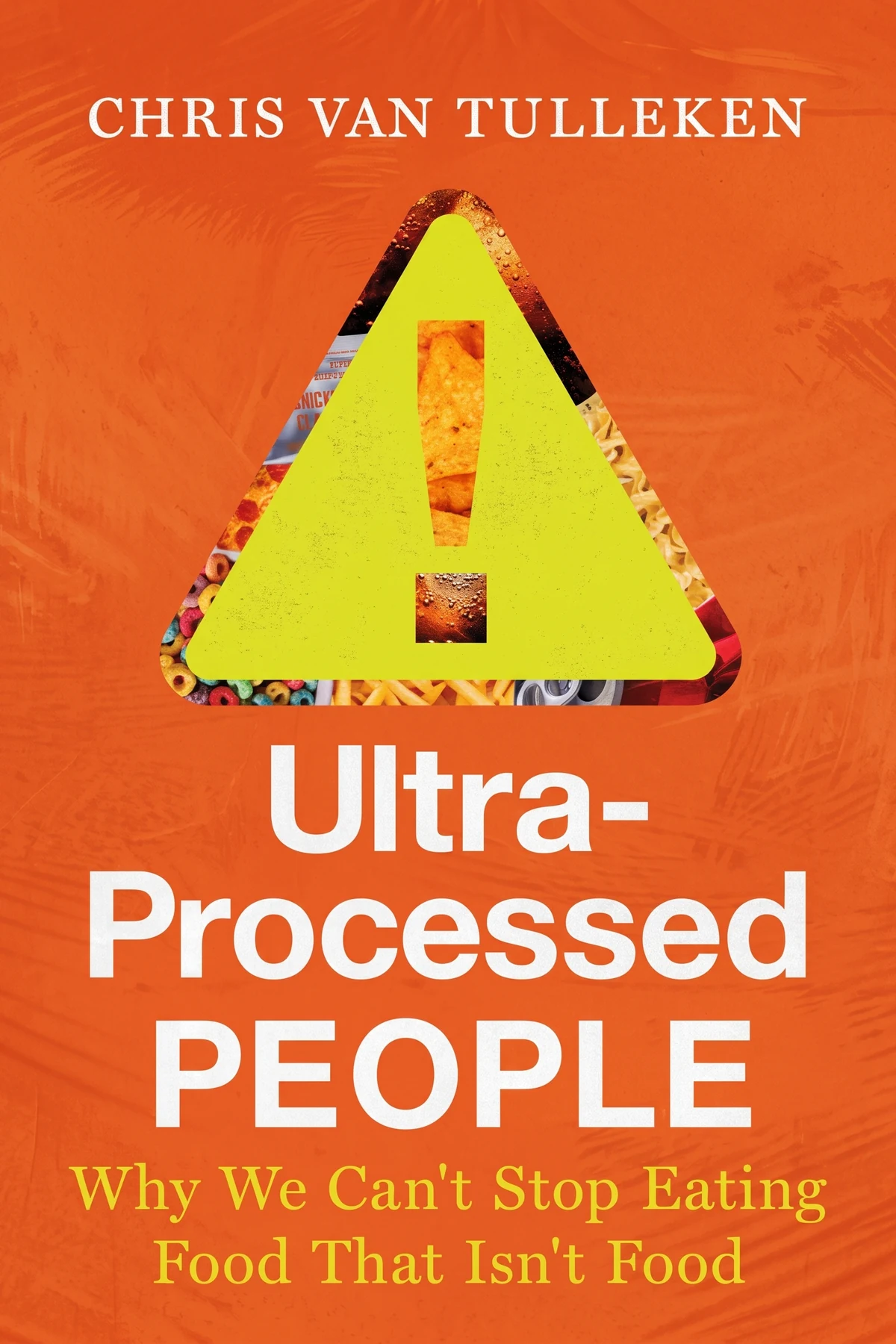
Table of Content
1. Introduction
1 min 00 sec
If you keep trying to eat better and keep slipping, Chris van Tulleken offers an unsettling explanation: much of what you eat may not be food at all. In Ultra-Processed People, the London infectious diseases doctor argues that ultra-processed food, as much as 60 percent of the average diet in the UK and the USA, is a new class of substance. It is assembled from cheap commodity ingredients and shaped by decades of sales to be eaten in the largest possible amounts. That is why the struggle feels so hard: the product is doing what it was designed to do.
His case runs from a ball of pistachio ice cream that refused to melt, through a hospital trial and a month of eating like one in five Britons, to the investors who keep the shelves stocked. By the end, you will be able to recognize this food at a glance, explain why diets and gym sessions lose against it, and start eating less of it without guilt or a meal plan.
2. Spot ultra-processed food with two quick tests
2 min 01 sec
A child’s ice cream sat on its cone in the summer heat without melting. Its label pointed to a category most shoppers eat from every single day without ever being able to see it.
3. See what makes cheap food so cheap
2 min 14 sec
One tub of vanilla costs about fourteen times as much as another. The difference sits in the ingredients list, and in a trick that goes back to an emperor’s prize.
4. Matched nutrients can still make you overeat
2 min 20 sec
Two diets were matched for salt, sugar, fat and fiber, and rated equally tasty. People still ate hundreds more calories on one of them, and a doctor’s own month of eating told the same story.
5. Your fullness signals work until food fools them
2 min 04 sec
Infants left to choose their own meals once balanced their diets with no adult help at all. Something in modern food breaks that ancient skill, and a tube of snack chips shows exactly how.
6. Stop blaming willpower for what the shelves decide
2 min 06 sec
Obesity rose in every group at once, while one government wrote 689 policies against it. The story of two identical twins explains what all those policies kept missing.
7. Quit ultra-processed food by eating it
2 min 07 sec
The companies cannot change their recipes even when their own bosses try. The author’s advice for escaping their products starts with something no diet book would ever tell you to do.
8. Conclusion
1 min 17 sec
Ultra-Processed People opens in a virology lab, with old genes locked in an arms race against the genes that hold them down, an image that explains the rest. For billions of years, eating was a contest for energy that shaped our teeth, our senses and our appetite. Over roughly the past 150 years a second contest has taken over, run on money, in which the products that survive are the ones we overeat. In van Tulleken’s picture, we are the prey and the food is the bait.
Once you see eating this way, much of the shame people carry about weight loses its footing. A body that can balance an infant’s diet across 34 dishes is not broken. It is being fed substances made to slip past it.
The practical side follows from that. Read one ingredients list a day and ask what each unfamiliar item is doing there. Notice how fast a soft, dry snack disappears and how soon hunger returns, then compare it with something you have to chew. And before you judge anyone’s willpower, your own included, look at what is on the shelves around them.
Lyra’s pistachio ice cream held its shape on the cone because it was built to travel, to last and to be eaten again. Now you can read that on the label.
About this book
What is this book about?
Most people who try to eat better are told to count calories, cut sugar, exercise more and find more willpower. Chris van Tulleken, an infectious diseases doctor and associate professor at University College London, argues that this advice misses the real change. For the first time, most of the calories in countries like the UK and the USA come from ultra-processed food. These are products rebuilt from cheap commodity ingredients and additives, and selected over decades for one trait: being bought and eaten in large amounts. He makes the case through his daughter's unmelting ice cream, the history of margarine and Crisco, a hospital trial in which people overate on carefully matched diets, and a month he spent eating mostly ultra-processed food himself. He shows how soft, dry, flavor-boosted products get past the body's fullness signals, why sugar, exercise and willpower are weak explanations, and why the companies cannot change course on their own. Readers get a simple test for spotting this food, a clearer and kinder way to think about weight, and an unusual method for eating less of it: keep eating, read the labels and let understanding do the rest.
Book Information
Who it's for
Doubting it's just willpower
People who keep failing at diets and suspect the problem is bigger than willpower.
Parents puzzled by snacking
Parents puzzled by how much cereal and snacks their children can eat in one sitting.
Health workers and managers
Health workers and team leads who want an evidence-based way to talk about food without shaming anyone.
About the Author
Chris van Tulleken
Chris van Tulleken, known to many as Dr Chris, is a British physician who works as an infectious diseases doctor and holds a PhD in molecular virology. He is an associate professor at University College London. He is also a writer and a BAFTA-winning broadcaster, widely known for the 2018 BBC One special The Doctor Who Gave Up Drugs, and he has presented programs such as the children's series Operation Ouch! with his identical twin brother, Xand.
Ratings & Reviews
Ratings at a glance
What people think
Listeners find this work to be deeply investigated and educational without coming across as condescending, making it essential for those interested in wellness. The prose is also skillfully composed, and listeners value the way complicated data is translated into everyday speech for an accessible experience. Furthermore, listeners share that the content has altered their dietary choices and reshaped their view of what they eat. Nevertheless, opinions are divided regarding the discussion on processing techniques; some like the attention given to ultra-processed products, while others raise doubts.
Top reviews
Kanchana
Ever wonder why you can't stop eating that bag of chips even when you aren't hungry? This book explains exactly how the food industry hacks our brains. Van Tulleken’s definition of UPF—anything with an ingredient you wouldn’t find in a home kitchen—is a total game-changer for how I shop now. I loved that it wasn't preachy; instead, it felt like an investigative journey into the weird 'edible substances' we’ve been told are food. Frankly, the part about xanthan gum being bacterial slime was enough to make me rethink my salad dressings. It’s an easy read despite the heavy science, and I've already started clearing out my pantry.
Show morePhichai
Picked this up on a whim and I haven't been able to stop talking about it since. The author’s experiment of eating an 80% UPF diet for a month was terrifying to witness, specifically the changes in his brain MRI and hormone levels. It really highlights how these products are engineered to bypass our fullness signals. I used to think my snacking was just a lack of willpower, but now I see it as a physiological reaction to ultra-processing. The writing style is approachable and funny, making complex metabolic science accessible to everyone. Truly, this is a must-read if you want to understand the link between modern food and chronic illness.
Show moreAir
Wow. I will never look at a protein bar or a loaf of supermarket bread the same way again. Van Tulleken exposes the loophole where companies can self-determine if an additive is safe, which is absolutely chilling. The way he breaks down the history of the food industry is both enlightening and infuriating. Truth is, we are living in a giant human experiment without our consent. I particularly liked the 'plastic wrap' rule because it’s a simple, non-preachy way to evaluate what I’m buying. It has completely changed my grocery shopping habits without making me feel guilty about my past choices.
Show moreRapee
Finally got around to reading this and it lived up to the hype. The author manages to take complex nutritional data and turn it into a page-turner that feels like a thriller. I was particularly struck by the discussion on how obesity isn't a moral failure but a biological response to addictive, ultra-processed 'food.' The book is thoroughly researched and provides a clear-eyed look at the global health crisis. I loved the casual yet professional tone throughout. It’s rare to find a book that changes your worldview while being so genuinely entertaining to read.
Show moreKasemsan
After hearing Chris on a podcast, I knew I needed the full story, and this book delivered. The list of ingredients in a standard Reese's bar compared to actual food is eye-opening and frankly disgusting. It makes you realize that most of what we eat isn't even food anymore—it’s just a collection of chemicals. I appreciated the nuance regarding class and how many people simply don't have the time or money to avoid UPF. The book offers a systemic critique rather than just giving individual diet advice. It’s a powerful call to action for better government regulation and food education.
Show moreAna
A solid read that definitely makes you think twice about your next trip to the grocery store. I liked how he tackled the 'health claims' on packaging—if it says it's healthy, it's probably UPF! The writing is very readable and he explains the science of 'soft' food and how we chew less, leading to overeating. Some parts felt a little bit too focused on his own personal life, which didn't always add to the argument. That being said, the overall impact of the book is profound. It’s a necessary look at why our modern diet is making us so sick.
Show moreSuthinee
As someone who already cooks most meals from scratch, I didn't think I'd learn much, but I was wrong. The sections on how UPF affects the microbiome were fascinating, even if some of the mouse studies felt a little speculative. I appreciated that he didn't blame the individual, focusing instead on how governments and corporations have failed us. Look, the book can be a bit long-winded when he talks about his brother and daughter, which slowed down the pacing for me. However, the information about 'industrial edible substances' is so vital that I’m recommending it to everyone I know. It's not just about weight; it's about what we're actually made of.
Show moreRin
The chapter on emulsifiers alone is worth the price of the book. I’ve always wondered why my stomach felt off after certain meals, and now I have a much better idea of why. Van Tulleken writes with a lot of empathy for the consumer, which I found refreshing in the health space. My only gripe is that the middle sections got a bit repetitive regarding the corporate politics. Still, the core message is incredibly persuasive. It’s hard to ignore the evidence when you see how drastically these foods change our hormone levels. I'm definitely aiming for that 80% real food goal now.
Show moreRay
This book makes some vital points about corporate greed, but I found the scientific rigor a bit lacking in places. To be fair, Van Tulleken is a great storyteller, yet he tends to use dramatic anecdotes—like the DuPont chemical dumping story—to scare readers about additives that aren't actually related. Some of the research felt cherry-picked, especially when he’d dismiss certain studies but embrace others that fit his narrative perfectly. While the core message about eating real food is solid, the winding paths into his personal family life felt a bit self-indulgent. It’s a decent starting point for health enthusiasts, but definitely do your own research before swearing off every single additive mentioned.
Show moreTuck
Not what I expected after hearing all the buzz. While I agree that capitalism in the food industry is a problem, the author’s tone felt incredibly fear-mongering and inconsistent. He describes xanthan gum as 'bacterial slime' to gross out the reader, yet ignores that many traditional fermented foods are made through similar processes. The claim that processed food companies are comparable to Nazis was a bridge too far for me and felt quite silly. I also found his disdain for specific additives like diacylglycerols to be based on incorrect facts about their presence in nature. If you're looking for a serious scientific analysis, you might find this a bit too sensationalist.
Show moreQuestions about this book
What is the main idea of Ultra-Processed People?
Chris van Tulleken argues that ultra-processed food, now as much as 60 percent of the average diet in the UK and the USA, is a new kind of substance. It is rebuilt from cheap ingredients and additives, and the products that survive are the ones people buy and eat most. In a trial matched for salt, sugar, fat and fiber, people still ate about 500 extra calories a day on it.
How can you tell if a food is ultra-processed?
The book offers two quick tests. If a product is wrapped in plastic and lists at least one ingredient you would not normally keep in a home kitchen, treat it as ultra-processed. And almost anything with a health claim on the packet falls in the same group, including organic and free-range versions. Behind these rules sits Brazil’s NOVA system, which defines the category partly by its purpose: making highly profitable products.
Is weight gain about sugar, exercise or willpower, according to van Tulleken?
Not mainly, in his view. He sides with Kevin Hall’s experiments over the sugar and insulin explanation, and uses Herman Pontzer’s work with the Hadza to argue that daily energy use barely changes with activity. On willpower, he points to American surveys showing obesity rising in every group at once from the 1970s, which he says no sudden failure of personal responsibility could explain.
How do you stop eating ultra-processed food?
Van Tulleken’s method is to keep eating it while you learn, borrowing the approach of Allen Carr’s book on quitting smoking. Read the labels, ask why each industrial ingredient is there and let disgust build without shame. His own turning point came when scientist Fernanda Rauber told him his dinner was an industrially produced edible substance. He also stresses that real food takes money, time and skills many people lack.
Who should read Ultra-Processed People?
It suits anyone who has struggled with diets and wants to understand why, parents worried about how much cereal and snacks their children eat, and health professionals who want evidence beyond calories and nutrients. The author stresses it is not a weight-loss book and offers no diet plan. It gives readers a way to recognize ultra-processed food and to see the system that puts it on the shelves.
Readers also enjoyed






AUDIO SUMMARY AVAILABLE
Listen to Ultra-Processed People in 15 minutes
Get the key ideas from Ultra-Processed People by Chris van Tulleken, plus 5,000+ more nonfiction titles.
- 5,000+ titles
- Listen as much as you want
- 7-day free trial
- Cancel anytime









