

A Promised Land
Barack Obama
 English
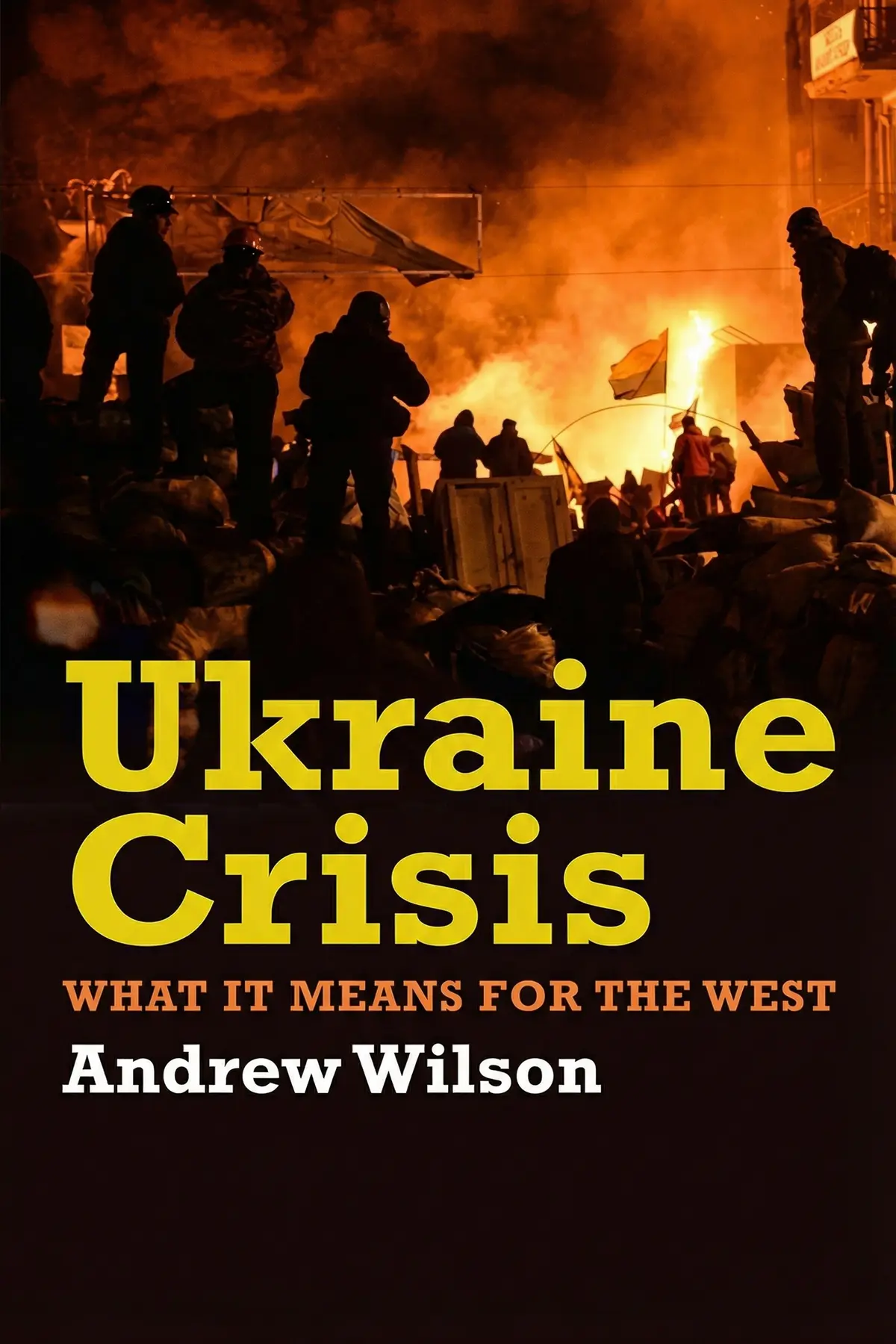
Explains how years of corruption, Russian money and European hesitation left Ukraine open to the 2014 uprising, the loss of Crimea and war in the Donbas, and why Andrew Wilson fears a new Cold War.
1 min 02 sec
If the war in Ukraine reaches you only through headlines, it can look like a sudden explosion with no clear cause. In Ukraine Crisis, Andrew Wilson, a professor of Ukrainian studies at University College London, traces it to a slower rot: for years, Ukrainian politics was up for sale, and Moscow was the most eager buyer.
Wilson’s argument runs in a straight line. A country squeezed between Russia and the European Union fell into corruption that Russia exploited and Europe ignored. When Ukrainians finally rose up and drove out their president, Vladimir Putin used the confusion to seize territory, and the West found it had few ways to respond.
Along the way come a hacked vote count, a fleeing leader said to have carried billions in cash, and a peninsula taken by a few dozen masked men. Follow the thread and the news about Russia and its neighbors starts to make sense, including why Wilson fears a new Cold War.
1 min 45 sec
One neighbor controls the fuel that keeps Ukraine running. The other offers a path toward reform and trade. Wilson shows why standing between them turned into a trap, and why Europe chose the easy option.
1 min 38 sec
Russia holds elections, has a parliament and calls itself a democracy. Yet Wilson describes a system where money, fraud and fear decide outcomes, and where reporters at a rally face more danger than the protesters.
1 min 55 sec
Ukrainians filled a square in the capital, forced a court to cancel a rigged result and elected their own candidate. It looked like victory. Wilson explains why the country ended up in a worse place than before.
2 min 10 sec
A refused trade treaty sounds like a dull reason to fill a city square in winter. Wilson shows what was really at stake for the protesters and for a president with a great deal to lose.
1 min 41 sec
No large army rolled across the border. A small group of masked men appeared, and a region of Ukraine changed hands almost without a fight. Wilson explains what had already gone wrong long before they arrived.
1 min 52 sec
Eastern Ukraine looked like a repeat of Crimea, with the same population and the same playbook. This time the outcome was very different, and a passenger plane full of civilians was caught in the middle.
1 min 50 sec
Sanctions, a food embargo and a president who mourns a lost empire. Wilson argues that a conflict many Westerners see as distant has already changed the relationship between Russia and the West, and may not end in Ukraine.
1 min 13 sec
Wilson’s book reads as a warning written while events were still unfolding. Ukraine did not fall into crisis overnight. It was weakened for years by corruption that Moscow paid for and Europe chose not to see, and when its people finally threw out a corrupt president, Putin treated the moment of change as a moment of weakness. Sixty masked men in Crimea proved how cheap that weakness had become.
The larger point concerns the West. Europe hoped that ignoring Ukraine’s troubles would keep it out of a fight, and Wilson argues it only let them grow. A Russia willing to redraw borders, facing a European Union with thin armies and a dependence on Russian fuel, is the setting he describes as a possible new Cold War.
The book offers a sharper way to read the news. When a country near Russia makes headlines, look first at who controls its energy and who funds its politicians. Then notice whether outside powers act early or only once a crisis turns violent. In Ukraine, help arrived only after the violence began, and within weeks Russia was moving to redraw the map.
When protesters drove Ukraine's president from power in 2014 and Russia seized Crimea soon after, much of the world was caught by surprise. Andrew Wilson argues it should not have been. For years, Ukrainian politics had been for sale, with oligarchs, clans and Russian money shaping decisions while the European Union looked away. Wilson traces the story from independence in 1991 through a hacked presidential vote, the Orange Revolution and its disappointments, and the second wave of protests on Kiev's Maidan that followed the rejection of an EU agreement. He then shows how Vladimir Putin used the confusion that followed, taking Crimea with a handful of masked soldiers and backing a rebellion in the Donbas that turned into war. Readers get a clear account of the forces pulling Ukraine between Russia and the West, the tools Putin uses to extend his reach, and the reasons Wilson thinks other countries near Russia could face similar crises, with relations between Moscow and the West at their lowest point since the Iron Curtain fell.
Professionals who follow news about Russia and Ukraine and want the background behind the headlines.
Students of politics or international relations looking for a clear account of the 2014 crisis.
People whose work touches European energy, trade or security and who need to understand the risks in the region.
Andrew Wilson, born in Cumbria, England, in 1961, is a professor of Ukrainian studies at University College London, where he works in the School of Slavonic and East European Studies. He is also a Senior Policy Fellow at the European Council on Foreign Relations, a role that connects his scholarship on the region to policy debates. His other books include The Ukrainians and Virtual Politics.

Listeners find the work highly educational and compelling, with one review praising its thorough coverage of contemporary developments. Furthermore, the book’s academic depth earns praise, with one listener describing it as the finest initial response to the situation in Ukraine. Conversely, opinions vary regarding the author's prose and how individuals are portrayed. Also, several listeners mention that the text exhibits significant bias.
To try to start understanding the complex mess of modern geopolitics, this is essential reading for everyone. Wilson delivers a detailed and fascinating account of the events leading up to the Donbas rebellion and the fall of the Yanukovych regime. I was moved by the descriptions of the popular protests and the tragic human cost of these political games. The book stands as a powerful sign of support for all people who believe in 'no war' and seek truth over propaganda. Even with the minor criticisms of his writing style, the sheer volume of facts makes this a vital historical document. It explains the 'green men' and the 'Family' mafia circle with clarity. Every page reveals how fragile democracy can be when faced with cynical manipulation. Truly an informative and necessary piece of work.
Show moreWow, the sheer amount of detail regarding the 'political technologists' and their fake democracy scripts is staggering. Wilson has written what I consider the best first reaction to the events in Ukraine. He perfectly captures the essence of Yanukovych—a man who wanted to be both president and the number one oligarch. The way he describes the 'green men' and the covert funding of NGOs provides a masterclass in modern hybrid warfare. It’s a fascinating, scholarly account that doesn't shy away from the gritty details of bribing politicians and setting up front parties. For anyone who wants to look past the propaganda and see the machinery of the state, this is the book. It’s dense, informative, and absolutely vital. I couldn't put it down despite the complexity of the subject matter.
Show moreWilson provides a remarkably dense chronology of the 2014 upheaval that changed the face of Europe forever. The book excels when it dives into the world of 'political technologists' and the cynical manipulation of democratic systems by the Kremlin. It reads like a high-stakes political thriller, though the historical weight is very real. I found the analysis of Yanukovych’s 'Asiatic despotism' particularly insightful compared to the more medieval monarchical style of Kuchma. While the writing occasionally feels like it was rushed to press to remain topical, the scholarly content is top-tier. You get a real sense of the corruption within the 'Family' inner circle and how that triggered the Maidan. It is a fascinating, if sometimes harrowing, look at the mechanisms of modern power. To be fair, it provides the best first reaction to the crisis I have come across so far.
Show moreAfter hearing so much about the 2022 escalation, going back to Wilson’s 2014 analysis is an eye-opening experience. He captures the immediate shock of the annexation and the West’s total confusion in the face of Russian 'soft power' and covert bribery. The chapter on the 'anti-fascist' narrative was especially enlightening, showing how labels are manipulated for propaganda. It highlights the shortsightedness of Western political agendas that ignored the breakaway regions for far too long. I appreciated the critical look at both Russian aggression and the internal failures of the Ukrainian elite to implement real reform. Wilson doesn't hold back on the missed opportunities of the post-Orange Revolution years. This is a very informative resource for anyone trying to understand the roots of today's conflict. It helps connect the dots between 2004, 2014, and the present.
Show moreWilson’s background as a historian shines through in the way he dissects the Kremlin's warped view of 'soft power.' He provides an amazingly accurate assessment of how the Yeltsin-Putin regime transitioned into a monopoly of manipulation. The book is scholarly and detailed, moving beyond simple headlines to explain the 'political technologists' behind the scenes. It’s striking how he predicts that parliament might become more patriotic but not necessarily more reformist. This proved to be quite prescient given the events that followed. While some readers find the tone biased, I think he’s just being realistic about the cynical nature of the actors involved. The prose is dense, which requires some patience, but the payoff is a much clearer understanding of the 2014 crisis. It's a solid, fascinating read for history buffs.
Show moreEver wonder how Russia managed to annex Crimea so swiftly while the West stood by in confusion? Wilson breaks down the covert methods and the bribing of local politicians in a way that is both informative and fascinating. He mentions the Brzezinski quote about the 'category mistake' of Western policy, which provides a great framework for the whole book. The writing is a little 'rough-draft' in places, but the specific elements regarding the Donbas rebellion are excellent. It clearly shows how the West’s shortsighted political agenda backfired in the post-Soviet space. Even with the occasional awkward phrase, the depth of the scholarly content makes it a worthy addition to your shelf. It’s a sobering look at how the region has been used as a geopolitical chessboard. Definitely worth the time if you want the full picture.
Show moreThis felt like a collection of hurried newspaper columns rather than a cohesive, polished academic study. The truth is, the information is incredibly detailed, but the prose suffers from a distinct 'rough-draft' vibe that can be distracting. Some sentences are quite clunky, like the odd remarks about Western Europe becoming post-modern. Still, the book serves as a solid overview of the standard topics: the Orange Revolution, the 'green men' in Crimea, and the war in Donbas. It captures the essence of the crisis well enough for a casual reader. However, it lacks a certain depth of analysis regarding the long-term aftereffects of the Cold War. It’s a decent primer, but don't expect a literary masterpiece. It covers the ground without breaking much new soil.
Show morePicked this up to learn more about the vertical power structures in Kyiv, but found it a bit hit-or-miss. The comparison between Kuchma’s 'barons' and Yanukovych’s Asiatic style of rule was a highlight for me. However, much of the rest feels like a standard list of topics any news-obsessed citizen already knows by heart. We get the two revolutions, the shooting down of the civilian plane, and the annexation of Crimea. The writing is very rough, almost like the author was typing as the events were still unfolding in real-time. It’s informative, sure, but the lack of a final polish makes it hard to recommend over more recent, more refined scholarship. It’s a good 'first draft' of history, but it feels dated already. Use it as a reference, not a definitive guide.
Show moreFrankly, the book struggles to balance its desire to be an immediate response with the need for deep reflection. It is undeniably informative, and Wilson’s knowledge of the region is impressive, but the execution is often clunky. I noticed several passages where the expression of ideas felt incomplete or distracting. For example, the discussion on Right Sector felt a bit shallow compared to the complex reality of Ukrainian nationalism. To be fair, it’s a great first reaction to the crisis, but it misses the polish of a well-edited volume. The content is scholarly, yet the delivery is unpolished. If you can get past the awkward phrasing, there is a lot of valuable information here about the 'anti-fascist' narrative and the Donbas. It’s a middle-of-the-road experience for me.
Show moreNot what I expected from a scholarly work because the bias is palpable on almost every page. The author clearly writes from a very specific Western perspective, which often results in a one-sided interpretation of complex regional history. It feels like a summary of Western newspaper coverage rather than a deep dive into the nuances of the post-Soviet space. The writing is incredibly unpolished and many ideas seem half-baked or rushed. Look, if you want a standard pro-EU take on why things fell apart, this is fine. But if you’re looking for a balanced, three-dimensional analysis of the internal dynamics in both Russia and Ukraine, you will be disappointed. It lacks the intellectual depth required for such a volatile subject. Frankly, it’s a bit of a slog to get through the awkward phrasing and repetitive points.
Show moreWilson argues that Ukraine’s 2014 crisis grew out of years of corruption that Russia exploited with money and propaganda while the European Union mostly looked away. When Ukrainians drove out President Yanukovych, Putin used the turmoil to annex Crimea and back a rebellion in the Donbas. Wilson concludes that the crisis may signal a new Cold War, with the EU struggling to respond to a Russia willing to redraw borders.
In November 2013, Yanukovych’s Russian-backed government rejected an association agreement with the EU that aimed to fight corruption in government and the courts. Wilson says Yanukovych refused because the deal would have stopped him draining public money for himself and his friends. Many Ukrainians saw the agreement as their only hope for reform, and the protests grew sharply after he ordered troops to use force.
Wilson points to Ukraine’s weak military, underfunded for decades, and to Yanukovych spending more on territorial troops than on national forces. When masked Russian soldiers arrived while the new government was still settling in, Ukraine could not respond. According to Wilson, 60 masked men with Kalashnikov rifles were enough to secure a referendum confirming Russian rule over the peninsula.
Wilson argues that relations between Russia and the West hit their lowest point since the Iron Curtain fell, with Western sanctions met by a Russian food embargo. Putin has called the Soviet collapse a catastrophe and wants to rebuild ties with former Soviet states. Because Europe’s armies are weak, Wilson cautions that Moldova, Georgia, the Baltic states, Belarus, Armenia and Azerbaijan, among others, might face comparable conflicts.
The book offers a lens for reading the news about countries near Russia. Ask who supplies their energy, who funds their politicians and how strong their army is, since those pressures shaped Ukraine’s crisis in Wilson’s account. Watch, too, whether Western powers act early or only after violence begins, because the EU’s long inaction in Ukraine, he argues, made things worse.
Barack Obama


Masaji Ishikawa

William J. Bernstein

John Rawls

Ben Macintyre




James Shapiro
AUDIO SUMMARY AVAILABLE
Get the key ideas from Ukraine Crisis by Andrew Wilson, plus 5,000+ more nonfiction titles.









