


59 Seconds: Change Your Life in Under a Minute
Richard Wiseman
 English
Shows how to stop living by other people's approval and keep your own values in close relationships, using therapist Kathleen Smith's practical take on Murray Bowen's idea of differentiation of self.
1 min 04 sec
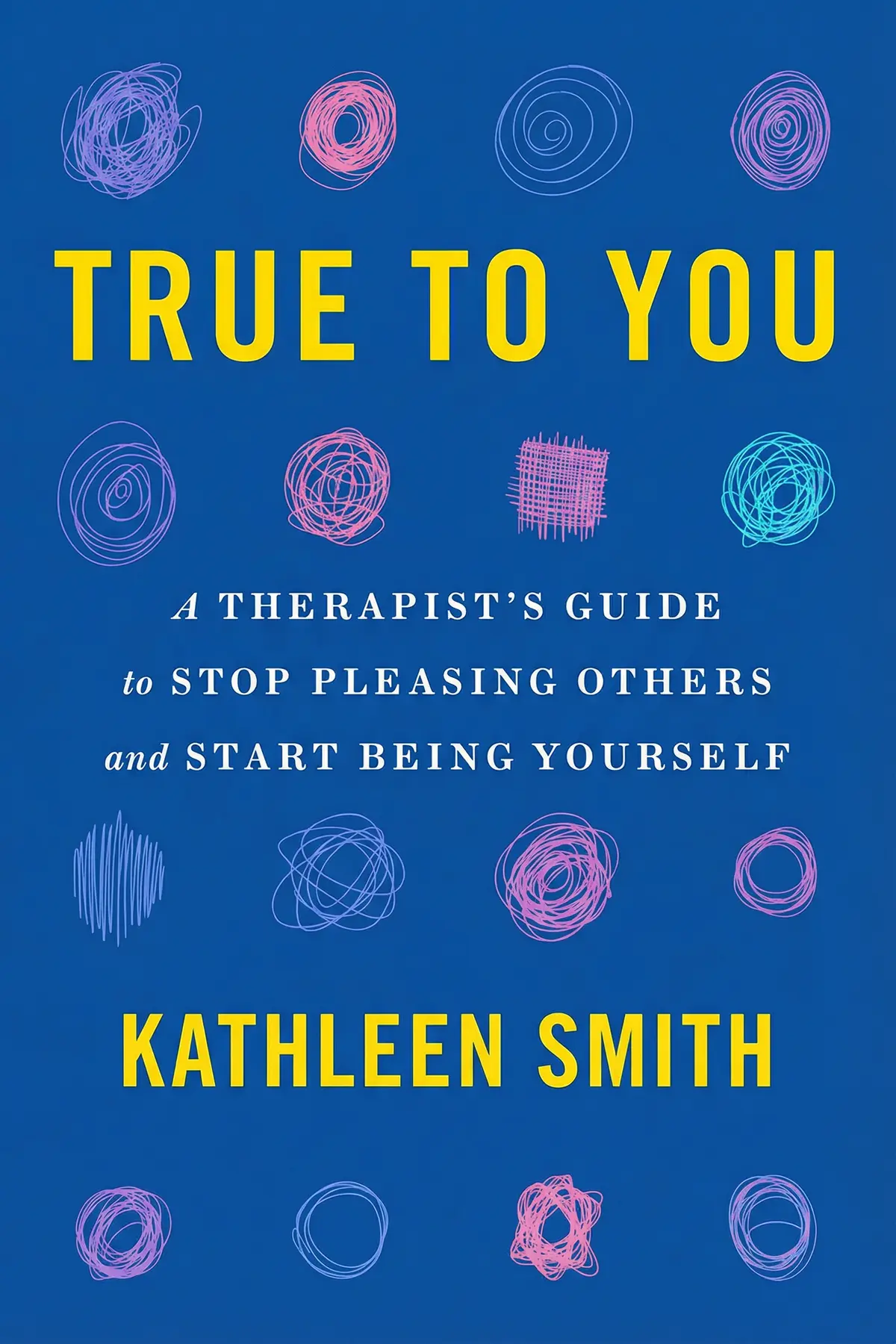
If you agree when you mean to refuse and feel shaky whenever nobody approves, therapist Kathleen Smith has a diagnosis: your sense of self is leaning on other people. In True to You, she draws on the psychiatrist Murray Bowen and his idea of differentiation of self, the ability to stay clear about your own values while staying close to the people around you.
Smith’s argument is that people-pleasing loosens when you stop steering by other people’s reactions and start steering by your own principles, right inside the relationships that matter to you. She takes that idea through four practical shifts. You learn why approval feels so rewarding, how trying to change someone by changing yourself backfires, why anxious guesses about others’ feelings blur your boundaries, and how kinder, more flexible standards give a truer picture of yourself.
Along the way come questions you can use at a tense family dinner or after a hard week at work, and a steadier way to answer them.
1 min 47 sec
Some people can disagree with their family at dinner and still feel close by dessert. Others either give in or pull away. The book’s picture of a tree explains what separates the two.
2 min 00 sec
A word of praise can feel as good as something sweet, and the feeling has deep roots. Smith traces where the craving comes from, and why the family you grew up in shapes how strongly you feel it.
2 min 02 sec
A wife takes over the household when her husband loses his job, and long after he finds new work, nothing changes back. The reason says a lot about how helping can keep the people we love stuck.
1 min 53 sec
The friend who matches up happy couples while their own love life stalls is a familiar figure. Smith links that pattern to a useful mental skill, and to the kind of evidence your mind collects about other people.
1 min 54 sec
Most people misjudge themselves in two opposite directions, sometimes in the same week. Smith points to one small word that keeps the target moving, and to a different kind of yardstick for an ordinary day.
1 min 06 sec
People-pleasing usually looks like kindness from the outside. Smith’s reading makes it look more like a missing center: worth borrowed from praise, energy spent running other people’s lives, days graded on scales someone else designed. Bowen’s idea of differentiation offers a way back that keeps the relationships and returns the self to its place within them, like the tree whose roots hold firm so its branches can reach far.
The practice is small and repeatable. The next time a partner, a child or a colleague frustrates you, ask how you want to respond before asking how to make them change, and step back long enough for them to surprise you. When your mind starts guessing who might be upset with you, pause and ask what you actually know. And at the end of the day, set the word enough aside and ask whether you were present and whether you listened.
None of this needs anyone else’s permission. Every step asks you to change only one person, and that person is the one you can.
Many people know what everyone around them expects and feel vague about what they want themselves. They say yes too quickly, carry other people's problems and judge their worth by praise. Therapist Kathleen Smith argues that the fix lies inside relationships, not away from them. Her guide rests on Bowen theory, developed by the psychiatrist Murray Bowen, and its idea of differentiation of self: holding on to your own beliefs and goals while staying emotionally connected to others. From there Smith explains why approval feels so rewarding and why some families raise adults who crave it. She shows how overfunctioning for a partner keeps that partner from stepping up, and how anxious guessing about others' feelings blurs boundaries. Readers get a set of usable questions. They learn to swap relationship-focused questions for self-focused ones and to work from observable data. They also learn to trade rigid measures of success for flexible, kinder ones, so they can support the people they love without losing themselves.
People-pleasers who say yes too fast and feel lost without approval.
Partners and parents who keep overfunctioning for family members and feel resentful.
Managers and helpers who solve everyone's problems at work but neglect their own lives.
Dr. Kathleen Smith is a licensed therapist and writer based in Washington, DC. She is associate faculty at the Bowen Center for the Study of the Family, which gives her a close working knowledge of the theory behind this book, and she hosts Family Matters, a show from the University of the District of Columbia. Her writing has appeared in Slate, Salon and New York Magazine, and she writes the newsletter The Anxious Overachiever. Her other books include Everything Isn't Terrible.
Listeners find the material captivating and accessible, and one individual suggests it is essential reading for therapists and their clients alike. Furthermore, they value the deep, reflective insights provided, with one listener emphasizing how it offers a fresh framework for viewing social interactions, while another points out the useful questions found after every chapter. Built upon Bowen theory, the work is seen as highly practical by listeners, including one who describes its effectiveness in managing anxiety within relationships. They also appreciate the various examples of common interpersonal struggles that feel very relatable.
After hearing Smith on a podcast, I knew I had to pick up her latest work, and it definitely didn't disappoint. The writing is incredibly smooth and conversational, making it feel less like a clinical textbook and more like a heart-to-heart with a very smart friend. I particularly appreciated how she utilizes systems thinking to help readers understand their roles in family dynamics. It’s not just about you; it’s about how you function within the larger group, whether that’s at work or home. To be fair, some of the concepts felt familiar, but the way she breaks down Bowen theory is accessible for anyone. The composite stories of her clients were relatable and provided a clear mirror for my own behaviors. If you struggle with relationship anxiety, these chapters offer a new paradigm for understanding why you react the way you do.
Show moreWait, why has no one explained Bowen theory like this before? Kathleen Smith has a gift for taking dense, academic concepts and turning them into actionable advice that feels relevant to modern life. I’ve read a lot about relationship anxiety, but the way she frames it through the lens of 'systems' changed everything for me. Personally, I found the chapter on workplace dynamics to be a total game-changer, especially the parts about interrupting old patterns. The book is funny, smart, and doesn’t take itself too seriously while still tackling heavy topics. Each exercise forced me to look at my own family history in a way that was uncomfortable but necessary. This is a must-read for anyone who feels like they’re constantly overthinking their interactions with others. It's a gift to yourself.
Show moreThe way this guide tackles relationship anxiety is nothing short of revolutionary for me. I’ve always felt like I had to choose between being myself and being in a relationship, but Smith shows that both are possible. By using Bowen theory, she illustrates how our multi-generational patterns dictate our current behavior without us even realizing it. Not gonna lie, some of the exercises were pretty challenging to work through emotionally. But the payoff is worth it. I feel like I finally have the tools to stop being a chameleon and start being my true self. The writing is sharp and witty, which helps balance out the heavier realizations about family systems. I’ve already recommended this to three friends who struggle with similar issues. It’s truly a wonder of a guide.
Show moreTruth is, I’ve read a lot of self-help, but the 'systems thinking' framework here feels genuinely fresh. Smith doesn’t just tell you to 'be yourself'; she explains the biological and systemic reasons why that’s so hard to do. I loved the emphasis on equanimity during tricky times and how to spot those old, inherited patterns that keep us stuck. The writing is funny and smart as heck, making the complex elegance of the theory easy to grasp. Each chapter ends with a review of main points, which I found incredibly helpful for retention. Whether you’re part of a family, a workspace, or even an acapella group, you’ll find something here that resonates. It’s a gift of a book that provides a brand-new paradigm for how we interact with the world around us. Highly recommended.
Show moreAs someone who has spent years in the 'people pleaser' trap, this book felt like it was written specifically for my brain. Smith dives deep into how we often sacrifice our true selves just to keep the peace in our relationships. It is incredibly rewarding to finally have a framework that explains why I feel the need to be a different version of myself depending on who I’m with. Look, the work isn't easy, but the practical exercises at the end of each chapter make the process of self-differentiation feel manageable. I loved the emphasis on becoming an individual while still maintaining healthy connections with others. It’s a delicate balance that few books get right. My only minor gripe is that the second half felt a bit less grounded than the first, but the insights on multi-generational patterns were eye-opening regardless.
Show moreFinally got around to finishing this, and I have some thoughts on the way it's structured. Smith’s writing style is effortlessly conversational, which makes the pages fly by. I was particularly impressed by the composite client stories—they felt incredibly authentic and helped me see my own 'silly' or 'wild' traits that I often hide. In my experience, most self-help books fail because they don't give you a way to apply the knowledge, but the review questions here are actually useful. I didn't give it five stars because I felt like the momentum stalled a bit in the middle. Still, the focus on individual maturity versus keeping the calm is a vital distinction. It's a great book club pick because there is so much to discuss regarding how we act as individuals within our larger social groups.
Show moreGotta say, the pop culture references throughout the chapters made the heavy psychological concepts much easier to digest. Smith has a way of making 'systems thinking' feel like something you’d discuss over coffee rather than in a doctor's office. The first half of the book is particularly strong, providing a clear mirror for how we sacrifice our individuality to maintain peace. I appreciate that she doesn't just point out the problems; she gives you a roadmap for growing into a more mature state of being. While I think some sections could have been tightened up, the overall message is powerful. It’s about owning who you are and letting people know what you’re about. Definitely a solid 4-star read for anyone feeling stuck in their social or professional roles.
Show moreEver wonder why you act like a completely different person depending on which family member you're talking to? True to You explores this phenomenon with such clarity and humor that you almost forget you’re learning deep psychological theory. Smith focuses on how we can maintain our own personhood while still respecting the people we love. It’s a tough needle to thread, but the examples she uses make it feel possible. I found the sections on workplace systems to be surprisingly insightful as well. To be fair, I think some readers might find the Bowen theory a bit repetitive by the end, but the practical investigation steps keep it grounded. This is exactly the kind of book you want to read with a trusted friend so you can hold each other accountable for making real changes.
Show moreThis book is a decent entry point for those brand new to therapy, but it might feel a bit surface-level for seasoned self-help readers. Frankly, it probably could have been a long-form essay rather than a full book. I did enjoy the pop culture references sprinkled throughout, as they kept the tone light and engaging. However, I found myself wanting more rigorous depth in the later chapters when it came to actually implementing change. The first half is quite eye-opening regarding how we lose ourselves in systems, but the second half lacks the same punch. It’s an easy read, and the summary points at the end of each chapter are helpful for a quick review. If you’re just starting to look at your family dynamics, this is a solid choice, but don't expect a deep dive into complex psychological theory.
Show moreNot what I expected given the hype around Smith's social media presence. To be honest, most of the advice felt like things I’ve seen on a standard listicle or a basic Instagram infographic. I was looking for something more substantial to help me navigate complex family issues, but this felt a bit too 'Self-Help 101.' The pop culture references were cute but often felt like they were filling space where more clinical insight could have been. It’s an easy read, but for someone who has been in therapy for years, it didn't offer many new strategies or 'aha' moments. If you are totally new to the concept of people-pleasing, you might get more out of it. For me, it was a bit of a letdown compared to her other work.
Show moreSmith argues that people-pleasing fades when you build what psychiatrist Murray Bowen called differentiation of self: keeping your own values and goals while staying emotionally connected to others. Instead of steering by approval or trying to change the people around you, you focus on your own responses, work from observable facts and judge yourself by kinder, more flexible measures. The change happens inside your relationships, which stay close.
Overfunctioning means taking on more and more of someone else’s responsibilities to compensate for them. Smith describes a wife who carried the household after her husband lost his job, and kept doing so after he found new work, so his good habits never returned. Her advice is to step back and give the other person room to step up, even if that brings some short-term mess.
Smith suggests pairing every outward question with an inward one. Instead of asking whether people seem impressed, ask whether your actions fit your values. Instead of wondering whether your parents worry about you, ask how you think you are doing. She also recommends thoughtful attention: calming your anxiety before you respond and accepting that real solutions take time, instead of grabbing the quickest approved fix.
Smith recommends dropping the word enough, which keeps the target moving, and swapping anxious questions for growing ones such as what matters to you and where you have seen progress. She also replaces rigid measures like a spotless house or thousands of likes with flexible ones: were you present today, did you try to listen, did you get some fresh air.
It suits people who feel steered by others’ expectations: chronic people-pleasers, partners and parents caught carrying a family member’s responsibilities, and professionals who manage everyone else’s problems while their own lives slide. Its tools are questions you can use in the moment, such as asking how to manage your own response instead of how to change the other person.
Richard Wiseman





William B. Irvine


Andrew D. Thompson


Deepak Chopra
AUDIO SUMMARY AVAILABLE
Get the key ideas from True to You by Kathleen Smith, plus 5,000+ more nonfiction titles.









