
13 min 38 sec
Available in: English
Transformed: Moving to the Product Operating Model
By Marty Cagan
Explains why technology spending so often fails to produce innovation, and how companies can move to a way of working built on skilled, empowered teams that solve real customer problems while serving the business.
Table of Content
1. Introduction
1 min 04 sec
Many companies pour money into technology and still watch projects stall, and their leaders often cannot say why. In Transformed, Marty Cagan, who held senior product roles at eBay and Netscape, argues that the trouble is rarely the tools or the talent. It is the way the organization is set up to work.
His alternative is the product operating model, a set of principles used by some of the most successful technology companies. In it, teams exist to solve customer problems in ways that also work for the company. The whole argument rests on one claim: real transformation comes from skilled, empowered, cross-functional teams, backed in public by the CEO and built patiently over months.
Cagan shows the model working at a British ticket company whose value climbed from under 500 million pounds to over 2 billion. He also explains how to judge your people honestly, how to map the way you work today and how to keep the effort alive once the early excitement fades.
2. See why tech spending alone stalls innovation
1 min 57 sec
Plenty of companies spend heavily on technology and still feel stuck. Cagan locates the cause somewhere most leaders never look, and he names the three pressures that finally push companies to deal with it.
3. Judge product people by potential, not title
1 min 53 sec
A new job title costs nothing and changes little. Cagan offers one blunt question about every product manager that tells a CEO whether the team can actually carry the new way of working.
4. Build teams that argue toward the best answer
1 min 50 sec
Teams that agree on everything and teams that vote on everything share the same weakness. Cagan describes what real collaboration looks like when a few skilled people gather around a prototype.
5. Copy the order Trainline used to transform
2 min 01 sec
A private equity firm bought an outdated British ticket business and, a few years later, it was worth several times more. The sequence of changes behind that jump matters as much as the changes themselves.
6. Map how you work before changing it
1 min 54 sec
Most transformations drift because nobody defined the finish line or the starting point. Cagan lists the questions that expose how a company really builds products, and the three that matter most.
7. Keep the change alive through the slow months
1 min 49 sec
The middle of a long change is where enthusiasm dies. Cagan’s tactics range from where engineers should sit to what to do on the day one team finally gets a win.
8. Conclusion
1 min 10 sec
Cagan’s case comes down to a change in what a company believes technology is for. In the old setup, technology teams wait for instructions from business leaders. In the product model, small groups of skilled people own a customer problem, argue their way to a solution and answer for whether it works for the customer and the business. Trainline did not get from under 500 million pounds to over 2 billion by buying new tools. It rebuilt its skills, its methods and its choice of problems, in that order.
That makes the starting point plainer than most leaders hope. Write down what the company should be able to do in six months to two years that it cannot do today, and take an honest look at who works there and how they spend their days. Ask honestly whether each product manager has the potential to lead within five years, take engineers along on customer visits, and hold regular sessions to test ideas with real users.
None of it holds without a CEO who champions the change in public. The switch is as slow as moving traffic to the other side of the road, and the companies that finish are the ones that keep the drum beating until the new side feels normal.
About this book
What is this book about?
Many organizations invest heavily in technology and still end up with frustrated teams, stalled projects and systems that promise more than they deliver. Marty Cagan argues that the cause is rarely the tools or the people. It is the way the company is organized to work. His alternative is the product operating model, a framework of principles used by some of the most successful technology companies. Instead of serving requests from business leaders, product teams are given customer problems to solve in ways that also work for the business, and they are held accountable for the results. Cagan explains what that demands of product managers, designers and tech leads, what real collaboration looks like, and why the CEO has to champion the change openly. He grounds the model in the story of Trainline, a British train ticket business whose value climbed from under 500 million pounds to over 2 billion pounds after its transformation. Readers also get a practical starting plan: defining the outcome and timeline, assessing how the company works today, building skills before concepts, and keeping momentum through a change that can take up to two years.
Book Information
Who it's for
Executives disappointed by tech
CEOs and executives who have invested heavily in technology and are disappointed by the results.
Product teams in transition
Product managers, designers and tech leads whose company is switching to empowered product teams.
Wanting a realistic roadmap
Founders and operators who want a realistic plan and timeline for changing how their organization builds products.
About the Author
Marty Cagan
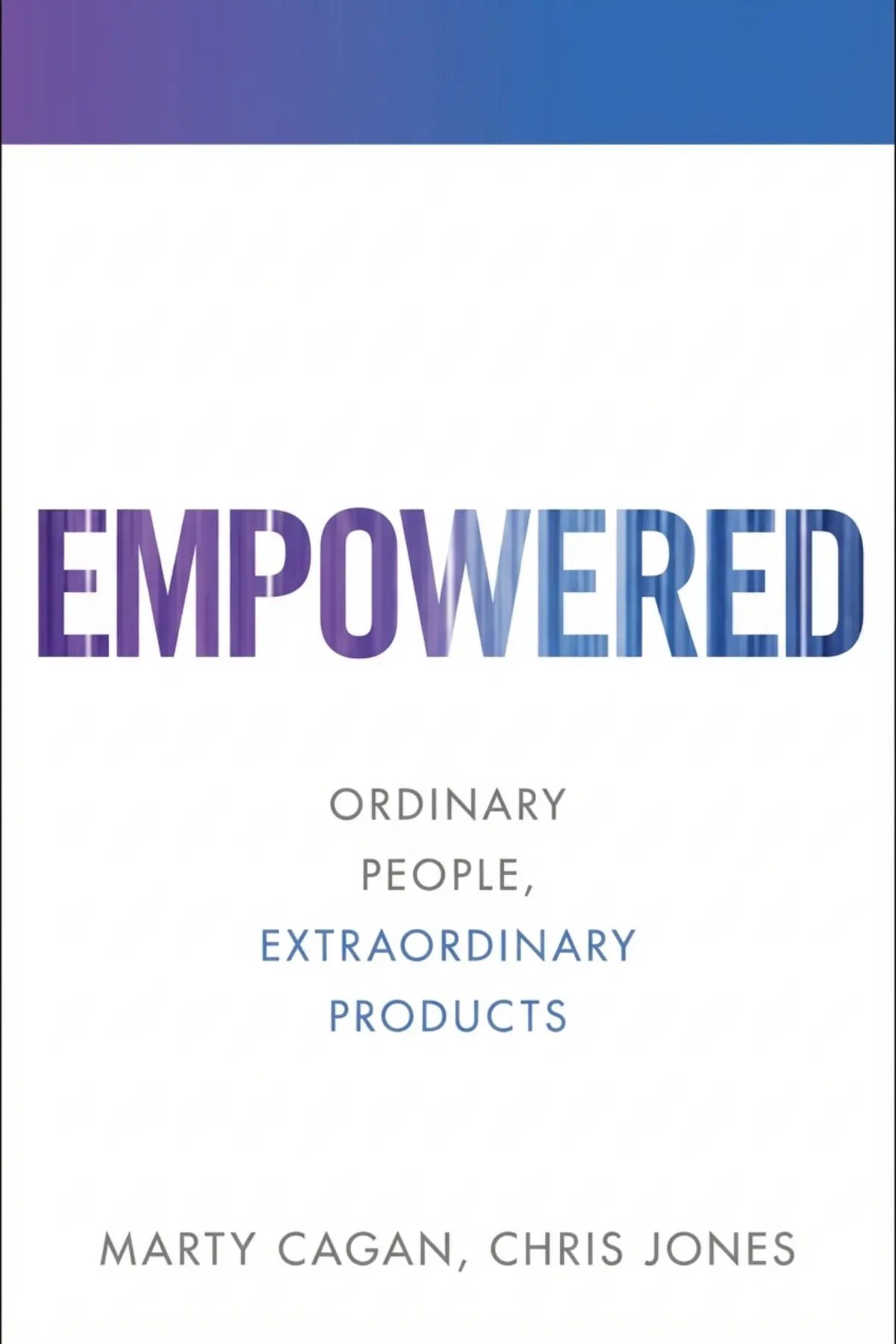
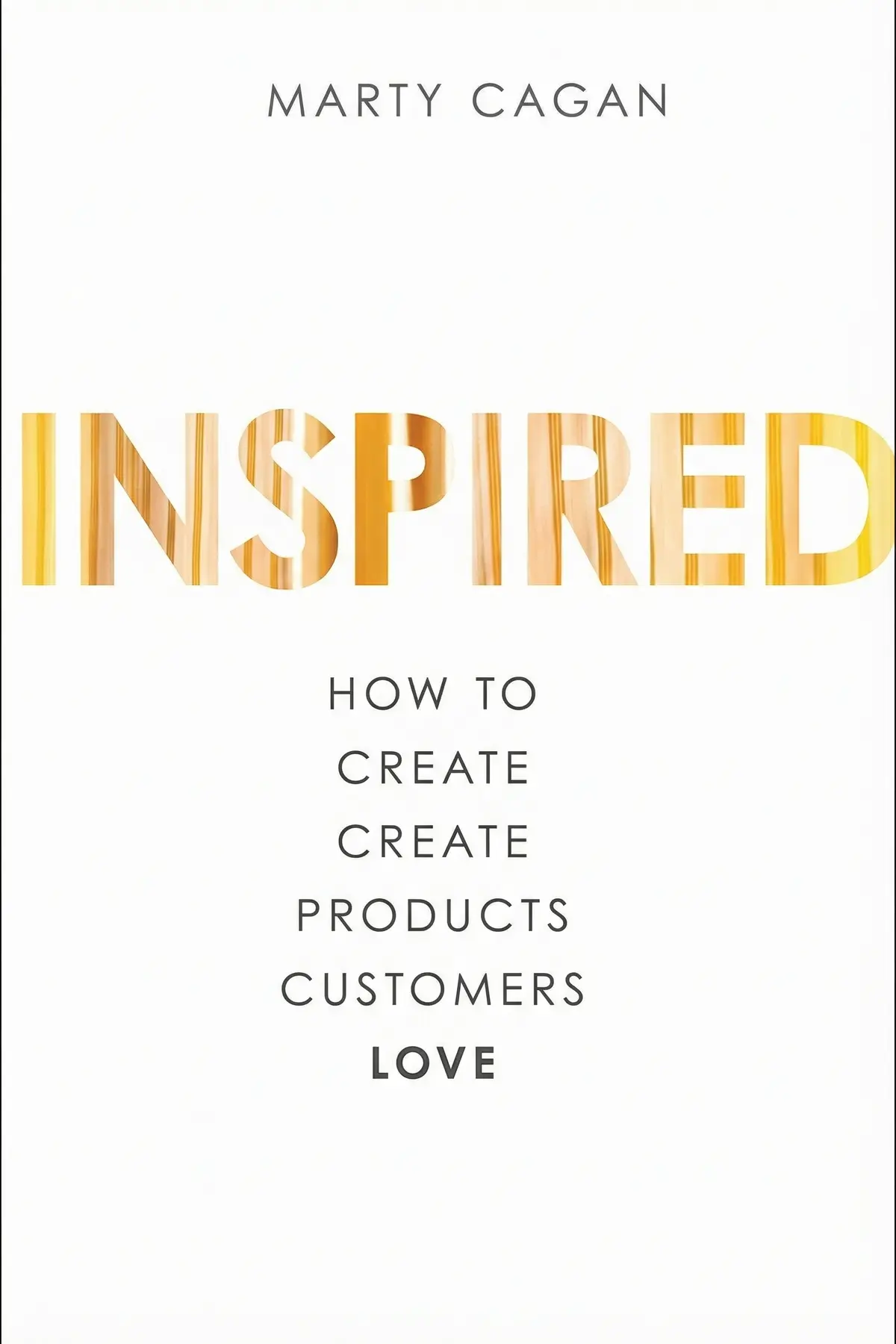
Marty Cagan held senior product roles at companies including eBay and Netscape Communications before founding the Silicon Valley Product Group. He has worked in most of the roles inside a technology product organization, from software development and design to product marketing and general management. Through his firm he writes, speaks, advises and coaches, and companies and conferences around the world invite him to speak. He also wrote Inspired and co-authored Empowered.
Ratings & Reviews
Ratings at a glance

What people think
Listeners find the book's organized structure and smooth, informal tone highly appealing. While some listeners believe the material repeats quite a bit from the author's earlier books, they still consider it a useful guide for companies trying to transition from traditional project-centered approaches. Furthermore, they appreciate the practical case studies provided, with one listener highlighting the "canned answers to difficult questions" as an especially useful resource. They also point out that the work acts as a "valuable reminder about the foundations of good product management" for managers and staff alike.
Top reviews
Cherry
As someone stuck in a feature factory for the last decade, Cagan's latest is exactly the ammunition I needed to start hard conversations with our leadership. The book is incredibly well-structured, following a 'tell you what I'm going to tell you' approach that makes the complex shift to a product operating model feel attainable. I especially appreciated the 'canned answers to difficult questions' section toward the end; it’s basically a cheat sheet for every objection a CFO has ever thrown at me. While it does touch on themes from his earlier work, it centers them specifically on the organizational struggle of legacy firms. Cagan’s conversational writing style makes it an easy read, yet the message is a powerful reminder that empowerment requires eternal vigilance from leadership. If you are a CEO or a product leader trying to drag a 100-year-old company into the 21st century, this is non-negotiable reading.
Show moreAkosua
Marty Cagan has this incredible ability to make complex organizational shifts sound like common sense, even if implementing them is anything but easy. This book is a fine example of professional development literature done right, focusing on the nuances of moving toward a product-led culture. The layout is clean, the chapters are digestible, and the summaries at the end of each section are perfect for busy executives. I personally loved the inclusion of diverse industries in the examples, even if I wished there was more longitudinal data on how these companies held up over five or ten years. It addresses the 'how' of transformation with more empathy for the legacy constraints than his previous books did. Whether you're an individual contributor or a VP, there’s enough here to change how you approach your daily collaboration and vision-setting.
Show moreSuphan
Wow, I didn't expect to walk away with so many highlights from a book that many online were calling 'just a rehash' of Marty's earlier work. While there is certainly some overlap, the focus on the actual process of transformation is what makes this stand out. The way Cagan connects concepts from 'Inspired' and 'Empowered' into a holistic operating model is masterfully done. He doesn't shy away from the reality that this requires a total shift in how a company views its employees and its customers. The case studies, while brief, offer enough of a 'hook' to see these principles in action across different sectors. I especially appreciated the visual continuity with the rest of the series; it looks great on the shelf and the formatting makes it very easy to skim for key points during a meeting. This is a 5-star manual for anyone serious about change.
Show moreSudarat
Finally got around to finishing this, and while it's definitely a 'reheated dish' in some parts, the structure is undeniably helpful for non-tech organizations. The focus on the 'Product Operating Model' provides a clear framework for companies that aren't digital natives. I loved the transparency regarding how essential the CEO is to this process—it doesn't sugarcoat the fact that bottom-up transformation usually fails. However, I do have some minor quibbles. The case studies, like the ones on Trainline and Datasite, were weirdly bifurcated across different chapters, which made following their specific journeys a bit disjointed. I also found the use of the term 'stakeholder' to be a bit vague and politically charged, which Cagan himself seems to acknowledge. Despite that, it remains a valuable reminder about the foundations of good product management for anyone trying to navigate a legacy environment.
Show moreTee
The reality of 'Transformed' is that it isn't really written for the PM in the trenches, but rather for the CxO who still thinks software is a cost center. Cagan does a brilliant job of explaining why the project-based model is killing innovation in the Fortune 500. I found the section on 'high-integrity commits' and the distinction between insourcing and outsourcing to be particularly sharp. Even if you work at a digital-native firm, this book serves as a vital reminder to hold the line against top-down control and the suffocating bureaucracy of 'program managers.' My only real complaint is that the case studies feel a bit like enterprise self-praise; they don't really get challenged or validated by external data. Still, for a department-wide book club, this is a fantastic choice to align everyone on what a modern product organization should actually look like.
Show moreYaowares
To be fair, the jump from project to product is the hardest thing a legacy company can do, and this book provides a decent roadmap for that journey. Cagan is very direct about the fact that most organizations lack the talent or the courage to truly transform. This honesty is refreshing, even if it might sting for some readers. I found the discussion on 'stakeholders' versus 'collaborators' to be a highlight, as it gets to the heart of the political friction in most large firms. While some of the success stories felt a bit like light white papers, the underlying principles are robust. I’m having my entire product team read this so we can use it as a common language when talking to our engineering and sales partners. It’s not a perfect book, but it’s a necessary one for the current market.
Show moreCooper
I was required to read this for a department-wide initiative, and as an engineer, I found it surprisingly readable even if it lacked the technical depth I usually look for. It does a great job of explaining why 'handing off' requirements to a development team is a recipe for failure. The book advocates for a level of transparency and empathy that is often missing in corporate environments. I do wish there were more examples of 100-year-old companies that have successfully shed their hierarchy, as most of the 'successes' here are relatively young companies. But the fluid, conversational style makes the medicine go down easier. It gave me a better understanding of what my PM colleagues are actually trying to achieve when they talk about 'discovery' and 'outcomes.' Overall, it's a valuable resource for anyone in product development.
Show moreAhmed
Ever wonder why every transformation story lately seems to hinge on the 2020 lockdowns? My biggest gripe with this book is the heavy emphasis on the pandemic as the primary catalyst for innovation in the case studies. It makes me wonder: can these organizations sustain this model without an existential global crisis at their heels? The writing is fluid and the concepts are solid, but for a seasoned PM, it feels a bit superficial. There’s a lot of high-level advice that most people at a certain career stage already know. To be fair, if you haven't read 'Inspired' or 'Empowered,' you'll find a wealth of information here. But if you’re a Cagan devotee, you might feel like you’re paying for content you’ve already consumed elsewhere. It's a good reference book, but perhaps not the ground-breaking revolution the hype suggested.
Show morePetch
Look, I love Marty's blog, but if you've been a regular reader of the SVPG site for the last few years, you've already seen most of these ideas. This book feels like a mash-up of his previous two works with some filler profiles of Product Managers thrown in. These profiles almost sound like commercial ads for specific people, which felt a bit off. On the positive side, having all this information in one well-organized place is useful for sharing with my leadership team. It’s a great 'entry-level' book for a company that is just starting to realize their 'feature factory' approach is failing. The advice is general, but the definitions and role expectations are handled well. Is it revolutionary? No. Is it a solid 3-star resource for a non-product organization? Absolutely. Just don't expect deep, actionable technical details.
Show morePiyanart
This felt less like a guidebook and more like a very expensive pamphlet for SVPG's consulting services. Frankly, if you’ve spent any time reading Marty’s blog or his previous books, you’ll find that nearly half of this is just a rehash of 'Inspired' and 'Empowered.' The tone can be quite preachy, often leaning on that 'the best and the rest' language that feels more like a sales pitch than actual practical advice for someone in the trenches. The case studies are particularly disappointing, reading more like light blog posts than deep dives into the messy reality of transformation. It paints a picture of 'product elves' frolicking in a land of rainbows where CEOs just suddenly get it. For those of us actually trying to move a legacy organization away from a project-based model without the benefit of a massive consulting budget, there isn't much here to actually sink your teeth into.
Show moreQuestions about this book
What is the product operating model in Transformed?
Marty Cagan describes it as a framework of principles, not a single process, used by some of the most successful technology companies. It puts technology at the center of the business and gives product teams customer problems to solve in ways that also work for the company. Teams are empowered, cross-functional and collaborative, and they are held accountable for results. Experimentation is one of its core principles.
Why do companies move to the product operating model?
Cagan identifies three common motives. A competitive threat, such as disruption from generative AI, can force a company to adapt or fall behind. A prize, the financial reward for successful innovation, can pull it forward. Frustration also plays a part, when leaders see disappointing results after heavy technology spending. In every case, Cagan argues, the CEO has to champion the change visibly for it to succeed.
How long does a product model transformation take?
According to Cagan, even a company that is serious about change typically needs between six months and two years. He recommends fixing a rough timeline at the outset and spelling out the outcome concretely, meaning the new abilities the company should have afterward that it lacks now. Because the process is long, he stresses keeping momentum by sharing team successes and celebrating smaller accomplishments along the way.
What happened at Trainline in Transformed?
After the private equity firm KKR bought Trainline in 2015, a new CEO and head of product rebuilt how it built products, how it solved problems and how it chose which problems to tackle. Customer interviews revealed seven recurring issues, and the team tested hundreds of ideas, including help finding less crowded trains. The company, bought for under 500 million pounds, was later valued at over 2 billion pounds.
How can I start applying Transformed at my company?
Begin with an honest assessment, ideally with an experienced product coach. Map how products are made today: how customer problems are detected and fixed, when engineers and designers get involved, and how priorities are set. Then ask who works for you, what skills they have and what they do with them. Build competencies through clear role definitions, coaching and in-house engineers, then add discovery sessions and hack days.
Readers also enjoyed



A Year with Peter Drucker: 52 Weeks of Coaching for Leadership Effectiveness
Joseph A. Maciariello




Acting with Power: Why We Are More Powerful Than We Believe
Deborah Gruenfeld

21 Lessons for the 21st Century
Yuval Noah Harari

All In: How Great Leaders Build Unstoppable Teams
Mike Michalowicz

AUDIO SUMMARY AVAILABLE
Listen to Transformed in 15 minutes
Get the key ideas from Transformed by Marty Cagan, plus 5,000+ more nonfiction titles.
- 5,000+ titles
- Listen as much as you want
- 7-day free trial
- Cancel anytime









