

13 min 45 sec
Available in: English
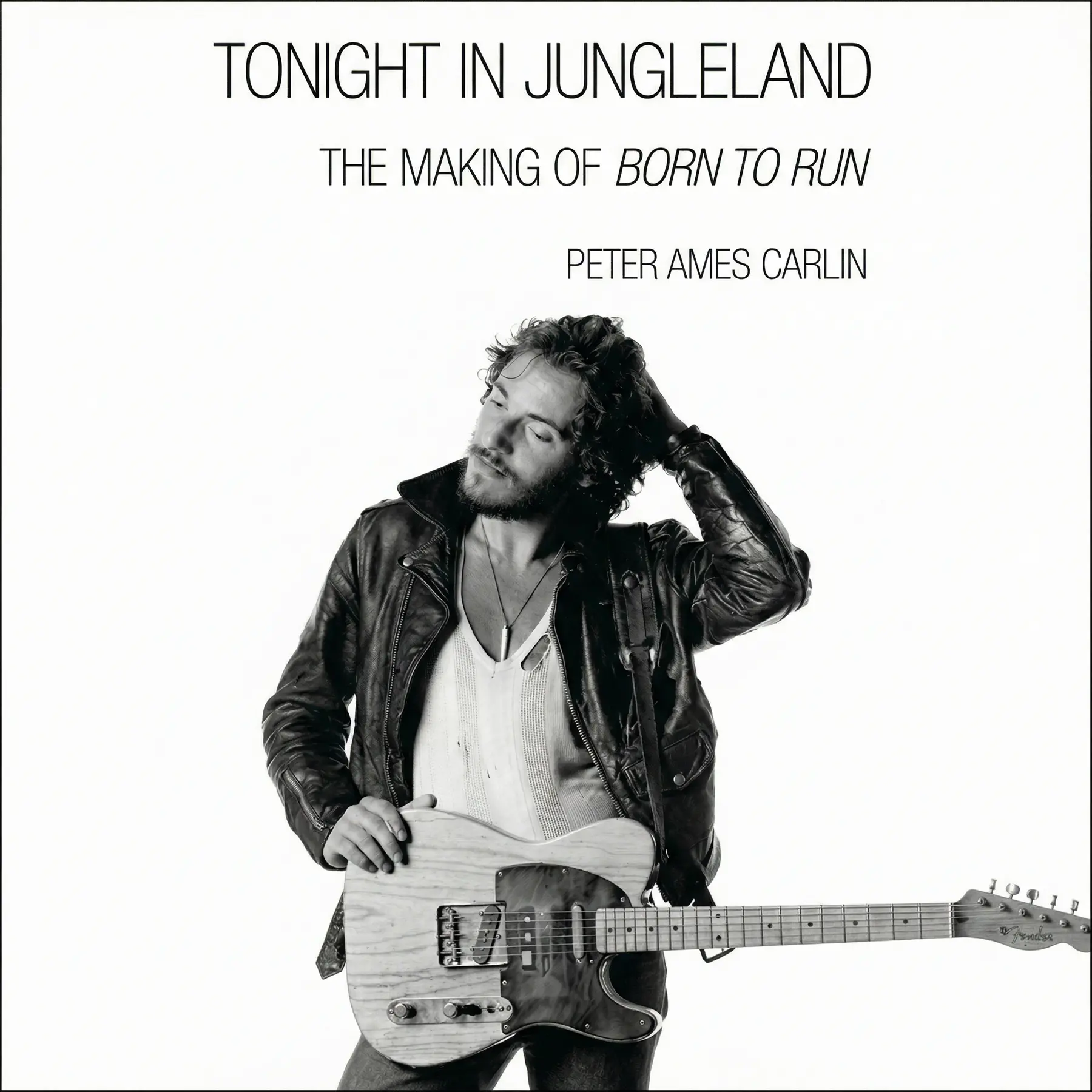
Tonight in Jungleland: The Making of Born to Run
Follow Bruce Springsteen through the firings, rewrites, studio fights and live tests that produced Born to Run. Along the way you see how high standards, trusted collaborators and real audiences turned a struggling bandleader into a national figure.
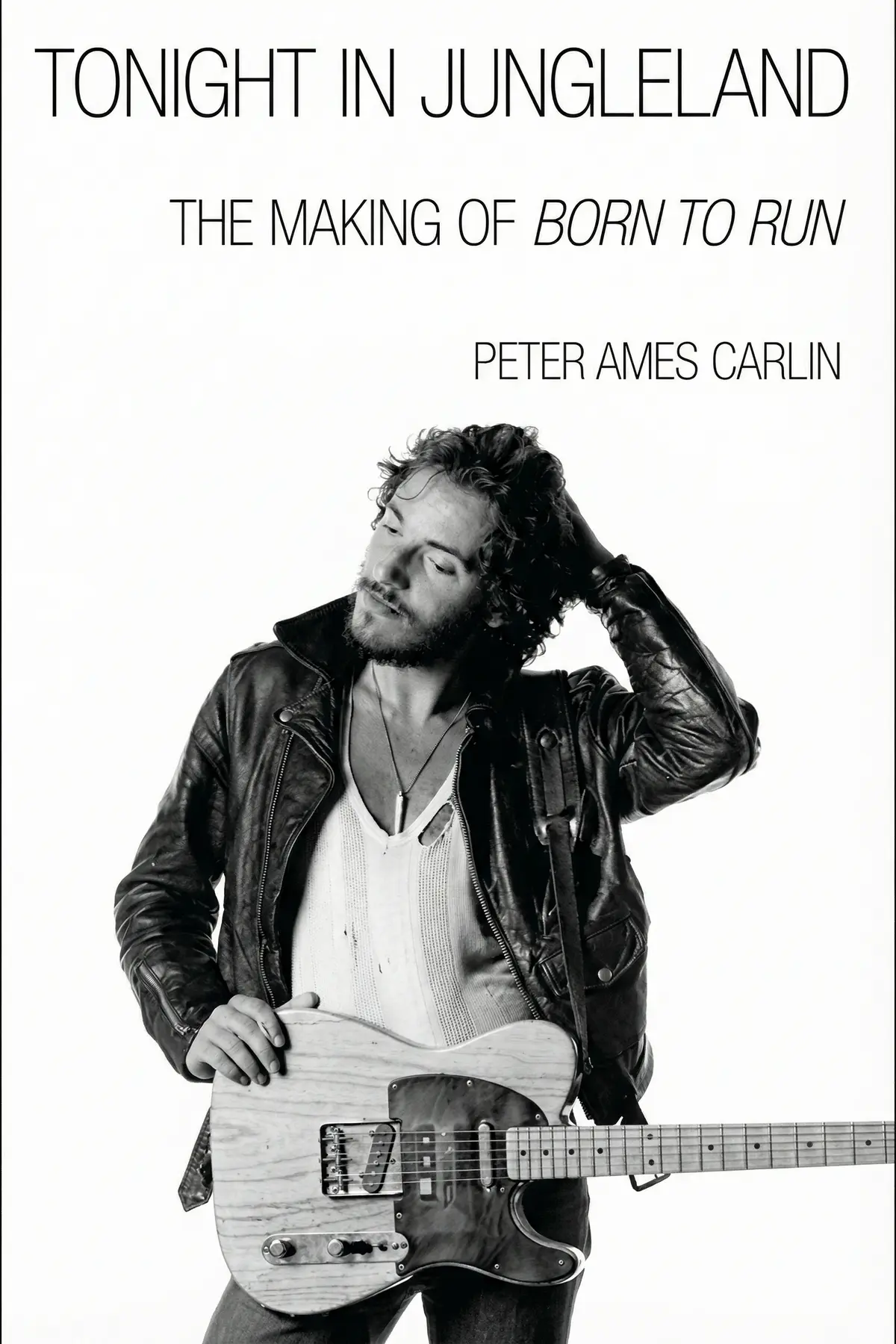
Table of Content
1. Introduction
1 min 05 sec
A lot of talented people get stuck somewhere between praise and a real breakthrough. In Tonight in Jungleland, journalist and music biographer Peter Ames Carlin shows how Bruce Springsteen got past that point in 1975. He held a hard standard while live crowds, radio programmers and a few trusted voices tested every song.
When the work began, Springsteen led a band in New Jersey and had two albums that critics liked and that sold slowly. His label wanted a hit. What he delivered was Born to Run, with Thunder Road, Tenth Avenue Freeze-Out and Jungleland, a record that changed what a rock album could sound like.
Carlin’s throughline is that the near-collapses, the rebuilt band, the shock of fame and the lawsuit did not stop Springsteen. They made clear what he was making and who owned it. His story gives anyone finishing ambitious work under pressure a model: whom to listen to, when to hold firm and when to let the work go.
2. Play the full set even when the executives stay away
1 min 39 sec
A ten-hour drive, a showcase planned for record executives, and not one of them in the audience. How the band answered that snub says a lot about where real momentum begins.
3. Go where your audience already listens
1 min 58 sec
The same band, on the same tour, played to sold-out halls in one city and a nearly empty room in the next. The difference had nothing to do with the music on stage.
4. Let one trusted ear reshape your best song
2 min 02 sec
A finished single sat on a cassette while the label shrugged, and then the band fell apart after its biggest shows yet. The rescue came from a mailbox, open auditions and one adviser’s edits.
5. Give a big project one organizing picture
1 min 58 sec
Talented players and strong songs can still add up to a shapeless record. One simple image, about a single day in one place, decided what stayed, what moved and even what went on the cover.
6. Finish the work when doubt says start over
2 min 02 sec
The album was done by sunrise and the tour bus was waiting. A few days later its creator wanted to throw it all away, and two advisers with opposite styles both helped him decide.
7. Turn a public storm into a clearer purpose
1 min 51 sec
Two national magazine covers in one week should have felt like victory. Instead they set off a backlash, an old private wound and a contract fight that kept him out of the studio for years.
8. Conclusion
1 min 10 sec
Born to Run sounds like one burst of freedom, but Carlin’s account shows how much patience and repair went into it. The band was taken apart and rebuilt twice. A finished single sat on a cassette until the manager mailed it to disc jockeys himself. A critic’s edits turned Wings for Wheels into Thunder Road. Steve Van Zandt, singing raw R&B lines to the horn players one by one, brought life back to a track that skilled professionals had made stiff. Each time, Springsteen kept his standard and let almost everything else change.
The story also carries a warning. The same months that made him famous nearly took his work away, and the hardest fights came after the applause.
If you are finishing something ambitious, choose one or two people whose ear you trust and let them cut and rearrange, as Landau did. When doubt peaks just before release, test the work in front of real people before you decide it needs to be redone.
The test pressing went into the pool, and the record went out to the world anyway.
About this book
What is this book about?
In late 1973 Bruce Springsteen was a hardworking New Jersey bandleader with two albums that critics liked and few people bought. His label wanted a radio hit before it would pay for another record. What followed was nearly two years of rebuilding, rewriting and second-guessing that ended in one of rock's defining albums. Peter Ames Carlin tells the making of Born to Run as a story of pressure and persistence. A drummer was fired and a lineup collapsed. Regional radio stations filled some halls while others stayed empty. A critic named Jon Landau became an adviser who helped turn a song called Wings for Wheels into Thunder Road. The sessions ran all night, the artist nearly threw the finished record away, and two shows a night in a New York club proved it worked. Then came two magazine covers in the same week, a backlash and a lawsuit that locked him out of the studio. Readers get a close, concrete picture of how ambitious creative work actually gets finished: who to trust, when to hold the line, and what sudden success can cost.
Book Information
Who it's for
Music fans
Music fans who want the real story behind Thunder Road, Jungleland and the E Street Band.
Creators and founders
Creators and founders finishing an ambitious project under deadline and pressure from investors or a company.
Facing fame or disputes
Anyone facing sudden attention or a contract dispute who wants to see how one artist came through it.
About the Author
Peter Ames Carlin
Peter Ames Carlin, born in 1963, is a journalist, critic and biographer. He was a senior writer for People magazine and a television critic at The Oregonian, and his articles have appeared in The New York Times Magazine, the Los Angeles Times Magazine, the Times of London and Men's Journal. Much of his work is about music: he has written books on Brian Wilson, Paul McCartney, Paul Simon, Warner Bros Records and R.E.M., as well as one titled Bruce.
Ratings & Reviews
Ratings at a glance
What people think
Listeners describe this book as an excellent experience, especially for fans of Bruce Springsteen, and value its detailed narrative and engaging storytelling. Furthermore, the work provides fantastic depth regarding the album's production, with one listener mentioning that it adds significant context for this magnum opus. In addition, the caliber of writing earns high praise, and listeners view the subject matter as one of the best albums ever made.
Top reviews
Nina
Ever wonder what it looks like when a career is teetering on the edge of total collapse? This book paints that picture with such cinematic warmth that you can almost smell the salt air and stale studio coffee. Carlin expertly frames the 'Born to Run' sessions not just as a recording process, but as a desperate, poetic mission for survival. The level of detail regarding Bruce’s perfectionism—especially that infamous moment with the acetate and the motel pool—is staggering. I’ve listened to these eight tracks a thousand times, yet this narrative provided a fresh, vital context that made the music feel new again. It’s a deep dive into the torture of creation that every rock devotee needs on their shelf. Frankly, it’s one of the most insightful looks at a single album I’ve ever encountered.
Show morePat
As someone who finds a spiritual connection in those opening piano notes of 'Thunder Road,' this book felt like a homecoming. Carlin captures the grit and the glory of the Jersey Shore scene with such vividness that it feels less like a biography and more like a documentary film. He leans into the 'Gospel of Bruce,' detailing the agonizing self-doubt that nearly prevented this magnum opus from ever reaching the public. The way he explores the creative process as a form of sacrifice really resonated with me. Not gonna lie, I was on the edge of my seat during the descriptions of the 'Jungleland' recording sessions. It’s a beautiful reaffirmation of why this record still matters fifty years later. Absolutely essential reading for the true believers out there.
Show moreJom
Picked this up expecting a standard track-by-track breakdown but got a profound exploration of what it means to be an artist. Carlin has this way of making the recording studio feel like a high-stakes battlefield where every note is a matter of life and death. The shift from the loose, rambling style of the first two albums to the operatic tightness of 'Born to Run' is explained with such clarity and passion. I particularly loved the focus on the E Street Band’s dynamics and how Bruce gathered his 'disciples' for this specific mission. It captures the 'make-or-break' energy of 1975 perfectly. This isn't just a book about an album; it’s a book about the sheer willpower required to create something flawless. One of my favorite reads of the year.
Show morePranee
Carlin manages to articulate exactly why those eight tracks continue to endure well beyond their first half-century. His access to the key players provides a thorough account that feels both intimate and authoritative. The narrative moves with an episodic rhythm, moving from the student prince in Asbury Park to the heights of the national charts. I was surprised at how much I enjoyed the technical details of the 'Wall of Sound' influence and the various influences from Chuck Berry to Dylan. It’s a musically smart book that doesn't get bogged down in jargon, making it accessible even for fair-weather fans. The story of the album’s formation is one of tragedy and triumph, and Carlin tells it with immense heart. A spectacular tribute to a rock and roll masterpiece.
Show moreChan
The chapter on the acetate being hurled into the motel pool is worth the price of admission alone. It perfectly encapsulates the obsessional self-doubt that defines so many great artists. Carlin’s prose is nimbly chronicled, moving from the dirty streets of Freehold to the polished studios of New York with ease. He captures the poetic power of Springsteen’s writing while acknowledging the messy, human troubles with the record label that almost derailed everything. This is a story about a guy on a mission, and the author makes you feel the weight of that mission on every page. It’s a weirdly beautiful, cinematic journey through one of the most exceptional albums in rock history. If you’ve ever felt like you were 'born to run,' this book will show you the cost of that flight.
Show moreTak
Finally got around to this after decades of considering 'Born to Run' the definitive American rock masterpiece. What struck me most was how much of an underdog Bruce actually was back in '75. We think of him as this invincible legend now, but Carlin reminds us that he was one flop away from being dropped by his label. The tension in the studio between Mike Appel’s business pressures and Jon Landau’s emerging influence creates a gripping narrative arc. My only minor gripe is that the prose gets a little flowery in the middle chapters, slowing down the momentum. Still, the interviews with Max Weinberg and Roy Bittan add incredible depth to the 'why' behind the music. It’s a thorough, nimbly chronicled account that honors the album’s legacy.
Show moreWilliam
After hearing the audiobook, I have a newfound respect for the 'long, slow slog' it took to get this record made. The portrayal of Bruce as a perfectionist who would spend weeks on a single guitar fill is both inspiring and slightly terrifying. Carlin does a great job contextualizing the era, showing us a New Jersey that felt small and stifling, which makes the escapism of the lyrics feel even more urgent. The interviews with David Sancious and other E Streeters provide some great 'fly-on-the-wall' moments that I hadn't encountered before. Personally, I would have liked a bit more focus on the tour that followed, but the deep dive into the production itself is incredibly rewarding. It’s a solid 4-star read that really hits its stride in the second half.
Show moreIngrid
Truth is, I appreciated the historical context more than the actual narrative arc, which felt a bit stretched at times. That being said, Carlin is a master at recreating pivotal moments. He makes you feel the humidity of the Jersey summer and the claustrophobia of the recording booth. The way he weaves together the personal lives of the band members with the evolution of the songs is very well done. It's a reminder that 'Born to Run' wasn't just a lucky break; it was a calculated, exhausting effort by a group of guys who had everything to lose. Despite a few redundant passages, the book offers a great deal of insight into the making of a masterpiece. A very strong addition to any music lover's library.
Show moreSin
The level of research Peter Ames Carlin puts into his work is undeniable, but there’s a sense of déjà vu here for longtime fans. Having already devoured his 2012 biography on Springsteen, I found some of these anecdotes felt a bit recycled. To be fair, the writing remains top-tier and the focus on the technical evolution of the E Street sound is fascinating. However, if you’ve already read the autobiography and Carlin’s previous book, you might find the 'new' insights to be a bit thin. It’s a well-told story and a great companion piece for the album's fiftieth anniversary, but it doesn't always feel like it's breaking enough new ground to justify its length. A solid read for completionists, though perhaps redundant for others.
Show morePim
Not what I expected, unfortunately. While the writing quality is objectively good, I struggled with how much of this felt like a retread of the 'Wings for Wheels' documentary. Look, if you’re a casual fan who hasn't seen the films or read the other three major biographies, you’ll likely love the rich details here. But for the hardcore fans, there just isn't enough fresh material to justify a whole new volume. The pacing felt uneven, with some chapters dragging through minor studio arguments that didn't feel pivotal. I appreciate the context Carlin provides for the Jersey setting, but I found myself skimming the parts I’d heard a dozen times before. It’s a fine book, just not a necessary one if you’ve been following the Boss for a while.
Show moreQuestions about this book
What is Tonight in Jungleland about?
Peter Ames Carlin tells the story of how Bruce Springsteen made Born to Run, from late 1973 to its release in 1975 and the years after. It covers the label’s demand for a hit single, the firing of a drummer and the rebuilding of the band, Jon Landau’s role as adviser and coproducer, the all-night Record Plant sessions, the Time and Newsweek covers, and the lawsuit with manager Mike Appel.
How did Thunder Road get written?
In Carlin’s account, the song began as Wings for Wheels. Jon Landau, then a close adviser, heard it, suggested cuts, moved the saxophone to the end and pushed for a bigger lift. The rewrite became Thunder Road. It launched the Record Plant sessions on April 18, 1975, and its pattern of a soft start that grows into a release by the full band became the template for the rest of the album.
Why did Springsteen almost scrap Born to Run?
After the album was finished, Springsteen heard the master on ordinary equipment in Kutztown, Pennsylvania, and focused on what sounded wrong. He talked about recording it again live and threw an early test pressing into a hotel pool. Landau pushed him to trust the work and hold new ideas for the next album, while Appel fed the doubts until the calmer choice became obvious. He released it.
What happened after Born to Run was released?
Reviews were very positive, and Columbia tripled its first pressing. In the same week, Springsteen appeared on the covers of both Newsweek and Time, which triggered a backlash. Then a dispute over 1972 contracts with his manager led to lawsuits that froze his income and kept him out of the studio for almost two years. A 1977 settlement cleared the way for Darkness on the Edge of Town.
What lessons does Tonight in Jungleland offer beyond music?
The book shows a few working habits. Do the work fully even when the people with power are absent, as the band did in Nashville. Go where your audience already listens, as the Texas and Phoenix radio stations showed. Let a trusted adviser reshape your work. Test the finished work in front of real people before giving in to last-minute doubt.
Readers also enjoyed

A Promised Land
Barack Obama


A River in Darkness: One Man’s Escape from North Korea
Masaji Ishikawa

A Spy Among Friends: Philby and the Great Betrayal
Ben Macintyre

A Room of One’s Own
Virginia Woolf



A Year in the Life of William Shakespeare: 1599
James Shapiro
AUDIO SUMMARY AVAILABLE
Listen to Tonight in Jungleland in 15 minutes
Get the key ideas from Tonight in Jungleland by Peter Ames Carlin, plus 5,000+ more nonfiction titles.
- 5,000+ titles
- Listen as much as you want
- 7-day free trial
- Cancel anytime









