

15 min 40 sec
Available in: English
 ไทย
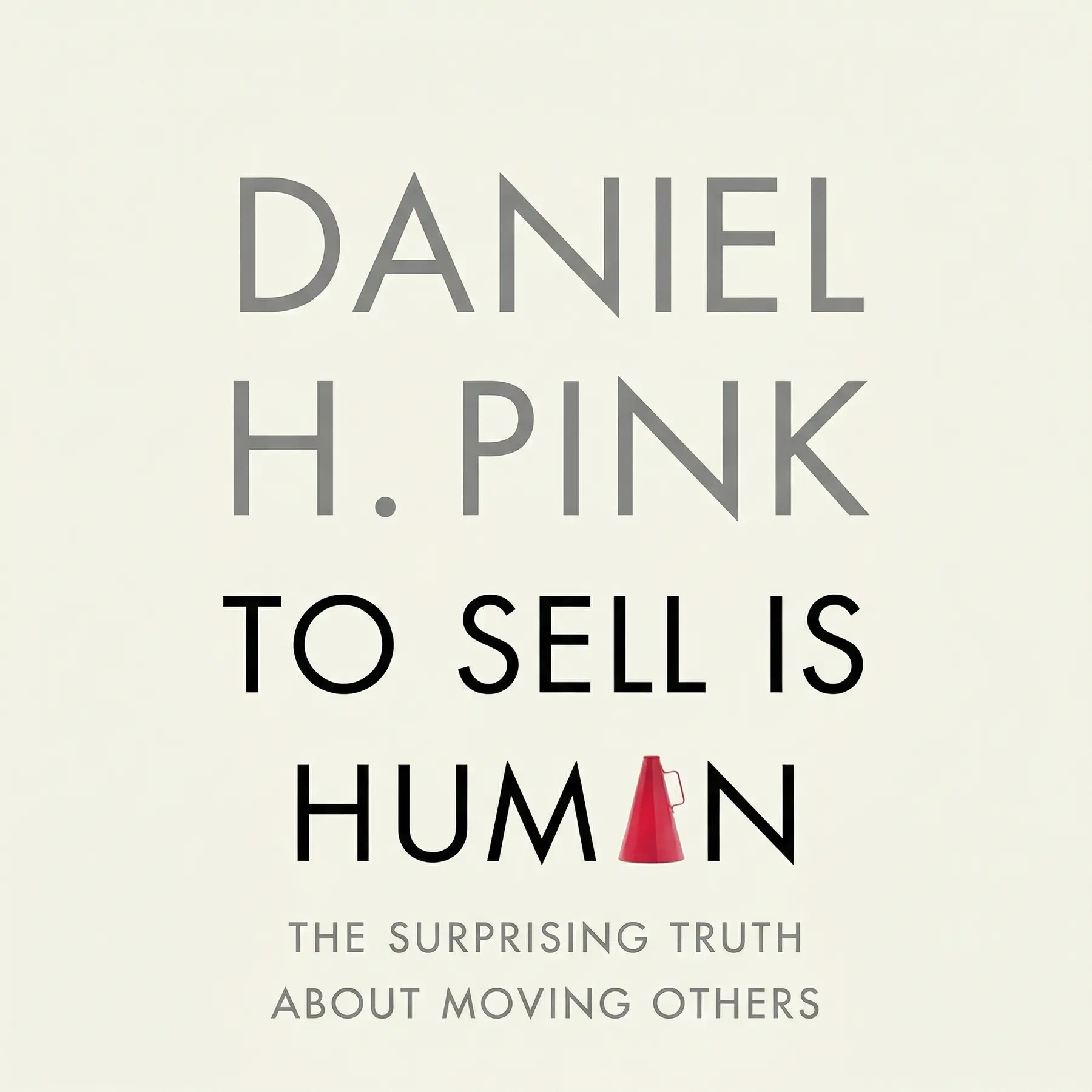
EnglishไทยTo Sell Is Human: The Surprising Truth About Moving Others
Shows that persuading others now fills a large share of nearly every job. It explains how to do it honestly, by tuning in to people, recovering from rejection and helping them see their real problem.
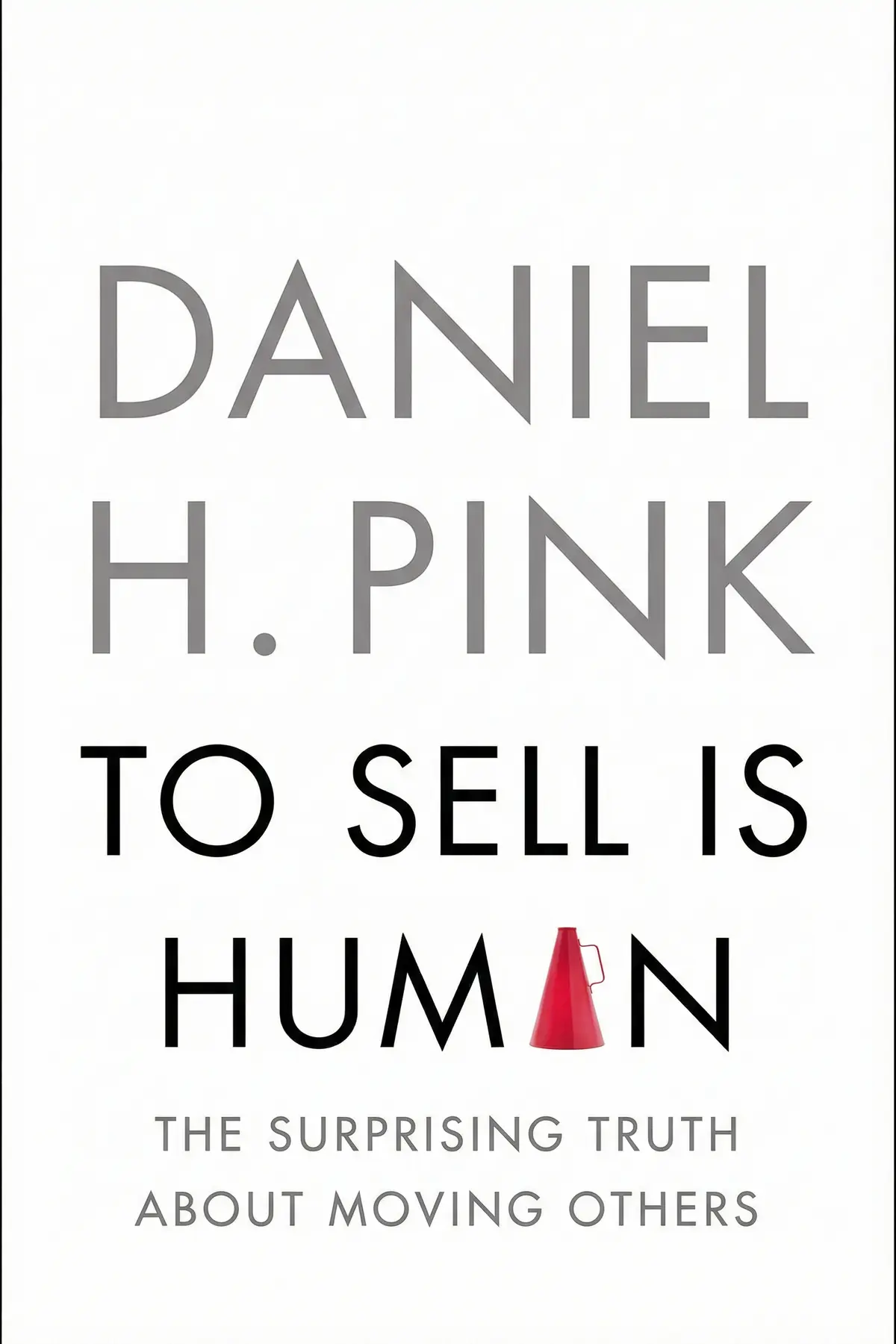
Table of Content
1. Introduction
59 sec
If the word selling makes you picture a pushy car dealer, you probably underestimate how much of your own day is spent doing it. In To Sell Is Human, author Daniel H. Pink points to research showing that people spend around 40 percent of their working hours persuading, convincing and influencing others, even when sales appears nowhere in their job title. Pink calls this non-sales selling, and he argues it is now part of almost everyone’s work.
The bigger claim is about method. Because customers, students and patients can now look up nearly anything, the old tricks of pressure and closing have stopped working. What moves people today is honesty and service, built on three qualities Pink names attunement, buoyancy and clarity. Follow his argument and you will know how to read the person in front of you, recover from a no, and frame an idea so people act on it.
2. You are already in sales, so learn to move people
1 min 38 sec
A software company passed 100 million dollars in revenue without one dedicated salesperson. The explanation reaches far beyond software, and it says something uncomfortable about how you spend almost half of your own working day.
3. Earn trust when buyers know as much as you
1 min 47 sec
The internet reversed an old rule of commerce, and buying a used car shows how. The change strips sellers, teachers and doctors of their old advantage and forces them to earn trust in another way.
4. Read the other side before you make your case
1 min 40 sec
The loud, fast-talking seller is the model most people picture, and the research suggests it is the wrong one. Two small adjustments, one about power and one about your body, help you understand the person you want to persuade.
5. Bounce back from rejection and keep selling
1 min 40 sec
Every seller faces doors shut in their face. What you say to yourself before a call, and how you explain a failure afterward, decides whether the next call ever happens, and the common advice gets it backwards.
6. Find the problem your customer has missed
1 min 43 sec
Customers can buy almost anything online, so handing over facts no longer earns anyone a living. A dusty carpet and a shorter menu of options show where a persuader’s real value now lies.
7. Pitch in a sentence that invites a yes
1 min 46 sec
An inventor once cut the cable of the elevator he was standing in to win over a crowd. Today’s pitches must be even shorter, and the strongest ones get the listener to do part of the work.
8. Trade the sales script for yes, and
1 min 46 sec
Doctors often cut patients off within seconds of their first words. Improvisational actors train themselves out of that habit, and three of their stage rules turn a stiff sales call into a real conversation.
9. Make it personal and purposeful to move people
1 min 40 sec
Radiologists read scans better under one surprising condition, and doctors washed their hands more after one small change of wording. Both findings point to what makes people willing to act on your request.
10. Conclusion
1 min 01 sec
Pink’s book adds up to a new definition of selling. In his account, it has become a service for people who already know plenty. Once a used-car shopper has every price and review on a phone, the best edge left is understanding them better than they expected, staying steady when they refuse, and showing them a problem they had not seen. That is why the attentive ambivert outsells the showboat, and why the teacher, the doctor and the founder without a sales team are all doing the same work.
This week, walk into one important conversation assuming you hold the weaker hand, and let the other person finish before you speak. When a no arrives, explain it to yourself as temporary and specific. Before you ask anyone for anything, picture the face of the person it will help.
Otis made his case for the brake through a live demonstration. He let the crowd watch the elevator barely move after the cable was cut.
About this book
What is this book about?
Most people never call themselves salespeople. Yet Daniel H. Pink cites research showing that workers spend about 40 percent of their time persuading, convincing and influencing others. Engineers talk to customers, founders pitch their start-ups, teachers win over students and doctors coax patients toward healthier habits. Selling, in Pink's view, has become part of nearly every job. What has changed is how it works. Buyers once depended on sellers for information, which left room for the pushy tactics behind selling's bad name. Now anyone can look up prices, reviews and specifications, so honesty and service win. Pink replaces the old motto Always Be Closing with three qualities. Attunement is seeing a situation from the other person's side. Buoyancy is recovering from rejection. Clarity is helping people find the right problem and compare their options. He adds practical tools: pitches short enough for an email subject line, lessons from improvisational theater such as answering with yes, and, and ways to make every request personal and tied to a larger purpose. Readers get a way of persuading people that they never need to feel embarrassed about.
Book Information
Who it's for
Persuaders outside sales
Engineers, designers and analysts who persuade clients and colleagues every day but would never call themselves salespeople.
Founders and early staff
Founders and early start-up staff who have no sales team and must pitch their product themselves.
Serving the well informed
Salespeople, teachers and doctors whose customers, students or patients now arrive already informed.
About the Author
Daniel H. Pink
Daniel H. Pink was born in 1964 and lives in Washington, DC. Between 1995 and 1997 he served as Al Gore's chief speechwriter during Gore's time as Vice President. He also hosted the National Geographic Channel series Crowd Control and was its co-executive producer. His books include A Whole New Mind, Drive, When and The Power of Regret. Drive and To Sell Is Human both topped the New York Times bestseller list, When stayed on that list for four months, and his books have won multiple awards.
Drive: The Surprising Truth About What Motivates Us
Daniel H. Pink
When: The Scientific Secrets of Perfect Timing
Daniel H. Pink
Ratings & Reviews
Ratings at a glance
What people think
Listeners view this work as an essential read for salespeople, highlighting the approachable writing and gripping narrative. The book is heavily evidence-based, drawing on educational research and examples that push people to think creatively. Additionally, listeners find the hands-on tips useful for any professional role and value the modern perspective on how selling works today.
Top reviews
Pruet
As a career educator, I never thought a book about sales would apply to my daily life in the classroom. Daniel Pink completely changed my perspective by showing how we are all in the business of 'moving' others, whether we’re pitching a product or a lesson plan. The concept of 'non-sales selling' is a total game-changer for those of us who find traditional marketing methods slimy or aggressive. I particularly loved the section on the Pixar Pitch; it’s a brilliant, structured way to tell a compelling story that sticks. The writing is incredibly conversational and moves at a brisk pace, making it easy to digest between classes. While some might find the research a bit light compared to a textbook, the practical application is where this book shines. It’s a must-read for anyone who needs to persuade, which, as Pink points out, is basically everyone.
Show moreNam
This book completely dismantled my prejudice against the word 'sales' and replaced it with a sense of purpose. Pink argues that in a world of information parity, the old 'buyer beware' mentality is dead, replaced by 'seller beware.' I found the concept of 'servant-selling' to be deeply moving—the idea that moving others is actually about improving their lives. The Pixar Pitch framework alone was worth the price of admission for me. It’s rare to find a business book that is this well-researched yet remains so accessible and fun to read. The examples are vivid, and the 'Sample Case' sections at the end of each chapter offer immediate ways to test the theories. Not gonna lie, I’ve already started using the 'Question Pitch' in my team meetings and the results are noticeable. It’s a compelling look at human behavior that everyone should read.
Show moreBunyarit
Wow. This is the best book on human interaction I’ve picked up in years. Pink manages to take the stigma out of sales and shows that moving people is a fundamental human skill that requires empathy and honesty. I listened to the audio version narrated by the author, and his energy is absolutely infectious; you can tell he really believes in this stuff. The ' Pixar Pitch' and the 'Twitter Pitch' are so relevant for today’s fast-paced digital environment where you only have a few seconds to make an impression. It’s well-researched, backed by informative studies, and filled with case studies that actually make sense. Whether you are a parent, a designer, or a CEO, there is something in here that will make you better at your job. I’ve already bought three extra copies to give to my team.
Show moreAkosua
Ever wonder why some people just seem to ‘get’ others instantly while others struggle to communicate? This book dives deep into the psychology of persuasion, but it does so through engaging storytelling rather than dry data. The ABCs of moving others—Attunement, Buoyancy, and Clarity—provide a solid framework for anyone looking to improve their interpersonal skills. Personally, the chapter on ‘Buoyancy’ and how to handle rejection was the most helpful part for me. It’s not just about being positive; it’s about how you explain failure to yourself. To be fair, if you’ve spent years studying social psychology or read 'Influence' cover-to-cover, some of this might feel like a refresher. However, Pink’s ability to synthesize complex ideas into actionable advice is top-notch. It’s a solid four-star read that I’ll likely revisit when I need a boost before a big presentation.
Show moreMarasri
Finally got around to reading this, and I was pleasantly surprised by how much it challenged my introverted assumptions. The data showing that ambiverts actually outperform extreme extroverts in sales roles was incredibly reassuring for someone like me. Pink has a knack for taking familiar concepts and giving them a fresh, modern spin that feels relevant to the 21st-century workforce. I specifically appreciated the 'Clarity' section, which emphasizes that finding the right problem to solve is often more important than the solution itself. My only gripe is that it occasionally feels a bit repetitive, hammering home the 'we are all salespeople' point a few times too many. Still, the practical tips on improvising and the six types of elevator pitches are tools I’ll keep in my back pocket. It’s an insightful, quick read that helps you think outside the box regarding your own career.
Show moreAiden
Picked this up on a recommendation from a colleague, and I’ve been using the techniques in my freelance consulting ever since. The shift from 'selling' as a dirty word to 'selling' as a human necessity is handled with a lot of grace and wit. I loved the breakdown of different pitch styles, especially the Rhyming Pitch—it sounds cheesy, but the research behind it is actually quite fascinating. Look, the book isn't going to turn you into a master negotiator overnight, but it provides a very helpful mental map for navigating professional interactions. The writing is snappy and the tone is encouraging without being overly 'rah-rah' like a lot of old-school sales books. It’s a modern guide for a world where we’re all trying to get our ideas heard. I’d recommend it to anyone who feels like their great ideas are getting lost in the noise.
Show moreOscar
After hearing so much buzz about the 'surprising truth' of moving others, I found this to be a solid, if not revolutionary, read. The most valuable takeaway for me was the idea of 'problem finding' vs 'problem solving.' In my line of work, we often jump straight to solutions without really understanding the client's underlying pain points. Pink’s anecdotes, like the one about the Fuller Brush man, are entertaining and help illustrate his points, even if they feel a bit nostalgic. The book is very much in the vein of Gladwell or the Heath brothers—easy to read, full of 'aha' moments, and very shareable. It’s not a technical manual, but it is a great psychological primer. If you're looking for a way to sharpen your persuasion skills without feeling like a manipulator, this is the right place to start.
Show moreSamroeng
While I appreciate Pink's attempt to modernize the image of the salesperson, this felt a bit like a collection of blog posts stitched together. The structure is very neat—three sections, three chapters each—but sometimes the content feels stretched to fit that symmetry. I found the anecdotes about the last Fuller Brush salesman entertaining, yet they didn't always bridge the gap to my actual work in software development. Truth is, the book leans heavily on 'pop psychology' tropes that have been covered extensively elsewhere. The section on ambiverts was a highlight, though I had already seen most of that data on his website. It’s a pleasant, quick read with some good gems on writing concise emails and subject lines, but don't expect a deep academic dive. If you want something light and encouraging, pick it up, but if you want heavy research, look elsewhere.
Show moreJin
To be fair, the writing style is incredibly engaging and snappy, but I frequently found myself wanting more 'how-to' and less 'why.' The first half of the book spent a long time convincing me that I'm a salesperson, which I already knew because I bought the book! Once we got into the ABCs, things picked up, but even then, the advice felt a bit surface-level at times. I enjoyed the story about the used car lot and how the internet changed that industry, but did it help me close a deal? Not really. The section on 'Attunement' was probably the strongest, specifically the tips on subtle mimicry and perspective-taking. It’s a decent book to keep on the nightstand for a few nights of light reading, but it lacks the 'meat' of some of Pink's other works like 'Drive'.
Show moreHang
Frankly, if you've read Cialdini's 'Influence' or any standard organizational behavior textbook, you can probably skip this one. My first clue that the book wasn't for me was the slim physical size combined with the surprisingly large font and generous margins. It felt like the content was being stretched to justify a hardcover release. Between the constant anecdotes and the lack of truly rigorous data, I felt my time wasn't being respected as a reader who enjoys deep dives. Pink is a talented writer, no doubt, but this felt like it was written for the lowest common denominator of business consumer. The 'surprising truths' aren't particularly surprising if you pay attention to modern workplace trends or have a basic grasp of social psychology. I finished it, but I didn't walk away with anything I hadn't already heard in a dozen TED talks.
Show moreQuestions about this book
What is the main idea of To Sell Is Human?
Daniel H. Pink argues that almost everyone now sells, since research he cites shows people spend about 40 percent of their working time persuading and influencing others. Because buyers can find information online, the seller’s old advantage is gone, and honesty and service matter most. Pink replaces Always Be Closing with three qualities, attunement, buoyancy and clarity, and adds tools for pitching, improvising and making requests personal and purposeful.
What are the new ABCs of selling in To Sell Is Human?
Pink’s new ABC stands for attunement, buoyancy and clarity. Attunement means understanding how another person thinks about a situation and acting on it. Buoyancy means staying afloat through rejection, before, during and after a sales conversation. Clarity means helping people see their situation in a new light, often by finding the real problem, offering a simple comparison and giving clear next steps.
What is an ambivert and why does Pink say they sell best?
An ambivert sits between introvert and extrovert. In the research Pink cites, very extroverted sellers can actually hurt their sales because they talk too much and fail to listen or see the customer’s view. Ambiverts can hold a conversation and also listen closely, which lets them tune in to the customer before making the sale.
How does To Sell Is Human suggest handling rejection?
Before a call, ask yourself whether you can succeed instead of repeating slogans, because the question pushes you to plan. During the call, stay positive so you notice more options. Afterward, explain a no as temporary, specific and external, such as a buyer who was already fully stocked, and challenge any story that blames a permanent flaw in you.
How can I apply To Sell Is Human at work?
Enter important meetings assuming you hold less power, so you listen better. Repeat a key phrase the other person used. Ask questions to find their real problem, and offer fewer, clearly compared options. Keep your pitch to one line or a question. Answer ideas with yes, and. Frame requests around the people your work helps, as the hospital handwashing study suggests.
Featured in

Readers also enjoyed










AUDIO SUMMARY AVAILABLE
Listen to To Sell Is Human in 15 minutes
Get the key ideas from To Sell Is Human by Daniel H. Pink, plus 5,000+ more nonfiction titles.
- 5,000+ titles
- Listen as much as you want
- 7-day free trial
- Cancel anytime









