

14 min 59 sec
Available in: English
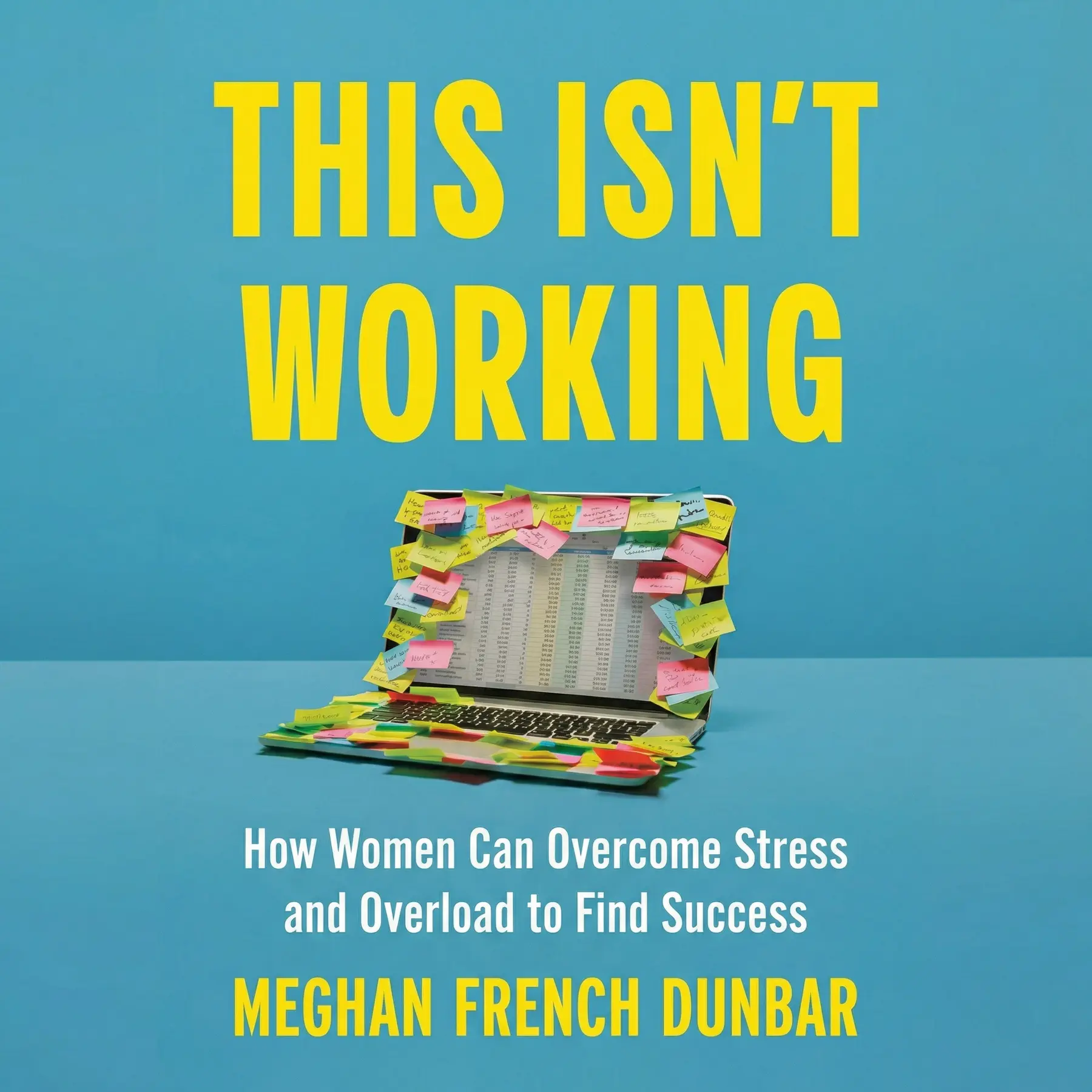
This Isn’t Working: How Women Can Overcome Stress and Overload to Find Success
Shows women why stress and overload at work are often built into the system. It then gives concrete tactics to protect their energy, get credit for their work, build alliances and change how teams operate.
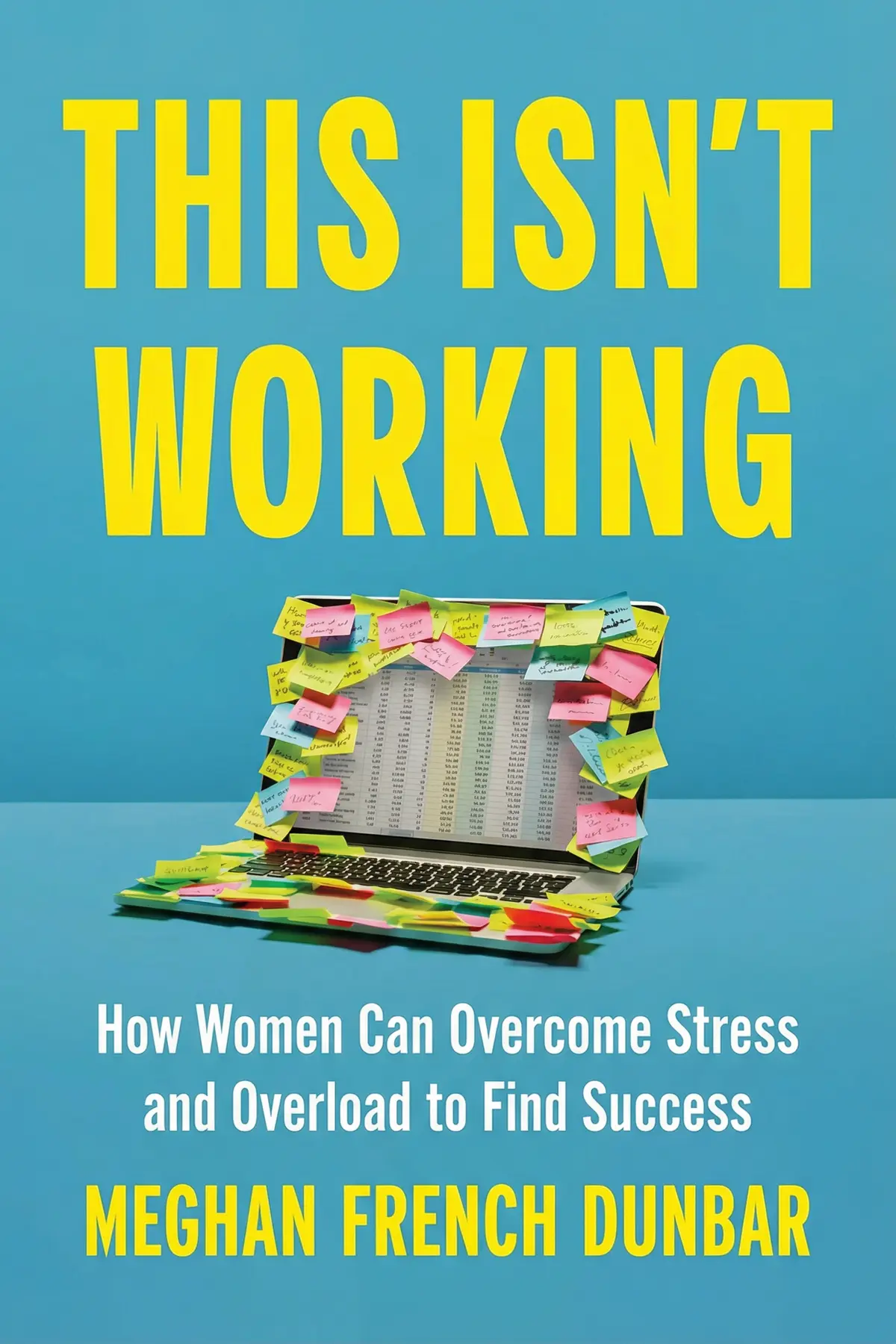
Table of Content
1. Introduction
1 min 03 sec
If you work longer hours than anyone, polish every slide and still watch less qualified colleagues get promoted, the fault may not be yours. In This Isn’t Working, entrepreneur and business journalist Meghan French Dunbar argues that many women are losing a game whose rules were written so they could not win. Workplaces, she says, rest on an old assumption of male superiority, reward cutthroat competition over collaboration and treat worn-out people as a normal cost of doing business.
That diagnosis is only her starting point. Her case is that once you see the field clearly, you can stop reading its failures as your flaws and start playing differently: defend your energy, advance on purpose, team up with other women and then rewrite the rules. The tools are small and specific, from a weekly update email to a no-interruption rule in your own meetings, and each one turns private frustration into evidence you can use.
2. Stop blaming yourself for a rigged game
1 min 55 sec
Your point is ignored, then praised five minutes later when a man repeats it. Most women walk out of that room asking what they did wrong. Dunbar thinks that is the wrong question entirely.
3. See burnout as a workplace problem, not your failing
1 min 54 sec
A manager tells you that you seem stressed and maybe too sensitive for the role. By evening you believe it. Dunbar offers a simple test that shows where that exhaustion really comes from.
4. Guard your energy without asking permission
1 min 39 sec
Most women defend themselves by explaining, justifying and working later. Dunbar’s defense looks very different, and its hardest rule asks you to stop doing the thing that feels most responsible.
5. Make your work impossible to overlook
1 min 59 sec
A woman saves her company three million dollars and two other people get thanked for it. Speak up and look aggressive, stay quiet and vanish. Dunbar describes a way out of that trap.
6. Trade every extra favor for a real opportunity
1 min 37 sec
You are asked to plan the office party yet again. Saying no feels risky and saying yes feels like losing. Dunbar suggests a third answer that changes what the favor is worth.
7. A squad that turns slights into evidence
2 min 01 sec
Three women down the same hallway are answering the same kind of hostile email, each sure she is the only one. Dunbar explains why that isolation is no accident, and how to end it.
8. Workarounds that become rules for everyone
1 min 52 sec
The tricks women use to survive a biased office usually stay private. Dunbar argues they can do far more, and shows how a single meeting you chair can change what a whole team expects.
9. Conclusion
59 sec
Dunbar’s book adds up to a change in where you look. The exhaustion, the self-doubt and the overlooked work are largely what a system built against women was always going to produce, and pushing harder against such a system only drains you faster. Getting smarter about it works better.
What makes her approach usable is that every move leaves something you can hold: a record of moved goalposts, a trail of weekly emails, a colleague who confirms you are not imagining things, a meeting where nobody gets cut off. Each turns a private doubt into shared evidence, and evidence is what a system that depends on your silence handles worst.
So start the document this week, and show it to one colleague you trust. The next time someone asks for an extra favor, attach a condition to your yes.
The meeting where your idea is ignored until a man repeats it may well happen again. This time, you will have sent the email first.
About this book
What is this book about?
Many women at work do everything asked of them and more, yet still watch credit and promotions go elsewhere while stress builds in their bodies and their confidence. Meghan French Dunbar argues that the fault lies mostly with the workplace. In her account, offices were built on an old assumption of male superiority, reward aggressive competition and treat burnout as an acceptable cost, so women are judged by contradictory rules they cannot all satisfy at once. Her answer is a four-part strategy. Defense protects your energy through firm boundaries, careful records and a few trusted colleagues who confirm what you see. Offense builds visibility through impact logs, weekly updates and conditional yeses. Alliances, from monthly coffees to what she calls conspiracies of care, turn isolated slights into documented patterns. The same habits can then reshape the workplace itself, from no-interruption meetings to fairer policies backed by data. Readers get a clear way to understand why work feels so draining, plus a set of specific moves to protect themselves, move ahead and change the rules for the women who come after them.
Book Information
Who it's for
Women overlooked for promotion
Women in demanding jobs who work harder than anyone yet keep getting passed over for credit and promotion.
Chronically stressed professionals
Professionals running on chronic stress who suspect their burnout comes from the workplace itself.
Managers and team leads
Managers and team leads who want meetings and policies where every voice gets heard.
About the Author
Meghan French Dunbar
Meghan French Dunbar is an entrepreneur and business journalist. She co-founded Conscious Company Magazine, the first US print magazine on impact-driven business with national distribution, served as CEO of Conscious Company Media and created the World-Changing Women's Summit. She hosts the Better Than This podcast and has interviewed more than 1,000 business leaders. She has written for Forbes and Inc., and has worked on leadership and culture with brands including Coach and Kate Spade.
Ratings & Reviews
Ratings at a glance
What people think
Listeners find the content deeply insightful, with one review pointing out its new model of leadership rooted in well-being and another noting how it backs everything up with research. The work is praised for being easy to digest, with one listener defining it as a must-read for high-achievers.
Top reviews
Cee
After hearing so much buzz about Meghan French Dunbar’s approach to corporate culture, I finally dived in. It felt like someone finally turned the lights on in a room where I’d been fumbling for years. The way she articulates the exhaustion of the hustle-culture grind is both convicting and deeply validating. It isn’t just another 'girlboss' manifesto; it’s a rigorous dismantling of the old-school business models that are currently failing all of us. I found the research-backed sections particularly grounding because they moved the conversation from 'feelings' to 'facts' about why we are so burnt out. Truth is, I started highlighting so many passages that I basically turned the book yellow. It’s a necessary, hopeful shakeup for anyone who suspects there must be a better way to work without losing your soul.
Show moreSomsak
The chapter on the 'Old Playbook' of business was a total game-changer for my perspective. Personally, I’ve always felt a bit like a round peg in a square hole within the corporate world, and Dunbar explains exactly why that is. This book provides a new model of leadership that prioritizes well-being without sacrificing the bottom line, which is a balance I previously thought was impossible. The writing style is conversational yet authoritative, blending personal stories from various women with hard data that backs up every claim. It’s a relief to see a leadership book that doesn't just demand more productivity but asks for more humanity instead. I’ve already started implementing the communication tips with my own team, and the shifts in morale are already visible. It’s a lot to process, but it is worth every second.
Show moreMaria
Look, I’m not usually one for business books because they often feel like they’re shouting slogans at you. However, this one caught me off guard with its sincerity and depth. While the author clearly writes with a female audience in mind, the insights into workplace dynamics and leadership are universally applicable to anyone tired of the status quo. I appreciated the actionable tips scattered throughout, though I did find some of the earlier chapters a bit dense. Still, the core message is vital. It’s a solid read that pushed me to rethink how I support my colleagues and how I manage my own energy levels. Not gonna lie, it made me realize I’ve been accepting some pretty toxic 'norms' for far too long. Definitely worth picking up for the perspective shift alone.
Show moreOksana
Picked this up during a particularly brutal week at the office, and it was exactly the lifeline I needed. Meghan French Dunbar doesn't just point out what’s broken; she offers a vibrant, research-backed vision for what a healthy workplace should actually look like. The personal anecdotes from other successful women were incredibly powerful because they proved that 'success' doesn't have to mean 'exhaustion.' I loved how the book challenges us to build something saner rather than just trying to survive a flawed system. The tone is perfectly balanced—hopeful but grounded in the harsh reality of today’s economy. This isn't just a book to read once; it’s a manual for anyone who wants to lead with more empathy and less ego. I’ve recommended it to three people already this morning.
Show moreGioia
Wow. This book is a total powerhouse. Every single chapter hit me like a reality check I didn't know I needed. We’ve been pretending we’re 'fine' for so long that we’ve forgotten what it’s like to actually thrive in our careers. Meghan French Dunbar brings such a unique, refreshing perspective to leadership that centers on the human being rather than just the output. It’s a call to action to stop following a script that was never written for us in the first place. I particularly loved the stories from the women she interviewed; their vulnerability and wisdom are so inspiring. It's rare to find a book that offers both a high-level critique of society and tiny, actionable things you can do tomorrow. Truly a must-read for anyone feeling overwhelmed by the grind.
Show moreKan
Ever wonder why we’re all so tired even when we’re succeeding? This book answers that question with a mix of radical honesty and clinical precision. I found the 'New Playbook' framework to be an excellent tool for reassessing my own career goals. To be fair, some of the personal narratives felt a little long-winded, but the underlying data is so strong that it keeps the momentum going. It’s a book about leadership, yes, but it’s also about reclaiming your life from a culture that demands constant availability. My biggest takeaway was the focus on well-being as a metric for success rather than just a luxury. If you’re a high-achiever who feels like you’re hitting a wall, this might just be the pivot you need. Great read, very eye-opening.
Show morePakinee
As someone who is just starting out in my career, I feel so lucky that this book found its way to me now. It has completely reframed how I think about ambition and success before I could get sucked into the 'Old Playbook' habits. Frankly, I think this should be required reading in every business school. It’s not just about 'self-care'—it’s about structural change and building industries that actually serve society. The writing is clear, the research is solid, and the tone is incredibly supportive without being soft. I loved the emphasis on building something saner together. It’s a relief to know that the burnout I see in my older colleagues isn't an inevitable part of the job. There is a different way, and this book proves it.
Show moreSing
Finally got around to this after seeing it all over my feed, and the hype is real. As someone who has been in management for years, I found the insights into workplace dynamics to be some of the most profound I’ve ever read. Dunbar challenges you to stop being a passive participant in a broken system and start being a catalyst for real change. The tone is punchy and direct, avoiding the usual corporate platitudes that make my eyes roll. Instead, she gives us hardcore truths about why we’re exhausted. It’s part leadership shakeup and part personal recovery guide. I finished it feeling energized and, for the first time in a while, actually hopeful about the future of work. Every leader should have this on their desk.
Show moreYongyut
Direct and to the point: this book is a necessary intervention for the business world. I appreciated the way Meghan French Dunbar doesn't pull any punches when describing how the current system fails women and marginalized groups specifically. In my experience, most leadership books ignore the systemic issues and just tell you to work harder, so this was a breath of fresh air. I did think the middle section dragged a bit with the case studies, but the overall message is so powerful that I didn't mind too much. It’s a 4-star read that I’ll likely return to whenever I feel myself slipping back into that 'hustle' mindset. It’s high time we stopped accepting 'normal' as 'good enough.' Solid, research-backed advice for the modern age.
Show moreYaowares
Not what I expected initially, to be frank. While I agree with the author’s premise that the current business world is dysfunctional, I found some of the proposed solutions to be a bit idealistic for those of us working in more traditional, rigid industries. The research is certainly there, and the writing is engaging, but I struggled to see how some of these 'new playbook' moves would fly in my specific corporate environment. That being said, the sections on burnout were incredibly relatable and helped me put names to feelings I’ve had for a decade. It’s a decent read for the perspective shift alone, even if the implementation feels like a bit of a mountain to climb. I’d say it’s a 3.5 but rounding down because I wanted more specific advice for entry-level employees.
Show moreQuestions about this book
What is the main idea of This Isn't Working by Meghan French Dunbar?
Dunbar argues that many women struggle at work because they are playing a game whose rules were written against them. Workplaces built on an assumption of male superiority set contradictory standards and treat burnout as normal. Once women see this, she says, they can stop blaming themselves and respond with a strategy: defend their energy, advance deliberately, build alliances with other women and use those habits to change how their workplaces run.
What causes burnout according to This Isn't Working?
Dunbar lists six main causes: unfairness, too much work, lack of control, insufficient rewards, no sense of community and a clash with your values. She points out how many of these are built into workplace structures that expect people to do more with less. Checking your own job against the six helps show whether your exhaustion reflects the workplace rather than a personal weakness.
How can women get credit for their work, according to Dunbar?
She suggests keeping an ongoing record of the problems you solved, the relationships you built and the crises you avoided, since standard metrics often overlook this work. Send your manager a weekly update on your accomplishments, and email ideas to key people before raising them in meetings, so there is a record if someone repeats them. She also recommends making extra favors conditional, such as planning the party in exchange for leading a product launch.
What are conspiracies of care?
It is a term Dunbar says comes from sociologists, describing small groups who actively advocate for one another. In practice, members attend each other’s presentations, ask questions that highlight each other’s expertise and mention each other’s ideas in later conversations. Combined with shared documentation, these groups turn individual slights into visible patterns that are much harder for an organization to dismiss.
Who should read This Isn't Working?
It suits women who feel overworked, overlooked or constantly second-guessed at work, especially those who suspect the problem is bigger than their own performance. It also helps managers who want practical ways to make their teams fairer, such as enforcing a no-interruption rule, rotating note-taking, turning fair practices into policy and tracking results like retention after flexible scheduling.
Readers also enjoyed

A Bigger Prize: How We Can Do Better Than the Competition
Margaret Heffernan



60 Seconds & You’re Hired!
Robin Ryan



AUDIO SUMMARY AVAILABLE
Listen to This Isn’t Working in 15 minutes
Get the key ideas from This Isn’t Working by Meghan French Dunbar, plus 5,000+ more nonfiction titles.
- 5,000+ titles
- Listen as much as you want
- 7-day free trial
- Cancel anytime









