

14 min 37 sec
Available in: English
Thirst: A Story of Redemption, Compassion, and a Mission to Bring Clean Water to the World
How a burned-out New York club promoter turned his talent for selling parties into charity: water, and why showing donors every result, including failures, built a trust that kept the money and the wells flowing.
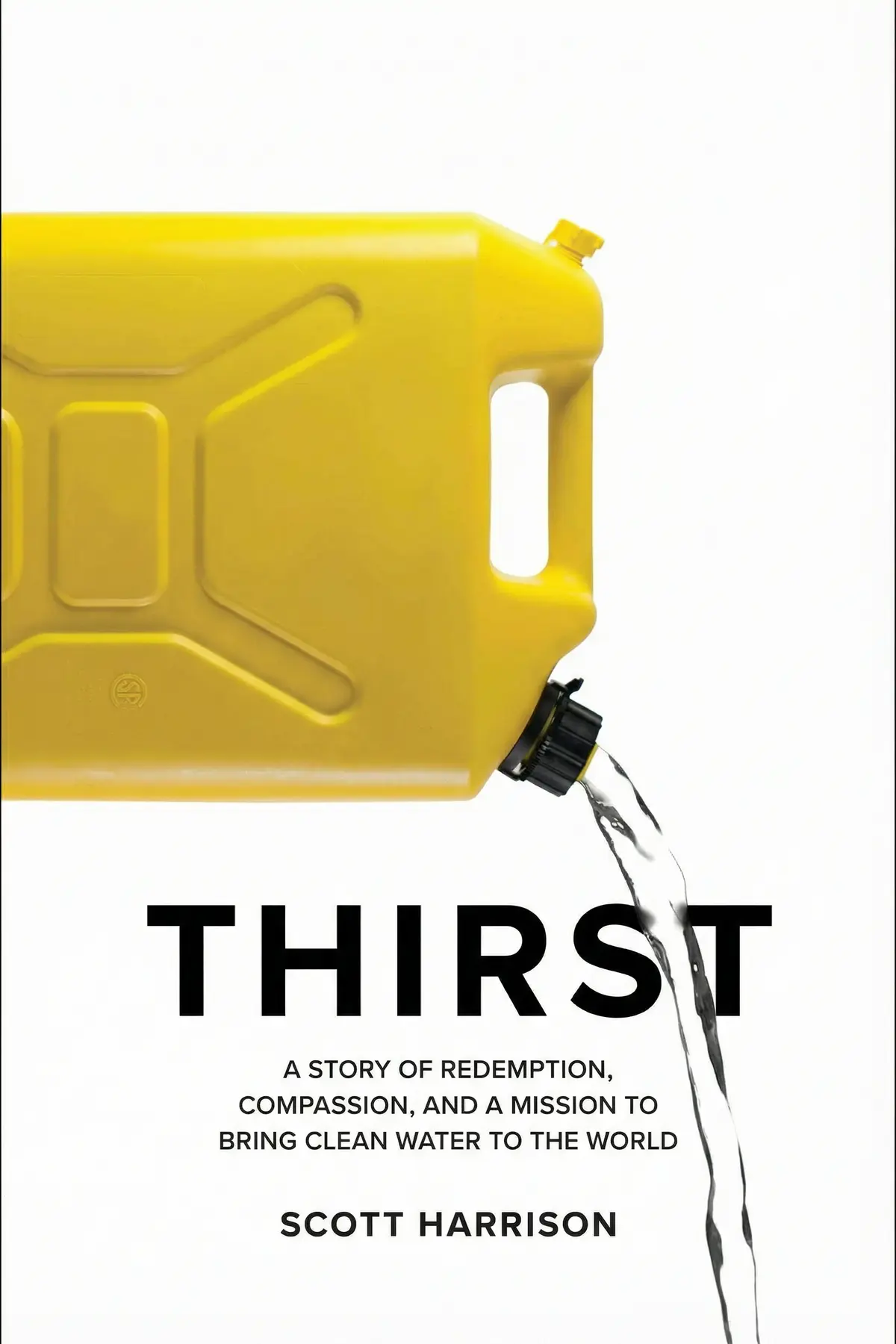
Table of Content
1. Introduction
58 sec
A career can pay well, look exciting from outside and still leave you empty. In Thirst, Scott Harrison describes going from selling $600 bottles of champagne in New York nightclubs to selling clean water to strangers, and finding that the second job used the same talents as the first. Harrison founded the nonprofit charity: water in 2006, and his memoir makes one case through his own life. A gift for persuasion, aimed at real need and joined to complete honesty about where money goes and what fails, earns a kind of trust no slick campaign can buy.
The story moves from a hospital ship off West Africa to an orphanage well in Liberia, a nine-year-old’s birthday page and a cliff path in Ethiopia. It shows how to turn the skills you already have toward work that matters, and why telling people bad news can make them believe you more.
2. Treat numbness as a sign to change course
1 min 40 sec
A top New York club promoter had money, travel and endless parties, then his arms and legs began to go numb. A book from his father gave the symptom a meaning he could not ignore.
3. Walk through the door that actually opens
1 min 32 sec
Harrison applied to the biggest aid groups in the world and heard nothing back, except from one. The place that said yes looked like the worst possible fit for a man used to VIP booths.
4. Your old skills can serve a new cause
1 min 34 sec
Former party guests started finding photos of tumors in their inboxes, and some fled at once. Then a gallery opening collided with a national disaster, and the outcome surprised its organizer.
5. One well can launch a movement
1 min 26 sec
A woman caring for 150 orphans, a phone call to an aunt and uncle, and a jet of water shooting into the air. What happened next started in a party animal’s apartment.
6. Small gifts grow when donors see results
1 min 35 sec
A girl asked friends for donations instead of presents and fell short of her goal. After she died in a 15-car pile-up, her page became the largest birthday campaign the charity had ever seen.
7. Admitting failure can make donors trust you more
1 min 30 sec
A corporate donor took the charity to court, and a jungle well collapsed for the third time after a video had been promised. Harrison’s response to both went against every public relations instinct.
8. Clean water keeps girls in school
1 min 27 sec
A hotel owner told a story Harrison could not forget, and he hiked nine hours to learn whether it was true. What he found on a cliff path changed how he talks about water.
9. Count the people you reached, then fix the gaps
1 min 41 sec
In its ninth year the charity raised less than the year before, and its founder offered to step aside. His staff answered with a different way to read the same disappointing numbers.
10. Conclusion
1 min 14 sec
Harrison’s story turns on two images of water. One is the jet that shot into the air at Mama Vic’s orphanage, the moment a promoter found something worth promoting. The other is a broken clay pot at dusk on a cliff path above Meda. Between them sits the argument of Thirst: the talent that once filled velvet-rope booths can fill wells, but only if people trust where every dollar goes, including the dollars that fail.
That trust was built in unglamorous ways. A video explaining a collapsed well. An open letter answering a lawsuit. A report sent to someone who gave a single dollar. A sensor that lets the charity know right away when a well stops working.
None of this needs a hospital ship. Take stock of what your current work has taught you and ask who else could use it. When you ask anyone for money or effort, show them what it became, and tell them early when something breaks.
Harrison believes the world’s water crisis can be solved if enough people act together. A nine-year-old’s $220 page shows the kind of generosity he has seen.
About this book
What is this book about?
By 2003 Scott Harrison had the life many people envy. He promoted some of New York's most fashionable nightclubs, traveled to Milan and earned money from drink brands. He also felt numb, ashamed and hollow. Thirst is his account of how that emptiness led him onto a hospital ship off West Africa, to a well at a Liberian orphanage, and then to founding charity: water in 2006. Harrison's angle is that he never stopped being a promoter. He changed what he was selling. He took a mailing list built for parties, an eye for events and a feel for brands, and pointed them at people who walk for hours to fetch dirty water. What made it work was a promise he called radical transparency: every donation to projects, regular reports to every donor, and honest news when a lawsuit hit or a well collapsed. Readers get a moving story, from a nine-year-old's birthday page that raised over a million dollars to a 13-year-old girl's death on an Ethiopian cliff path. They also get a practical lesson about turning existing skills toward meaningful work and earning trust by telling the truth.
Book Information
Who it's for
Professionals questioning their work
Professionals in well-paid jobs that feel empty, wondering whether their skills could serve something bigger.
Needing trust through setbacks
Founders and nonprofit leaders who need donors, customers or staff to trust them through setbacks.
Drawn to redemption stories
Readers drawn to true stories of faith, second chances and global health.
About the Author
Scott Harrison
Scott Harrison founded the nonprofit charity: water in 2006 and has led it as chief executive, focusing on clean water access around the world. His work has earned him places on Fortune's 40 under 40 list and Forbes' Impact 30 list. In Thirst he tells his own story of redemption and compassion, and of the effort to get clean water to people everywhere.
Ratings & Reviews
Ratings at a glance

What people think
Listeners find this account deeply moving, with one review mentioning how it reveals internal details of Scott’s personal path. The story frequently reduces readers to tears and shifts their global outlook, and one listener calls the experience a modern tale of a thousand-mile journey. Additionally, the prose is expertly composed, and listeners value the insightful data provided, as one review emphasizes how the book intersects various fields of interest.
Top reviews
Selin
After hearing Scott's story on a podcast, I knew I had to dive into the full memoir, and it did not disappoint. The way he describes his transition from a drug-fueled life as a New York City club promoter to a volunteer on a Mercy Ship is visceral and raw. It’s a modern tale of a thousand-mile journey that starts with a single, desperate realization of spiritual bankruptcy. While some might find the heavy focus on his early party days a bit much, it serves to highlight the massive scale of his eventual transformation. This book moves readers to tears by illustrating the harsh reality of the global water crisis without feeling like a hopeless tragedy. Frankly, I finished the last chapter feeling completely empowered to change my own perspective on what a single person can achieve. It’s an informative, fast-paced read that manages to intersect various fields of interest from marketing to humanitarian aid.
Show moreKai
Wow. I wasn't prepared for how much this would affect my perspective on something as basic as a glass of water. The descriptions of people walking eight hours a day for contaminated pond water are haunting and will stay with me for a long time. Scott’s 'Road to Damascus' moment feels authentic, especially since he doesn't shy away from the darker parts of his life as a promoter. I loved how the book highlights that you don't have to be perfect to start doing something good for the world. The chapters on his time in Liberia were particularly moving and provide a gritty look at the medical needs in developing nations. It’s an emotional rollercoaster that manages to be both heartbreaking and incredibly hopeful at the same time. If you’re looking for a story that proves there is still tangible good to be done, this is it.
Show morePop
Picked this up on a whim and finished it in two sittings because the pacing is just that good. It’s rare to find a non-fiction book that reads like a high-stakes novel, but Harrison manages to pull it off. The way he leverages his marketing background to revolutionize how we think about giving is nothing short of brilliant. I found the sections about the technical difficulties of drilling and the importance of sustainability in water projects to be very informative. Not gonna lie, I teared up several times reading about the children whose lives were changed by clean water. It’s a modern classic for the humanitarian world and a must-read for anyone who feels overwhelmed by the bad news in the world. You’ll leave feeling like you can actually make a difference, regardless of your background or income level.
Show moreSara
Ever wonder how a guy addicted to the New York nightlife scene ends up digging wells in Liberia? Scott Harrison’s story is a wild ride that proves anyone can pivot their life toward a higher purpose. I was moved by the raw honesty regarding his failures and the difficult relationship he had with his mother’s illness. The book does an excellent job of explaining the global water crisis in a way that feels personal rather than just a list of statistics. Reading about his time with Mercy Ships was eye-opening and provided the perfect bridge into the founding of his own charity. This story is deeply emotional and provides a much-needed reminder that clean water is a luxury we often take for granted. I’d highly recommend this to anyone who needs a spark of inspiration to get involved in a cause they care about.
Show morePranee
Finally got around to reading 'Thirst' and it truly felt like a modern odyssey across a thousand miles of transformation. The emotional weight of the stories Harrison shares is immense, particularly the ones involving the physical toll that hauling water takes on women and girls. I loved the emphasis on transparency and the idea that 100% of public donations go directly to the field. It’s a refreshing take on philanthropy that focuses on the solution rather than just the problem. The writing is polished and the narrative flow keeps you engaged from the first page to the last. Personally, I think this should be required reading for anyone in the business or nonprofit world. It’s a powerful testament to the idea that our past doesn't have to define our future impact.
Show moreSupatra
This book provides a fascinating look into the machinery behind one of the world's most recognizable nonprofits, though it focuses heavily on the founder’s persona. Scott Harrison is clearly a master of the pitch, and his storytelling ability shines when he describes the innovative 100% donation model. I appreciated the behind-the-scenes details regarding the struggle to fund operations through private donors while keeping public donations strictly for water projects. However, the narrative does lean quite heavily into the 'Scott and Vik show,' leaving me wanting more depth on the local teams actually drilling the wells. Look, the writing is well-crafted and engaging, even if the author occasionally comes across as a bit hyperbolic about his past regrets. To be fair, the impact of charity: water is undeniable, and this book serves as a powerful manifesto for radical transparency in the charity sector. It’s a solid four-star read for anyone interested in social entrepreneurship or personal redemption stories.
Show moreKanchana
To be fair, I went into this expecting a dry business manual on NGO management, but it's much more of a redemption arc. The contrast between the glitzy New York nightclubs and the hospital ships off the coast of Africa is staggering. I appreciated the behind-the-scenes look at how they built their digital platform and the 'The Spring' subscription model. My only real gripe is that the book paints the success of charity: water as almost entirely the result of Scott’s personality and connections. I would have loved more insight into the local partners who manage these wells after the cameras leave. Still, the writing is sharp and the message is vital for our current times. It’s a modern tale of how one man’s obsession with luxury turned into an obsession with service.
Show moreNing
Not what I expected from a book about a charity, as it reads more like a fast-paced thriller in the beginning chapters. Scott’s life as a promoter was honestly kind of gross, but his self-awareness about that period makes the later chapters very rewarding. I found the details about their marketing strategies and how they use GPS to track well locations to be incredibly innovative. However, the tone is very 'Christian-adjacent,' and while I didn't mind it, I can see why some readers might feel it's a bit preachy. The stories of the African villagers he met are the real heart of the book and could have been featured even more prominently. Overall, it’s a well-crafted memoir that balances personal growth with a call to action. It definitely changed my perspective on how nonprofits should operate in the 21st century.
Show moreRin
As someone who appreciates transparency in the nonprofit sector, I found the breakdown of their 'private donor' funding model incredibly enlightening. Harrison is very candid about the mistakes he made early on and the hurdles of building a global organization from scratch. The book is definitely inspiring, but it does have a bit of an 'infomercial' vibe toward the end where it feels like a constant plea for support. I also noticed the strong religious themes throughout, which I wish the publisher had made more apparent in the marketing. Despite that, the work they are doing is undeniably life-changing for millions of people. It’s a fascinating look at the intersection of high-end branding and humanitarian work. I give it four stars for the sheer audacity of the vision and the tangible results they've achieved.
Show moreIff
The truth is, while the mission of charity: water is undeniable, the narrative felt a bit self-indulgent at times for my taste. Much of the book revolves around Scott’s personal brand and his talent for networking among the wealthy elite. He tries to garner sympathy for flying in coach or dealing with poor weather at a borrowed chalet, which felt tone-deaf when compared to the stories of people facing extreme poverty. I was much more interested in hearing stories about the people getting the water than the logistics of high-end donor parties. Also, there’s a strong Christian undercurrent that wasn't mentioned in the blurb, which might catch some secular readers off guard. It’s an okay read with some very inspiring moments, but it feels like a 300-page pep rally for the founder. I think it could have been much more influential if it was cut by at least a hundred pages to focus more on the field work.
Show moreQuestions about this book
What is Thirst by Scott Harrison about?
Thirst is Harrison’s memoir of leaving a hollow life as a New York nightclub promoter, volunteering as a photographer on the Mercy Ships hospital ship in West Africa, and founding charity: water in 2006. It follows the charity from a $2,500 well at a Liberian orphanage to large birthday campaigns, a lawsuit, a failed well and the death of a 13-year-old Ethiopian girl that renewed his commitment to the cause.
What does radical transparency mean at charity: water?
Harrison used the phrase for his promise that every donation to projects goes to bringing people clean water, and that donors keep hearing what their money did. Drilling partners are vetted, and every donor gets detailed reports, whether they gave $1 or $1,000. The charity even released a video explaining why a well in the Central African Republic failed, and donors said they trusted it more afterward.
Who was Rachel Beckwith in Thirst?
Rachel Beckwith was a girl who asked for donations to charity: water instead of birthday presents for her ninth birthday, raising $220 toward a $300 goal. After she died in a multi-vehicle crash in 2011, her page was reopened. It grew to $1,265,823, enough for 142 water projects serving 37,770 people. Harrison later took her mother to see one of the villages in Ethiopia.
How can I apply the lessons of Thirst to my own work?
The book suggests looking at the skills your current job has given you and asking who else could use them, as Harrison did with his mailing list and event skills. It also argues for showing people exactly what their money or effort became, reporting failures early and plainly, and, when results dip, counting the people you reached before the ones you missed.
Why does Harrison link clean water to girls' education?
In the Ethiopian village of Meda he learned the story of Letikiros Hailu, a 13-year-old who could only attend school three days a week because fetching water took up to ten hours. After she fell and broke her water pot, she took her own life. Harrison concluded that clean water nearby also gives girls time to study and frees them from rationing water between their bodies and their clothes.
Readers also enjoyed

A Promised Land
Barack Obama


A River in Darkness: One Man’s Escape from North Korea
Masaji Ishikawa

A Spy Among Friends: Philby and the Great Betrayal
Ben Macintyre


A Year in the Life of William Shakespeare: 1599
James Shapiro



AUDIO SUMMARY AVAILABLE
Listen to Thirst in 15 minutes
Get the key ideas from Thirst by Scott Harrison, plus 5,000+ more nonfiction titles.
- 5,000+ titles
- Listen as much as you want
- 7-day free trial
- Cancel anytime









