

13 min 25 sec
Available in: English
They Ask You Answer: A Revolutionary Approach to Inbound Sales, Content Marketing, and Today's Digital Consumer
Shows businesses how to win buyers who research everything online: answer their real questions openly, including price, flaws and competitors, teach instead of advertise, and make every step of buying fast and easy.
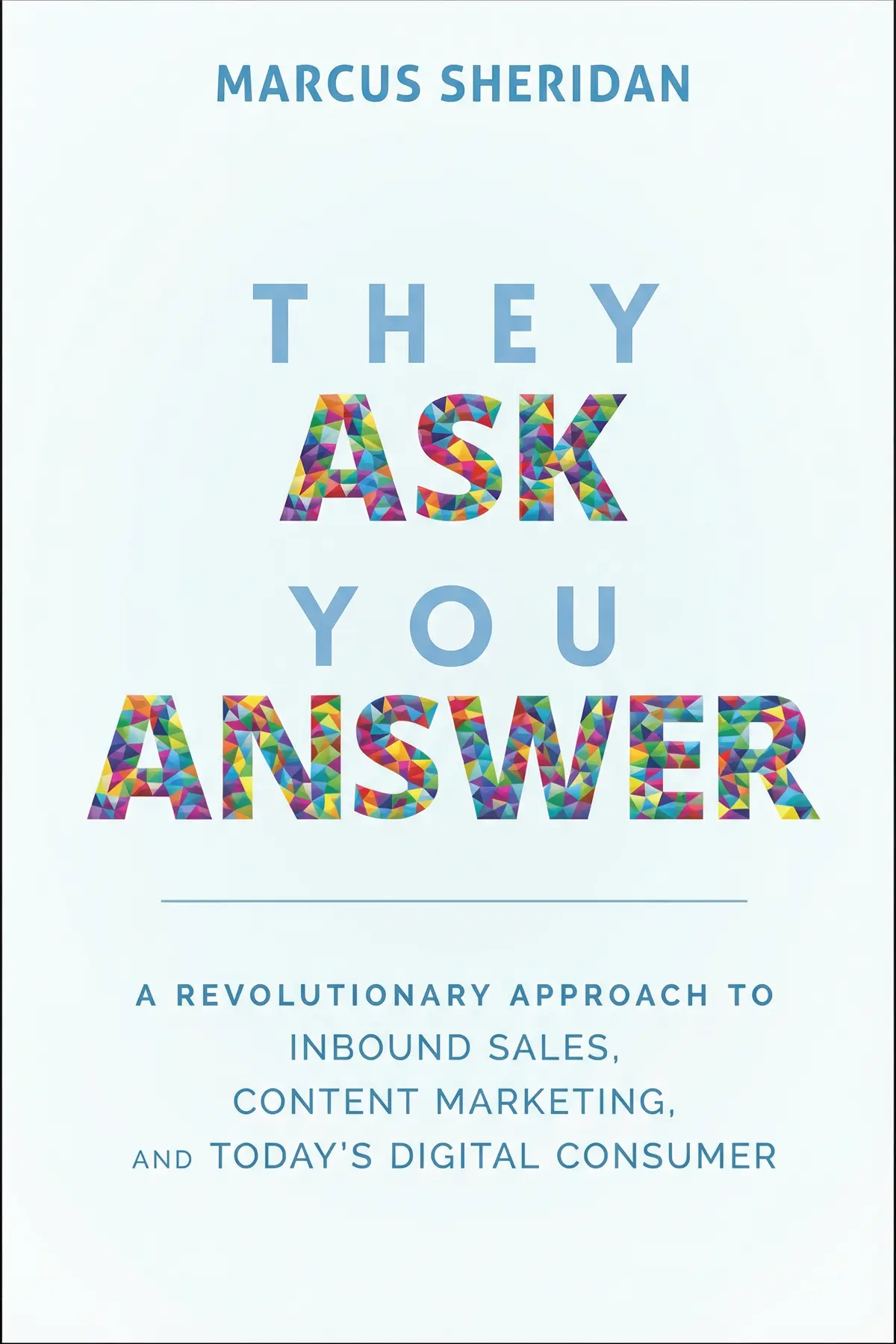
Table of Content
1. Introduction
1 min 03 sec
If your marketing still tries to win over people who tune out ads, the fix takes more courage than money: answer every question your buyers are asking, honestly and in public. Marcus Sheridan makes that case in They Ask You Answer, an approach he built while selling swimming pools. About 70 percent of purchasing decisions are now made before the buyer gets in touch with a company, he notes, so the content buyers find first carries real weight.
His argument fits in one line. Companies that teach openly, about price, flaws and even competitors, earn the trust that advertising no longer buys, and then they make buying effortless. The evidence ranges from a used-car dealer that scrapped haggling to one article about pool drawbacks that brought in more than $3 million. Along the way there is a test for which pages to write first, a method for screening out poor-fit prospects, and a case for answering a chat message the moment it arrives.
2. Win the sale before the first call
1 min 29 sec
Most buyers have made their choice long before they speak to a seller. What they bring to that first conversation is something no advertisement can fix, and a pool salesman learned to meet it head on.
3. Turn customer fears into company policy
1 min 30 sec
A used-car seller worked in an industry known for distrust, and its rivals laughed at its plan. Three changes to how it priced, paid and sold cars turned buyers’ doubts into its biggest advantage.
4. Publish the price, the flaws and the rivals
1 min 42 sec
One article explaining what was wrong with a company’s own product sold millions of dollars of that product. Sheridan names four things every online buyer looks for, and explains why the ones sellers dread are worth writing.
5. Stop listening to the wrong people first
1 min 38 sec
A rental giant went out of business while a mail-order newcomer caught the shift, because it had stopped listening to its customers. The cause was a mistake in whom it listened to, and many struggling firms still make it.
6. Let your content screen out bad-fit buyers
1 min 36 sec
One visitor read 374 pages of a company’s website before picking up the phone. What happened in the 45 minutes after the salesman arrived shows how homework can replace hard selling.
7. Become the teacher your industry is missing
1 min 29 sec
In a field with no trusted source of information, one company decided to build that source and nearly hid its own logo. The bet made it the voice its whole industry listened to.
8. Answer on camera and in real time
1 min 48 sec
Most of the questions customers send are the same few, asked again and again. Two simple shifts, one on camera and one in the chat window, turn that repetition into faster sales.
9. Conclusion
1 min 10 sec
What Sheridan describes is a shift in who holds the power. Buyers arrive informed, anxious and short on patience, and the company that wins is the one willing to be their most honest teacher. A used-car dealer gave up haggling, a pool company wrote about its own product’s flaws, and an analytics firm taught a whole field what it needed to know. Each one gave up some control over the message and gained trust by answering buyers straight.
The work begins with a list. Gather the questions customers ask, especially the uncomfortable ones about price, drawbacks and rivals, and answer them in public, in writing and on video, made by the people who know the product. Let that material help buyers decide whether they fit before anyone books a meeting, and when they do reach out, reply fast and in plain words.
Sheridan adds one warning of his own: the internet keeps everything. A careful article goes on informing readers for years, while a rushed one sinks or comes back to embarrass you. So write fewer pieces, and make each one the answer you would hope to find.
About this book
What is this book about?
Buyers no longer wait for a salesperson to explain a product. They search, read reviews and watch videos. Marcus Sheridan notes that by the time they get in touch, about 70 percent of the decision is already made. Ads they ignore will not reach them. Honest answers will. Sheridan learned this selling fiberglass swimming pools. He calls his approach They Ask You Answer: find every question customers have, especially the uncomfortable ones about price, problems, comparisons and reviews, and answer them openly on your own website. He shows it working at CarMax, which removed buyers' fears with fixed prices, flat commissions and a five-day money-back guarantee. Health Catalyst is his other case: it became its field's leading voice by teaching first. Readers get a practical method. Write openly about your product's weaknesses. Use educational content to screen out poor-fit prospects before sales meetings. Make videos in-house to answer the questions customers keep repeating, and reply to buyers in real time. The goal is trust that turns informed researchers into confident customers.
Book Information
Who it's for
Big-ticket business owners
Small business owners selling costly products or services who lose online researchers to competitors.
Sales leaders and marketers
Marketers and sales leads tired of ads buyers ignore and ready to publish honest, useful content.
Customer-facing teams
Teams answering the same customer questions every day who want to answer them once, and well.
About the Author
Marcus Sheridan
Marcus Sheridan is a marketing expert, business strategist and keynote speaker. He became widely known when his swimming pool company, River Pools, survived the 2008 downturn, a turnaround the New York Times wrote about. He now speaks and consults around the world on digital sales and marketing and has advised hundreds of businesses and brands. He cofounded The Question First Group and PriceGuide.ai, is a partner at IMPACT, and also wrote Endless Customers.
Ratings & Reviews
Ratings at a glance
What people think
Listeners find the material straightforward and simple to navigate, while one mentions that it is full of wisdom and offers concrete instances. The strategy for content marketing receives significant praise, with one listener describing it as a master class in inbound marketing. Additionally, listeners value the emphasis on building trust and the inclusion of clear, actionable steps.
Top reviews
Chloe
Wow, I wish I had read this three years ago before wasting thousands of dollars on 'fancy' agency branding that didn't actually say anything. This isn't just another marketing book filled with buzzwords; it’s a total overhaul of how a business should interact with the world. Sheridan’s logic is bulletproof: if a customer is asking a question, you have a moral and financial obligation to answer it publicly. We started implementing the 'Big 5' content strategy last month, and the engagement we’re seeing is already different in quality. It turns out people actually appreciate it when you don't hide your pricing or shy away from comparing your product to the competition. The book is written with so much energy and passion that you can’t help but feel motivated to start writing. It’s a game-changer for anyone tired of the 'smoke and mirrors' approach to corporate communications.
Show morePruet
Marcus Sheridan has managed to turn common sense into a master class for the digital age, proving that honesty really is the best policy for your bottom line. I was skeptical about a book written by a guy who sells swimming pools, but his insights into consumer behavior are more profound than most textbooks I've read. The focus on earning trust through transparency is exactly what is missing from most modern marketing strategies. He provides a clear, step-by-step framework for what to write, how to record videos, and how to integrate those assets into the sales process. Frankly, it’s refreshing to read something so practical that doesn't require a massive advertising budget to execute. This should be required reading for every sales and marketing department. It changes the goal from 'getting clicks' to 'helping people,' and that's a pivot that actually leads to long-term revenue.
Show moreOscar
Picked this up on a recommendation and it’s easily the most practical business manual on my shelf right now. Most marketing books are full of high-level theory that’s impossible to implement, but Sheridan gives you the actual blueprints. From the BCC technique for harvesting content ideas from sales emails to the structure of a perfect landing page, the 'how-to' aspect is incredible. I love the emphasis on being the 'teacher' in your industry. It’s a simple shift, but it changes everything about how you present your brand. Not gonna lie, the book is quite thick, but the conversational tone makes it fly by. I didn't mind the repetitions because they served to hammer home the importance of a company-wide culture shift. If you want to build a brand that people actually trust and respect, you need to follow this guide.
Show moreDaranee
After hearing Marcus speak at a conference, I wanted to see if the book lived up to the hype, and it absolutely does. It’s a rare find: a marketing book that actually focuses on the customer’s needs instead of the company’s ego. The concept of 'They Ask You Answer' is more than just a content strategy; it’s a philosophy for how to do business in a world where everyone is skeptical. The case studies provided real-world proof that this works across various industries, not just for pool companies. I particularly liked the actionable advice on handling negative reviews and talking about why you might not be the right fit for a client. That level of honesty is rare, and as Sheridan points out, it's the fastest way to build a loyal following. This book is a must-buy for any entrepreneur looking to scale.
Show moreNatchaya
Stop overthinking your content strategy and just buy this book immediately. It is packed with real-world examples that illustrate exactly why the old ways of 'interruption' marketing are dead. Sheridan makes the case for inbound marketing better than almost anyone else in the industry today. The writing is punchy, the advice is actionable, and the focus on radical transparency is exactly what consumers are looking for right now. I've already bought copies for my entire executive team. Even if you think you know everything about SEO and blogging, the way Sheridan links content directly to the sales cycle will change your perspective. It’s about more than just traffic; it’s about closing deals by being the most helpful resource in your niche. Truly a master class in building a trustworthy digital presence from the ground up.
Show moreSin
Finally got around to reading the 'pool guy' book everyone keeps mentioning, and I have to admit, the hype is mostly justified. Sheridan’s approach to inbound marketing is refreshingly human because it prioritizes trust over flashy gimmicks or SEO tricks. I particularly enjoyed the section on the '80% video'—using content to answer the repetitive questions that take up all of our sales team’s time. It’s a practical way to shorten the sales cycle that we can implement immediately. My only real gripe is the length; he definitely beats a dead horse with the 'They Ask You Answer' mantra. You could probably get through the core lessons in half the time if the author wasn't so intent on selling his specific methodology. Still, the underlying philosophy of radical honesty is something every modern company needs to embrace if they want to survive.
Show moreIsabella
As someone who manages a small sales team, the 80% video concept was a total lightbulb moment for our workflow. We spend hours every week repeating the same technical specifications to prospects, and Sheridan’s blueprint for automating that through honest video content is brilliant. The book is very easy to read, almost like having a conversation over coffee, which makes the concepts accessible for everyone from the CEO to the interns. Some might find the writing style a bit too informal or 'American,' but the actionability of the steps compensates for the lack of literary flair. I appreciated how he pushed for price transparency, even when it feels uncomfortable. It’s not a perfect book—it's definitely too long and contains a fair amount of fluff—but the shift in mindset it encourages is invaluable for any business struggling to gain traction.
Show moreFort
The core philosophy is deceptively simple: stop hiding your prices and start answering the awkward questions that your competitors are ignoring. Marcus Sheridan builds a compelling case for why 'assignment selling' is the future of business growth. By educating your customers before they even get on a call, you aren't just selling; you're building a foundation of authority. I found the section on Wix’s user experience and self-selection tools particularly insightful for our upcoming website redesign. Look, you have to ignore the occasional braggy tone regarding his pool company's success to get to the real value. It’s a master class in inbound marketing that focuses on the psychological triggers of the modern buyer. While I think some chapters like 'Site Speed' are a bit trite, the overall strategy for content creation is robust enough to recommend to any business owner.
Show moreManee
If you’ve been in the marketing world for more than a year, you’ll find much of this foundational, though there are still some nuggets worth digging for. The book focuses heavily on the idea that customers want their questions answered—which seems obvious—but Sheridan argues that most companies are too scared to actually do it. I liked the specific advice on 'The Big 5' topics that drive traffic, especially the part about being brave enough to talk about cost and competitors. However, the tone is definitely a bit 'salesy' and self-congratulatory at times. Truth is, the middle section drags significantly with repetitive success stories that don't add much new information. It's a great primer for a traditional business owner who is terrified of the internet, but it lacks the advanced technical depth that a digital native might be looking for in a marketing guide.
Show moreConnor
To be fair, this could have been a 20-page whitepaper rather than a full-length book. I appreciate the core message about radical transparency, but Sheridan repeats himself so often that it feels like he’s trying to hit a word count. The constant references to his pool business and his own marketing agency get exhausting after the first few chapters. It’s written in a very conversational, almost simplistic style that might grate on you if you prefer academic or data-heavy business books. While the advice on discussing pricing and addressing competitors is solid, the padding is undeniable. I found myself skimming large sections of the case studies because they all reached the same conclusion with very little variation in the 'how-to' aspect. If you are brand new to the industry, you might find it revolutionary, but for seasoned professionals, it’s mostly common sense wrapped in anecdotes.
Show moreQuestions about this book
What is the main idea of They Ask You Answer?
Marcus Sheridan argues that buyers now research products online and make about 70 percent of their decision before contacting a company. The way to win them is to answer every question they have, honestly and publicly, including price, weaknesses and comparisons with competitors. Openness calms buyers’ fears, builds trust, and turns educational content into sales, as his pool company found when one article on fiberglass pool drawbacks brought in more than $3 million.
What are the four things buyers look for in online content, according to Marcus Sheridan?
Sheridan names price, problems, comparisons and reviews. Buyers check price first and leave sites that hide it. Honest discussion of a product’s pros and cons builds trust. Frank comparisons with rival products earn goodwill, even when they admit yours may not suit everyone. Fair reviews, including of competitors, show a company has nothing to hide and draw traffic from buyers who would have found that information elsewhere anyway.
What is assignment selling in They Ask You Answer?
Assignment selling means asking prospects to read and watch educational content before a sales meeting. River Pools and Spas built articles and videos covering every pro and con of fiberglass pools, and asked people requesting appointments to study them first. Those who would not make time were politely declined. One buyer, Mr. G, read 374 pages beforehand, and Sheridan closed the sale in 45 minutes.
How can a business apply They Ask You Answer?
Start by listing the questions and fears customers bring, especially about cost, drawbacks and competitors, and publish honest answers to them. Use that content to help prospects judge whether they fit before sales meetings. Record in-house videos for the questions that make up most customer calls and emails, and offer an always-available chat that replies right away in a human, informal way. Favor careful, lasting content over volume.
Who should read They Ask You Answer?
It suits business owners, marketers and salespeople whose buyers research heavily online before getting in touch, particularly for considered purchases like pools, cars or professional services. It is also useful for teams drowning in repeated customer questions, and for companies in young fields where no trusted source of information exists yet, as Health Catalyst’s rise to thought leader in health care analytics shows.

Readers also enjoyed


AUDIO SUMMARY AVAILABLE
Listen to They Ask You Answer in 15 minutes
Get the key ideas from They Ask You Answer by Marcus Sheridan, plus 5,000+ more nonfiction titles.
- 5,000+ titles
- Listen as much as you want
- 7-day free trial
- Cancel anytime









