

14 min 17 sec
Available in: English
The Wild Diet: Go Beyond Paleo to Burn Fat, Beat Cravings, and Drop 20 Pounds in 40 Days
By Abel James
Explains why eating less and running more often fails, and how real, unprocessed food, healthy fats, plenty of protein, water and short intense workouts can switch your body to burning fat.
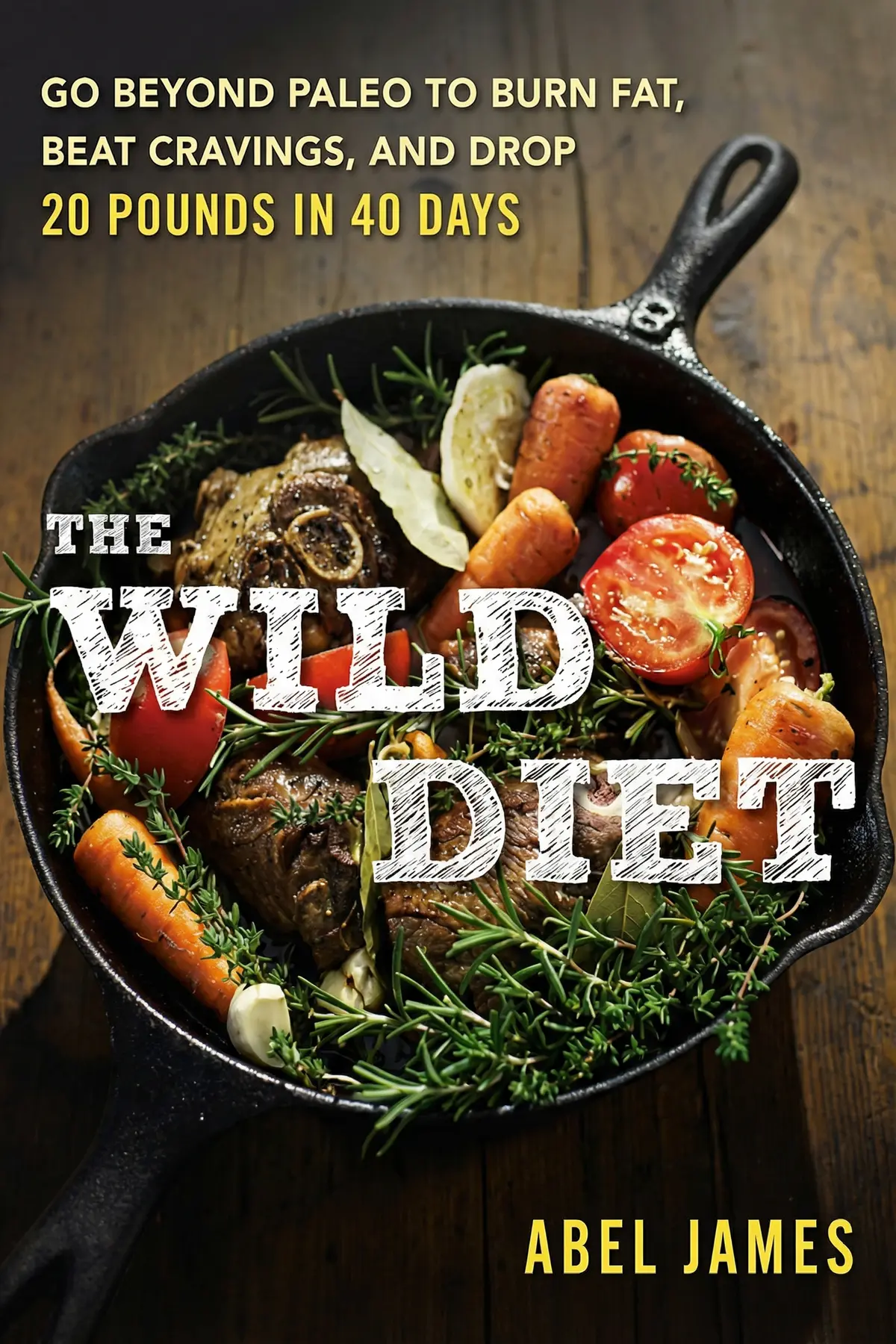
Table of Content
1. Introduction
58 sec
If you have cut calories and logged long runs and still watched your waistline grow, Abel James has been there, and he argues the advice itself was the problem. In The Wild Diet, the creator of the Fat-Burning Man podcast recalls running thirty miles a week on low-fat, low-calorie food in his early twenties while his blood pressure climbed and his sleep fell apart. When he went back to the kind of farm food he grew up on, rich in fat and fiber, he lost twenty pounds in forty days and exercised far less.
His case is that the body is built to eat richly and burn fat, as long as the food is real. Cut sugar and processed grains, fill the plate with vegetables, good protein and healthy fats, and move hard for minutes instead of hours. What follows gives you a plate you can build at any meal, a way to read your own hunger, a seven-minute workout and a forty-day test to see whether the approach works for you.
2. Stop trying to outrun a bad diet
1 min 32 sec
A young man followed his doctors, the magazines and the television advice to the letter, and his health got steadily worse. What he did next went against all of it, and the results arrived within forty days.
3. Cut the carbage and start burning fat
1 min 53 sec
Granola and fruit juice sound like a sensible start to the day. James argues that foods like these keep the body locked in storage mode, and he explains what has to change before stored fat can be used.
4. Build every plate from real, wild food
1 min 52 sec
Butter, bacon and eggs are usually the first foods a diet takes away. This one puts them back, sets a strict order for filling the plate, and replaces calorie counting with a much simpler check.
5. Eat more protein from animals raised well
1 min 39 sec
One kind of food makes your body burn fat simply to digest it. Yet the same steak can help or harm depending on what the animal ate, and the most nutritious cuts are often the cheapest.
6. Eat when hungry and drink water all day
1 min 51 sec
Most people eat on a schedule and drink when they feel thirsty. James argues both habits miss what the body is actually telling you, and the bandleader of Tim McGraw’s band shows what following the diet can do.
7. Seven minutes of sprints beats an hour of jogging
1 min 42 sec
Put a marathon runner beside a sprinter and most people know whose body they would rather have. The reason lies in hormones, and the workout that triggers them fits inside a coffee break.
8. Run your own 40-day reset and lose fat
1 min 36 sec
Most diets fail long before the body has a chance to change. James’s forty-day challenge starts with a photograph and a small change in wording, and it trusts the kitchen far more than willpower.
9. Conclusion
1 min 14 sec
The Wild Diet rests on a kind of trust. James believes the body was never designed for calorie counting or hour-long cardio, and that when it gets food from farms instead of factories it switches to burning fat and stops sending hunger it cannot satisfy. He asks readers to picture an older way of living, where grain is expensive, hard physical work is part of the day and sweets are a treat. His grandmothers’ generation, he argues, already knew that grains, starch and sugar make people fat. He even encourages getting some dirt under your fingernails.
The simplest place to begin is the one his advice singles out: drink only water, and plenty of it, for a month. Sodas, juices and sweet coffee drinks add calories without filling you up, and James suggests that change alone could take off as much as 20 pounds. At your next meal, put vegetables on the plate first and add fat without guilt. Twice a week, give seven minutes to sprints instead of an hour to jogging.
James ate richly and exercised less, and he lost twenty pounds in forty days. The farm he grew up on fed him well long before any diet book did.
About this book
What is this book about?
Plenty of people have counted calories, eaten low-fat food and logged long runs, and still watched their waistline grow. Abel James was one of them. In his early twenties he was running thirty miles a week on doctor-approved low-fat food, and his blood pressure kept climbing anyway. He argues that the standard advice was the problem. The Wild Diet makes the case that the human body is designed to eat well and burn fat, provided the food is real and comes from farms instead of factories. James tells readers to cut what he calls carbage, meaning sugar, processed grains and industrial oils. In its place go plates built mostly from vegetables, with good protein and generous healthy fats. He swaps long cardio sessions for a seven-minute sprint workout and replaces calorie counting with reading ingredient labels and eating when hungry. The book also includes a 40-day challenge and more than 50 recipes, from chicken parmesan to mint chocolate chip ice cream. Readers get a flexible template looser than Paleo, along with the story of how James lost twenty pounds in forty days while exercising less.
Book Information
Who it's for
Calorie counters and runners
People who have counted calories and run long miles without losing fat.
Professionals short on time
Busy professionals who want a seven-minute workout and a plate rule they can use at any meal.
Parents and foodies
Food lovers and parents who want to cut sugar and processed grains without giving up butter, eggs or dessert.
About the Author
Abel James
Abel James created Fat-Burning Man, a podcast on healthy eating and lifestyles that has found an international audience. He was a Senior Fellow with Honors at Dartmouth College, where he designed his own course of study in brain science, music and technology, later published as The Musical Brain. He is also a songwriter and multi-instrumentalist. Greatist named him one of the hundred most influential figures in health and fitness in both 2015 and 2016.
Ratings & Reviews
Ratings at a glance
What people think
Listeners find this nutritional guide deeply informed and thorough, providing numerous simple recipes and a direct method for healthy living. This work results in better physical health and weight reduction, with listeners describing easy fat loss and reaching 6% body fat. They enjoy the taste of the included meals and feel the concepts are accessible, while highlighting how the material offers fresh motivation and a new perspective on nutrition.
Top reviews
Manop
Finally got around to reading Abel's book after following his podcast for months, and it’s a total game-changer for my kitchen. I used to think healthy eating meant bland chicken and steamed broccoli, but these recipes are actually packed with flavor and easy to prep. Not gonna lie, I was skeptical about the high-intensity workout claims, yet doing just a few minutes of sprints has made a visible difference in my energy. The book is straightforward and cuts through the noise of traditional dieting while keeping the focus on real, whole foods. Truth is, I’ve already dropped several pounds without feeling like I’m starving myself every single afternoon. It’s more of a lifestyle shift than a temporary fix, and the photos inside make every meal look incredibly appetizing. If you want to understand nutrition without a PhD, this is the guide to get.
Show moreMay
Ever wonder why you're still tired despite eating 'healthy' grains and low-fat snacks? This book completely opened my eyes to how modern starches were sabotaging my metabolism and keeping me in a constant state of hunger. After implementing the principles for just two months, my body fat has dropped significantly, and I'm nearing that 6% mark Abel talks about. The approach is simple: ditch the liquid calories like soda and focus on high-quality proteins and greens that actually satisfy your cravings. It’s refreshing to read something that encourages listening to your own body rather than following a rigid, one-size-fits-all calorie counter. Honestly, the focus on natural, unprocessed foods made the transition feel effortless once I got past the first week of sugar withdrawals. This isn't just a diet; it's a way to reclaim your health and feel like a human being again.
Show moreGame
Wow, I didn't realize how much hidden sugar I was consuming until I started tracking things the 'Wild' way. By just cutting out the juices and sodas for a month, I’ve already dropped 15 pounds, and it felt completely effortless. The book makes a compelling case for how modern diets disrupt our metabolism and turn off our natural fat-burning signals. I love that the author encourages spending time outside and listening to your body’s actual hunger cues rather than the clock. The layout is beautiful, and the photos actually look like food a normal person would eat, not some laboratory experiment. It’s been a long time since a health book actually motivated me to change my morning routine, but this one did it. I feel leaner, sharper, and way more energetic throughout the workday. Highly recommended for those tired of the status quo.
Show moreLillian
As someone who struggles with strict regimes, the flexibility offered here was a breath of fresh air. Abel James doesn't just bark orders about what to eat; he takes a holistic approach that includes sleep, nature, and mental health. I particularly liked the section on 'The Wild Diet' vs. traditional veganism, explaining how to find natural substitutes like tempeh without relying on processed fake meats. The recipes are genuinely tasty, and I appreciate that he allows for some cheese, which makes the transition from a standard diet way more sustainable. My only gripe is the formatting, as it feels a bit repetitive in the middle sections where he repeats the same 'why' over and over. Still, the summarized to-do lists at the back are incredibly helpful for daily reference. It’s a solid guide for anyone looking to clean up their lifestyle without losing their mind.
Show moreDing
Picked this up on a whim and ended up finishing it in two sittings because the writing is so conversational and easy to digest. The focus on intensity over duration for workouts is perfect for my busy schedule, especially those seven-minute high-intensity sessions. It’s amazing how much you can accomplish when you stop wasting hours on a treadmill and start moving with purpose. I’ve switched to mostly water and the weight is practically falling off, just like the book promised would happen. Personally, I don't care if the science is a bit 'light' because the results in the mirror are very real for me. The advice is practical, the grocery lists are manageable, and the philosophy makes total sense in our over-processed world. It’s a great entry point for anyone wanting to ditch the junk and eat like our ancestors did.
Show morePakinee
After hearing Abel talk about being a 'fitness nerd,' I figured I'd give his methodology a shot, even if his definition of 'nerd' just means using an Excel sheet. The book is surprisingly grounded, especially when discussing how to source quality protein on a tight budget by using offcuts. I was worried this would be another elitist 'whole foods or bust' manual, but he gives you permission to do the best you can with what’s available. To be fair, some of the 'Paleo but with cheese' logic feels like he's just making it up as he goes, but it works for my lifestyle. The recipes for carbless meals are creative, though I agree with other reviewers that a burger without a bun is essentially a salad. Regardless, the newfound inspiration I have for cooking has made this purchase worth every penny. It's a fun take on nutrition.
Show moreKae
Specific details about the 7-minute workouts were what finally convinced me to buy this, and they really do pack a punch. I’ve always hated the gym, so the idea of doing sprints or squats at home is much more my speed. The recipes are the real star here, though, because they don't taste like 'diet' food at all. Gotta say, the bison burgers (even without the bun) are delicious and filling enough that I don't miss the carbs. I appreciate the straightforward approach Abel takes, even if he does spend a bit too much time on his own backstory in the beginning. It’s a practical, well-researched guide that has helped me rethink my relationship with processed starches. If you can get past some of the bro-science, the core advice is incredibly effective for fat loss.
Show moreWoramet
The chapter on exercise was actually the most interesting part for me, though the rest felt like stuff I’ve seen on Facebook for years. Abel comes across as a bit of a "dude-bro," and while he’s charming, the writing sometimes feels like a long-winded transcript from a late-night infomercial. To be fair, the advice to eat organic and move outdoors is solid, but there isn't much here that qualifies as a revolutionary discovery. I found the pseudo-science regarding GMOs and "bugs" a bit hard to swallow because it lacks rigorous citations. Look, it’s a decent primer for someone totally new to the Paleo world, but seasoned health nuts won't find anything groundbreaking. It's a quick read with some okay recipes like the bunless burgers, even if calling a meat patty a "hamburger" without bread feels like a stretch.
Show morePensuda
This book is basically a synthesis of every health trend from the last decade wrapped in a pretty package. If you’ve been following the Paleo or low-carb scene, you won’t find any shocking revelations here, but it’s a nice refresher. I liked the author's tone—he's charming and relatively humble for a fitness guru. However, some of his 'science' about genetic modification killing gut bacteria is a bit of a stretch and lacks real evidence. It’s a decent enough read if you want a simple plan to follow without too much technical jargon. Just don't expect it to change your life if you're already eating clean and working out regularly. It's a solid middle-of-the-road guide for beginners, but the 'Wild' branding is mostly just clever marketing for established concepts.
Show moreAhmed
Not what I expected given the hype surrounding the podcast, especially since the 'science' presented feels incredibly thin. Much of the book reads like the author patting himself on the back for being athletic and handsome rather than providing actionable, unique data. Frankly, telling people to drink water instead of soda to lose weight is a common-sense tip, not a radical fat-burning gimmick worth a whole book. I was annoyed by the lack of citations for the more extreme claims about how certain foods affect our DNA or his thoughts on gut bacteria. It’s essentially a rehashed version of the Atkins diet with a 'wild' marketing spin and some nice photography to distract you from the lack of substance. If you've read one Paleo book, you've read this one, and you can probably skip the first hundred pages of self-promotion.
Show moreQuestions about this book
What is the main idea of The Wild Diet by Abel James?
James argues that the eat less, exercise more formula fails because the body is built to eat richly and burn fat when it gets real food. He tells readers to cut sugar, processed grains and industrial oils, build plates mostly from vegetables with quality protein and healthy fats, drink plenty of water and replace long cardio with short, intense workouts. He describes the result as switching from a Sugar Burner to a Fat Burner.
How is The Wild Diet different from Paleo?
James positions his approach as looser than Paleo and free of rigid calculations. He faults popular Paleo for neglecting food quality and building every meal around meat. On the Wild Diet, at least half of each plate should be plants, food quality comes first, and dairy is allowed. He calls it a flexible template for eating and living, not a strict bootcamp.
What is the seven-minute wild workout?
It starts with a one-minute warm-up, such as jumping rope or a boxer’s shuffle. Then come ten rounds of 20 seconds of all-out sprinting with 10 seconds of rest, about five minutes in total, and a final minute of easy cooldown. James recommends hill sprints for more intensity and says the same pattern works in a pool. Maximum effort in each burst is what matters.
Do you count calories on The Wild Diet?
No. James argues that people are not meant to starve themselves or count calories. Instead, he asks readers to check that every item on an ingredients list is real food, to eat when hungry and to skip meals when they are not. Those without morning appetite can try Fasting and Feasting, eating mainly in the evening. Progress is judged by how your tightest pants fit, at about a pound a week.
How can I start applying The Wild Diet?
The book’s simplest first step is to drink only water for a month and drop sodas, juices and sweet coffee drinks. From there, fill your plate with non-starchy vegetables first, then protein, then fat. Keep tempting foods out of sight, take a before photo and try the forty-day challenge, using the book’s recipes or reworking your own family dishes with real ingredients.
Readers also enjoyed






AUDIO SUMMARY AVAILABLE
Listen to The Wild Diet in 15 minutes
Get the key ideas from The Wild Diet by Abel James, plus 5,000+ more nonfiction titles.
- 5,000+ titles
- Listen as much as you want
- 7-day free trial
- Cancel anytime









