

15 min 49 sec
Available in: English
 ไทย
EnglishไทยThe Wide Wide Sea: The Fateful Final Voyage of Captain James Cook
Hampton Sides follows Captain James Cook's third and final voyage, from a secret Arctic mission to his death in Hawaii. He shows how a respectful explorer still became a lasting symbol of colonial collision.
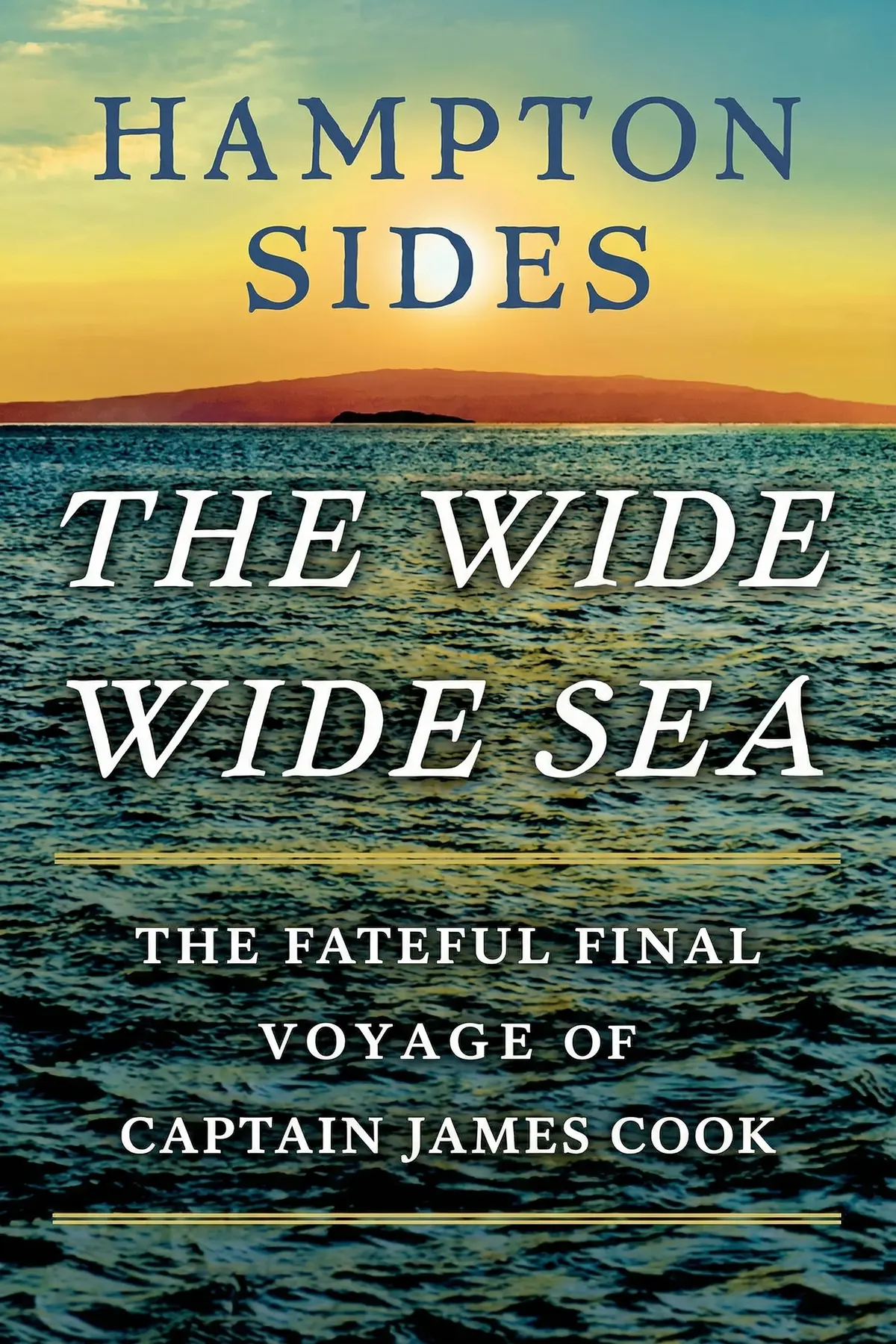
Table of Content
1. Introduction
1 min 02 sec
Captain James Cook is usually remembered as either a hero of exploration or a herald of empire, and his last voyage shows how both came true. In The Wide Wide Sea, historian Hampton Sides follows Cook’s third expedition and shows that the same man who chose patience after a massacre in New Zealand later plotted to kidnap a Hawaiian king over a stolen boat.
The expedition carried more than 180 men across thousands of miles, around Africa, through the Pacific islands and up to the Arctic ice, in search of the Northwest Passage. The thread Sides follows is this: an explorer who respected the peoples he met still opened the way to guns, disease and exploitation, and died in a clash of cultures he only partly read.
Follow that thread and you get one of the great sea stories of the age, plus a sharper sense of how good judgment wears down under pressure, and why a reputation can look so different from the other shore.
2. Success can tempt a leader into one more risk
2 min 13 sec
In 1776 Cook had fame, a royal admirer and a home in London. A grieving wife and a partly secret Admiralty offer reveal why none of that could keep him ashore.
3. Choose restraint when revenge looks justified
2 min 07 sec
Ten British sailors had been killed and reportedly eaten, and even Cook’s own translator wanted the chief responsible shot. What Cook learned about how the violence began shaped a decision few expected.
4. Learn why good intentions could not bring Mai home
2 min 13 sec
A young Polynesian had charmed London and won a king’s promise to send him home with livestock and seeds. Arriving turned out to be the easy part of his return.
5. Test a confident theory against the ice
2 min 20 sec
Five thousand miles of supposedly empty ocean produced two surprises, and the Arctic produced a third. One nobleman’s comfortable belief about salt water was about to meet the facts.
6. Learn how a stolen boat ended a welcome
2 min 23 sec
Thousands of Hawaiians greeted Cook with chants and rituals at a sacred bay. Within weeks the same shore turned deadly, and the trigger was a small object tied to a ship.
7. Read a hero's legacy through other eyes
2 min 14 sec
The ships came home without a single death from scurvy, yet without their captains. On a Hawaiian shore, a white monument and a few words of red paint tell the rest.
8. Conclusion
1 min 17 sec
Cook’s last voyage reads like a test he passed once and failed once. In New Zealand, with Mai urging him to shoot a chief who had confessed to killing ten Englishmen, he traced the violence back to a stolen loaf of bread and a sailor’s rash shot, and chose peace. In Hawaii, after months of ice, a broken mast and a fading welcome, a stolen boat pushed him to plan a kidnapping, and that plan cost him his life. Sides ends on the view that cultural insensitivity caused his death, and that the respectful explorer of 1776 has become, for many, a symbol of empire reaching too far.
The lessons carry well beyond the eighteenth century. When pressure builds, notice whether you are still asking how a conflict began or only how to win it. Treat any plan built on a confident assumption, like seawater that cannot freeze, as something to test early. And measure good intentions by what remains after you leave, as the scant traces of Mai’s life and gifts on Huahine show.
Cook mapped coastlines with astonishing accuracy. The harder map, of the people on those shores, he never finished.
About this book
What is this book about?
In 1776, Captain James Cook was famous, respected and restless. When the Admiralty offered him a partly secret mission to find the Northwest Passage from the Pacific side, he accepted, even though some thought a third voyage was pushing his luck. Over the next four years, more than 180 men crossed thousands of miles of sea, from Africa to New Zealand, Tahiti, Hawaii, Alaska and the Arctic ice. Hampton Sides tells the story as a narrative history and keeps its contradictions in view. Cook showed restraint after a massacre in New Zealand, tried to bring the Polynesian traveler Mai safely home, and admired the cultures he met. Yet his expeditions opened Pacific peoples to guns, disease and exploitation, and he died at Kealakekua Bay after planning to kidnap a Hawaiian king over a stolen boat. Readers get a gripping account of one of the great voyages of the age and a clear way to understand why Cook is now seen both as a gifted navigator and as a symbol of British overreach.
Book Information
Who it's for
History buffs
History readers who want Captain Cook's final voyage told as one gripping, balanced story.
Leaders curious about judgment
Managers and team leads interested in how judgment holds or breaks under long pressure.
Rethinking explorers and empire
Anyone rethinking explorers and empire who wants both the European and the Pacific view.
About the Author
Hampton Sides
Hampton Sides, born in 1962 in Memphis, Tennessee, studied history at Yale and has written bestselling narrative history and literary nonfiction, including Hellhound on His Trail, Blood and Thunder and On Desperate Ground. He has served as editor-at-large for Outside magazine, and his magazine features have twice been recognized in the National Magazine Awards. He has also taught literary journalism and narrative history at Colorado College.
Ratings & Reviews
Ratings at a glance
What people think
Listeners find this work to be a superb experience that flows like an adventure novel, providing a compelling narrative of Cook's last journey. The prose is a masterfully written historical record, and the book is deeply researched with intriguing specifics. They value the focus on exploration, with one listener pointing out the striking depictions of the Gulf of Alaska, and consider it captivating throughout, with one remarking it is difficult to put down.
Top reviews
Palm
This book is a masterclass in narrative non-fiction, reading more like a high-stakes adventure novel than a dry historical text. Hampton Sides handles the complexity of Captain Cook’s character with incredible nuance, showing us both the brilliant navigator and the man who was clearly unraveling during his final trek. I was particularly struck by the contrast between his earlier diplomat-like approach and the mercurial, almost violent shifts in his temperament on this voyage. It reminded me a lot of David Grann’s The Wager, but with a broader, more global scope that captures the sheer scale of the Pacific. The level of detail regarding the HMS Resolution’s constant leaks and the crew’s exhaustion made the journey feel visceral. If you enjoy Erik Larson, this is an absolute must-read. It’s rare to find a book that balances rigorous historical research with such propulsive storytelling.
Show moreKwan
As a devotee of maritime history, I’ve read my fair share of Cook biographies, but Sides brings something fresh here by integrating indigenous oral traditions. The inclusion of the Palawa and Māori perspectives adds a much-needed layer to the standard 'explorer' narrative. I loved the smaller tidbits, like the story of the Tahitian oil massage that supposedly cured Cook’s sciatica or the first written descriptions of Hawaiian surfing. Truth is, many historians gloss over the human element, but Sides keeps the focus on the clashing cultures and the tragic misunderstandings that led to the final confrontation. The prose is evocative and flows beautifully, making 400 pages fly by. It’s a stunning achievement that doesn’t shy away from the darker consequences of imperialism while still acknowledging Cook’s undeniable skill as a mariner. This is exactly how history should be written.
Show moreLuckana
Wow, what a gripping reconstruction of a journey that changed the world map forever. The author captures the eerie atmosphere of Cook being worshipped as the god Lono in Hawaii, only for the tide of emotion to turn so violently against him when the ships were forced to return for repairs. It felt like watching a slow-motion train wreck; you know the ending, yet you’re still holding your breath. I was fascinated to learn that a piece of the Resolution actually made it to the moon on a NASA mission—a perfect bridge between the age of sail and the age of space. The research is staggering, yet it never feels like a data dump. Every page is infused with a sense of wonder and impending doom. If you’re looking for an adventure that makes you think about the ethics of first contact, this is it.
Show moreWoramet
The descriptions of Alaskan ice fields and the brutal conditions faced by the crew of the Discovery were the highlight of this book for me. Sides manages to make the reader feel the biting cold of the Arctic Circle just as vividly as the humidity of Tahiti. It’s a fascinating look at a man who was history’s uncontested master of the Pacific, pushing his ships into waters where no European had ever dared to go. I appreciated how the book didn't just lionize Cook but interrogated his increasingly aggressive behavior and fatal errors during this final voyage. The writing style is punchy and visual, making it very easy to picture the scene at Kealakekua Bay. It’s a tragic, sprawling epic that feels incredibly relevant today. This is narrative non-fiction at its absolute finest, perfectly balancing adventure with cultural critique.
Show moreSelin
Ever wonder why James Cook's third voyage ended in such a gruesome disaster when his first two were so successful? Hampton Sides explores this question with the precision of a surgeon. He paints a portrait of a captain who was losing his edge—perhaps due to illness, exhaustion, or the sheer weight of his own legend. The dichotomy between the 'civilized' British crew and the 'savages' they encountered is flipped on its head when you see the sailors spreading disease and the indigenous people displaying much healthier lifestyles. The book is packed with 'did you know' moments, like the details of the first-ever grog or the way rats infested Moorea. It’s an immersive experience that leaves you questioning the true cost of 'discovery.' This is a brilliant addition to any history lover's shelf.
Show moreFang
Picked this up expecting a standard biography but got a vivid, cinematic adventure instead. Seeing a young William Bligh before the Bounty fame was a great touch, showing the seeds of future maritime legends. Sides has this amazing ability to make 250-year-old journal entries feel like they were written yesterday. The contrast between the lush, tropical 'paradise' and the gritty reality of life on a leaky, stinking ship is handled perfectly. It’s a story of high-stakes mapmaking, cultural collisions, and a man who stayed at sea just one voyage too long. Frankly, I couldn't put it down. The tension builds perfectly toward the inevitable massacre in Hawaii. It’s easily one of the most engaging historical accounts I’ve read in years, making the complex politics of the era accessible to everyone.
Show morePraepimon
Finally got around to this after seeing it on several 'Best of 2024' lists, and it mostly lived up to the hype. The sections detailing Mai’s return to Tahiti and his subsequent struggles were surprisingly moving, though they did feel a bit long-winded at times. To be fair, the pace really hits its stride once they head north toward the Bering Strait. Sides does a fantastic job explaining the sheer impossibility of the Northwest Passage mission given the knowledge of the eighteenth century. My only real gripe is that some of the technical discussions about the K1 sea clock felt a bit dry compared to the vivid descriptions of the Pacific islands. However, the tragedy at Kealakekua Bay is handled with such sensitivity and depth that it more than makes up for the slower chapters. It is a dense read, but rewarding for anyone who likes maritime history.
Show moreCee
After hearing so much buzz about this on Goodreads, I decided to dive in, and it’s certainly an impressive piece of scholarship. The book does a great job of placing the voyage within the context of the American Revolution happening simultaneously across the globe. It’s wild to think Cook was mapping the Northwest Passage while the colonies were fighting for independence. To be fair, the sheer volume of names and journals can be overwhelming if you aren't paying close attention to every crewman introduced. I did find the discussion of the K1 sea clock a bit overly technical for a general audience, but the way it revolutionized navigation was crucial to the story. Overall, it’s a very balanced account that respects indigenous perspectives without turning into a modern polemic. A very strong four stars for depth and detail.
Show moreRatthapong
Gotta say, I wasn't expecting to be so invested in a story about 18th-century surveying, but here we are. The book is full of fascinating, gnarly details about the crew's health and the rampant spread of venereal diseases that Cook desperately tried to stop. It highlights the irony of the British bringing 'civilization' in the form of inappropriate English gardens to people who already had a better diet than them. While the pace slowed down a bit during the long Arctic mapping sections, the ending was visceral and haunting. The image of the obelisk in Hawaii being defaced today really brings the whole legacy of Cook into perspective. It’s a nuanced, deeply researched book that makes the past feel incredibly present. Highly recommended for any history buff looking for a balanced view of exploration.
Show moreKwame
Look, I wanted to love this as much as In the Kingdom of Ice, but the middle section really dragged for me. The detail about the menagerie of goats and plants being returned to the islands was interesting for a few pages, but it eventually felt repetitive. Personally, I found the shifting focus between the various crew members a bit dizzying at times, even if the individual stories were well-researched. Not gonna lie, I almost put it down during the long wait for the wind in the Society Islands. That said, the final hundred pages are absolutely electric. The way Sides deconstructs the 'discovery' myth while showing the physical toll the voyage took on Cook’s mental state is very well done. It’s a solid history book, but it lacks the tight, breathless pacing I’ve come to expect from this author. It's a good effort, but not quite a five-star experience.
Show moreQuestions about this book
What is The Wide Wide Sea by Hampton Sides about?
It is a narrative history of Captain James Cook’s third and final voyage, which began in 1776. Cook led more than 180 men in search of the Northwest Passage, stopping in New Zealand, Tahiti, Hawaii, the northwest coast of North America and the Arctic. Sides follows the voyage to Cook’s death at Kealakekua Bay in 1779 and explores how his expeditions affected Indigenous peoples across the Pacific.
How did Captain Cook die according to The Wide Wide Sea?
After a storm broke Resolution’s foremast, Cook returned to Kealakekua Bay, where relations with King Kalani’ōpu’u had already soured. When a boat tied to Discovery was stolen on February 14, 1779, Cook planned a blockade and a scheme to hold the king until it was returned. The blockade went badly, stones and shots flew, and Cook was killed along with four other officers.
Did the Hawaiians believe Captain Cook was the god Lono?
Sides reports that historians disagree. Cook arrived at Kealakekua Bay during a major religious festival, and people chanted the name Lono and performed rituals as he came ashore. Some historians think Hawaiians truly saw him as the god, while others think priests may have used the idea to win his favor. Many of Cook’s crew believed he was seen as the god’s embodiment.
What happened to Mai, the Polynesian traveler on Cook's voyage?
Mai had become famous in London, and King George III promised to send him home with animals and seeds. Cook found Tahiti unwelcoming because of Mai’s low family status, so he settled Mai on Huahine with land, a house and a garden. When William Bligh returned in 1789, he learned Mai had died in 1780 of a throat infection and that little of his life remained.
What lessons does The Wide Wide Sea offer today?
The book shows good judgment wearing down under pressure. Cook chose restraint in New Zealand after tracing a massacre to his own side’s overreaction, yet in Hawaii he answered a stolen boat with a kidnapping plan. It also shows the risk of untested assumptions, like the belief that salt water could not freeze, and how a reputation can look very different to the people on the other shore.
Readers also enjoyed

Alexander Hamilton
Ron Chernow

Alexander the Great
Philip Freeman


A History of Iran: Empire of the Mind
Michael Axworthy

A History of the World in 6 Glasses
Tom Standage

A Long Way Gone: Memoirs of a Boy Soldier
Ishmael Beah


AUDIO SUMMARY AVAILABLE
Listen to The Wide Wide Sea in 15 minutes
Get the key ideas from The Wide Wide Sea by Hampton Sides, plus 5,000+ more nonfiction titles.
- 5,000+ titles
- Listen as much as you want
- 7-day free trial
- Cancel anytime









